To organize your desk for maximum productivity, start by clearing away clutter and removing unnecessary items. Categorize your supplies and use storage solutions like bins and dividers to keep essentials within easy reach. Arrange frequently used items at eye level and assign a specific spot for papers and digital files. Maintain your setup daily with tidying routines, add personal touches, and regularly review your organization system. Keep going to discover more tips to boost your efficiency.
Key Takeaways
- Declutter your workspace by removing unnecessary items and keeping only essentials within easy reach.
- Categorize and organize supplies using containers, labels, and drawer dividers for quick access.
- Optimize storage with vertical solutions, stackable bins, and labeled containers to maximize space.
- Manage paper and digital files with clear labeling, regular purging, and digital scanning to reduce clutter.
- Maintain your setup through daily routines, ergonomic adjustments, and personalized decor to boost focus and motivation.
Clear Your Desk and Remove Unnecessary Items
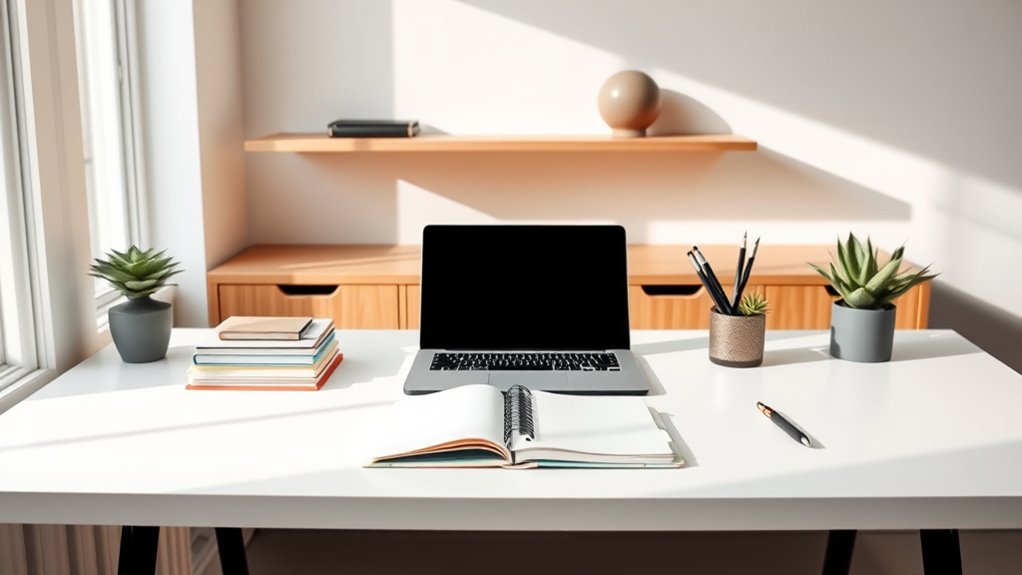
To create a productive workspace, you need to start by clearing your desk and removing unnecessary items. Desk decluttering is essential to eliminate distractions and create a clean environment. Begin by sorting through your supplies and identifying what you really need within reach. Remove clutter such as old papers, broken pens, or unused gadgets that only take up space. Clearing away unnecessary items helps you focus on your tasks and reduces visual chaos. Keeping a well-organized workspace enhances your ability to prioritize and stay efficient throughout the day. Additionally, using storage solutions can aid in maintaining long-term organization. Incorporating visual organization techniques can help you arrange your items logically and improve overall workflow. Keep only the essentials that support your workflow, and put away everything else. This initial step sets the foundation for an organized, efficient workspace. Once your desk is free from clutter, you’ll find it easier to maintain order and stay productive throughout your workday. Incorporating simple organization strategies can help you sustain this tidy environment over time.
Categorize and Prioritize Your Supplies
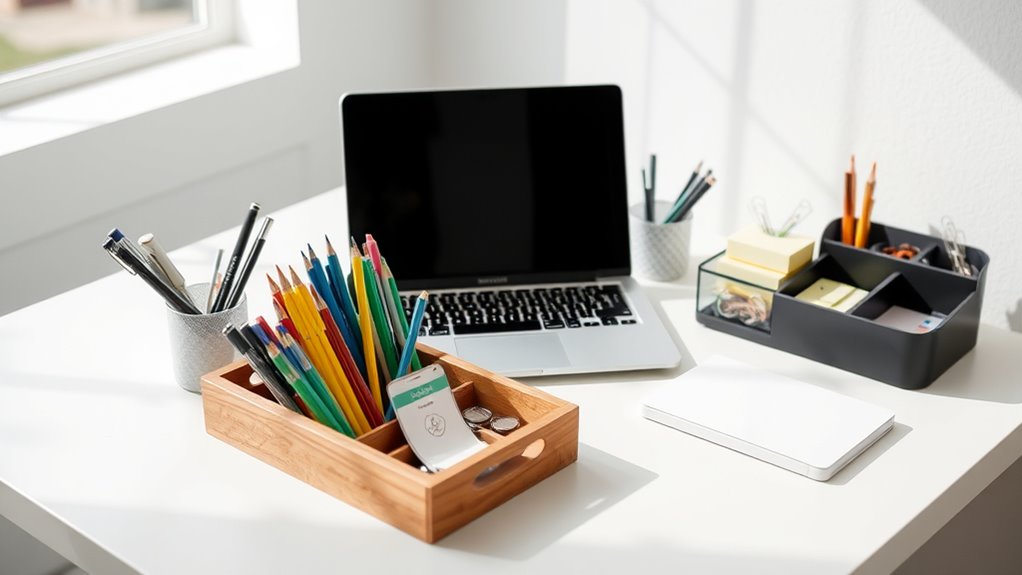
After clearing your desk, the next step is to categorize and prioritize your supplies so you can access what you need efficiently. Start by grouping similar office supplies together—pens, paper, staples, sticky notes, and chargers. This makes it easier to locate items quickly. Use storage organization methods like small containers or drawer dividers to keep these groups neat and accessible. Prioritize frequently used supplies by placing them within arm’s reach, while less-used items can go further away. Label storage containers for clarity, so you know exactly where everything belongs. Proper categorization prevents clutter and saves time searching for supplies later. Additionally, understanding the horsepower of electric dirt bikes can inspire you to incorporate dynamic and efficient tools into your workspace. Considering ergonomic accessories can further enhance comfort and productivity during long work sessions. Incorporating adjustable desk accessories can also help maintain proper posture and reduce fatigue. Exploring energy-efficient tools and setups can also contribute to a more sustainable and cost-effective workspace. Taking these steps ensures your workspace remains organized, functional, and ready for maximum productivity.
Use Storage Solutions to Maximize Space
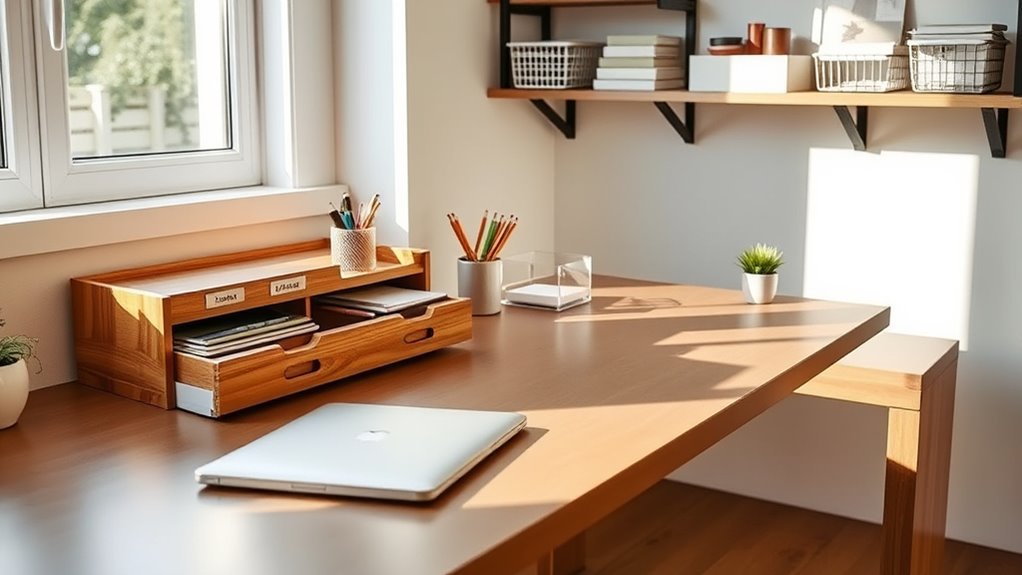
Effective storage solutions can substantially maximize your desk space and keep your workspace tidy. Using the right tools helps prevent clutter and makes items easy to find. Consider these options:
Smart storage solutions keep your workspace organized and clutter-free.
- Install drawer dividers to organize small supplies like paper clips, pens, and sticky notes, creating clearly designated sections. Incorporating storage organization techniques ensures each item has a specific place, enhancing overall efficiency. Additionally, implementing water-related storage methods can help keep liquids like pens or small plants upright and contained securely.
- Use stackable bins to store bulkier items or less frequently used supplies, saving valuable desktop surface area.
- Incorporate vertical storage solutions like shelves or tiered trays to keep documents and accessories within reach without crowding your workspace. Exploring space-saving strategies can further optimize your setup.
- Choose storage options that are fire-safe and compliant, ensuring your workspace remains secure and aligned with safety standards.
- Select European cloud compliant storage solutions to enhance data security and ensure your digital workspace benefits from innovative, secure cloud technology.
Arrange Your Desk Items for Accessibility

Arranging your desk items for accessibility guarantees that everything you need is within easy reach, boosting your productivity and reducing unnecessary movements. Use ergonomic placement to position frequently used tools like your keyboard, mouse, and notepad at eye level and within arm’s reach. An aesthetic arrangement enhances your workspace’s visual appeal while maintaining functionality. Keep essentials such as pens, chargers, and papers nearby but organized to avoid clutter. A well-designed layout minimizes distractions and streamlines your workflow. Consider placing items based on how often you use them, placing high-need tools front and center. This setup makes your workspace more efficient and comfortable, encouraging sustained focus. Additionally, organizing your workspace in accordance with ergonomic principles can help streamline workflows for tech-related tasks. Proper accessibility ensures that your most important items are always within arm’s reach, reducing strain and enhancing efficiency. Being aware of networking hardware and infrastructure can also inform how you organize electronic accessories like chargers and cables for quick access. Using the proper organization techniques can further optimize your workspace for productivity. Use the table below to visualize ideal placement:
| Item | Placement |
|---|---|
| Keyboard & Mouse | Ergonomic placement |
| Pens & Notepad | Aesthetic arrangement |
| Chargers & Cables | Accessible but organized |
Implement a Paper Management System

To keep your desk organized, you need a solid paper management system in place. Start by categorizing your papers and using clear labels to find what you need quickly. Make a habit of regularly purging files to prevent clutter from piling up. Incorporating ethical hacking principles can help you identify and eliminate unnecessary or outdated documents effectively. Additionally, applying cybersecurity awareness strategies can enhance your ability to recognize and protect sensitive information within your physical files. Regular audits of your paper system can ensure ongoing appliance maintenance, preventing issues before they arise. Incorporating data protection practices can further secure your important documents from unauthorized access. Understanding personality assessments can also assist in organizing your workspace to align with your working style and improve productivity.
Categorize Your Papers
Have you ever felt overwhelmed by the clutter of loose papers on your desk? To manage this, start by categorizing your papers into three groups: urgent, reference, and discard. For urgent documents, set up a dedicated inbox for immediate action. Reference materials should be stored in clearly labeled folders or digital filing systems, making retrieval quick. For papers that no longer serve a purpose, implement paper shredding to eliminate clutter and protect sensitive information. Incorporate digital filing to scan important documents and reduce physical paper. This helps keep your workspace tidy and ensures you’re not overwhelmed by unnecessary papers. Regularly reviewing and sorting your papers keeps your system effective and your desk organized for maximum productivity. Additionally, applying exfoliation techniques can improve the appearance of your skin, boosting your confidence while working in a tidy environment.
Use Labels Effectively
Once you’ve categorized your papers, the next step is to implement a clear labeling system. Using color coded labels helps you quickly identify file types or priorities at a glance. Invest in a label maker usage to create consistent, professional labels. This reduces confusion and saves time searching for documents. To keep your system organized, assign each category a specific color and label accordingly. Here’s an example:
| Category | Label Color | Priority |
|---|---|---|
| Invoices | Red | Urgent |
| Meeting Notes | Blue | Ongoing |
| Reference Docs | Green | Archive |
This visual approach makes your paper management more efficient and intuitive, ensuring you always know exactly where each document belongs.
Regularly Purge Files
Regularly purging your files is essential to keep your desk organized and prevent clutter from piling up. Implementing a paper management system helps you stay efficient. First, review physical and digital files regularly, deleting outdated documents and consolidating duplicates. Second, set aside time for paper shredding to securely dispose of sensitive information. Third, streamline your digital filing by creating clear folders and naming conventions, making it easier to locate important files quickly. This routine keeps only relevant paperwork on hand, reducing visual chaos. By maintaining this system, you’ll minimize clutter, increase productivity, and ensure your workspace remains focused and professional. Regular purging is a simple yet powerful step toward a more organized, efficient desk.
Create a Designated Spot for Essential Items
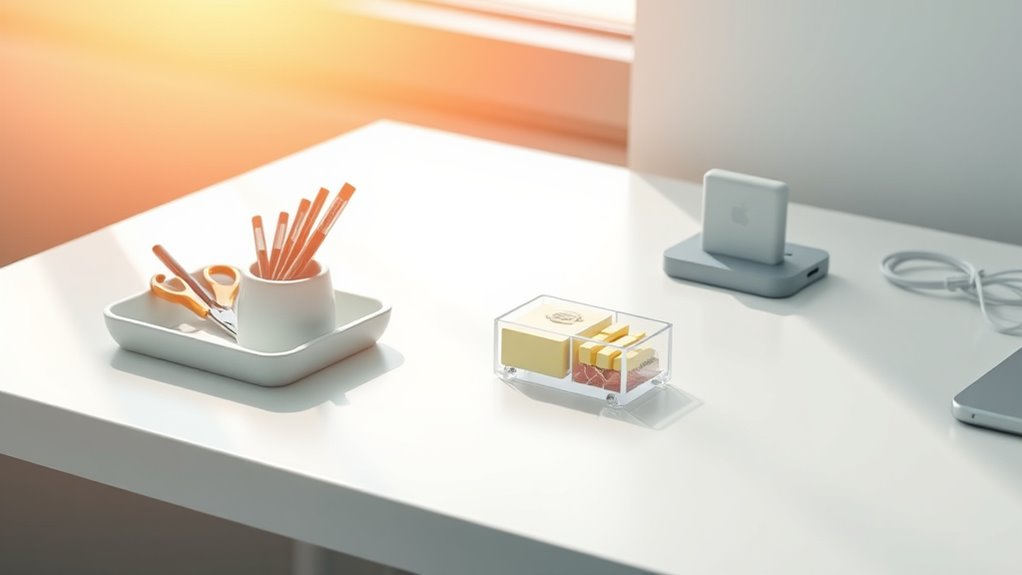
Designating specific spots for your essential items guarantees quick access and reduces clutter. Keep your stationary essentials, like pens, pencils, and sticky notes, in a dedicated drawer or container. This prevents them from spreading across your desk and makes it easier to find what you need. Similarly, assign a particular spot for your tech gadgets, such as chargers, earbuds, or USB drives. Use a small tray or organizer to keep these items contained and easily reachable. By establishing clear locations for these essentials, you’ll save time searching and maintain a tidy workspace. Consistency is key—always put items back in their designated spots after use. This simple step helps create a streamlined workspace that enhances focus and productivity.
Maintain Your Organization With Daily Tidying
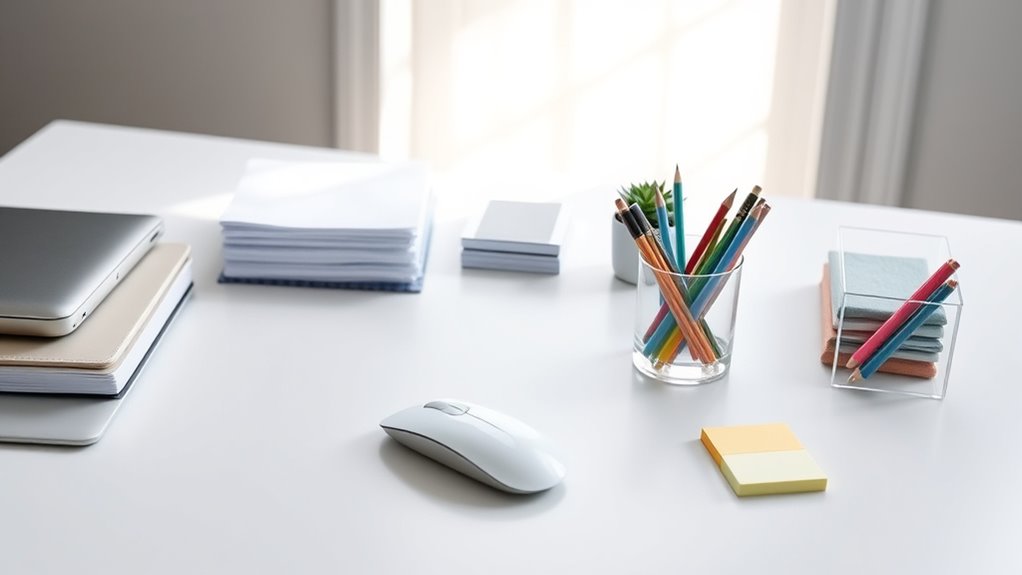
Establishing a daily cleanup routine keeps your desk tidy and prevents clutter from piling up. Use storage solutions like trays and organizers to quickly put things back in their place. Regular tidying makes it easier to stay focused and maintain an efficient workspace.
Daily Cleanup Routine
To keep your workspace organized and boost productivity, make it a habit to tidy your desk every day. This daily cleanup routine helps maintain effective desk organization and prevents clutter from piling up. Start by:
- Clearing off unnecessary items to keep only essentials within reach.
- Wiping down surfaces to remove dust and smudges, fostering a clean environment.
- Returning used items to their designated spots, supporting clutter control.
Use Storage Solutions
Using storage solutions effectively is key to maintaining a tidy workspace. Office shelving helps keep frequently used items within reach while freeing up desk space. Choose sturdy shelves to organize books, files, or decorative items, preventing clutter from piling up. Storage containers are perfect for small items like paperclips, sticky notes, or chargers; label them for quick access. Regularly revisit your storage setup to guarantee everything stays organized and accessible. Clear containers allow you to see contents instantly, saving time and reducing frustration. Incorporate drawers or desktop organizers to keep essentials handy and out of sight when not in use. By consistently using office shelving and storage containers, you create an environment that’s functional and easy to maintain daily.
Personalize Your Workspace to Boost Motivation

Personalizing your workspace can substantially boost your motivation by making your environment feel welcoming and inspiring. By adding thoughtful touches, you create a space that energizes you to stay focused. Consider these ideas:
Personalize your workspace to feel welcoming and inspiring, boosting motivation and focus.
- Choose meaningful desk decor that reflects your personality, like plants or artwork.
- Display motivational quotes prominently to remind you of your goals.
- Use color schemes that evoke positivity and concentration.
Keep your desk decor simple yet impactful, avoiding clutter that could distract you. Motivational quotes serve as quick mental boosts during busy moments and reinforce your purpose. When your workspace feels personalized, you’ll naturally feel more driven and engaged, making it easier to maintain productivity throughout the day.
Regularly Review and Revise Your Desk Setup
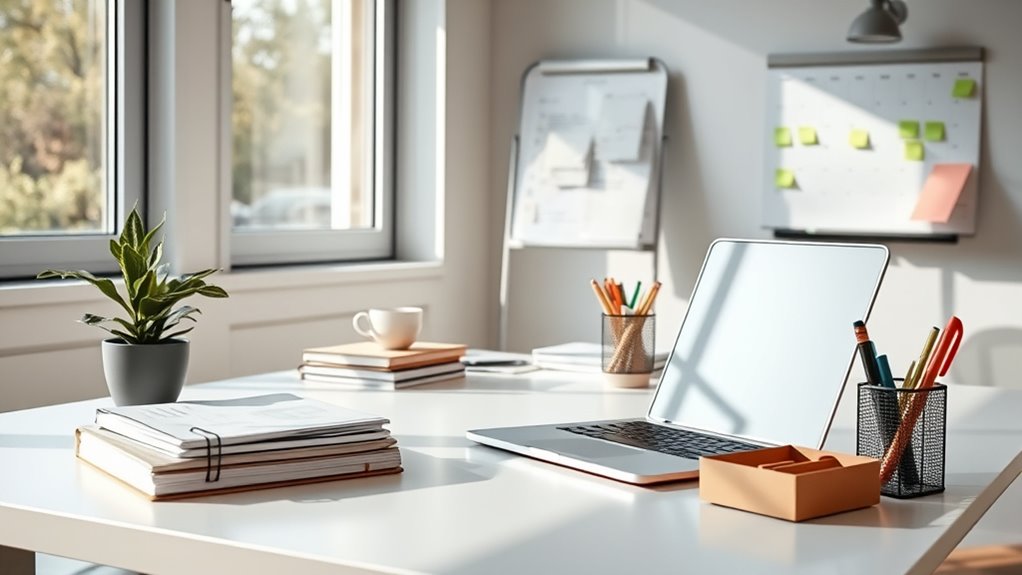
Have you ever noticed how your workspace feels stale after a while? Regularly reviewing and revising your desk setup keeps your environment fresh and efficient. Start by appraising workspace ergonomics—ensure your chair, monitor height, and keyboard position support good posture, reducing fatigue. Tweak desk aesthetic improvements by decluttering and adding small updates like new organizers or plants to energize the space. Your needs change over time, so what worked months ago might no longer suit your workflow. Set aside time weekly or monthly to evaluate your setup, removing unnecessary items and optimizing placement for productivity. This ongoing process helps prevent discomfort, boosts motivation, and keeps your workspace aligned with your goals. A refreshed desk encourages focus and makes working enjoyable.
Frequently Asked Questions
How Often Should I Reorganize My Desk for Optimal Productivity?
You should reorganize your desk every few weeks to maintain ideal productivity. Regular desk maintenance helps keep clutter at bay and guarantees your organizational routines stay effective. By setting a recurring reminder, you prevent buildup of unnecessary items and streamline your workspace. This routine allows you to identify what’s working and what needs adjusting, keeping your environment clean, focused, and conducive to efficient work.
What Are the Best Ways to Reduce Desk Clutter Quickly?
Think of your desk as a canvas waiting for clarity. To reduce clutter quickly, start by removing non-essential items, embracing minimalist décor to keep only what you need. Next, tackle digital decluttering—delete unused files and close irrelevant tabs. Use trays or drawers for organized storage, and keep your workspace tidy daily. These steps transform chaos into calm, making your desk a productive oasis in no time.
How Can I Personalize My Workspace Without Causing Distractions?
You can personalize your workspace by adding tasteful decor like framed photos or inspiring artwork that energize you without overwhelming your space. Incorporate functional accessories such as stylish pen holders or desk organizers that keep essentials handy and reduce clutter. Keep decorations minimal and meaningful, ensuring they boost your mood without causing distractions. This balance helps create a motivating environment tailored to you while maintaining focus and productivity.
What Storage Solutions Are Most Effective for Small Desk Spaces?
Imagine a sleek, compact desk with vertical storage that stacks your essentials up high, freeing up your workspace. Opt for multi-functional furniture like a storage ottoman with hidden compartments or a desk with built-in drawers. These solutions maximize limited space, keeping everything organized and within reach. You’ll create a clutter-free zone that feels open and efficient, making your small desk space feel much larger and perfectly tailored to your needs.
How Do I Balance Accessibility With a Tidy Appearance?
You balance accessibility with a tidy appearance by using ergonomic accessories that keep essentials within easy reach, reducing clutter. Incorporate decorative elements like small plants or stylish organizers to add personality without overcrowding your desk. Prioritize items you frequently use and store less-used items in drawers or containers. Regularly declutter and arrange items neatly, ensuring your workspace remains functional and visually appealing, fostering focus and productivity.
Conclusion
By organizing your desk, you create a space that fuels productivity and reduces stress. Notably, studies suggest that a tidy workspace can actually boost your focus and creativity—supporting the theory that environment influences mindset. So, keep your desk clean and well-arranged, and you’ll likely find it easier to stay motivated and efficient. A clutter-free desk isn’t just neat; it’s a powerful tool for unblocking your best work every day.