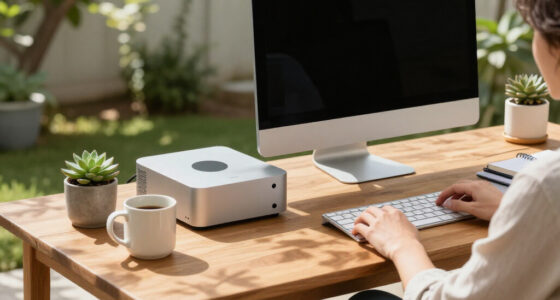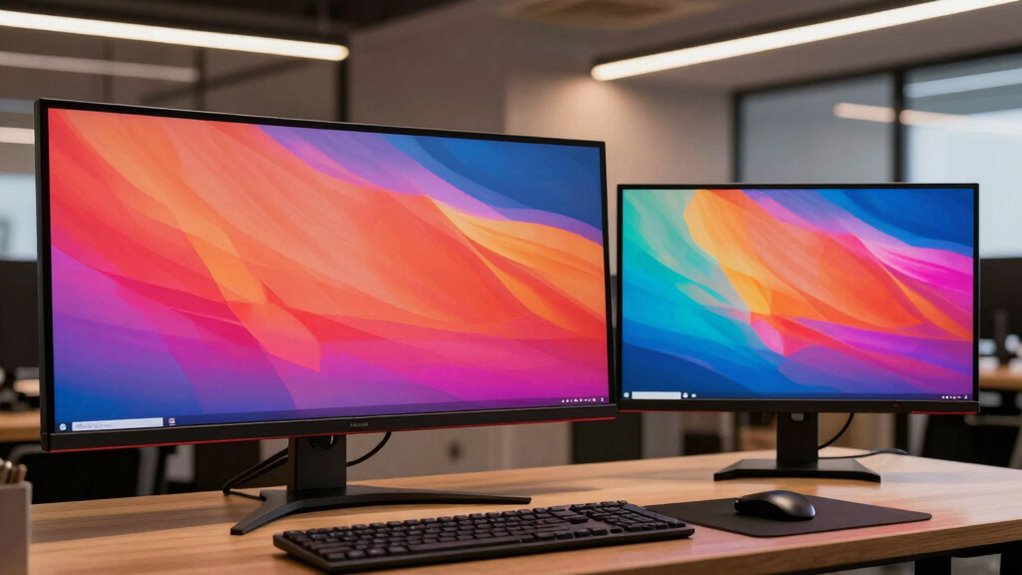

To decide between one big screen and two smaller ones, consider your workflow and space. If you need sharp visuals for design or detailed tasks, a large, high-resolution monitor might be best. For multitasking, dual screens help organize applications and reduce clutter. Ergonomics and desk space also matter—large screens may require more room, while dual setups offer flexible placement. Exploring your specific needs further can help you find the perfect fit for your work style.

Get comfort and recovery gear delivered free with Prime
- Fast, free delivery on millions of items
- Prime Video, Amazon Music and more included
- Member-only deals all year
Key Takeaways
- Consider your workflow: complex multitasking favors dual monitors, while simple tasks may suit a single large screen.
- Evaluate your workspace size and desk space to determine if one large monitor or two smaller ones fit better.
- Prioritize ergonomic comfort by adjusting monitor height and angle, whether using one or two screens.
- Think about visual clarity needs: high-resolution displays benefit creative work, while standard resolutions suffice for browsing.
- Decide based on personal preference for workspace organization—minimalist single screen or segmented dual setup.
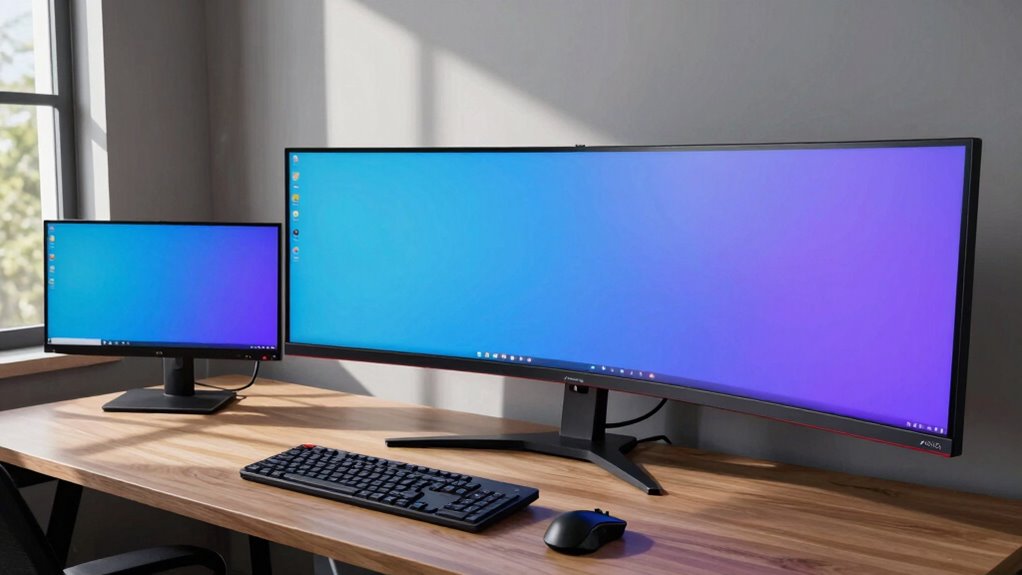
Are you struggling to choose between a single large screen and two smaller monitors? Making this decision depends on how you work and what feels most comfortable for you. First, think about your screen resolution needs. A large screen generally offers higher resolution options, which means sharper images and more screen real estate for multitasking. If you’re into detailed design work or need to view multiple documents simultaneously, a high-resolution display can be a game-changer. On the other hand, dual monitors can provide more flexibility. With two screens, you can set different resolutions, tailoring each to specific tasks. For example, you might want a 4K monitor for creative work and a standard HD monitor for browsing or chat windows. This setup allows you to organize your workflow efficiently, reducing the need to constantly switch between tabs or windows.
Next, consider your ergonomic setup. A single large screen can simplify your workspace, reducing clutter and the need to constantly turn your head or reposition yourself. However, if you opt for two smaller monitors, you’ll want to ensure they are positioned at the right angles and heights to prevent neck strain. Dual monitors require a bit more adjustment to achieve a comfortable viewing angle, but they can ultimately provide a more adaptable workspace. Think about your desk space as well. A big screen might take up more room or require a sturdy stand, while two smaller monitors can be placed side-by-side or stacked, depending on your preference. This flexibility allows you to customize your setup to fit your environment comfortably.
Another key factor is your workflow. If you often work on complex projects that involve multiple applications or windows, dual monitors can boost your productivity by giving you dedicated spaces for each task. You can keep email or communication tools open on one screen, while working on your main project on the other. Conversely, if your work is centered around a single application or you prefer a minimalist setup, a large, high-resolution monitor might be better. It provides an immersive experience and reduces the need to manage multiple screens. Ultimately, your decision should align with your specific work habits, comfort preferences, and available space. Both options have their advantages, but focusing on your screen resolution needs and ergonomic setup will help you choose the best fit for your needs.
4K ultra wide monitor for creative work
As an affiliate, we earn on qualifying purchases.
As an affiliate, we earn on qualifying purchases.
Frequently Asked Questions
How Does Screen Resolution Affect My Decision?
Screen resolution impacts your choice by affecting image clarity, color accuracy, and workspace. Higher resolution offers sharper visuals and better color accuracy, ideal for detailed tasks like photo editing. If you prioritize a smooth experience, consider refresh rate, especially for gaming. Two smaller screens can boost multitasking, but a single large screen with high resolution provides immersive viewing. Your decision depends on balancing resolution, refresh rate, and your specific needs.
What Are the Cost Differences Between the Options?
Like comparing a vintage typewriter to a sleek tablet, the cost difference is notable. A single large screen usually costs more upfront but may save on mounting and accessories, whereas two smaller screens might be cheaper individually but add up with extra stands and cables. Consider ergonomics and aesthetic appeal—dual monitors often boost productivity and look modern, but a large screen can streamline your setup and reduce clutter.
How Much Space Do I Need for Each Setup?
You’ll need enough space for an immersive experience with a big screen, ensuring good color accuracy and a comfortable, ergonomic setup. For two smaller screens, allocate room for side-by-side positioning, which can improve productivity. Consider the distance from your eyes to avoid strain and maintain color consistency across displays. Measure your workspace carefully, keeping ergonomic principles in mind, so you can comfortably view and work without clutter or discomfort.
Which Setup Is Better for Gaming or Creative Work?
A single large screen is generally better for gaming and creative work because it offers seamless visuals and easier multitasking. You should consider ergonomics considerations, ensuring the monitor height and distance prevent strain. Two smaller screens can enhance productivity with dedicated spaces for different tools but may impact aesthetic appeal. Ultimately, choose based on your workspace layout, comfort, and whether you prioritize immersive experience or multitasking efficiency.
How Easy Is It to Upgrade or Replace Screens Later?
Upgrading or replacing screens is like swapping out puzzle pieces—you can usually do it easily, especially with modular setups. Dual monitors often make upgrades simpler since you can replace or add screens individually, enhancing display durability and aesthetic appeal without overhauling your entire setup. With a single large screen, upgrades might be more complex and costly, but they tend to offer a seamless look. Overall, dual monitors give you flexibility and ease of maintenance.
As an affiliate, we earn on qualifying purchases.
Conclusion
Ultimately, choosing between one big screen and two smaller ones depends on your needs and space. For example, a remote worker might benefit from two screens to multitask efficiently, while a minimalist might prefer a single large monitor for simplicity. Consider your workflow and environment, and weigh the flexibility against the clutter. Making the right choice can boost productivity and comfort—so assess your habits and space carefully before deciding.
ergonomic monitor mount for desk
As an affiliate, we earn on qualifying purchases.
As an affiliate, we earn on qualifying purchases.
As an affiliate, we earn on qualifying purchases.
Fall Picks
fall essentials
As an affiliate, we earn on qualifying purchases.