
To choose a microphone for a quiet but natural sound, focus on models that balance sound isolation with a wide, flat frequency response. Look for microphones with noise cancellation or good polar patterns to reduce background noise while capturing your voice’s full richness. Condenser microphones are ideal for controlled environments, while dynamic ones work well in lively settings. If you keep these factors in mind, you’ll find the right mic for clear, authentic recordings—continue exploring for more helpful tips.

Get comfort and recovery gear delivered free — and shop member deals
- Fast, free delivery on millions of items
- Access to Prime Big Deal Days deals on October 6–7
- Prime Video, Amazon Music and more included
Key Takeaways
- Select a microphone with a wide, flat frequency response to accurately capture natural tones.
- Prioritize models with excellent sound isolation to minimize background noise in quiet environments.
- Use condenser microphones for controlled spaces to ensure clarity and detailed sound reproduction.
- Consider noise cancellation technology to enhance clarity in environments with subtle ambient noise.
- Match microphone polar patterns to your environment to optimize sound isolation and natural sound capture.
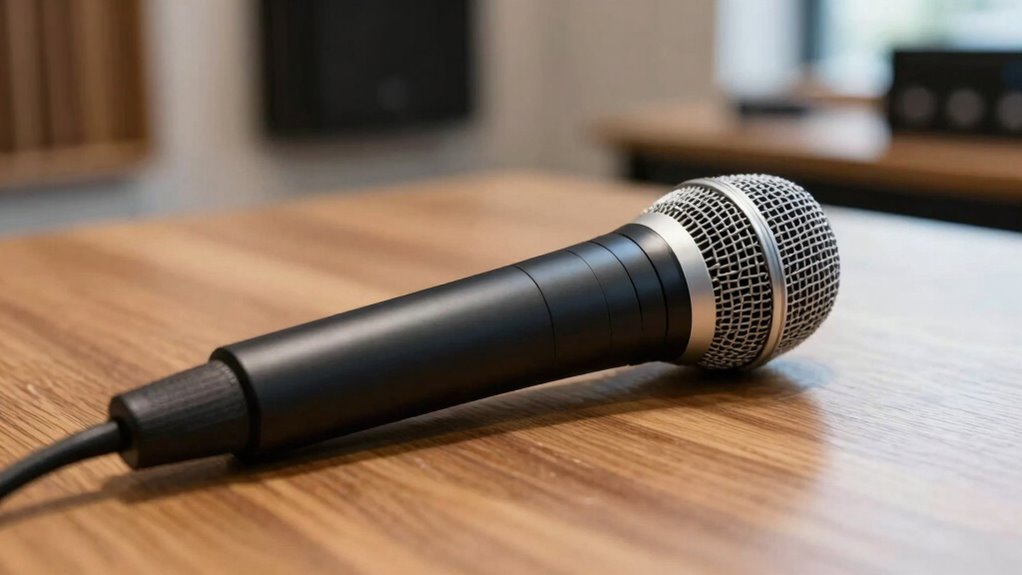
Are you unsure how to pick the right microphone for your needs? When you’re aiming for a sound that’s quiet yet natural, selecting the right gear becomes crucial. Your goal is to capture your voice or instrument accurately without unwanted noise or distortion. Two key factors you should consider are sound isolation and frequency response. Sound isolation refers to a microphone’s ability to pick up your voice while minimizing background noise, ensuring a clear, intimate sound. If you’re recording in a noisy environment or live setting, look for microphones with good sound isolation so your voice remains front and center, free from distractions. On the other hand, frequency response is about how well the microphone captures different sound pitches. A wide and flat frequency response ensures that your voice’s natural tone is preserved, capturing both the bass and treble accurately. This is especially important if you want a natural sound that reflects your true voice or instrument without exaggerated highs or lows.
When choosing a microphone for a quiet but natural sound, prioritize models that excel in these areas. Condenser microphones often provide excellent sound isolation and a broad frequency response, making them ideal for studio recordings and controlled environments. They tend to be more sensitive, capturing subtle nuances and delivering a detailed, natural tone. Additionally, some microphones incorporate noise cancellation technology to further improve sound clarity in challenging environments. Understanding the polar pattern of a microphone can also significantly influence how well it isolates your voice from ambient noise, helping you achieve a more natural sound. Consider the environment where you’ll be recording; if it’s a controlled space, a condenser might give you the clarity you desire. If you’re in a lively setting, a dynamic mic may help reduce unwanted sounds. Additionally, understanding how sound isolation impacts your recording quality can help you make a more informed choice. Recognizing polar patterns can also significantly influence how well your microphone isolates your voice from ambient noise. To further refine your choice, pay attention to frequency response charts or listen to sample recordings to ensure the sound accurately reflects your natural tone. Ultimately, the best microphone for a quiet but natural sound balances effective sound isolation with a wide, flat frequency response, capturing your voice’s full richness without unnecessary noise or coloration. By focusing on these factors, you’ll find a microphone that brings out the natural quality of your sound, whether in the studio or on the go.
condenser microphone for studio recording
As an affiliate, we earn on qualifying purchases.
As an affiliate, we earn on qualifying purchases.
Frequently Asked Questions
What Is the Best Microphone for Podcasting in Quiet Environments?
For podcasting in quiet environments, a condenser microphone like the Audio-Technica AT2020 works well because it captures natural sound with clarity. To improve your recording, optimize studio acoustics by adding foam panels and use microphone accessories like pop filters and shock mounts. These help reduce background noise and unwanted vibrations, ensuring you get a clean, natural sound that’s perfect for podcasting.
How Does Microphone Sensitivity Affect Sound Quality in Quiet Settings?
Microphone sensitivity determines how well it picks up quiet sounds, impacting your overall sound quality. Higher sensitivity can capture more detail in quiet settings, but may also pick up background noise. Pay attention to polar patterns; cardioid patterns focus on your voice, reducing room noise. Also, check the frequency response; a flat response preserves natural sound, ensuring your voice sounds clear and true to life without distortion.
Are Condenser Microphones Better Than Dynamic for Natural Sound?
Condenser microphones often provide a more natural sound than dynamics, especially in quiet settings. Did you know they capture up to 20% more detail? Their wide frequency response and versatile polar patterns make them ideal for natural vocals. They pick up subtle nuances, offering clarity and warmth. While dynamics are durable, condensers deliver a more authentic, studio-quality sound, perfect when capturing the true essence of your voice.
What Microphone Features Help Reduce Background Noise?
To reduce background noise, look for microphones with noise cancellation features and specific polar patterns. Cardioid and supercardioid polar patterns focus on sound sources directly in front of you, minimizing side and rear noise. Noise cancellation technology actively filters out unwanted ambient sounds. Combining these features helps you achieve a clearer, more natural sound, especially in quieter environments where background noise can be distracting.
How Important Is Placement for Achieving a Natural Sound?
Placement profoundly impacts your microphone’s performance. Proper positioning prevents picking up unwanted noise and captures a natural sound. Consider your room acoustics—hard surfaces cause echoes, while soft furnishings absorb sound. Adjust microphone positioning by experimenting with distance and angle to find that perfect spot. When you align your microphone thoughtfully, you enhance clarity and authenticity, ensuring your recordings sound just right without noise or unnaturalness.
noise cancelling microphone for quiet environment
As an affiliate, we earn on qualifying purchases.
As an affiliate, we earn on qualifying purchases.
Conclusion
Choosing the right microphone for a quiet, natural sound can truly elevate your recordings. Remember, about 85% of sound quality depends on mic selection and placement, not just editing. By understanding your environment and voice nuances, you can pick a mic that captures your natural tone without unwanted noise. When you prioritize clarity and authenticity, your recordings will resonate more with your audience, making every word count. So, trust your instincts and choose wisely—your voice deserves it.
dynamic microphone for live settings
As an affiliate, we earn on qualifying purchases.
As an affiliate, we earn on qualifying purchases.
microphone with flat frequency response
As an affiliate, we earn on qualifying purchases.
As an affiliate, we earn on qualifying purchases.
Fall Picks
fall essentials
As an affiliate, we earn on qualifying purchases.