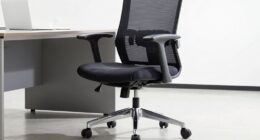

To reduce pressure points while sitting for hours, sit fully back in your chair with your feet flat on the ground and knees at 90°, engaging your back muscles. Use ergonomic accessories like adjustable lumbar support and seat cushions to support natural alignment. Take breaks every 30 minutes to stretch and move around, which relieves pressure and boosts circulation. Staying aware of your body signals helps you make quick adjustments, and exploring more tips can truly improve your sitting comfort.
Key Takeaways
- Use ergonomic accessories like lumbar support and seat cushions to distribute weight evenly.
- Maintain proper posture with feet flat, knees at 90°, and back fully supported.
- Take regular breaks every 30 minutes to stand, stretch, and move around.
- Stay hydrated to promote circulation and reduce tissue pressure.
- Make small, conscious adjustments to your seating position to prevent prolonged pressure points.
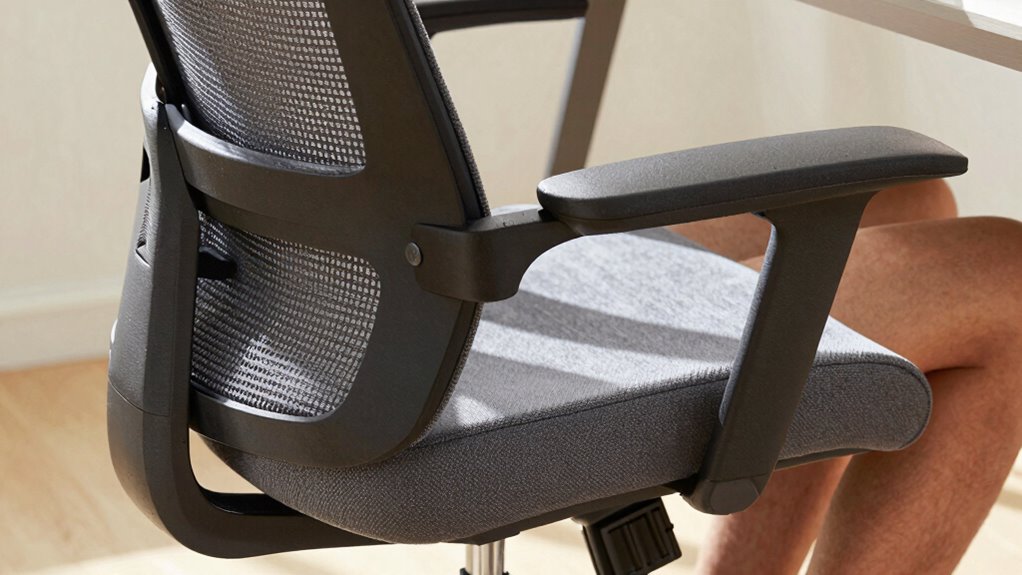
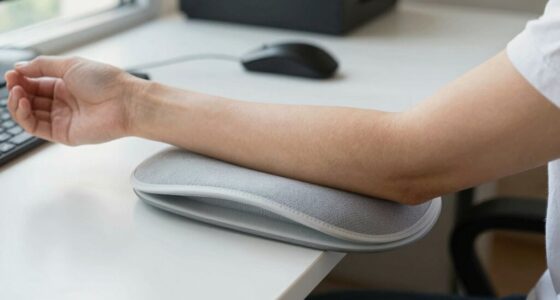
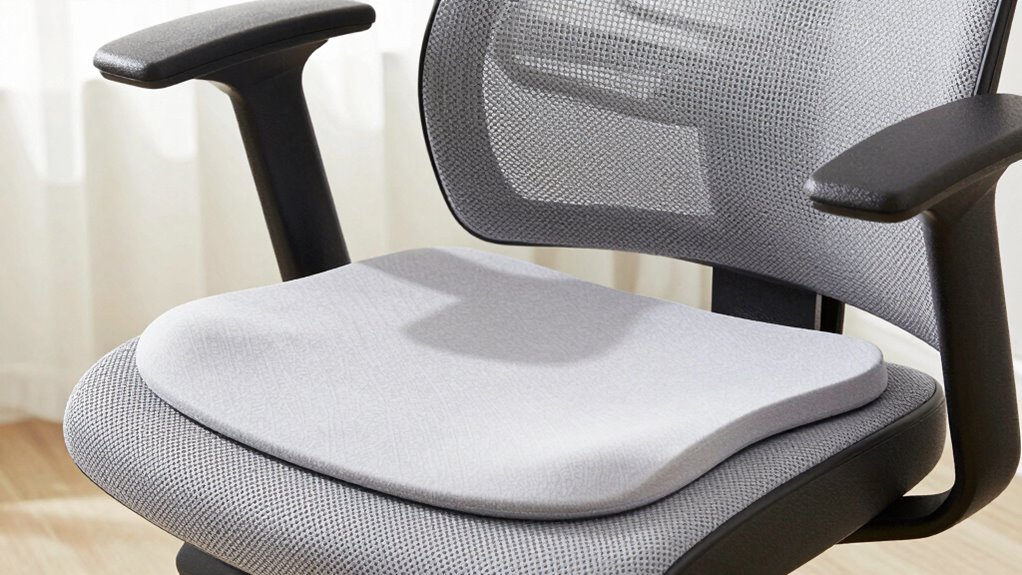
Sitting for hours can lead to uncomfortable pressure points that cause pain and discomfort, but you can take steps to minimize these issues. One effective approach is to incorporate ergonomic accessories into your workspace. These tools are designed to support your body’s natural alignment, reducing unnecessary strain. For example, an ergonomic chair with adjustable height and lumbar support guarantees your lower back stays properly aligned, preventing pressure buildup in your hips and tailbone. Using a seat cushion or ergonomic pad can also distribute your weight more evenly, alleviating pressure on sensitive areas. Furthermore, footrests can help keep your legs at a comfortable angle, reducing pressure on your thighs and improving circulation.
Support your posture with ergonomic chairs, cushions, and footrests to reduce pressure and enhance comfort during long sitting sessions.
In addition to adjusting your environment, developing good posture awareness is essential. When you’re focused on work or leisure, it’s easy to slip into positions that worsen pressure points. Regularly check in with your body: keep your feet flat on the ground, knees bent at roughly 90 degrees, and hips level with or slightly above your knees. Sit back fully in your chair to engage your back muscles and avoid slouching forward, which can put strain on your neck and shoulders. Remember to keep your shoulders relaxed and your head aligned over your spine. Small, conscious posture adjustments throughout the day can make a notable difference in preventing pressure buildup and discomfort. Incorporating ergonomic accessories into your workspace can promote better posture and reduce strain over time. Additionally, understanding musculoskeletal issues can help you tailor your adjustments more effectively. Staying aware of your body’s signals and making proper ergonomic adjustments can prevent long-term problems and enhance comfort.
Taking short breaks is another key strategy. Stand up, stretch, and move around at least once every 30 minutes. These breaks help shift your weight and relieve persistent pressure points. Stretching your hips, legs, and back promotes circulation and reduces the likelihood of stiffness. During these breaks, consider incorporating simple exercises like leg lifts or seated twists to keep your muscles active and your posture correct. Hydration also plays a role in maintaining good circulation and tissue health, which can help reduce pressure-related pain. Remember, body awareness is crucial for recognizing early signs of discomfort and adjusting accordingly.
Finally, consistency is vital. By regularly using ergonomic accessories, maintaining posture awareness, and taking breaks, you create a routine that minimizes pressure points over time. It’s about making small, intentional adjustments that add up to a more comfortable sitting experience. When you prioritize your body’s needs and stay mindful of your posture, you’ll find sitting for extended periods becomes less painful and more sustainable. Over time, these habits can greatly improve your comfort and reduce the risk of developing chronic discomfort or musculoskeletal issues.
Frequently Asked Questions
What Are Common Signs of Pressure Point Discomfort?
You’ll notice signs of pressure point discomfort through numbness, tingling, aching, or soreness in areas like your hips, tailbone, or thighs. You might also feel increased fatigue or a need to shift frequently. To prevent this, focus on cushion selection that offers proper support and maintain good posture awareness. These steps help distribute your weight evenly, reducing discomfort and preventing long-term issues from prolonged sitting.
How Often Should I Change Sitting Positions?
You should change your sitting position every 30 to 60 minutes to prevent pressure points. Incorporate regular posture adjustments to keep your spine aligned and reduce discomfort. Consider using a cushion that provides proper support, especially around sensitive areas. By actively shifting your position and selecting the right cushion, you’ll alleviate pressure and stay more comfortable during long sitting periods. Consistency is key for maximum comfort and health.
Can Specific Exercises Help Alleviate Pressure Points?
Think of your body as a well-tuned instrument—you need the right exercises to keep it in harmony. Yes, specific stretching routines and posture correction exercises can help alleviate pressure points. By regularly incorporating these movements, you loosen tight muscles and improve alignment, reducing discomfort during long hours of sitting. Consistent practice turns your posture into a fortress, preventing pressure points from becoming persistent pain.
Are There Ergonomic Chairs That Prevent Pressure Buildup?
Yes, ergonomic chairs with advanced designs can prevent pressure buildup. They feature ergonomic design principles that promote proper lumbar support and ideal posture, reducing strain on your hips and tailbone. These chairs incorporate pressure redistribution technology, evenly spreading your weight and minimizing pressure points during long sitting periods. Investing in such a chair helps maintain comfort, improves circulation, and prevents discomfort or pain associated with prolonged sitting.
How Does Body Weight Influence Pressure Points?
Think of your body weight like water filling a uneven vessel; excess weight concentrates pressure on specific areas. Your body weight influences pressure points by affecting how weight distributes across your sitting surfaces. Proper pressure relief techniques, such as shifting positions or using cushions, help evenly distribute weight and reduce discomfort. If you’re heavier, you might notice more pressure on certain spots, making these techniques even more essential for comfort and health.
Conclusion
Sitting for long hours can increase pressure points, but you’re not powerless. Regularly shifting your position, using supportive cushions, and taking breaks can make a huge difference. Did you know that prolonged sitting increases your risk of developing pressure ulcers and back pain by over 50%? By implementing these simple strategies, you’ll improve your comfort and health. Remember, small changes can lead to big relief—so sit smart and stay proactive!