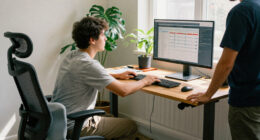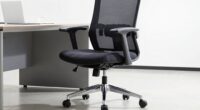
To position your feet comfortably at a desk, keep them flat on the ground or use a supportive footrest to prevent dangling. Make sure your feet are directly under your knees and your legs are relaxed. Avoid crossing your legs to maintain proper alignment and reduce strain. Distribute your weight evenly across both hips for better posture. If you want to learn how to optimize your setup for long-term comfort, there’s more to discover ahead.

Get comfort and recovery gear delivered free — and shop member deals
- Fast, free delivery on millions of items
- Access to Prime Big Deal Days deals on October 6–7
- Prime Video, Amazon Music and more included
Key Takeaways
- Keep feet flat on the ground or on an ergonomic footrest for optimal support.
- Ensure feet are directly under knees with a 90-degree angle for proper alignment.
- Avoid crossing legs to maintain balanced posture and prevent misalignment.
- Use supportive footwear with cushioned soles and a stable heel for comfort.
- Distribute weight evenly across both feet to reduce strain and promote circulation.
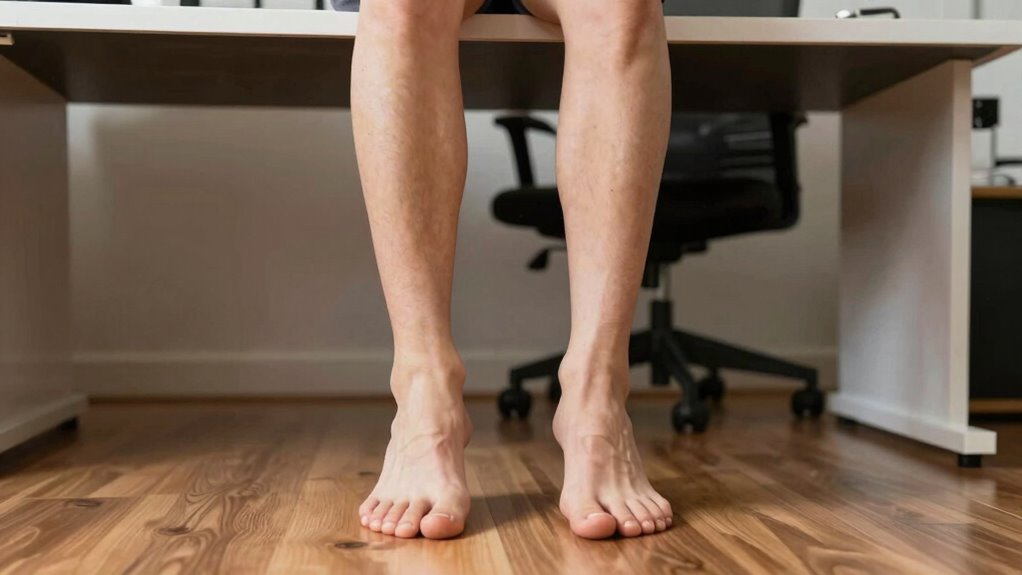
Proper foot positioning at your desk is essential for maintaining good posture and preventing discomfort during long hours of work. When your feet are properly aligned, you reduce strain on your lower back, hips, and legs, making your entire workday more comfortable. One effective way to achieve this is by choosing the right ergonomic footwear. Shoes designed with supportive insoles, cushioned soles, and a stable heel help promote better foot alignment, which translates to improved overall posture. Avoid wearing unsupportive shoes like flip-flops or overly flat footwear, as they can cause your feet to slide or strain, increasing fatigue.
Proper footwear supports good posture and reduces fatigue during long work hours.
In addition to your choice of footwear, using a footrest can considerably enhance your sitting position. Footrest benefits are numerous: they help keep your feet flat and supported, prevent dangling legs, and encourage proper circulation. If your feet don’t comfortably reach the ground, a small adjustable footrest allows you to maintain a 90-degree angle at your knees, reducing pressure on your lower back and thighs. This positioning not only lessens fatigue but also encourages a more natural alignment of your hips and spine, which is crucial for good posture over extended periods.
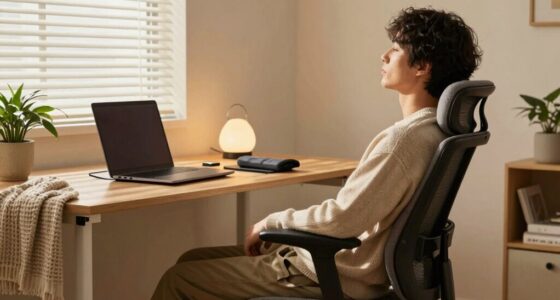
When you sit at your desk, aim to keep your feet flat on the ground or on a footrest if necessary. Avoid crossing your legs, as this can lead to misalignment and increased pressure on one side of your body. Instead, distribute your weight evenly across both hips, which helps maintain a neutral spine. Your feet should be positioned directly under your knees, not stretched out in front or tucked underneath your chair, to support proper weight distribution.
If you’re using ergonomic footwear, make sure it fits well and isn’t too tight, as constricting shoes can impede circulation and cause discomfort. Combining supportive shoes with a well-placed footrest offers a double layer of support, making it easier to sit comfortably for hours. Remember, the goal is to keep your feet and legs in a relaxed, natural position, reducing strain on your muscles and joints. Additionally, choosing environmentally friendly craft materials for your workspace accessories can promote a healthier environment and add a touch of sustainability to your ergonomic setup. Understanding the importance of ergonomic principles can help you optimize your workspace for better comfort and health. By paying attention to foot positioning and investing in ergonomic footwear and a quality footrest, you set yourself up for a healthier, more ergonomic workspace—one where discomfort and fatigue are minimized, and productivity can thrive.
Frequently Asked Questions
Should I Wear Different Shoes for Better Foot Positioning?
Yes, wearing different shoes can improve foot positioning, especially if you choose footwear with good support. Shoe orthotics can provide extra arch and heel support, helping you maintain proper alignment. Look for shoes with adequate footwear support to reduce strain and improve comfort during long periods at your desk. Switching shoes or adding orthotics guarantees your feet stay well-positioned, preventing discomfort and promoting better posture throughout the day.
How Often Should I Change My Foot Position During the Day?
You should change your foot position every 30 to 60 minutes, like shifting gears to keep things smooth. Using ergonomic footwear and a footrest benefits your posture, but staying static can cause strain. Regularly adjusting your feet relieves pressure, improves circulation, and prevents discomfort. Make it a habit to switch positions often, and your body will thank you for the extra care, keeping you comfortable and focused throughout the day.
Can Foot Positioning Affect My Overall Posture?
Yes, your foot positioning can impact your overall posture. Proper foot alignment helps maintain spinal support and reduces strain on your hips and lower back. Wearing ergonomic footwear can promote better alignment and comfort throughout the day. Adjust your foot position regularly to avoid stiffness, and guarantee your feet are flat on the floor or supported by a footrest. Good foot positioning encourages a balanced, healthy posture.
Is It Okay to Cross My Legs at the Ankle?
It’s okay to cross your ankles sometimes, especially if it feels natural. Just be mindful—ankle crossing can impact foot stability and might lead to discomfort or poor posture over time. When you cross your legs at the ankle, you might unknowingly shift your weight and strain muscles. To stay balanced and avoid tension, alternate your foot position regularly, ensuring your feet remain supported and aligned while working.
What Are Signs of Poor Foot Positioning at My Desk?
You might notice signs of poor foot positioning at your desk if your ankles aren’t well aligned or if your feet lack proper support. Pain or discomfort in your ankles, calves, or lower back can indicate misalignment. Swelling, numbness, or tingling might also occur if your foot support is inadequate. Pay attention to how your feet feel; comfortable, supported feet help maintain proper ankle alignment and reduce strain.
Conclusion
Remember, how you position your feet can make all the difference in your comfort and productivity. Keep your feet flat on the ground, avoid crossing them, and find a stance that supports good posture. As the saying goes, “A stitch in time saves nine.” Taking small steps now to improve your ergonomics can prevent bigger issues later, making your workday more comfortable and efficient. Your body will thank you for the mindful approach.
Fall Picks
fall essentials
As an affiliate, we earn on qualifying purchases.