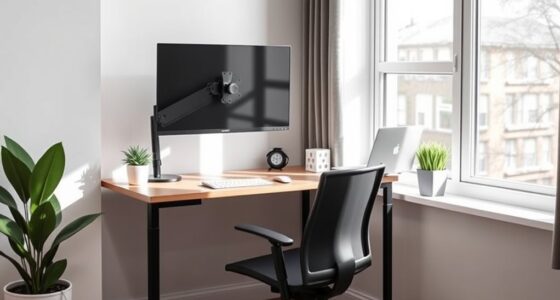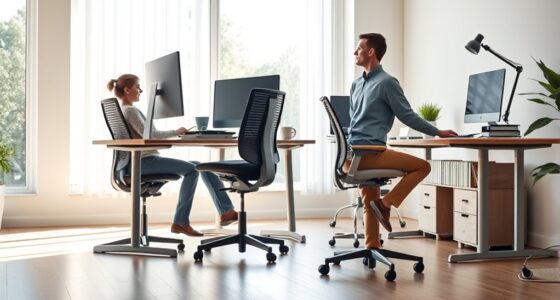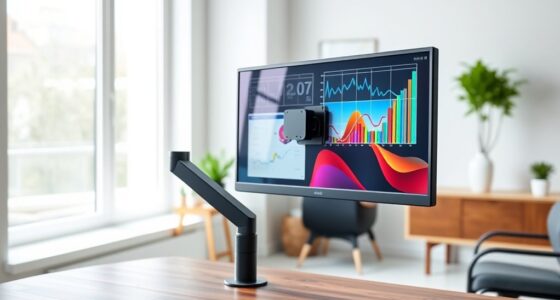
Discover ergonomic accessories you might not have considered, like footrests and wrist rests, that can transform your workspace. Footrests support proper leg and hip alignment, boost circulation, and reduce lower back strain, while wrist rests promote neutral positioning to prevent fatigue and injury. Extras like desk mats and monitor stands also improve comfort and posture. Incorporating these subtle tools can make a big difference in your daily comfort—keep exploring to find out more.
Key Takeaways
- Footrests support proper leg and back alignment, boosting circulation and reducing fatigue during long work sessions.
- Wrist rests with ergonomic design maintain neutral wrist positions, preventing repetitive strain injuries like carpal tunnel syndrome.
- Desk mats and monitor stands are simple accessories that alleviate strain and improve posture for a more comfortable workspace.
- Advanced materials in wrist rests, such as nanotechnology-enabled gels, offer enhanced responsiveness and durability.
- Incorporating subtle ergonomic accessories fosters better posture, reduces fatigue, and enhances overall workspace comfort and productivity.
The Hidden Benefits of Footrests for Long Workdays
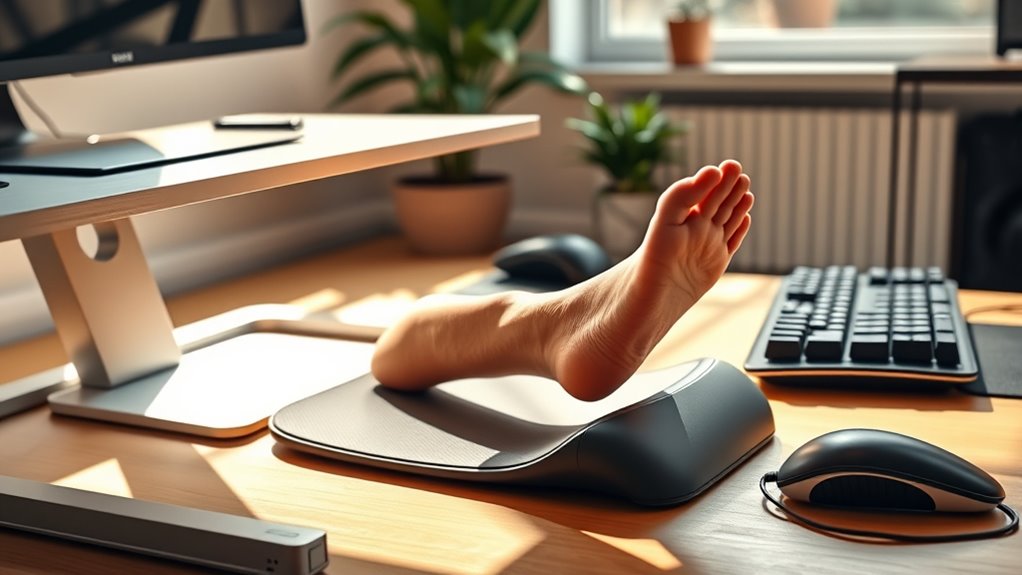
If you spend long hours sitting at a desk, using a footrest can considerably improve your comfort and posture. It provides essential foot support, helping you maintain proper alignment and reducing strain on your lower back. It also encourages proper ergonomic posture, which is crucial for preventing musculoskeletal issues. Additionally, using a footrest can promote natural body alignment by supporting your legs and hips in a healthy position. By elevating your feet, a footrest encourages better circulation, preventing blood from pooling in your legs and reducing fatigue. When your feet are properly supported, you’re less likely to develop discomfort or stiffness that can affect your productivity. Plus, improved circulation means more oxygenated blood reaches your muscles, helping you stay alert and focused throughout the day. Incorporating ergonomic accessories like footrests can also promote better posture habits and reduce long-term health risks, ultimately supporting your overall ergonomic health during those extended work hours. Using ergonomic accessories can also prevent repetitive strain injuries, which are common among people who spend a lot of time at desks.
Wrist Rests That Reduce Fatigue and Prevent Injury
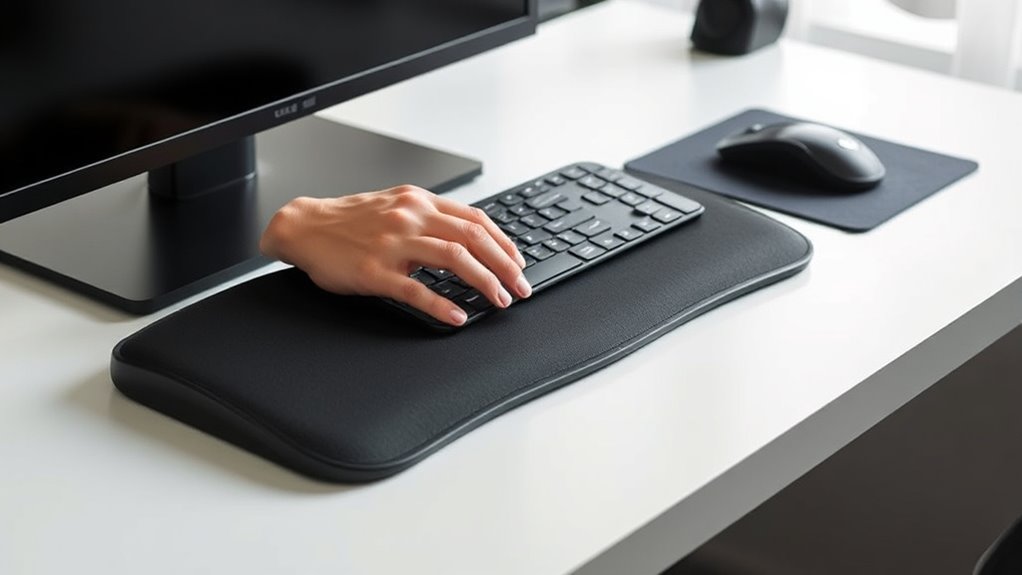
Using a wrist rest can considerably decrease fatigue and lower the risk of injury during long hours at your keyboard. The key is choosing one with the right wrist rest materials that provide comfortable support without causing additional strain. Look for options with gel, foam, or padded cushions that conform to your wrist’s natural shape. An ergonomic wrist design helps maintain proper alignment, reducing pressure on tendons and nerves. Properly designed wrist rests encourage a neutral wrist position, preventing repetitive strain injuries like carpal tunnel syndrome. Advances in nanotechnology-enabled materials now allow for even more responsive and durable wrist rest options. Additionally, selecting a wrist rest with ergonomic design principles can further optimize comfort and support. Incorporating necessary cookies can help ensure your preferences are remembered for a smoother experience. Keep in mind, the best wrist rest complements your workspace and fits seamlessly into your typing routine. When used correctly, it’s a simple yet effective way to boost comfort and protect your wrists over extended periods of typing or mouse use. Proper workstation ergonomics can also enhance overall comfort and reduce fatigue. Considering ergonomic accessories can further improve your overall setup and prevent strain.
Unexpected Accessories to Enhance Your Ergonomic Setup

Sometimes, the smallest adjustments can make a big difference in your ergonomic setup. Incorporating a desk mat can reduce strain from hard surfaces, providing cushioning and better grip for your workspace. It also helps protect your desk and keeps your accessories in place. A monitor stand elevates your screen to eye level, reducing neck and eye strain. It creates a more comfortable viewing angle and frees up space on your desk for other essentials. These unexpected accessories are simple yet effective ways to optimize your comfort and posture. By adding a desk mat and monitor stand, you’re making subtle improvements that can prevent fatigue and promote better ergonomics throughout your workday. Small changes like these can lead to a more comfortable, productive workspace, especially when combined with smart home automation features that can tailor your environment to your ergonomic needs. Incorporating ergonomic principles into your setup can further enhance comfort and reduce long-term health risks. Paying attention to workspace organization can also contribute to a more efficient and comfortable environment, reducing unnecessary movements and strain. Additionally, choosing accessories with adjustable features can help customize your workspace to better fit your unique ergonomic needs. Moreover, understanding the science behind sound healing and other holistic approaches can support overall well-being, complementing ergonomic strategies for a healthier work routine.
Frequently Asked Questions
Are Ergonomic Accessories Suitable for All Desk Setups?
Yes, ergonomic accessories are suitable for most desk setups, but you need to take into account your desk height and chair compatibility first. If your desk is too high or low, a footrest can help you maintain proper posture. Make sure your wrist rest fits comfortably with your keyboard and chair. Adjusting these accessories to match your workspace ensures comfort and reduces strain, regardless of your desk setup.
How Do I Choose the Right Size of Footrest or Wrist Rest?
To select the appropriate size of footrest or wrist rest, focus on ergonomic sizing for your body and workspace. Measure your feet and wrists to guarantee a comfortable fit, avoiding excessive elevation or compression. Make sure the accessory is compatible with your desk height and chair setup. Proper sizing prevents strain and promotes comfort, so prioritize adjustable options when possible to customize support and ensure seamless accessory compatibility.
Can Ergonomic Accessories Improve Overall Productivity?
Yes, ergonomic accessories can boost your overall productivity by providing ergonomic benefits that reduce discomfort and fatigue. When you use items like footrests and wrist rests, you support good posture and minimize strain, which helps you stay focused longer. This productivity enhancement allows you to work more efficiently, stay healthier, and maintain a higher level of comfort throughout your workday. So, investing in ergonomic accessories makes a noticeable difference in your work performance.
Are There Any Health Risks Associated With Improper Use of These Accessories?
Yes, improper accessory use can pose health risks, so ergonomic accessory safety is essential. If you don’t use footrests or wrist rests correctly, you might develop discomfort, strain, or repetitive stress injuries. Always follow manufacturer guidelines and adjust accessories properly to suit your body. Avoid neglecting ergonomic accessory safety, as improper accessory use can lead to long-term issues like musculoskeletal problems. Prioritize correct positioning to protect your health and maximize benefits.
How Often Should I Replace or Adjust My Ergonomic Accessories?
You should replace or adjust your ergonomic accessories regularly, ideally every 6 to 12 months, to guarantee they continue supporting your health. Incorporate lifestyle modifications and schedule ergonomic assessments to identify when updates are needed. If you notice discomfort or worn materials, it’s time for a change. Regular check-ins help maintain proper alignment, prevent strain, and promote comfort, keeping your workspace ergonomic and safe over time.
Conclusion
Investing in ergonomic accessories like footrests and wrist rests can transform your workday, making it more comfortable and injury-free. These small additions act like the right tools in a craftsman’s kit—simple but powerful. Remember, a well-set workspace isn’t just about comfort; it’s about longevity. As the saying goes, “A stitch in time saves nine.” So, prioritize your posture now, and you’ll thank yourself later for the comfort and health that follow.