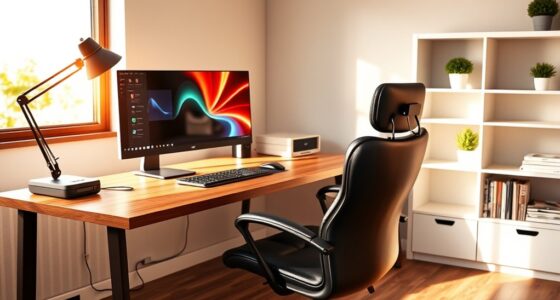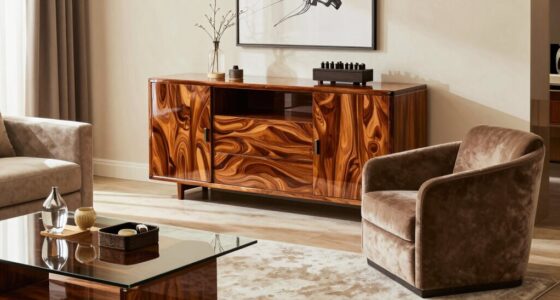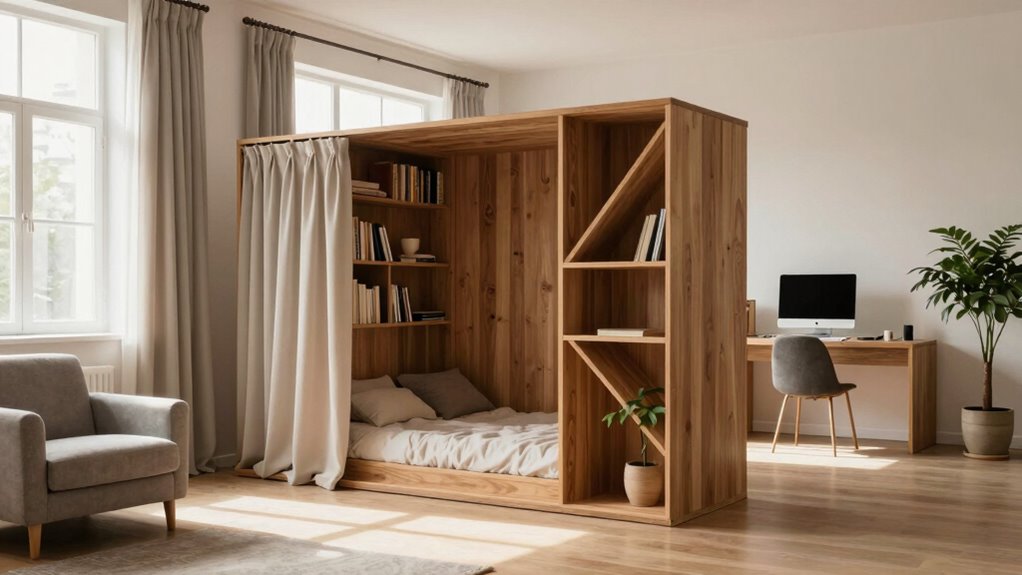
To create better separation in a multi-use room, use color shifts to define zones without walls, choosing calming tones for work areas and cozy hues for lounges. Carefully arrange furniture, like facing sofas or rugs, to visually mark different functions. Mix lighting styles to reinforce boundaries, with brighter lights for workspaces and softer ones for relaxation. Keep pathways open and proportionate to maintain flow. Exploring these tips further will help you achieve a harmonious, functional space.

Get comfort and recovery gear delivered free — and shop member deals
- Fast, free delivery on millions of items
- Access to Prime Big Deal Days deals on October 6–7
- Prime Video, Amazon Music and more included
Key Takeaways
- Use subtle color variations to visually differentiate zones without physical barriers.
- Arrange furniture strategically, such as facing sofas or rugs, to define specific areas.
- Incorporate different lighting styles for each zone to reinforce their functions.
- Utilize scale and proportion with larger furniture pieces to create natural boundaries.
- Maintain open pathways and sightlines for an inviting, balanced multi-use space.
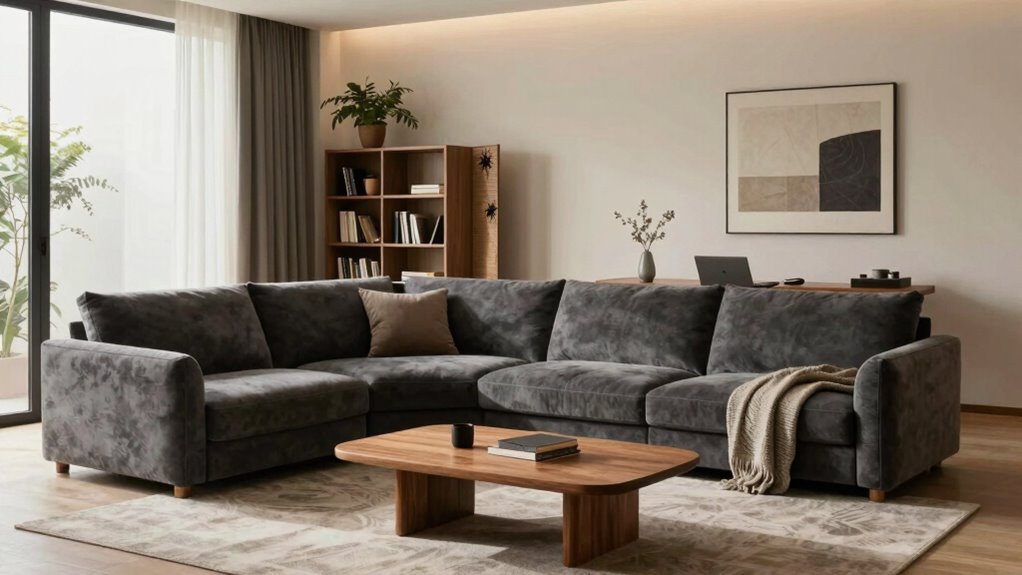
Creating clear separation in a multi-use room can transform a cluttered, chaotic space into a functional and inviting area. To do this effectively, you need to think about how each zone serves its purpose without overwhelming the entire space. One essential element is choosing the right color schemes for different areas. You don’t have to paint the entire room in contrasting colors, but subtle shifts can make a big difference. For example, using lighter, cooler tones in one corner can create a calming workspace, while warmer, richer hues in another section can define a cozy lounge area. These color distinctions help your eye naturally differentiate between zones, giving each its own identity without the need for physical barriers. Incorporating visual cues like color and furniture arrangement can enhance the perception of separate zones even further.
Using subtle color shifts defines zones, making your multi-use room organized and inviting without physical barriers.
Furniture placement is equally important. Instead of scattering pieces randomly, carefully position your furniture to delineate different functions. For instance, a sofa facing away from a workspace can create a visual boundary, signaling that the area behind it is for work or relaxation. Rugs are also excellent tools in this regard; placing a rug under a seating area or a desk can visually anchor that zone, making it feel separate from the rest of the room. Floating furniture, like open bookshelves or low cabinets, can act as subtle dividers without blocking sightlines, maintaining an open feel while defining boundaries. Additionally, spatial planning is key to ensuring each zone feels balanced and avoids overcrowding. Incorporating spatial awareness into your design can help optimize the use of available space and improve overall comfort. Furthermore, understanding inclusive design principles can help ensure each area is accessible and welcoming for everyone.
Lighting plays an integral role in creating separation, too. Use different lighting schemes for each zone—bright task lighting in a work corner and softer, ambient lighting in a lounge area. This variation not only enhances the function of each space but also reinforces their separation visually. Incorporate accessories and decor thoughtfully, ensuring that each area has its own style and personality. For example, a reading nook might feature cozy cushions and warm lamps, while the workspace remains minimal and sleek.
Lastly, don’t forget about scale and proportion. Larger furniture pieces can serve as natural dividers, and their placement can define boundaries without the need for walls or partitions. Keep pathways clear and open to avoid feeling boxed in, but make sure each zone feels distinct. By combining strategic color schemes, intentional furniture placement, and thoughtful lighting, you create a well-balanced multi-use room that feels organized and welcoming. This approach not only maximizes your space but also makes each activity more enjoyable and stress-free.
multi-use room furniture arrangement
As an affiliate, we earn on qualifying purchases.
As an affiliate, we earn on qualifying purchases.
Frequently Asked Questions
What Are the Best Color Schemes for Multi-Use Room Separation?
Choose color schemes based on color psychology to define different zones. Use warm, inviting hues like reds or yellows for social areas, and cooler shades like blues or greens for work or relaxation spaces. Incorporate paint techniques such as accent walls or stripes to visually separate zones. This approach creates distinct areas, making your multi-use room functional and visually appealing, while maintaining a cohesive overall look.
How Can Lighting Improve Room Functionality and Separation?
Lighting enhances room functionality and separation by using ambient layering and task lighting strategically. You can create distinct zones by adjusting ambient lighting to set the mood for each area, while task lighting highlights specific activities like reading or cooking. This approach helps define spaces visually, making your multi-use room feel more organized and functional. Proper lighting not only improves usability but also subtly separates different areas without physical barriers.
Are Movable Partitions Effective for Flexible Room Division?
Movable partitions like portable screens and curtain dividers are highly effective for flexible room division. They let you easily adapt your space for different needs, giving you the best of both worlds. With a simple pull or fold, you can create privacy or open up the room in a flash. These solutions are versatile, budget-friendly, and perfect for customizing your space on the fly—truly a win-win for dynamic living or working areas.
How Does Furniture Arrangement Influence Space Separation?
You can influence space separation through strategic furniture placement, which helps create distinct zones within a multi-use room. By arranging furniture thoughtfully—like placing sofas or shelves to define areas—you establish clear boundaries and improve space zoning. This technique enhances functionality while maintaining an open feel. Moving pieces around allows you to customize separation based on your needs, making the room versatile for various activities without sacrificing style or comfort.
What Are Budget-Friendly Options for Creating Room Divisions?
Looking for budget-friendly ways to divide your space? Have you considered cost-effective dividers or DIY partition ideas? You can use items like folding screens, curtains, or bookshelves to create flexible zones without spending much. Repurposing old furniture, hanging fabric, or using tension rods with fabric panels are simple DIY solutions. These options are versatile, affordable, and easily customizable, helping you define different areas without breaking the bank.
As an affiliate, we earn on qualifying purchases.
Conclusion
Creating effective separation in a multi-use room transforms chaos into harmony. By using strategic furniture placement, rugs, or dividers, you can clearly define each space for its purpose. Did you know that rooms with distinct zones tend to feel 30% more organized and inviting? So, don’t overlook the power of simple partitions and thoughtful design — they can make your space more functional and comfortable, making every square foot work harder for you.
adjustable floor lamps for living area
As an affiliate, we earn on qualifying purchases.
As an affiliate, we earn on qualifying purchases.
As an affiliate, we earn on qualifying purchases.
Fall Picks
fall essentials
As an affiliate, we earn on qualifying purchases.