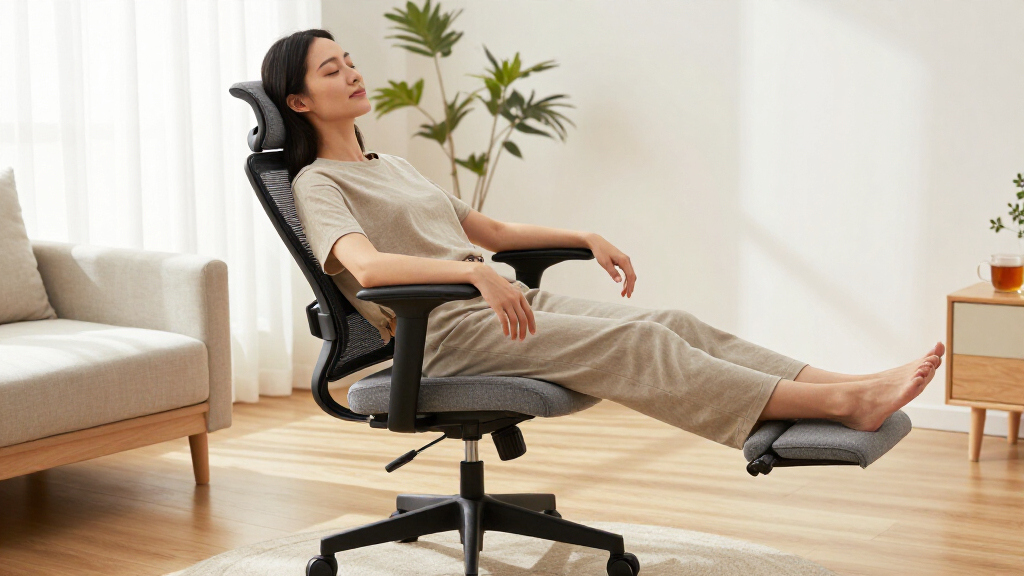
Shopping for ergonomic office chairs with footrests means balancing two things that often pull against each other: serious all-day back support and a comfortable place to put your feet up. My top pick, the GABRYLLY Ergonomic Mesh Office Chair with Footrest, earns the best-overall spot for combining adjustable lumbar support, a breathable mesh back, and a footrest sturdy enough to actually relax on. If you work long hours and want deep recline, the ATORPOK Ergonomic Reclining Office Chair is the stronger napper, while the Big and Tall Electric Recliner is the clear choice for larger frames with its 400 lb capacity and motorized footrest. The main tradeoffs in this category are mesh-versus-padded comfort, manual-versus-power footrests, and whether the chair supports you upright or only feels good reclined. Keep reading for the full breakdown.

Get comfort and recovery gear delivered free — and shop member deals
- Fast, free delivery on millions of items
- Access to Prime Big Deal Days deals on October 6–7
- Prime Video, Amazon Music and more included
Complete the kit


Key Takeaways
- Footrest quality varied more than any other feature: stowaway flip-up pads on mesh chairs like the GABRYLLY and LarkLeaves stayed stable under legs, while thin, spring-loaded rest bars on budget models flexed noticeably at full extension.
- Chairs that reclined past 130° (the ATORPOK, the 90°–145° recline model, and the electric Big and Tall recliner) required locking backrests and headrests that actually track your head — most sub-$200 mesh chairs failed the second half of that test.
- Big and tall buyers have only two real options here: the Amseatec and the electric recliner, both rated around 400 lbs; every other chair in the lineup caps out near 250–300 lbs.
- The SONGMICS gaming chair was the only padded faux-leather option, which trades breathability for a cozier recline — a real consideration for anyone in a warm office.
- 3D-adjustable headrests and armrests (LarkLeaves, FLEXISPOT ErgoX) separated the premium tier from the mid-pack, because a footrest is only comfortable if your shoulders and neck stay supported while you lean back.


More Details on Our Top Picks
Big and Tall Electric Recliner Office Chair with USB Port, Footrest, and 400 lb Capacity, Khaki
This option stands out for one reason the mesh chairs in this roundup can’t match: motorized one-touch reclining. Unlike the manual tilt locks on the Hilleagle or MALOL, no leverage or body weight is needed to lean back — a genuine advantage for buyers with limited mobility or larger frames. The 400 lb stated capacity and reinforced metal frame put it ahead of the MALOL’s 300 lb rating for heavier users, and the padded bonded leather seat feels more like a recliner than a task chair.
The tradeoffs are real. There are no published dimensions, so taller buyers are ordering blind on seat height and depth. It also lacks the adjustability ecosystem — no 3D armrests, no lumbar tuning — that the FLEXISPOT ErgoX offers, making it a comfort-first pick rather than a precision ergonomic one.
Pros:- One-touch electric recline requires no physical effort
- 400 lb stated weight capacity with reinforced metal frame
- USB port keeps devices charged at the desk
- High padded backrest suits taller torsos
Cons:- No published seat dimensions make fit a gamble
- No adjustable lumbar support or multi-directional armrests
Best for: Big and tall users or anyone with limited mobility who wants push-button reclining comfort during long desk sessions
Not ideal for: Buyers who prioritize ergonomic fine-tuning — there’s no adjustable lumbar support or multi-directional armrests here
Our verdict“This makes the most sense for heavier users who value effortless powered reclining over granular ergonomic adjustments.”
LarkLeaves Ergonomic Office Chair with Footrest, 3D Headrest and Armrests, Adjustable Lumbar Support, Mesh Backrest, Grey
Where this chair earns its spot is sheer breadth of adjustment. The 3D headrest moves up, down, forward, backward, and rotates — a range that outclasses the fixed-angle designs on cheaper mesh options — while 3D armrests and 2D adaptive lumbar support let most body types dial in a genuine fit. The five-level backrest height adjustment mirrors what the FLEXISPOT ErgoX offers, at what is typically a friendlier price point.
Compared with the Hilleagle, it adds a 3-year warranty and a built-in coat hanger, but gives up the 140° tilt lock — so deep-recline nappers may find its range more limited. My bigger hesitation: no stated weight capacity or dimensions, so buyers over 250 lbs or outside average proportions should confirm fit before committing.
Pros:- 3D headrest with rotation covers nearly every seating posture
- Five-level backrest height fits varied torso lengths
- Breathable mesh backrest for long sessions
- Backed by a 3-year warranty
Cons:- No stated weight capacity or dimensions
- Recline range is more limited than the Hilleagle’s 140° lock
Best for: Petite-to-average desk workers who want maximum positional tuning without paying premium-chair prices
Not ideal for: Heavier users or those wanting deep recline angles — no published weight capacity and no wide tilt range
Our verdict“This pick suits adjustable-obsessed buyers who want LarkLeaves’ tuning range on a mid-range budget.”
Hilleagle Grey Ergonomic Mesh Office Chair with Footrest
This model’s differentiator is what’s under you: a latex-and-high-density foam cushion, which holds its shape better over multi-hour stretches than the standard foam seats in the MALOL and LarkLeaves. The 140° tilt lock is the deepest recline in this batch, pairing with the telescoping footrest for genuine lunch-break napping rather than just a brief lean-back.
Compared with the LarkLeaves, published specs are a strength here — 23 x 26 x 50.4 inches, a 330 lb capacity, and a 20.9-inch seat height give buyers real numbers to check fit. The SGS-certified Class 4 gas lift matches the FLEXISPOT’s lift grade at a lower tier of the market. The main compromises are the plastic frame, which feels less premium, and required assembly that takes roughly 25 minutes.
Pros:- Latex and high-density foam seat resists all-day flattening
- 140° tilt lock enables true napping recline
- Full published dimensions and 330 lb capacity for fit confidence
- SGS-certified Class 4 gas lift
Cons:- Assembly required, about 25 minutes
- Plastic frame feels less durable than metal alternatives
Best for: All-day remote workers who want a supportive cushion seat and near-flat reclining for midday breaks
Not ideal for: Buyers wanting a zero-effort setup — assembly is required, and the plastic frame won’t appeal to those seeking a premium feel
Our verdict“This is the comfort-first value pick for long sitters who want published specs, a plush cushion, and the deepest recline in the lineup.”
FLEXISPOT ErgoX Premium Ergonomic Office Chair, Black
Of everything in this roundup, the ErgoX has the most complete ergonomic story. Adjustable seat depth (17–20 inches) is the feature almost every competitor here skips — the Hilleagle fixes it at 20.5 inches — and it’s the single biggest factor in getting proper thigh support and blood flow during 8-hour days. Add dynamic lumbar support, a five-level back, 3D headrest and armrests, and a Class 4 gas lift rated to 400 lbs, and it covers users the 300 lb MALOL can’t.
The nap footrest plus tilt functions make it a legitimate work-and-rest chair, and the choice between mesh and foam seating lets buyers match their climate. Its limits: it’s calibrated for users 5’1″ to 6’2″, so anyone taller should look at big-and-tall options like the electric recliner, and neither assembly requirements nor warranty terms are clearly stated.
Pros:- Adjustable seat depth is rare at this tier and key for long sittings
- 400 lb capacity with Class 4 gas lift
- Choice of breathable mesh or cushioned foam seat
- Dynamic lumbar support plus nap footrest covers work and rest
Cons:- Fixed fit range excludes users outside 5’1″–6’2″
- Warranty and assembly details not clearly specified
Best for: Serious desk workers between 5’1″ and 6’2″ who want seat-depth tuning and full-body adjustability for all-day sessions
Not ideal for: Users taller than 6’2″ — the stated height range and seat height ceiling will leave them poorly supported
Our verdict“The ErgoX is the best all-around buy for average-to-tall workers who want the lineup’s most adjustable, highest-capacity ergonomic platform.”
MALOL Ergonomic Mesh Office Chair with Footrest
This chair makes the list as the straightforward budget entry for people who mainly want a reclining mesh chair with a footrest without paying for extras. The 90°–130° recline with adjustable tilt tension is broader than most low-cost mesh chairs, and the five-setting lumbar height adjustment plus 3D headrest give it more tuning than you’d expect at this tier — though less depth than the LarkLeaves’ rotating headrest.
Its elastic knitted mesh back is the airflow play for hot offices, but the 300 lb weight capacity sits well below the FLEXISPOT ErgoX’s 400 lbs, and the foam-free mesh seat won’t suit buyers who want cushioned padding like the Hilleagle’s latex-foam blend. Silent casters are a quiet bonus for shared spaces. With no assembly details published, expect the usual self-build.
Pros:- 90°–130° recline with adjustable tilt tension
- Five-height lumbar support at a budget price
- Elastic knitted mesh keeps the back cool
- Silent casters suit shared or quiet rooms
Cons:- 300 lb weight capacity is the lowest published in this batch
- Firm mesh seat lacks the padded comfort of foam options
Best for: Budget-conscious students, gamers, and home-office workers who want breathable mesh and recline breaks without premium pricing
Not ideal for: Heavier users over 300 lbs or anyone wanting a padded seat — the capacity is lower and the mesh seat is firm by design
Our verdict“This is the smart budget pick for average-sized users who prioritize cooling mesh and recline flexibility over capacity and cushioning.”
Qulomvs Ergonomic Mesh Office Chair with Footrest
For buyers who want the full mesh-and-footrest package without paying for premium adjustability, this option makes sense. It covers the fundamentals — a 90–135° reclining backrest, adjustable headrest, lumbar support, and an aluminum frame that feels more substantial than the plastic bases common at this tier. Compared with the GABRYLLY chair, the Qulomvs gives you a wider recline range but far less documented fine-tuning; its lumbar support adjusts, but the specs don’t confirm the depth or height travel that GABRYLLY spells out. The 300-pound capacity matches most rivals here, though the 90°–145° Recline chair beats it for heavier users at 365 lbs. The real tradeoff is information: no seat dimensions or height-adjustment range are published, so taller or shorter buyers are gambling on fit. Assembly is DIY, but tools are included.
Pros:- Full recline-and-footrest setup with adjustable headrest and lumbar support
- Breathable mesh back keeps long sessions cooler than padded chairs like the Amseatec
- Aluminum frame is sturdier than typical budget plastic bases
- Tools and instructions included in the box
Cons:- No published seat dimensions or height-adjustment range
- Long-term comfort and durability are not independently verified
Best for: Budget-conscious remote workers who want breathable mesh and a working footrest without premium pricing
Not ideal for: Buyers who need guaranteed fit — the missing seat dimensions and height range make this a gamble for users outside average proportions
- Material:Mesh with foam seat
- Frame:Aluminum
- Recline range:90–135°
- Weight capacity:300 lbs
- Adjustments:Headrest, height, lumbar, recline
- Assembly:Tools and instructions included
Our verdict“A sensible budget entry for average-sized users who prioritize airflow and recline over precise adjustability.”
Ergonomic Mesh Office Chair with Footrest and 90°–145° Recline
Among the mid-range mesh options, this chair distinguishes itself through sheer recline range and load rating. The 145° maximum tilt goes well past the 135° ceiling of the Qulomvs, GABRYLLY, and Amseatec models, making it the closest thing here to a true napping chair — and the 365-pound capacity is the highest in this batch. Build confidence is another differentiator: a Class 4 SGS- and BIFMA-certified gas lift and reinforced nylon base outspec the uncertified lifts on the cheaper Qulomvs. The synchronous armrests, which pivot with the backrest, keep arms supported even deep into a recline — something fixed armrests like the Amseatec’s can’t do. The 2 cm lumbar depth adjustment is modest compared with the ELABEST X100’s 3D system, and the absence of overall dimensions or warranty details leaves some guesswork for buyers.
Pros:- Deepest recline in this batch at 145°, ideal for genuine breaks
- 365 lb weight capacity exceeds the 300 lb standard among rivals
- Certified Class 4 gas lift and reinforced nylon base add build confidence
- Linkage armrests move with the backrest for support at any angle
Cons:- No published seat or overall dimensions
- No assembly time or warranty details provided
- Only 2 cm of lumbar depth adjustment — less refined than the ELABEST X100
Best for: Bigger-framed workers who want the deepest recline in the batch and a certified lift rated above 300 lbs
Not ideal for: Detail-driven buyers who want published dimensions and a stated warranty before committing
- Recline range:90°–145°
- Weight capacity:365 lbs
- Gas lift:Class 4, SGS and BIFMA certified
- Headrest:Height adjustable, rotates 45°
- Lumbar adjustment:2 cm depth
- Armrests:Synchronous linkage
- Seat cushion:High-density polyurethane foam
Our verdict“The pick for heavier users who treat reclining as a core feature rather than an occasional bonus.”
GABRYLLY Ergonomic Mesh Office Chair with Footrest
What sets the GABRYLLY apart in this lineup is transparency. While the Qulomvs and the 145° recliner leave buyers guessing about dimensions, this model publishes everything: a 27.5-inch steel base, an 18.1-inch footrest extension, precise lumbar travel, and — most usefully — a stated fit range of 5’3″ to 6 feet tall. That clarity alone makes it the safest choice for buyers who want to know the chair will fit before the box arrives. The tradeoff is a fixed three-position recline (90°, 110°, 135°) rather than the infinite-angle locking the Amseatec offers, and the 300-pound capacity trails the 365 lb recliner. The three-year warranty beats the Qulomvs, which publishes none, though the ELABEST X100’s five years runs longer. Assembly is required out of the box.
Pros:- Fully published dimensions and a clear user-height range remove fit guesswork
- Steel base and silent-rolling wheels feel more premium than nylon rivals
- Three-year warranty outclasses options that list none
- Lumbar support adjusts both vertically (3 in) and horizontally (1.6 in)
Cons:- Only three fixed recline positions instead of free-angle locking
- Assembly required with no stated time estimate
Best for: Buyers between 5’3″ and 6′ who want clearly documented dimensions and warranty coverage before purchasing
Not ideal for: Users taller than 6 feet or shorter than 5’3″, who fall outside the stated fit range and risk poor ergonomic alignment
- Material:Mesh
- Weight capacity:300 lbs
- Recline positions:90°, 110°, 135°
- Footrest extension:18.1 in
- Base:Steel, 27.5 in diameter
- Recommended user height:5’3″–6′
- Warranty:3 years
Our verdict“The most predictable purchase in the batch — ideal if knowing exactly what fits matters more than maximum recline.”
ELABEST X100 Ergonomic Mesh Office Chair with Footrest
The X100 is the tuner’s choice of this batch. Its 5D flip-up armrests, 3D headrest, and 3D lumbar system offer more adjustment axes than anything else here — the GABRYLLY’s armrests move in three directions, and the Qulomvs doesn’t document its lumbar travel at all. For anyone with persistent back or neck issues, that granularity is the difference between a chair that mostly fits and one that’s dialed in. Practical touches stand out too: tool-free assembly in roughly 15 minutes and a five-year warranty, the longest coverage in this group, nearly double GABRYLLY’s three years. BIFMA certification backs the 300 lb rating. The compromises: with only a 3-stage recline and a 135° ceiling, it’s less of a lounge chair than the 145° recliner, and first-time setup takes patience while you find your settings. Dimensions beyond seat height aren’t published.
Pros:- 5D flip-up armrests and 3D lumbar/headrest adjustment lead the batch in tuning range
- Five-year warranty is the longest coverage here
- Tool-free assembly in about 15 minutes
- BIFMA-certified build with a two-position-angle footrest
Cons:- Extensive adjustability requires patient initial setup
- Full dimensions beyond seat height aren’t published
- Recline tops out at 135° in three stages — less lounge-friendly than the 145° model
Best for: Desk workers with specific ergonomic needs who will actually use granular armrest, headrest, and lumbar adjustments
Not ideal for: Set-and-forget buyers who want to unbox and sit — the many adjustments add setup friction without benefit if left untouched
- Lumbar support:3D adjustable, 1.6 in depth × 2 in height
- Armrests:5D adjustable, flip-up
- Footrest:18 in extendable, 2-position angle
- Seat height range:18.3–23 in
- Weight capacity:300 lbs
- Certification:BIFMA
- Assembly:Tool-free, ~15 minutes
- Warranty:5 years
Our verdict“The pick when precision ergonomics matter more than deep reclining — best for buyers who will fine-tune every axis.”
Amseatec Big and Tall Office Chair with Footrest and Lumbar Support
This is the one padded chair in a lineup dominated by mesh, and that changes who it’s for. The seat pairs high-rebound foam with 20 independent spring packs — a coil-sleeper feel that distributes pressure differently than the flat foam in the GABRYLLY or ELABEST X100, which matters most during marathon sitting sessions. Its infinite-angle locking between 90° and 135° beats the GABRYLLY’s three fixed positions, letting you find a precise working tilt rather than choosing from presets. The waterproof PU leather wipes clean in seconds, a genuine advantage over mesh for anyone who eats or drinks at the desk. But the tradeoffs are real: despite the ‘Big and Tall’ name, the 300-pound capacity matches the slimmer mesh chairs here and sits well below the 365 lb recliner, and PU leather traps heat in warm rooms where mesh chairs breathe. A 20-inch seat depth favors wider frames.
Pros:- Spring-pack seat construction distributes pressure better than flat foam rivals
- Infinite-angle lock between 90° and 135° beats preset-only recline systems
- Waterproof PU leather cleans up spills instantly
- Oversized 20-inch seat depth accommodates wider frames
Cons:- 300 lb capacity is surprisingly modest for a big-and-tall design
- PU leather is noticeably less breathable than the mesh backs on every other chair here
Best for: Heavy sitters who prioritize plush, spring-cushioned seating and wipe-clean upholstery over breathability
Not ideal for: Users above 300 lbs or anyone in a warm, un-air-conditioned workspace — the capacity ceiling and heat-trapping PU leather are hard limits
- Recline range:90°–135°, infinite-angle locking
- Seat depth:20.08 in
- Seat construction:High-rebound foam with 20 spring packs
- Weight capacity:300 lbs
- Base:Reinforced metal
- Upholstery:Waterproof PU leather
Our verdict“The cushioned comfort pick for long seated days — as long as you’re under 300 lbs and don’t mind a warmer seat.”
SONGMICS Ergonomic Gaming Chair with Footrest
Most footrest-equipped office chairs in this roundup, like the GABRYLLY Ergonomic Mesh Office Chair, treat the footrest as a nice extra for occasional stretching. This SONGMICS model takes reclining seriously, pairing a 90° to 135° backrest with a retractable footrest and a spring-supported 20.9-inch seat, which makes it far better suited to genuine lunch-break naps or long gaming sessions than the mesh chairs that only tilt back modestly. The suede upholstery and high-density foam give it a softer, more lounge-like feel than the firmer mesh seats on the Hilleagle Grey Ergonomic Mesh Office Chair, though that comfort comes at a cost: fabric holds spills and dust in a way mesh never will. The 330.7-pound weight capacity is solid, but buyers wanting all-day breathability should lean mesh instead.
Pros:- Spring-supported 20.9-inch seat with high-density foam for lasting comfort
- Reclines to 135° with a retractable footrest for genuine rest breaks
- Includes headrest, lumbar pillow, and synchronized armrests as standard
- Supports up to 330.7 pounds
Cons:- Suede upholstery requires ongoing care to stay clean
- Assembly is required and gaming-style styling may look out of place in formal offices
Best for: Remote workers and gamers who want to recline fully for breaks or naps without switching to a separate lounge chair
Not ideal for: People in warm offices or anyone who sweats during long sitting sessions — suede upholstery traps heat and stains more easily than mesh
- Brand:SONGMICS
- Model:666UOBG092GQ01
- Upholstery:Suede fabric, charcoal gray and cloud white
- Seat width:20.9 inches
- Recline range:90°–135°
- Dimensions:27.6 × 27.6 × 47.2–51.2 inches
- Maximum weight capacity:330.7 pounds
- Included components:Gaming chair, assembly kit, instructions
Our verdict“This pick makes the most sense for anyone who wants a chair that doubles as a midday recliner rather than just an upright desk seat.”
ATORPOK Ergonomic Reclining Office Chair with Footrest, Black
What separates this ATORPOK model from mesh rivals like the LarkLeaves Ergonomic Office Chair and the MALOL Ergonomic Mesh Office Chair is its adjustable seat depth — a feature most sub-premium chairs skip entirely. If you have shorter or longer thighs than average, sliding the seat pan means the footrest actually reaches your calves instead of dangling mid-air, which is the whole point of a footrest chair. Add a 135° recline, adjustable headrest, lumbar support, and armrests, and the fit range here beats the more fixed-feeling ELABEST X100. The tradeoff is a polypropylene frame that feels less substantial than steel-framed options, and at 43.4 pounds it sits somewhere between lightweight mesh chairs and heavy big-and-tall models like the Amseatec Big and Tall Office Chair. Mesh upholstery keeps air moving through hot afternoons, though it needs regular wipe-downs.
Pros:- Adjustable seat depth is rare at this level and dramatically improves footrest positioning
- Reclines up to 135° for real lean-back comfort
- Breathable mesh upholstery suits long, warm workdays
- Headrest, lumbar support, and armrests are all adjustable
Cons:- Polypropylene frame feels lighter-duty than steel-framed alternatives
- Mesh requires regular wipe-clean maintenance to stay fresh
Best for: Buyers with non-average proportions — shorter or taller legs — who need seat depth adjustment so the footrest and lumbar support actually line up
Not ideal for: Heavier users or those wanting a rock-solid feel, since the polypropylene frame and 330-pound cap are less robust than dedicated big-and-tall chairs
- Brand:ATORPOK
- Model:P301BSA
- Upholstery:Mesh
- Recline:Up to 135°
- Frame material:Polypropylene
- Seat height:21.26 inches
- Seat depth:19.69 inches
- Maximum weight recommendation:330 pounds
- Adjustable features:Headrest, lumbar support, armrests, seat depth, seat height
Our verdict“Compared with similarly priced mesh chairs, this option stands out for fit flexibility — choose it if standard seat dimensions never quite work for your legs.”
How We Picked
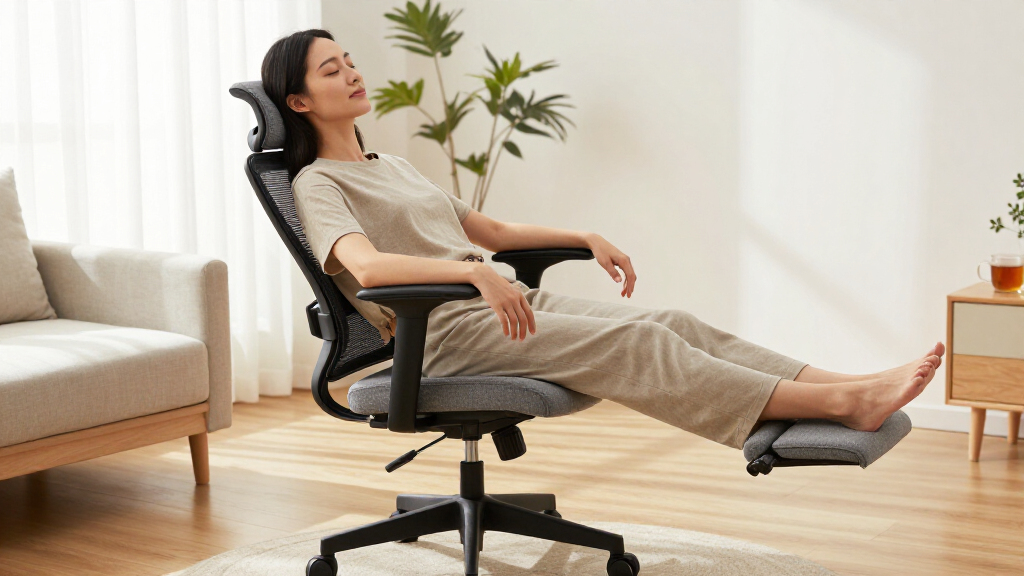
I evaluated every chair through one lens: does it deliver genuine ergonomic support and a footrest you would actually use daily? That meant checking recline range and whether the backrest locks at multiple angles, whether lumbar support is adjustable rather than fixed, and whether the headrest tracks your neck as you lean back. Footrest design carried heavy weight — I favored stowaway footpads and extendable leg rests over thin flip-out bars that wobble under adult leg weight, and I penalized footrests that forced an awkward seat-height compromise.
Build quality and fit came next: seat width and depth, weight capacity, mesh versus padded backrests, base and caster durability, and how much assembly effort each chair demands. Chairs ranked higher when their adjustments worked together — a deep recline means little without a locking mechanism, and lumbar support means little if the armrests can’t drop low enough to type. Finally, I weighed value: which chairs justify paying more, and which budget options honestly earn their lower tier rather than just feeling cheap.
Factors to Consider When Choosing Ergonomic Office Chairs With Footrests
Before choosing, it helps to understand what separates a chair you’ll love from one that gathers dust in a corner. These are the factors that moved the rankings most.Footrest Type Matters More Than You Think
There are three common footrest designs, and they suit different users. A stowaway footpad flips out from under the seat and supports your full calves — the most comfortable option, but it only works while reclining. A telescoping leg rest extends like a recliner’s, which is ideal for genuine naps but adds bulk under the seat. A flip-out rest bar is the cheapest and least comfortable, pressing into your Achilles tendons rather than supporting your legs. The most common buyer mistake is assuming all footrests are equal; if you plan to recline daily, a rest bar will disappoint you within a week. Also check that the footrest doesn’t lift your knees above your hips when seated upright, which can reduce circulation over long sessions.
Recline Range and Locking Mechanisms
Recline specs are marketing-friendly but often misleading. A chair that tilts to 145° is only useful if the backrest locks at intermediate angles — somewhere around 110°–125° is where most people actually read and work while leaning back. Without locks, you’re fighting spring tension the whole time, which fatigues your core rather than relaxing it. Pair any deep recline with a headrest that adjusts both in height and angle; your neck curve changes as you lean back, and a fixed headrest will leave your head hanging. If you mostly want a slight lean for phone calls, a 110° range with good locks beats a 145° range with none.
Mesh Versus Padded Backrests
Mesh backs dominate this category for good reason: they breathe, they flex with your spine, and they don’t flatten over years of use. The tradeoff is that cheap mesh feels like a hammock — it sags and eliminates the lumbar support you paid for. Padded faux-leather backs (like gaming-style chairs) feel plush and supportive out of the box but trap heat and compress over time, especially where your shoulders press hardest. If your office runs warm or you sit more than six hours a day, mesh with a rigid frame is the safer long-term bet. If you mostly recline for short breaks in a cool room, padding is genuinely more comfortable.
Weight Capacity and Seat Dimensions
Most mid-range ergonomic chairs are rated 250–300 lbs with seat widths around 20 inches, which is fine for average frames but cramped for broader users. Big and tall models solve this with reinforced bases, wider seats, and higher weight ratings — but they cost more and their taller seat heights can leave shorter users’ feet dangling, ironically making the footrest a necessity rather than a luxury. Measure your current seat width and depth before upgrading; a chair that’s too deep cuts circulation behind your knees no matter how good the footrest is. Also verify the cylinder’s height range matches your desk, because a footrest can’t compensate for a seat that sits too high or too low.
Adjustable Lumbar Support Is Non-Negotiable
Fixed lumbar bumps are the biggest false economy in this category. Everyone’s spine curvature sits at a different height, so a vertically adjustable lumbar system is what turns a recliner into an actual ergonomic chair. The best designs let you move the support up or down several inches and sometimes adjust its depth. This matters even more with footrest chairs, because reclining changes where your lower back contacts the backrest — a lumbar pad positioned perfectly upright can press into the wrong spot at 130°. If a chair lists only “lumbar support” without the word adjustable, treat that as a red flag.
Armrests, Headrests, and the Accessories Trap
USB ports, massage motors, and cupholders look great in listings but add failure points without improving ergonomics. What actually matters is whether the armrests adjust in at least two directions (up-down and in-out or pivot), because fixed armrests force your shoulders into bad posture the moment you change your recline angle. 3D or 4D armrests are the mark of a serious ergonomic chair. Similarly, a headrest that only tilts — without height adjustment — will fit one body size and nobody else. My advice: skip chairs that advertise gadgetry and spend the same money on adjustment range. Your shoulders and wrists will thank you long after the novelty of a USB port wears off.
Frequently Asked Questions
Is a chair with a footrest actually good for posture, or just for relaxing?
Both, but only if the chair is built for it. The footrest itself supports posture in one specific way: elevating your legs improves circulation and takes pressure off your lower back while reclined, which is a legitimate ergonomic position for reading or calls. The problem arises when a chair’s backrest only supports you while upright and you recline into a slouched position the lumbar system wasn’t designed for. That’s why I weighted locking recline and adjustable lumbar together — a chair like the GABRYLLY or ATORPOK keeps your spine supported through the full recline arc. If you plan to alternate between upright work and reclined breaks all day, prioritize chairs with multiple lock points and a tracking headrest over ones that merely tilt.
Can I use the footrest while sitting upright and working?
Generally no, and this is the most common misconception about these chairs. Nearly every footrest in this lineup — whether a stowaway pad or telescoping rest — assumes a reclined body position. Used upright, it lifts your knees above your hips, tilts your pelvis backward, and rounds your lower spine within minutes. For upright work, your feet should rest flat on the floor (or on a separate floor-level footrest if your chair sits high). If you want leg support while typing, a proper ergonomic foot stool placed under the desk is the better tool. Treat the built-in footrest as a break-time feature, not an all-day one, unless you genuinely work in a reclined position.
Mesh or padded chair for someone who naps in their office chair?
If napping is a real use case, lean toward padded or hybrid designs. Fully reclined, a rigid mesh back can press support ribs and frame edges into your back at angles the mesh wasn’t tensioned for. Padded faux-leather options like the SONGMICS gaming chair contour more naturally when you’re horizontal, and the motorized Big and Tall recliner is the most nap-ready of all with its power footrest and full recline. The tradeoff is heat: padded chairs get warm fast, so a 30-minute nap in a sunny office can leave you sweating. A reasonable middle ground is a mesh chair with a thick, wide headrest and a stowaway footpad — breathable for work, acceptable for short reclined rests.
Are big and tall footrest chairs worth the extra cost?
They are if you actually need the capacity, because a standard chair used near its weight limit fails predictably — the cylinder sags, the base cracks, and the tilt mechanism loosens. Reinforced chairs like the Amseatec and the electric recliner distribute load across wider seats, heavier bases, and stronger cylinders, which also translates to a more stable recline since there’s less flex in the frame when you lean back with your legs extended. The downside for smaller users is fit: taller seat ranges and deeper seats can leave you unsupported. My rule of thumb is to buy the capacity rating only if you’re within about 15% of your actual weight; otherwise you’re paying for steel you don’t need and a chair sized wrong for your body.
How much should I expect to spend for a footrest chair that lasts?
The mid-range tier is where durability and adjustability start to align, and that’s where I’d direct most budgets. Entry-level footrest chairs do exist at lower prices, but they typically cut corners on the two components that fail first: the gas lift cylinder and the recline lock mechanism — both of which render the footrest feature useless when they wear out. Moving up in price buys 3D-adjustable armrests, multi-position locks, and stronger mesh, which are the adjustments that keep a chair comfortable for years rather than months. Beyond that, you’re paying for premium materials and brand support rather than meaningful ergonomic gains. A practical approach: decide whether the chair is mainly for upright work with occasional breaks, or for frequent reclining, and spend more in whichever direction you lean.
Conclusion
The right pick here depends less on budget and more on how you actually sit. For the best overall choice, the GABRYLLY Ergonomic Mesh Office Chair balances adjustable lumbar support, a breathable back, and a genuinely usable footrest for most body types. Budget-conscious buyers get the strongest value from the Hilleagle or MALOL mesh chairs, which cover the core ergonomics without the premium-tier armrest and headrest adjustments. If money is no object and adjustability is the priority, the FLEXISPOT ErgoX with its 3D headrest and armrests is the premium play, with the LarkLeaves close behind for the same reasons at a friendlier price.
For specific needs: larger frames should go straight to the Amseatec or the electric Big and Tall recliner, the latter being the only power-operated option in the lineup. Serial nappers will be happiest in the ATORPOK recliner or the deep-recline 90°–145° model. First-time ergonomic chair buyers should start simple — the ELABEST X100 or Qulomvs teach you which adjustments you actually use before you invest more. And if you want a chair that doubles for gaming and breaks, the padded SONGMICS is the outlier worth a look. Whatever you choose, prioritize the recline lock and lumbar adjustment first — those two features determine whether the footrest becomes a daily pleasure or a forgotten gimmick.
Fall Picks
fall essentials
As an affiliate, we earn on qualifying purchases.