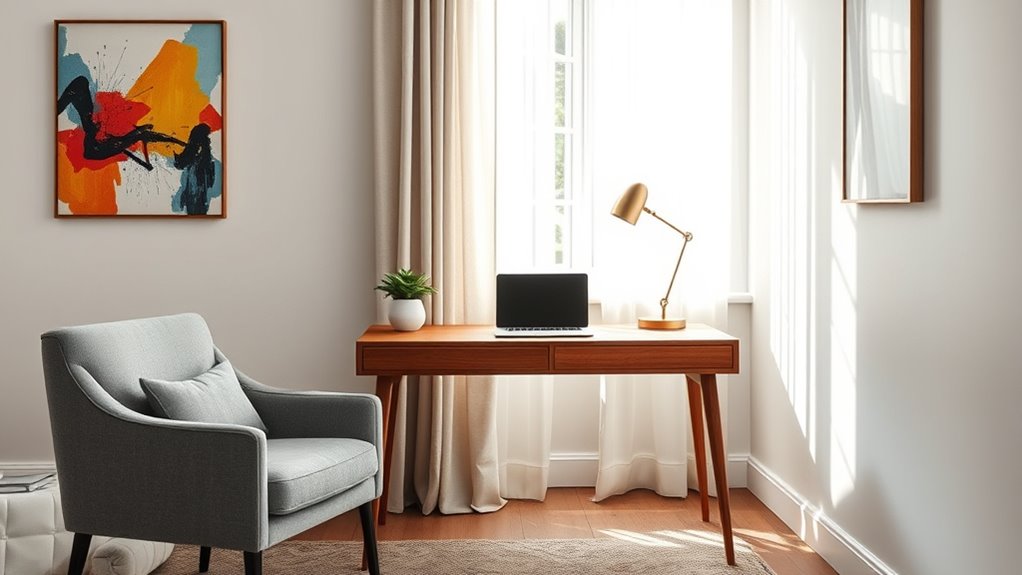

To set up a corner office in your living room, choose a spot with minimal foot traffic and plenty of natural light near a window. Use ergonomic furniture like a comfortable chair and a spacious desk, and keep your space organized with shelves and cable management. Add adjustable lighting for different times of day and create clear boundaries between work and leisure. Keep your environment clutter-free for better focus—explore more tips to perfect your workspace.
Key Takeaways
- Choose a quiet, low-traffic corner with ample natural light near windows for a bright, focused workspace.
- Use compact, ergonomic furniture that fits the space, such as a small desk and adjustable chair for comfort.
- Organize essentials with shelves and cable management to keep the area tidy and clutter-free.
- Incorporate adjustable lighting options to maintain productivity and reduce eye strain during different times.
- Add personal touches and visual boundaries to create a dedicated, inviting work zone within your living room.
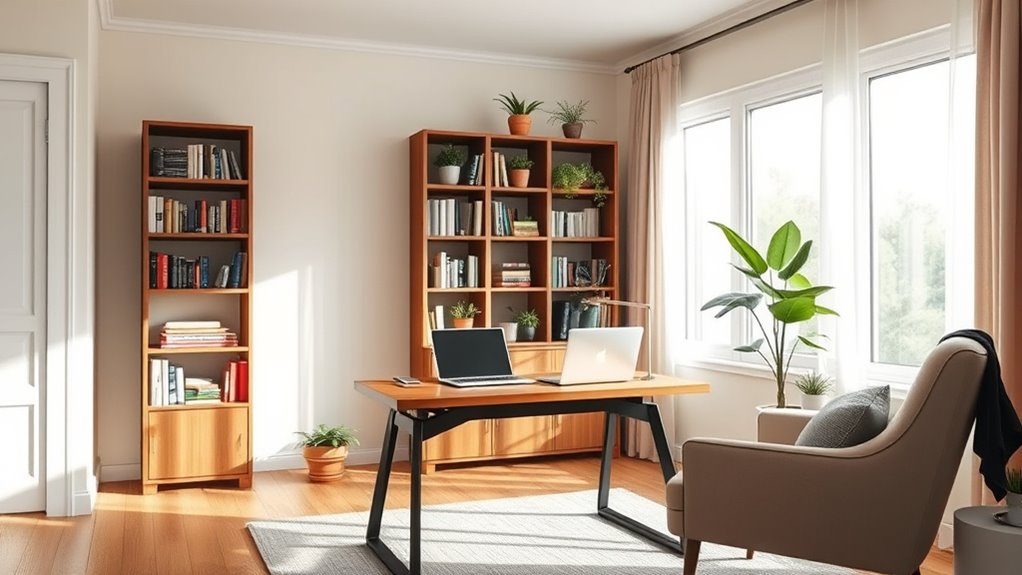
Creating an effective home workspace starts with choosing the right location. Since you’re transforming your living room into a functional corner office, you’ll want to select a spot that offers both convenience and focus. Look for an area with minimal foot traffic and natural light, which helps boost your mood and productivity. Position your desk near windows if possible, so you can take advantage of daylight, but also consider adding lighting solutions like adjustable lamps to guarantee adequate illumination during darker hours or cloudy days. Good lighting reduces eye strain and helps you stay alert throughout the day.
Once you’ve identified the ideal spot, investing in ergonomic furniture becomes essential. Your desk and chair should support good posture, preventing discomfort and long-term health issues. Choose a desk with enough surface space for your computer, documents, and other essentials, but avoid overly large pieces that clutter your space. An ergonomic chair with adjustable height, lumbar support, and breathable material will keep you comfortable during extended work sessions. If your existing furniture isn’t ergonomic, consider adding accessories like footrests or sit-stand desks to further enhance comfort.
Creating a dedicated corner within your living room also means organizing your workspace efficiently. Use storage solutions like shelves or filing cabinets to keep your essentials within reach but out of sight when not in use. This helps maintain a clean, focused environment while preventing clutter from building up. Incorporate cable management tools to keep cords tidy and prevent accidents, and choose a desk that accommodates your tech setup comfortably.
Organize your workspace with shelves, cable management, and clutter-free furniture for a tidy, focused environment.
Lighting solutions are more than just about brightness; they influence your energy and concentration levels. Besides natural light, consider task lighting that can be adjusted to suit different activities. For instance, a desk lamp with adjustable brightness allows you to focus on detailed tasks without straining your eyes. If your living room has limited natural light, supplement with soft, diffuse lighting options to create an inviting yet productive atmosphere. Proper lighting also helps set boundaries between your work and personal space, making it easier to switch into work mode and unwind afterward.
Additionally, choosing appropriate projector technology can enhance your home office by supporting presentations or visual tasks, especially if you need larger displays for work-related visuals.

Marsail Ergonomic Office Chair: Office Desk Chair with High Back Mesh and Adjustable Lumbar Support Rolling Work Swivel Task Chairs with Wheel 3D Armrests and Headrest
- Fully Adjustable Headrest: 2D adjustable for personalized comfort
- Reclining Backrest: Adjusts from 90° to 120°
- 3D Adjustable Armrests: Customizable for various postures
As an affiliate, we earn on qualifying purchases.
As an affiliate, we earn on qualifying purchases.
Frequently Asked Questions
How Can I Ensure My Home Workspace Is Ergonomically Correct?
To make certain your home workspace is ergonomic, start by adjusting your desk to the proper height so your elbows stay at a 90-degree angle. Use ergonomic accessories like an adjustable chair with lumbar support and a monitor stand to keep your screen at eye level. Take regular breaks, stretch, and keep your wrists straight to prevent strain. These simple steps help create a comfortable, healthy workspace.
What Are Budget-Friendly Tips for Creating a Functional Corner Office?
You can create a functional corner office on a budget by using DIY organization ideas like repurposing jars or boxes for supplies. Incorporate budget decor such as inexpensive artwork or plants to personalize your space without overspending. Focus on maximizing storage with simple shelves or containers, and choose affordable furniture that’s comfortable and versatile. This approach helps you stay organized and motivated without breaking the bank.
How Do I Minimize Distractions in a Shared Living Space?
Sure, because who doesn’t love working with their family or roommates barging in? To minimize distractions, prioritize noise control with headphones or white noise machines, and use privacy solutions like room dividers or curtains. Set clear boundaries, like specific work hours, so everyone knows when you’re “off-limits.” It’s all about creating a dedicated space where interruptions are less frequent, making your workday a little less chaotic.
What Are Some Creative Ways to Hide Clutter in My Workspace?
To hide clutter in your workspace, use decor storage like decorative baskets or stylish boxes to keep things organized. Incorporate cable management solutions, such as cable clips or sleeves, to conceal cords neatly. You can also opt for multi-functional furniture with built-in storage or hide clutter behind decorative screens. These ideas keep your workspace tidy and visually appealing, helping you stay focused and productive.
How Can I Incorporate Personal Style Into My Home Office Decor?
Imagine you’re in the 1920s speakeasy, and your home office is your secret hideaway. To incorporate personal style, add decorative accents like vintage posters, unique desk accessories, or meaningful photos. Mix in personal touches such as favorite colors or a quirky lamp. These elements make your space uniquely yours, blending functionality with personality and ensuring your workspace reflects your style while inspiring your productivity.

HUANUO 32" Small Electric Standing Desk Adjustable Height, 4 Memory Height Settings, Sit Stand Up Desk for Home Office & Computer Workstation, LightWalnut
- Compact 32” x 19” Desktop: Fits small spaces and corners
- 4 Memory Presets: Easy one-touch height adjustments
- DIY Mobile Setup: Install casters for mobility
As an affiliate, we earn on qualifying purchases.
As an affiliate, we earn on qualifying purchases.
Conclusion
Creating a dedicated corner office at home transforms your space, boosts your focus, and enhances your productivity. It’s about carving out a zone that invites concentration, inspires creativity, and fosters comfort. When you set up your workspace thoughtfully, you create a place to work, a spot to thrive, and a space to succeed. Ultimately, a well-designed home office becomes more than just a corner—it becomes your sanctuary, your station, and your stepping stone to success.
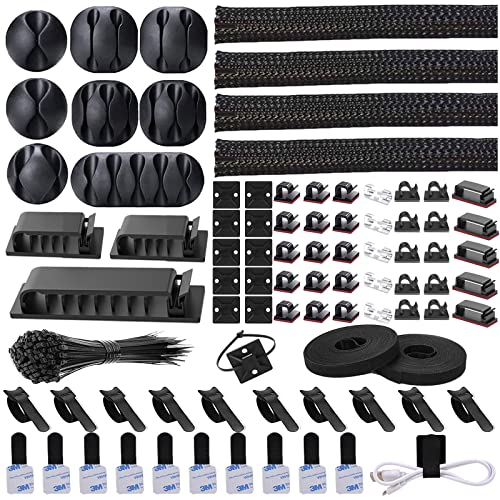
N NOROCME 192 PCS Cable Management Kit 4 Wire Organizer Sleeve
- Complete Cable Management Kit: Includes sleeves, ties, clips, and mounts
- Multiple Cable Clips: 6 types, 46 eco-friendly clips in two colors
- Durable Materials: Sturdy, high-quality components for long-lasting use
As an affiliate, we earn on qualifying purchases.
As an affiliate, we earn on qualifying purchases.

Airlonv LED Desk Lamp for Office Home, Eye-Caring Desk Light with Stepless Dimming Adjustable Flexible Gooseneck, 10W USB Adapter Desk Lamp with Clamp for Reading, Study, Workbench (Black)
- Stepless Dimming and Color Adjustment: Adjust brightness from 1% to 100%, color from 2700K to 6500K
- 360° Adjustable Flexible Gooseneck: Full control over light direction with long, flexible neck
- High-Quality Materials and Longevity: Made of aluminum and ABS, up to 60,000 hours lifespan
As an affiliate, we earn on qualifying purchases.
As an affiliate, we earn on qualifying purchases.