TL;DR

Get comfort and recovery gear delivered free with Prime
- Fast, free delivery on millions of items
- Prime Video, Amazon Music and more included
- Member-only deals all year
Physical therapist Raj Suppiah recommends cat-cow, open-book thoracic rotations and a half-kneeling hip flexor stretch for people who feel stiff after prolonged sitting. He advises moving gently, changing positions regularly and seeking professional advice if pain persists for weeks or disrupts daily activities.
A Fit&Well report outlines three stretches recommended by physical therapist Raj Suppiah for people who feel stiff after sitting for extended periods: cat-cow, open-book thoracic rotation and a half-kneeling hip flexor stretch. The sequence is intended to encourage comfortable movement in the spine and hips; it is not presented as a diagnosis or a treatment for a specific back condition.
Suppiah, co-founder of Foundation Physiotherapy & Wellness, recommends doing 10–12 cat-cow repetitions, followed by 10–12 open-book rotations on each side. Finish with a half-kneeling hip flexor stretch held for 20–30 seconds per side. The report suggests resting for 15–30 seconds and repeating the sequence once. It advises moving within a comfortable range and stopping if a movement worsens pain.
For cat-cow, start on hands and knees, with hands below shoulders and knees below hips. Slowly round the back, then gently move in the opposite direction by lowering the belly and lifting the chest. Suppiah says the exercise encourages movement of the spine in both directions after it has been held relatively still.
For the open book, lie on one side with hips and knees bent, arms extended in front. Keeping the knees together, sweep the upper arm across the body to rotate the chest and upper back, then return to the start. The hand does not need to reach the floor. For the final stretch, kneel on one knee with the other foot forward, gently tuck the pelvis and shift the hips forward until a stretch is felt at the front of the kneeling-side hip. Keep the torso upright and avoid arching the lower back.
Why Movement Can Ease Sitting Stiffness
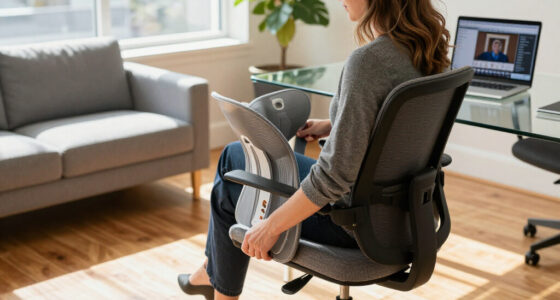
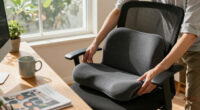
The practical point in Suppiah’s advice is to change positions regularly, rather than trying to hold one ideal posture throughout the day. He says remaining still can leave muscles and joints in fixed positions and may contribute to stiffness or fatigue. A chair or desk that encourages leaning forward, or a seat where the feet do not rest comfortably, may add to discomfort for some people.
The stretches also address more than the back alone. Suppiah says the hips and spine work together, and that prolonged sitting holds the hips in a flexed position. The hip-flexor movement is intended to make moving the hips into extension feel more comfortable; the report does not claim that sitting permanently shortens those muscles or that the stretch will resolve every cause of back pain.
These are simple movement suggestions for general stiffness, not a substitute for individualized assessment. Persistent or activity-limiting pain warrants advice from a healthcare professional, according to the report.
Products Worth Considering

Dyson W1 PencilWash Cordless Wet and Dry Floor Cleaner with Dock

Shark HydroVac MessMaster Corded Wet Dry Vacuum and Mop (WD161)

TCL 65-Inch T7 Series 4K QLED Smart Google TV, 144Hz (65T7)
As an affiliate, we earn on qualifying purchases.
How the Three-Move Sequence Works
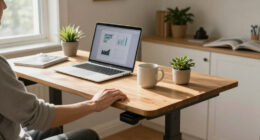
The recommendations came after the Fit&Well writer described feeling stiff while temporarily working at a dining table and chair. The writer asked Suppiah for movements that could offer a break from sitting. His answer places the emphasis on mobility and regular movement, rather than on maintaining a single posture for an entire workday.
Suppiah says sitting itself is not inherently damaging to the spine and that research does not support the idea that one specific sitting posture causes back pain in everyone. He describes discomfort as potentially related to remaining in a position for too long, muscles working continuously to support the posture, or a poorly fitted workspace. The article also notes that mobility is only one part of back health; Suppiah says strength and endurance matter too, though the supplied report excerpt does not set out a full strengthening plan.
“Our bodies are designed to move, not to hold one position perfectly for eight hours.”
— Raj Suppiah, co-founder of Foundation Physiotherapy & Wellness
What the Stretch Advice Cannot Establish
The source describes Suppiah’s preferred movements but does not provide clinical trial results, comparative evidence, or data showing how much relief readers should expect or how long it may last. It does not establish that the sequence is suitable for every person or every cause of back pain. The report’s guidance is to stop if an exercise makes pain worse and seek professional advice if pain lasts a few weeks or interferes with everyday activities.
The supplied material also does not specify a publication date, and it gives no detailed strengthening routine despite noting that strength and endurance are relevant. Readers with a diagnosed condition, new or worsening symptoms, or uncertainty about whether a movement is appropriate can ask a healthcare professional for individual guidance.
Building Movement Into the Workday
For readers trying the sequence, the next step is to perform the movements gently, use the stated repetitions and holds, and adjust the range to comfort. A cushion under the kneeling knee may make the hip-flexor stretch more comfortable. The article’s broader suggestion is to interrupt long spells of sitting by changing position and moving regularly, rather than relying on a single stretch or one fixed sitting position.
If discomfort worsens during the exercises, stop. If back pain continues for several weeks or makes ordinary activities difficult, the source advises consulting a healthcare professional. The report does not offer a timeline for improvement or a guarantee that these movements will relieve an individual’s symptoms.
Key Questions
Which three moves does the physical therapist recommend?
Raj Suppiah recommends cat-cow, open-book thoracic rotation and a half-kneeling hip flexor stretch for gentle spine and hip mobility after sitting.
How many repetitions should I do?
The report suggests 10–12 cat-cow repetitions and 10–12 open-book rotations per side. Hold the hip-flexor stretch for 20–30 seconds on each side, rest for 15–30 seconds, then repeat the sequence once.
Should I keep going if a stretch hurts?
No. The report says to move within a comfortable range and stop if an exercise makes your pain worse. Seek individual advice if you are unsure whether a movement suits your situation.
When should I ask a healthcare professional about back pain?
The source advises seeking professional guidance if pain persists for a few weeks or interferes with everyday activities. It does not claim that the stretches can treat every cause of back pain.
Source: fitandwell.com