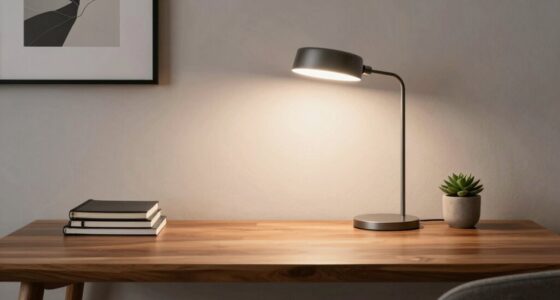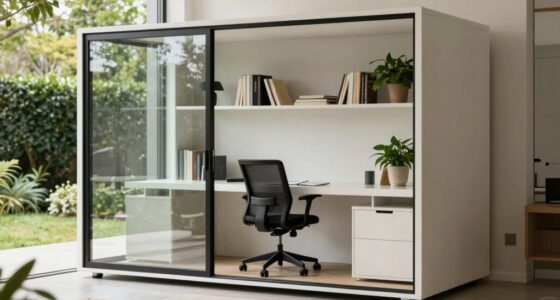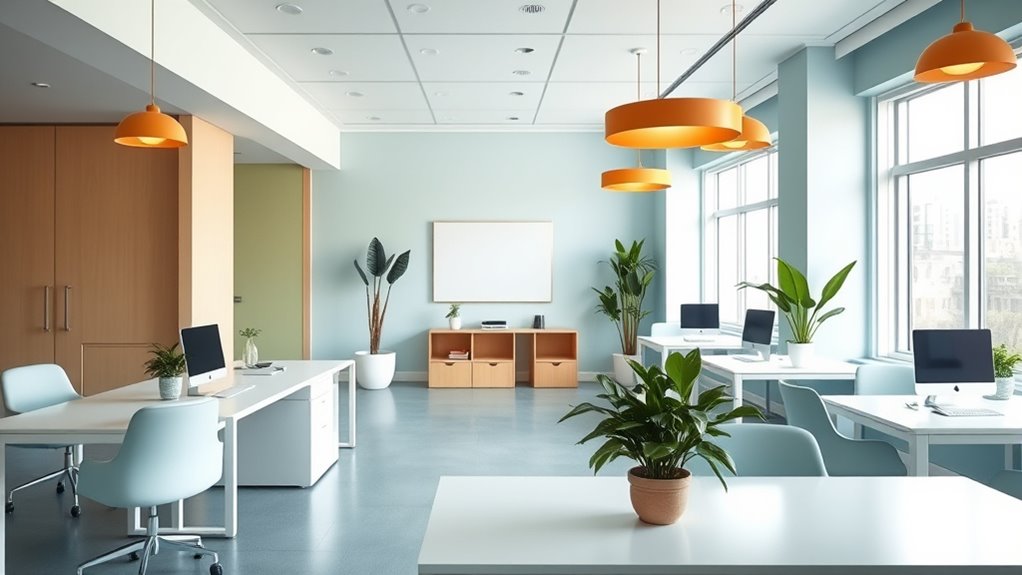

Choosing the right wall and decor colors can greatly boost your office productivity and mood by harnessing color psychology. Warm tones like yellow or orange energize and inspire creativity, while cooler shades such as blue and green foster calmness and focus. Neutral colors can be dull, so incorporating lively accents adds motivation. Thoughtful color choices create an environment that promotes well-being and efficiency. Keep exploring these tips to transform your workspace into a mood-boosting haven.

Get comfort and recovery gear delivered free with Prime
- Fast, free delivery on millions of items
- Prime Video, Amazon Music and more included
- Member-only deals all year
Key Takeaways
- Use blue hues to promote calmness, focus, and clarity in the workspace.
- Incorporate energizing colors like yellow or orange to boost creativity and motivation.
- Choose neutral tones for a balanced, non-distracting environment that supports steady mood.
- Add green accents to enhance harmony and reduce stress during busy workdays.
- Combine color choices with decor elements to tailor the office atmosphere to specific emotional and productivity needs.

Have you ever wondered how colors influence your mood and behavior? When it comes to creating an office environment that promotes productivity and well-being, understanding color psychology can make a significant difference. The colors you choose for your walls and decor aren’t just about aesthetics—they can directly impact your mood enhancement and overall work experience. Bright, bold hues like reds and oranges can energize you, sparking enthusiasm and motivation, while softer shades such as blues and greens tend to calm your mind, helping you focus and reduce stress.
Colors influence your mood; choosing the right shades boosts productivity and creates a calming or energizing workspace.
In an office setting, selecting the right colors creates a space that supports your daily tasks and emotional needs. For instance, if your work involves a lot of creative thinking, incorporating warm tones like yellow or orange can stimulate your brain and inspire innovation. These colors foster a sense of optimism and enthusiasm, making it easier to tackle challenging projects. Conversely, if your job requires concentration and careful analysis, cooler shades like blue can promote clarity and calmness, helping you stay composed during high-pressure situations. Green, often associated with balance and harmony, can also serve as an excellent choice for maintaining a steady, peaceful mood throughout your workday.
Color choices also influence how you feel about your workspace, impacting your attitude toward your tasks and your overall productivity. An office environment painted in dull, neutral colors might feel uninspiring, leading to decreased motivation and a sense of stagnation. Bright, lively colors, on the other hand, can uplift your spirits and make your workspace more inviting. When you pay attention to how colors affect your mood, you can strategically select decor elements that foster mood enhancement and create an environment where you want to be productive. For example, adding accent walls in energizing shades or incorporating artwork with calming tones can help tailor your office to your specific needs.
Furthermore, color psychology isn’t just about individual preference; it’s also about understanding the psychological effects that different hues have on your emotions and behavior. If you find yourself feeling anxious or overwhelmed, consider incorporating soothing colors that promote relaxation. If you need a boost of energy, opt for vibrant shades that invigorate your senses. Additionally, incorporating water-inspired elements such as aquatic artwork or decor can evoke feelings of calmness and serenity, especially in spaces where stress reduction is a priority. By consciously choosing wall and decor colors aligned with your goals, you craft an office environment that naturally supports your mental state, reducing stress and enhancing your overall mood. In the end, smart color choices aren’t just about style—they’re about shaping a space that works for you, fostering mood enhancement and boosting your productivity every day.
Frequently Asked Questions
How Do Different Colors Influence Employee Productivity?
Different colors influence your employee productivity through their color associations and the need for color consistency. For example, blue promotes focus and calm, boosting efficiency, while yellow inspires creativity. When you maintain color consistency, it creates a harmonious atmosphere that reduces distractions. You should choose colors that align with your office goals, ensuring the environment supports your team’s productivity and well-being effectively.
What Colors Are Best for Reducing Workplace Stress?
You should use soft, calming colors like blues, greens, and neutrals to reduce workplace stress. These shades are proven through color therapy to promote relaxation and focus, enhancing overall mood. Incorporate these colors into your walls or decor to create a soothing environment. When employees feel calmer, their productivity and mood improve, making your office a more pleasant and stress-free space.
How Can Color Choices Impact Client Perceptions?
Your color choices substantially impact client perceptions by conveying professionalism and trust. Using consistent color symbolism throughout your space reinforces your brand message, making your office feel cohesive and credible. Bright, bold colors can energize clients, while softer tones foster comfort. When you maintain color consistency, you create a harmonious environment that helps clients feel confident in your services, ultimately boosting their positive perception of your business.
Are There Cultural Differences in Color Psychology?
Think of color psychology as a global tapestry—each region adds its unique thread. Cultural color symbolism and regional color preferences profoundly influence how colors are perceived across different societies. You might find red energizing in China but aggressive in Western cultures. Recognizing these cultural nuances helps you select office colors that resonate positively, respecting diverse backgrounds and fostering a welcoming environment.
How Do Lighting Conditions Affect Color Perception in Offices?
Lighting conditions considerably affect how you perceive colors in your office. Natural light enhances true color tones, making them appear brighter and more vibrant, while artificial lighting can cast warm or cool hues, altering your perception. To create a balanced environment, combine natural light with adjustable artificial lighting, ensuring colors stay consistent and comfortable, which can improve focus and mood throughout your workday.
Conclusion
Now that you’ve uncovered the secrets of color psychology, imagine stepping into your office, where every hue influences your mood and productivity. Will you choose calming blues to foster focus, or energizing reds to ignite passion? The colors you select set the tone for your workday and future success. So, which shades will you embrace? The power is in your hands—your perfect workspace awaits, just beyond the spectrum of your choices.
Fall Picks
fall essentials
As an affiliate, we earn on qualifying purchases.