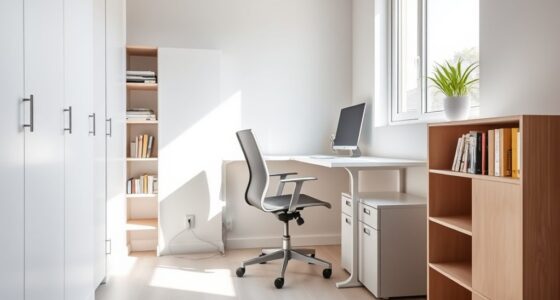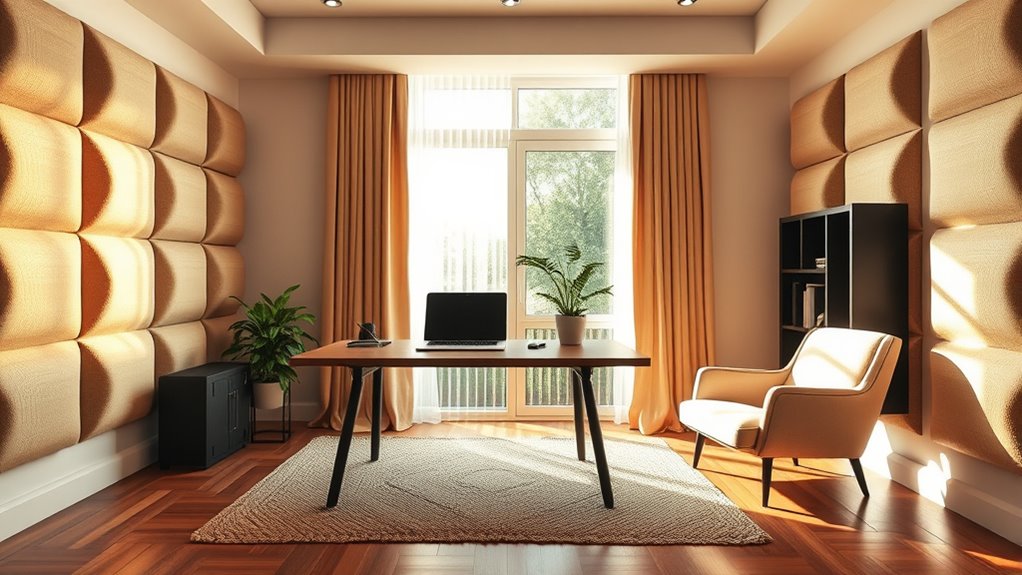

To soundproof your home office affordably, start by sealing gaps around windows and doors with weather stripping or draft stoppers. Use heavy curtains or DIY window inserts to block noise from outside. Add rugs or carpets in high-traffic areas to absorb sound, and place bookshelves or furniture against noise-prone walls for extra protection. Incorporate plants and soft furnishings to naturally dampen echoes. Keep exploring more tips to create a quieter, more focused workspace.
Key Takeaways
- Seal gaps around windows and doors with weather stripping or draft stoppers to block noise infiltration.
- Use heavy, dense curtains and rugs to absorb sound and reduce echoes in your workspace.
- Rearrange furniture to create physical barriers that deflect or block external noise sources.
- Install DIY window inserts or acoustic panels to enhance soundproofing without high costs.
- Incorporate soft furnishings and decorative wall hangings to naturally dampen sound and improve room acoustics.
Sealing Gaps and Cracks Around Windows and Doors

Sealing gaps and cracks around your windows and doors is one of the most effective ways to reduce noise entering your home office. Start by inspecting your window insulation; if you notice drafts or gaps, add weather stripping to close them off. Weather stripping is affordable and easy to apply, creating a tight seal that blocks sound infiltration. Don’t forget to check door thresholds and sides for gaps, applying weather stripping or door sweeps where needed. Proper insulation around your windows minimizes sound transmission and keeps your workspace quieter. This simple step not only enhances your privacy but also improves energy efficiency. Additionally, incorporating Free Floating elements like curtains or rugs can further absorb sound and create a more acoustically friendly environment. Using high-quality soundproofing materials can further enhance noise reduction, making your home office more peaceful. Taking the time to seal these gaps ensures less noise disturbance, as soundproofing techniques can significantly improve your overall sound control. Incorporating acoustic treatments can help diffuse sound waves and prevent echoes, boosting your focus and comfort. Implementing these measures is essential for creating a quiet workspace that fosters better concentration and productivity in your home office.
Using DIY Window Inserts or Heavy Curtains

Adding DIY window inserts or heavy curtains can markedly improve your home office’s soundproofing. DIY window inserts are affordable and easy to install, creating a barrier that blocks out noise. Heavy curtain options, like blackout or thick velvet curtains, absorb sound waves and reduce echo. To maximize their effectiveness, consider layering curtains or sealing gaps around the window frame. You can also attach DIY window inserts using simple tools, making them a quick upgrade. Keep in mind, the key is to choose materials that add mass and minimize gaps. Using sound-absorbing materials can further enhance your soundproofing efforts. For best results, selecting appropriate insulation materials is essential to ensure maximum noise reduction with minimal investment and effort, ultimately helping you enjoy better focus and less distraction during work hours. Incorporating soundproofing techniques like these can make a significant difference in creating an effective home office environment. Additionally, ensuring proper air sealing around windows can prevent sound leaks and improve overall soundproofing efficiency.
Adding Rugs and Carpets to Absorb Sound

Choosing thick rugs and carpets can profoundly improve sound absorption in your home office. Position them strategically in high-traffic areas and beneath your desk for ideal results. Regular maintenance, like vacuuming and spot cleaning, helps keep them effective and extends their lifespan. Incorporating sound absorption into your setup can also optimize space and functionality. Additionally, selecting appropriate materials that are dense and plush enhances their ability to dampen noise effectively. For optimal results, consider materials known for their soundproofing qualities, which further enhance noise reduction.
Thick Material Selection
One of the most effective ways to improve sound absorption in your home office is by incorporating thick materials like rugs and carpets. These add mass, helping to reduce sound transmission and dispel common soundproofing myths that only expensive solutions work. Thick rugs are especially useful for noise frequency reduction, absorbing mid and high frequencies that often bounce around a room. To maximize their effectiveness, consider:
- Choosing dense, plush carpets that add substantial weight
- Layering rugs over hard floors to catch more sound
- Combining rugs with other soft materials for better noise control
- Selecting trend-conscious designs that enhance your office decor while improving acoustics
- Understanding soundproofing principles can help you choose the most effective materials for your space.
- Incorporating mass-loaded materials can further enhance soundproofing without significant remodeling.
- Using a combination of soft, dense materials helps in achieving a more holistic soundproofing approach.
These strategies make your workspace quieter without costly renovations, giving you a practical, affordable way to minimize distractions and create a more focused environment.
Strategic Placement Tips
To maximize the sound-absorbing benefits of rugs and carpets, you should focus on their placement within your home office. Consider your room geometry—place rugs where sound waves tend to reflect or echo, such as in the center or along large, open walls. Positioning carpets near equipment placement, like desks or printers, helps reduce noise from vibrations and movement. Large rugs under your desk and seating areas can dampen foot traffic noise and airborne sound. Avoid small, isolated patches that won’t considerably impact sound levels. Instead, strategically cover areas where sound bounces most, creating a more acoustically balanced space. Proper placement ensures your rugs efficiently absorb sound, making your home office quieter and more conducive to focused work.
Maintenance and Longevity
Maintaining your rugs and carpets guarantees they continue to effectively absorb sound over time. Regular cleaning prevents dirt and dust buildup that can reduce their acoustic properties. Additionally, check your electrical wiring beneath or around the rugs to ensure no damage or hazards develop, which could compromise safety. Proper HVAC maintenance also helps preserve your carpets by reducing dust circulation and moisture buildup that can lead to mold or odors. To extend their lifespan, consider rotating rugs periodically to prevent uneven wear. Keep an eye out for frayed edges or loose fibers that may need repair. Regular vacuuming, prompt stain removal, and inspections for underlying issues will ensure your soundproofing remains effective while prolonging the life of your investment. Routine maintenance is essential for maintaining the durability and acoustic performance of your carpets over time. Incorporating proper rug care practices can significantly enhance their longevity and soundproofing effectiveness, especially by addressing material durability to resist wear and tear. Additionally, using sound-absorbing materials in conjunction with your rugs can further improve acoustic performance.
Installing Affordable Wall Panels and Hangings

Installing affordable wall panels and hangings is an effective way to improve your home office’s soundproofing without breaking the bank. Decorative wall art and acoustic wall hangings not only add style but also absorb sound waves, reducing echo and noise transmission. You can choose fabric-covered panels, foam tiles, or stylish tapestries that blend with your decor. Position these panels strategically on walls facing noisy areas or behind your workspace to maximize their impact. Hang lightweight acoustic wall hangings or art pieces with sound-absorbing materials to further dampen sound. These solutions are easy to install, affordable, and customizable, giving your office a quieter environment while enhancing its aesthetic appeal. Incorporating soundproofing techniques like smart sound absorption devices can further optimize your soundproofing efforts. Utilizing sound absorption materials can help target specific problem areas for more effective noise reduction. Understanding soundproofing principles can guide you in choosing the most effective solutions for your space. With the right choices, you’ll create a more focused and peaceful workspace effortlessly.
Rearranging Furniture to Create Sound Barriers
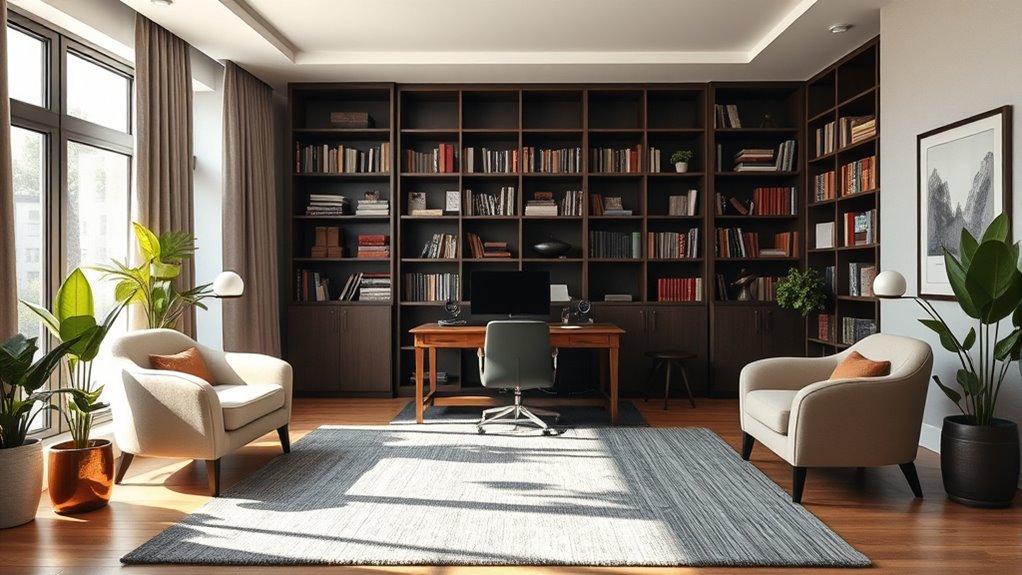
Rearranging your furniture can considerably reduce noise disturbances in your home office. By adjusting furniture placement and optimizing your room layout, you create physical barriers that absorb and block sound. Position heavy pieces like bookshelves or cabinets between your workspace and noise sources. Consider placing desks or seating arrangements away from external walls or windows where noise is most prominent. You can also angle furniture to deflect sound waves rather than allowing them to travel directly into your work area.
- Place thick, upholstered furniture near noise sources
- Use room dividers or large pieces to create visual and sound barriers
- Arrange desks so that they face away from noise sources
These simple changes can markedly improve your home office’s acoustics.
Utilizing Bookshelves and Dense Storage Units
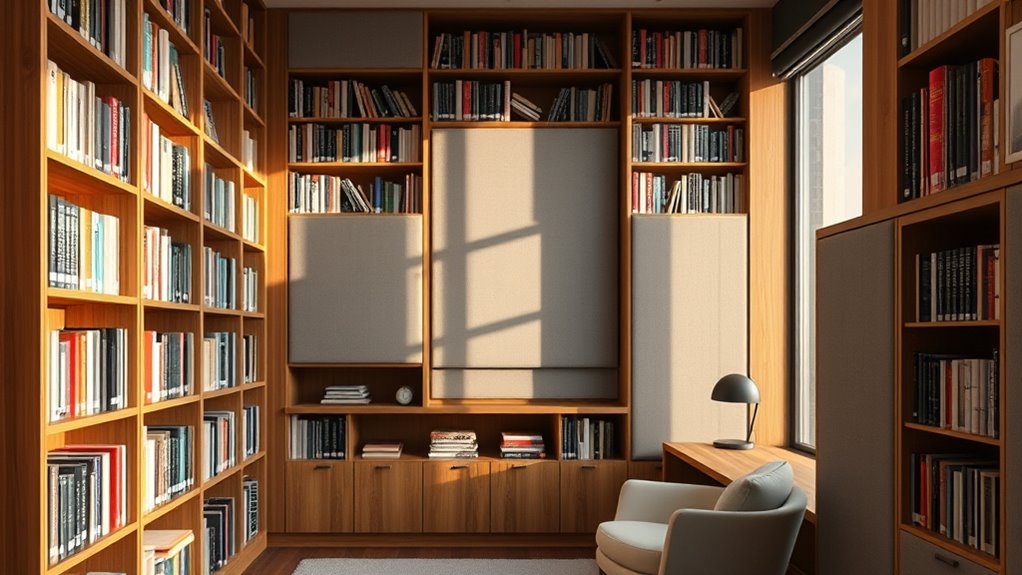
Placing bookshelves and dense storage units strategically can help block sound transmission in your home office. Position them against shared walls or near noisy areas for maximum effect. The material density of these furnishings enhances their ability to absorb and deflect sound, boosting your space’s acoustics.
Strategic Placement Tips
To maximize soundproofing in your home office, strategically positioning bookshelves and dense storage units can be highly effective. Proper equipment placement helps absorb sound and minimizes noise transfer, especially when placed near noise sources. Position your shelves against shared walls, focusing on noise source positioning to block sound before it travels. To enhance effectiveness, consider these tips:
- Place bookshelves directly against walls or around equipment that produces noise.
- Fill shelves densely with books or storage to act as additional sound barriers.
- Keep noisy equipment away from open doorways or windows, using shelves as buffers.
This approach creates a layered sound barrier, reducing noise and improving acoustics without costly modifications.
Material Density Benefits
Using bookshelves and dense storage units can substantially enhance your home office’s soundproofing because materials with higher density absorb and block sound waves more effectively. The increased material density improves sound absorption, reducing echoes and muffling external noise. Filling shelves with books or dense items creates a barrier that dampens sound transmission. To visualize this, consider the table below:
| Material | Density Level | Sound Absorption Effectiveness |
|---|---|---|
| Wooden Shelves | Moderate | Good |
| Metal Cabinets | High | Excellent |
| Filled Bookshelves | Very High | Superior |
| Plastic Units | Low | Limited |
Using Soundproofing Curtains and Draft Stoppers
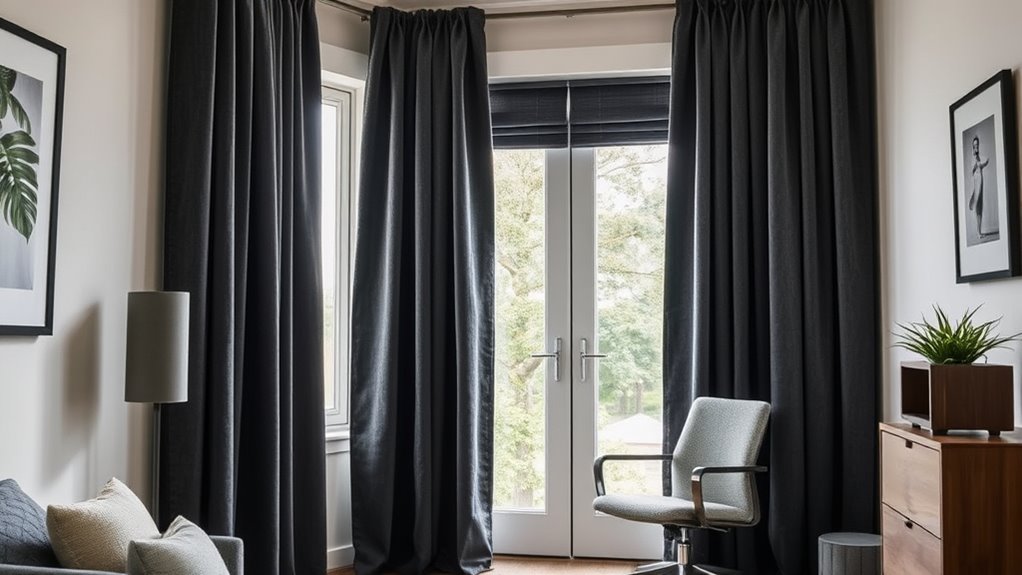
Soundproofing curtains and draft stoppers are effective tools you can deploy to reduce noise infiltration in your home office. Installing soundproof curtains over windows creates a barrier that absorbs and blocks external sounds, improving focus. Draft stoppers placed at the bottom of doors prevent noise from seeping through gaps, making your space quieter. These solutions are affordable and easy to implement, providing immediate relief from distracting noise. To maximize their effectiveness, consider the following:
- Choose thick, dense soundproof curtains for better sound absorption
- Use draft stoppers made of heavy materials like sand or foam
- Ensure curtains fully cover windows and draft stoppers tightly seal door gaps
Together, these items create a quieter environment, boosting your productivity and comfort.
Incorporating Plants for Natural Sound Absorption

Incorporating plants into your home office can naturally reduce noise levels by absorbing sound waves. They act as soft barriers, dampening echoes and muffling background noise. Plus, plants improve indoor air quality by filtering toxins and increasing oxygen levels, making your workspace healthier. Not only do they serve a functional purpose, but they also enhance aesthetic appeal, creating a calming environment that boosts focus. You don’t need large or numerous plants—small potted greenery placed strategically around your desk or windows can make a noticeable difference. Choose varieties with dense foliage, like pothos or ferns, to maximize sound absorption. With minimal effort and cost, adding plants can transform your home office into a quieter, more inviting space that promotes productivity and well-being.
Implementing Soft Furnishings and Acoustic Panels
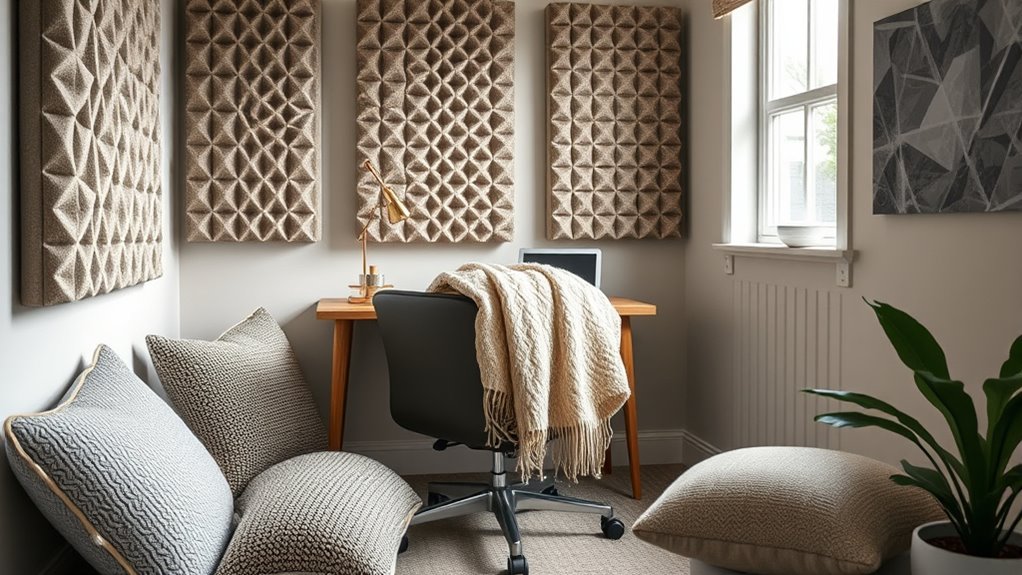
Soft furnishings and acoustic panels are effective tools for reducing noise in your home office. They absorb sound waves, making your space quieter and more comfortable. You can add decorative throw pillows to your seating area, which not only enhances style but also dampens noise. Plush area rugs are another great option; they cover hard floors that reflect sound, creating a softer environment. To maximize their effect, place acoustic panels on the walls where sound tends to bounce. Consider these tips:
- Use decorative throw pillows to add both comfort and sound absorption.
- Lay plush area rugs across your floor to reduce echo.
- Install acoustic panels strategically on walls for targeted noise control.
These simple upgrades make your home office more peaceful without breaking the bank.
Frequently Asked Questions
Can Weatherstripping Be Reused After Sealing Gaps?
Yes, reusable weatherstripping can often be reused after sealing window gaps, but it depends on its condition. You should inspect it for wear or damage before reapplying. If it’s still flexible and intact, you can remove and reposition it to seal additional gaps. Regularly check your weatherstripping to make sure effective sealing of window gaps and maintain energy efficiency. Properly maintained reusable weatherstripping provides a cost-effective way to keep noise out.
Do DIY Window Inserts Block Noise Effectively?
DIY window inserts can block noise effectively, turning your home into a fortress of silence. They act as powerful noise barriers, markedly reducing sound transmission from outside. Using window insulation materials, you can create custom inserts that fit snugly and prevent noise leaks. While not 100% soundproof, these inserts dramatically improve your home’s quietness, making your workspace peaceful and distraction-free. It’s like giving your windows superpowers against noise!
Will Adding Rugs Make a Significant Difference?
Adding rugs can make a noticeable difference in reducing noise, especially if you choose thick carpets with benefits like sound absorption. Rugs help dampen sound reflections and reduce echo, creating a quieter environment. For even better results, consider combining rugs with acoustic coatings on walls or ceilings, which further block noise transmission. Together, these solutions create a more comfortable, quieter home office experience without breaking the bank.
How Do I Choose the Best Wall Panels?
To choose the best wall panels, consider material options like foam, fabric-wrapped, or decorative wood. Think about your noise reduction needs and aesthetic preferences. Look for panels that are easy to install—adhesive backing or simple mounting hardware helps. Also, check reviews for durability and effectiveness. Select panels that fit your budget, match your decor, and provide the soundproofing quality you want for your home office.
Can Rearranging Furniture Improve Soundproofing Significantly?
Think of rearranging furniture as giving your room a friendly whisper rather than a loud shout; it can surprisingly improve sound absorption. By adjusting furniture placement and optimizing your room layout, you create natural barriers that help dampen noise. Although it’s not a full soundproofing solution, this simple tweak can make your home office quieter and more comfortable, all without breaking the bank.
Conclusion
By trying out these budget-friendly tips, you can turn your home office into a peaceful oasis. Sealing gaps, adding rugs, and rearranging furniture are simple steps that pack a punch. Remember, a little effort can go a long way—don’t let noise be the straw that breaks the camel’s back. With a bit of ingenuity, you’ll be able to focus better and keep distractions at bay without breaking the bank.