TL;DR

Get comfort and recovery gear delivered free with Prime
- Fast, free delivery on millions of items
- Prime Video, Amazon Music and more included
- Member-only deals all year
A Fit&Well contributor says year-round step-ups and Bulgarian split squats helped her feel steady while hiking to a 5,889-foot summit in Albania. Both exercises train one leg at a time and can be adapted with body weight or added load; her experience does not establish that they will produce the same result for every walker.
A Fit&Well contributor says year-round step-ups and Bulgarian split squats helped her feel steadier while hiking to a 5,889-foot (1,795-meter) summit in the Albanian Alps. The account offers walkers two accessible strength exercises to try, but it is a personal report, not evidence that the routines will prevent injury or make every climb easier.
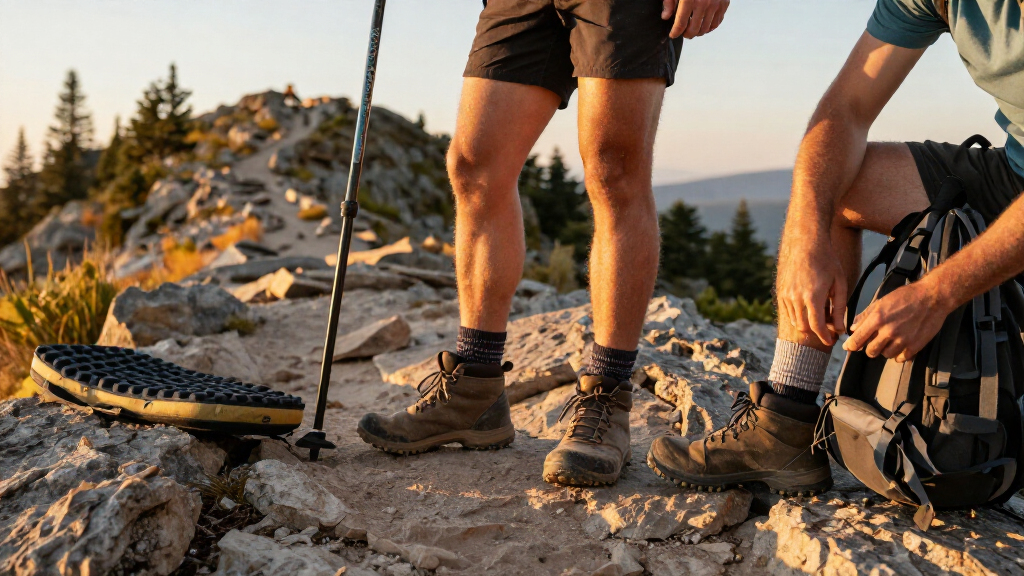
The contributor, who says she lives in London and seeks out hills and peaks on trips, described the Albanian hike as tough. She reported feeling confident moving over boulders and large rocks and having no knee niggles on the descent. She attributed that experience in part to regularly doing single-leg exercises, including the two movements her coach includes in her plan.
A step-up starts with one foot on a stable, raised platform. The walker presses through that foot to stand, then lowers the other foot with control. Fit&Well suggests 8–12 repetitions per side. A lower platform can make the movement easier; a higher one or a weight held at the chest can increase the challenge. The article says the controlled upward movement resembles part of the action of climbing a hill.
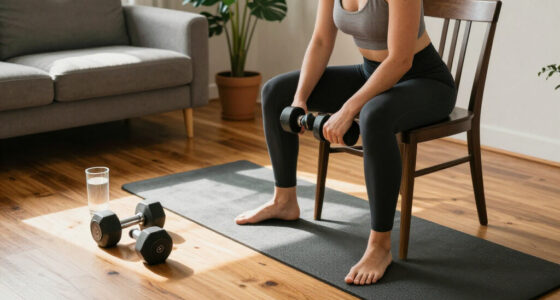
The second exercise is a Bulgarian split squat, also called a rear-foot-elevated split squat. With the top of one foot supported behind the body, the exerciser bends the front knee to lower, then pushes through the front foot to stand. The source recommends 8–12 repetitions per side and describes adding weights as a harder variation. Both exercises can be done at home with a suitable chair or platform, or in a gym.
Building Strength for Steeper Trails
Uphill walking asks the legs to repeatedly lift and move the body against gravity. These exercises offer a way to practice single-leg strength, with the step-up providing a movement pattern that resembles stepping onto higher ground. The source says both exercises work the hips, hamstrings, quadriceps and glutes, while also challenging core stability.
For walkers who have limited access to hills, strength work may be a practical way to train between outings. The exercises also have adjustable difficulty: people can begin with body weight and a lower step, then add height or resistance as appropriate. That flexibility is useful, but the contributor’s hike is an individual example; it does not establish a training result for others or show that these movements alone prepare someone for a particular route.
The report may be relevant to people seeking a straightforward addition to a walking routine, especially those who want to work each leg separately. As with any exercise, technique, current fitness and individual health needs affect what is suitable. Anyone with pain, an injury, or a pre-existing condition should seek advice from a qualified health professional before changing their routine.
Products Worth Considering

Ring Alarm 8-Piece Kit (2nd Gen) Home Security System

Blueair Blue Pure 511i Max Smart Air Purifier

Philips Hue Festavia Globe Outdoor String Lights, 8 Bulbs, 22 ft
As an affiliate, we earn on qualifying purchases.
Training Behind the Albanian Hike
The contributor says she loves walking and regularly looks for hills and peaks, but that living in London limits her access to challenging terrain. She makes trips further afield several times a year, according to her account. The summit in Albania reached 1,795 meters, or 5,889 feet, and the report describes the ascent as physically demanding.
Her coach programs the two exercises in her training plan, and she says she also includes them for her personal training clients. That is the basis for the recommendations in the article: a practitioner’s account of movements used in training, rather than a comparison of exercise plans or a controlled study. The source does not provide details such as the length of her training program, how frequently she did each exercise, or the route’s distance and elevation gain.
The article gives a simple progression for each movement. Step-ups can be adjusted by changing the platform height or holding a weight. For split squats, the rear foot is supported on a bench, chair or couch, while extra weight can make the exercise harder. A stable support and controlled movement are central to the instructions provided.
“It was tough, but I was still able to enjoy it because I do single-leg exercises year-round.”
— Fit&Well contributor
Limits of One Hiker’s Account
The source does not report a formal test of whether the exercises improved the contributor’s hiking performance. It also does not say how often she trained, how long she had practiced the movements, or what other preparation she did before the trip. Her account that she experienced no knee niggles on the descent is personal experience, not evidence that the exercises prevent knee pain or injuries.
It is also unclear how the exercises would affect walkers with different fitness levels, health histories or trail conditions. The article supplies suggested repetitions and easier or harder variations, but no individualized coaching assessment. The suitability of a particular step height, load or squat range may vary, and readers should not treat the reported summit as a promised outcome.
How Walkers Can Apply the Advice
Fit&Well’s report does not announce a follow-up study or a new training program. Its practical advice is to use step-ups and Bulgarian split squats as adaptable strength movements, starting with an appropriate body-weight version and progressing only when the movement can be performed with control. The suggested range is 8–12 repetitions on each side.
Walkers considering the exercises can choose a stable, suitable support and reduce the difficulty if balance or control is a problem. The report does not provide a full hiking-preparation plan, so readers should not assume these two movements replace walking practice, route planning or other preparation. Anyone with an injury, pain or a pre-existing condition should consult a qualified professional about suitable exercise. No further evidence or update is provided in the source.
Key Questions
Which two exercises did the contributor use?
She names step-ups and Bulgarian split squats, both performed one leg at a time.
What height was the summit?
The Fit&Well account identifies the Albanian Alps summit as 5,889 feet (1,795 meters).
How many repetitions does the report suggest?
It recommends 8–12 repetitions per side for each exercise. The source does not present this as a personalized prescription for every walker.
Can these exercises be done at home?
Yes. The report says they can be done at home using a suitable chair or other stable support, as well as in a gym. Step-ups can be made easier with a lower platform.
Do the exercises prevent knee pain on hikes?
The source does not establish that. The contributor reported no knee niggles on her descent, but that is an individual experience and does not show that the exercises prevent pain or injury for other people.
Source: fitandwell.com