TL;DR

Get comfort and recovery gear delivered free with Prime
- Fast, free delivery on millions of items
- Prime Video, Amazon Music and more included
- Member-only deals all year
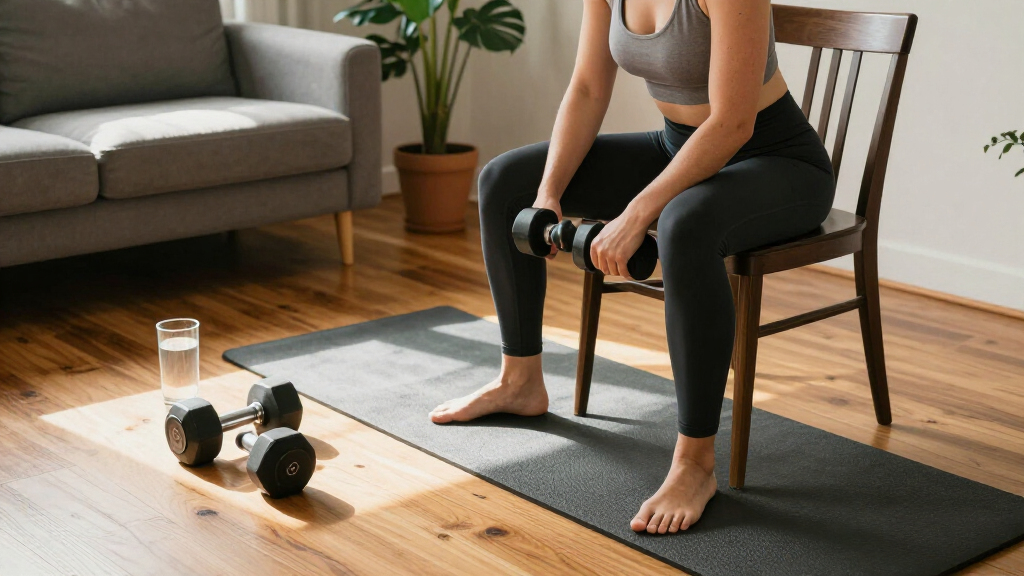
Personal trainer Pippa Sealey recommends using shorter rest periods and unilateral exercises to increase the challenge of home dumbbell workouts without buying heavier weights. A Fit&Well report describes a workout using supersets and tri-sets, but the routine is aimed at people already comfortable with basic strength exercises.
Personal trainer Pippa Sealey recommends shorter rest periods and unilateral exercises to make home dumbbell workouts more challenging when someone does not have access to heavier weights. A Fit&Well report describes how those methods can be used in supersets and tri-sets, offering a way to vary training without buying more equipment.
Sealey said she uses shorter rests and movements performed one side at a time, rather than bilateral exercises that use both sides together, when heavier loads are unavailable at home. The approach changes how a workout is structured and performed; the source does not claim it can replace heavier resistance for every training goal.
One method she suggests is a superset: perform a set of one exercise, move directly to a different exercise, and rest after completing the pair. Sealey also recommends agonist supersets, which pair exercises targeting the same muscle groups. The Fit&Well report says this can increase the challenge to those muscles.
The sample routine combines these approaches in groups of two or three exercises. It includes calf raises, hamstring bridge marches and wall sits, followed by movements such as single-leg Romanian deadlifts and split squats. The report says to complete each exercise sequence three times before moving to the next group; some groups include rest periods of 60 to 90 seconds after the sequence.
How the Methods Change Home Training
For people training at home with a limited set of dumbbells, Sealey’s suggestions offer ways to adjust the workout structure rather than adding equipment. Shorter rests can make a session more demanding, while unilateral movements place the work on one side at a time and ask the exerciser to control that movement independently.
The advice is practical, but the report presents it as a trainer’s approach, not as evidence that these methods guarantee continued progress. The routine also includes bodyweight exercises and is intended for people who are already confident with fundamental movements such as squats and deadlifts. That distinction matters for readers deciding whether to follow the sample workout as written.
adjustable dumbbells for home workouts
As an affiliate, we earn on qualifying purchases.
As an affiliate, we earn on qualifying purchases.
The Routine’s Intended Audience
The report frames the workout as an option for people who have been using the same dumbbells for a while and want a greater challenge without purchasing heavier ones. It does not provide a study or comparative data measuring the routine’s results. The recommendations are attributed to Sealey, a personal trainer who says she regularly trains with dumbbells.
According to the supplied workout instructions, exercises are performed in sequence, with rest after the full superset or tri-set rather than between every movement. The sample contains both dumbbell and bodyweight work, including push-ups and a wall sit. The report specifies controlled technique for several movements, such as keeping the hips level during a bridge march and maintaining an upright torso during split squats.
““You may also want to use more agonist supersets.””
— Pippa Sealey, as quoted by Fit&Well
non-slip exercise mat for strength training
As an affiliate, we earn on qualifying purchases.
As an affiliate, we earn on qualifying purchases.
What the Report Does Not Establish
The source does not specify when the Fit&Well report was published, provide research comparing these methods with heavier lifting, or report measured outcomes from the workout. It also does not say how often readers should perform the routine or how to adapt it for different fitness levels, injuries or available dumbbell weights. The claim that supersets increase the challenge is presented as Sealey’s training guidance, not as a quantified result.
Some details in the supplied workout text are incomplete: the exercise listing jumps from 3A to 3C, while the accompanying material also includes instructions for a single-arm dumbbell push press. Readers should consult the original workout instructions rather than assume the excerpt contains every exercise or detail.
resistance bands for home strength workouts
As an affiliate, we earn on qualifying purchases.
As an affiliate, we earn on qualifying purchases.
Applying the Advice Safely
The report provides a sample workout but does not announce a follow-up study or further development. People considering the routine should choose movements they can perform with control and keep the stated form guidance in view; the workout is described for those already comfortable with basic strength exercises. Anyone with a pre-existing condition, an injury or uncertainty about exercise technique should seek guidance from a qualified health or fitness professional before changing their training.
For readers interested in the routine, the next step is to review the full Fit&Well instructions, including the complete exercise sequence and rest periods, then decide whether the movements suit their experience and equipment. The source does not establish a universal timetable for increasing workout difficulty.
exercise timer for interval training
As an affiliate, we earn on qualifying purchases.
As an affiliate, we earn on qualifying purchases.
Key Questions
What two methods does Pippa Sealey recommend?
Sealey recommends shorter rest periods and unilateral movements, which train one side at a time, when heavier weights are not available at home.
What is a superset in the reported workout?
A superset means performing a set of one exercise followed directly by a set of another exercise, then resting after the pair. The sample workout also uses tri-sets, which add a third exercise before the rest.
Who is the sample workout intended for?
The Fit&Well report describes it as designed for people already confident with fundamental movements such as squats and deadlifts, rather than presenting it as a beginner routine.
Does the report show that these methods guarantee progress?
No. The source shares Sealey’s training recommendations but does not provide measured results or evidence that the methods guarantee progress for every person or goal.
Source: rss
Fall Picks
fall essentials
As an affiliate, we earn on qualifying purchases.