TL;DR

Get comfort and recovery gear delivered free with Prime
- Fast, free delivery on millions of items
- Prime Video, Amazon Music and more included
- Member-only deals all year
Physiotherapist and Pilates instructor Helen O’Leary shared four standing Pilates moves for people who struggle with floor-based exercise. The routine includes a spinal rotation, leg slides, marching and side leg lifts, with a chair or other stable surface available for support.
Physiotherapist Helen O’Leary has recommended four standing Pilates exercises for people who find it difficult to get down to the floor for a workout. Published by Fit&Well, the routine uses upright movements to work on mobility, balance and core stability, and includes options to hold a stable surface for support.
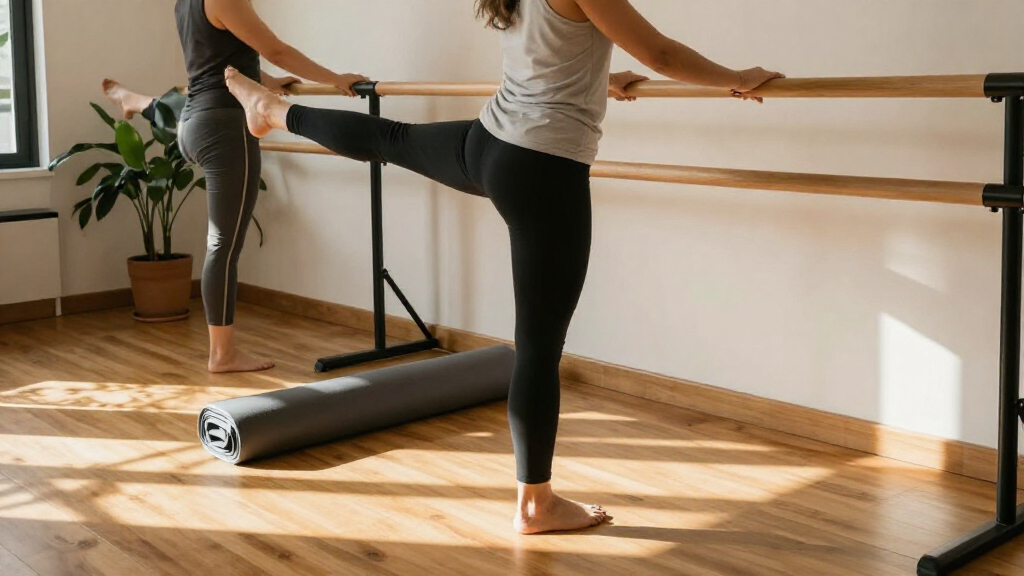
The four exercises are the standing book opener, the scooter, marching and standing hip abduction. O’Leary, clinical director at Complete Pilates, says standing moves can challenge the body in ways that floor-based exercises do not. The report presents the exercises as a home routine, not as a medical treatment or a substitute for individual instruction.
For the book opener, stand with feet about hip-width apart and hands behind the head, then rotate the rib cage and head to one side. The report suggests three sets of four to five repetitions per side. O’Leary’s technique cue is to keep the pelvis facing forward when seeking a more pronounced rotation.
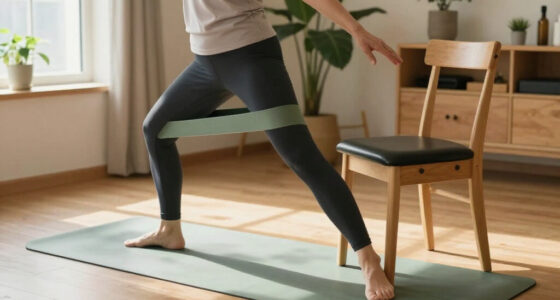
The scooter starts with hands resting lightly on a surface. Hinge at the hips, shift weight onto one leg, then slide the other foot backward and forward while keeping its toes on the floor. Fit&Well suggests three rounds of 10 to 15 repetitions per side. A sock or towel under the moving foot may help it slide on a wooden floor, according to the report. For marching, lift one knee while standing on the other leg, then switch sides; the suggested amount is three rounds of 10 to 15 per side. A table, chair back or countertop can provide support.
A Standing Option for Pilates
The routine offers an alternative format for people who have trouble getting onto the floor or prefer to exercise upright. That can make Pilates-style movement more accessible, although the report does not say that standing exercises suit everyone or that they produce specific health outcomes.
O’Leary says standing work can challenge core strength and balance while asking the body to remain upright. She also says it may counter effects of prolonged sitting by encouraging better posture. These are her explanations for the routine, rather than results from a study cited in the article.
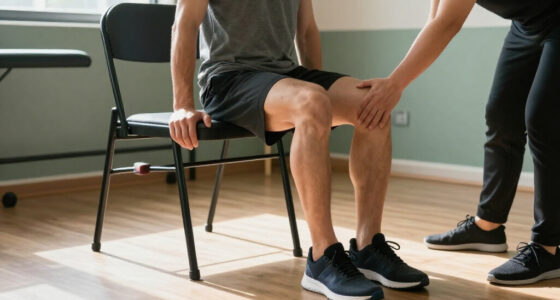
The exercises also have adjustable support: users can keep a hand near or on a stable surface, and the hip-abduction move can be stopped when balance begins to falter. That makes the routine easier to adapt than a sequence that requires unsupported balance throughout. People should still work within their ability and stop if a movement causes pain or feels unsafe.
Products Worth Considering

Blueair Blue Pure 511i Max Air Purifier for Home and Bedroom

Ring Outdoor Cam 4K Plus Battery Security Camera, 3-Pack, White

Dreame L40 Ultra Gen 2 Robot Vacuum and Mop
As an affiliate, we earn on qualifying purchases.
How the Four Moves Work
Pilates is commonly associated with mat exercises or a reformer, but the Fit&Well report describes a session that stays on the feet. Its focus is not on equipment or a full class plan; it is a short selection of movements aimed at mobility, balance and core stability.
The standing book opener adds rotation through the upper body while the legs remain planted. The scooter involves a small hip hinge and a controlled sliding leg. Marching asks the person to briefly balance on one leg, while standing hip abduction lifts a straight leg out to the side. Together, the moves vary the demands on the body without requiring a mat or reformer.
The report recommends three sets or rounds for each exercise, with different repetition ranges. It does not provide a total workout duration, a warm-up, rest intervals or a weekly schedule. Readers should not treat the listed repetitions as a personalized program, particularly if they have balance concerns or an existing injury or health condition.
“Standing Pilates exercises might sound as though they’re easy, but they test you in many ways that floor-based moves won’t.”
— Helen O’Leary, physiotherapist and clinical director at Complete Pilates
Limits of the Published Routine
The supplied report does not give a publication date, identify a tested participant group or cite research measuring the effects of these four exercises. Its descriptions of posture, core engagement and mobility should be read as the instructor’s guidance, not as a guarantee of outcomes.
It is also unclear whether the routine is appropriate for people with particular injuries, pain, limited balance or other health conditions. The article gives general support suggestions but no individualized screening or modifications for specific diagnoses. Anyone unsure whether the movements are suitable for them should seek advice from a qualified health professional or Pilates instructor.
Adapt the Moves to Your Ability
The report does not announce a follow-up program or a next publication milestone. For readers trying the exercises, its immediate guidance is practical: use a stable surface for support during the scooter, marching or leg lift, keep the scooter’s moving toes in contact with the floor, and stop the hip-abduction repetition when balance begins to go.
Start with a comfortable range of motion rather than forcing a deeper twist or higher leg lift. A chair or countertop should be stable and within reach, and the exercise area should be clear of objects that could cause a trip. If a movement causes pain, dizziness or unusual discomfort, stop and seek appropriate advice before continuing.
Key Questions
Which standing Pilates moves does Helen O’Leary recommend?
She recommends the standing book opener, scooter, marching and standing hip abduction. Fit&Well gives separate repetition ranges for each move.
Can these exercises be done without equipment?
The moves do not require a mat or reformer. For balance, the report suggests using a stable table, chair back or countertop. A sock or towel under the moving foot may help with the scooter on a wooden floor.
How many repetitions does the routine suggest?
The book opener is listed at three sets of four to five repetitions per side. The scooter and marching are listed at three rounds of 10 to 15 per side, while standing hip abduction is listed at up to 10 repetitions per side. These are general instructions from the report, not a personalized prescription.
Are the exercises suitable for everyone who has trouble getting on the floor?
The report does not establish that the routine is suitable for everyone. People with pain, injuries, balance difficulties or health conditions should consider getting guidance from a qualified professional before trying the moves.
Source: fitandwell.com