
TL;DR

Get comfort and recovery gear delivered free with Prime
- Fast, free delivery on millions of items
- Prime Video, Amazon Music and more included
- Member-only deals all year
Physical therapist Devin Trachman recommends the sit-to-stand as a practical strength exercise for people who want to support walking and everyday mobility. She suggests 2–3 sets of 8–10 repetitions, with a chair or other stable support available as needed. The report offers expert guidance, not evidence that one exercise works for everyone.
Physical therapist Devin Trachman recommends the sit-to-stand as a starting exercise for people seeking to build strength used in walking and other daily tasks. In a Fit&Well report, she suggests 2–3 sets of 8–10 repetitions, while advising people who need support to use a chair with armrests or another stable surface.
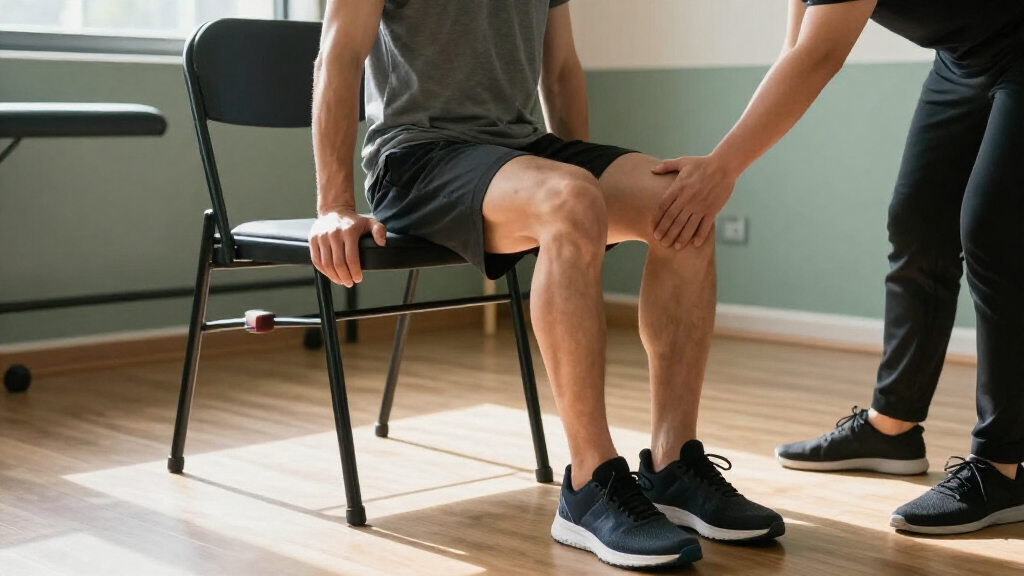
The sit-to-stand involves rising from a sturdy chair and lowering back into it with control. Trachman says the movement works the quadriceps, gluteus maximus and core stabilizers, muscles involved in standing and moving around. She describes chair rises as a functional activity that can also relate to climbing stairs and getting up independently.
For the exercise, sit near the front of the chair with feet flat and about shoulder-width apart. Lean the chest slightly forward while keeping the back straight, then push through the heels to stand upright. Lower back into the seat slowly. The report lists 60 seconds of rest between sets and advises avoiding hand support if that can be done safely.
People who cannot rise without assistance can use the chair’s armrests for light support or place a sturdy table or support in front of them, according to the report. Trachman is identified as a clinic director and physical therapist at Physical Therapy Central in West Edmond, Oklahoma. Her recommendation is presented as professional guidance; the source does not report a new clinical trial or comparative study evaluating the exercise.
Building Strength for Everyday Walking
The recommendation focuses on a practical barrier to walking: movements such as standing up can become harder when strength, balance or endurance declines. Trachman says that reduced activity can contribute to weaker muscles and make walking feel more difficult, potentially creating a cycle in which people move less because movement feels tiring or uncomfortable. This is her clinical explanation in the report, not a measured finding from a study described there.
A chair-based exercise may be easier to start than a walking program for some people, because it can be done at home and adjusted with support. The broader point is that strengthening everyday movement may help people feel more capable of remaining active. The report does not establish that sit-to-stands alone prevent falls, restore mobility or improve walking for every person; outcomes depend on individual circumstances and the exercise being appropriate for them.
chair exercise for strength and mobility
As an affiliate, we earn on qualifying purchases.
As an affiliate, we earn on qualifying purchases.
Why Chair Rises Relate to Walking
The Fit&Well report frames its advice around age-related changes in muscle mass and mobility, while noting that reduced walking is not necessarily caused by age alone. Trachman says people may walk less because life becomes busy, pain develops or walking feels more tiring. In her account, lower activity can be followed by reduced strength, balance and endurance.
Rather than advising people simply to walk more, Trachman favors building strength and confidence that may make walking feel easier. The article identifies her as a doctor of physical therapy and an orthopedic clinical specialist, credentials relevant to her role as the source of the recommendation. It does not provide a patient study, a comparison with other exercises or evidence that this is the best exercise for all people seeking to improve walking.
““If I could only prescribe one exercise to improve walking, this would be it.””
— Devin Trachman, physical therapist, as quoted by Fit&Well
As an affiliate, we earn on qualifying purchases.
Who Should Modify the Exercise
The report does not specify which groups of people were assessed or provide evidence comparing sit-to-stands with other exercises. It also does not establish how quickly someone might see a change, whether the suggested sets and repetitions suit every ability level, or what effect the exercise has on walking outcomes across a wider population.
People’s strength, balance, pain and medical histories differ. The source recommends support for those who need it but does not give individual screening criteria. Anyone with pain, balance concerns, a recent injury or a health condition may need advice from a qualified health professional before starting or changing an exercise routine.
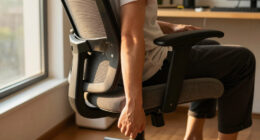
sturdy kitchen or dining chair with armrests
As an affiliate, we earn on qualifying purchases.
As an affiliate, we earn on qualifying purchases.
A Starting Point, Not a Full Plan
The source provides an exercise recommendation and a suggested routine, but it does not announce a study, program or follow-up assessment. Readers considering the movement can start by using a sturdy chair and the support described in the report, keeping the movement controlled and adapting it to their ability. They should stop if the exercise causes pain or feels unsafe.
For people who have difficulty standing, experience persistent pain or are unsure what level of support is appropriate, an assessment from a physical therapist or another qualified clinician can help tailor activity to their needs. The report does not say that Trachman’s suggested exercise replaces a personalized rehabilitation or fitness plan.
As an affiliate, we earn on qualifying purchases.
Key Questions
Which exercise did Devin Trachman recommend?
She recommended the sit-to-stand: rising from a chair and lowering back down with control.
How many sit-to-stands does the report suggest?
The report lists 2–3 sets of 8–10 repetitions, with about 60 seconds of rest between sets. That is the recommendation in the article, not an individualized prescription for every reader.
What if I need my hands to stand up?
The report suggests using a chair with armrests for light support or a sturdy support in front of you. Choose an arrangement that feels stable, and seek professional guidance if you are unsure whether the exercise is safe for you.
Does the report prove sit-to-stands improve walking for everyone?
No. It reports a physical therapist’s recommendation and rationale, not a clinical trial establishing that the exercise improves walking for everyone or is superior to other exercises.
Source: rss
Fall Picks
fall essentials
As an affiliate, we earn on qualifying purchases.