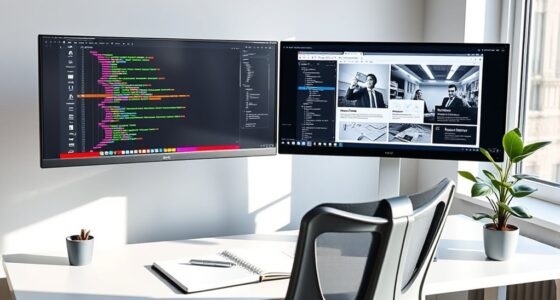
Smart notebooks and digital note-taking devices can genuinely boost your organization, efficiency, and sustainability by replacing traditional paper and offering seamless syncing across devices. They feature durable pens, long battery life, and useful tools like handwriting recognition and search functions, making note management more accessible. While they come with some challenges like compatibility and initial costs, their benefits often outweigh the pitfalls. Want to see how these tools can transform your workflow? Keep exploring to find out more.
Key Takeaways
- Digital note-taking devices offer enhanced organization, searchability, and seamless syncing, making note management more efficient than traditional notebooks.
- High-quality smart notebooks and pens provide durability and accuracy, reducing paper waste and supporting environmental sustainability.
- While they improve productivity, initial costs, device compatibility, and potential tech glitches are practical considerations.
- Digital notes facilitate collaboration and integration with other apps, boosting overall workflow and accessibility.
- Long-term benefits often outweigh costs, especially for users prioritizing convenience, sustainability, and future-proof technology.
The Rise of Digital Note-Taking Devices

Digital note-taking devices have rapidly transformed how people capture and organize information. You’ll notice that high-quality pens designed for these devices offer impressive pen durability, allowing you to write smoothly without worrying about quick wear and tear. Battery longevity is another key feature—many devices now last for days on a single charge, making them reliable for long meetings or study sessions. This shift means you can ditch traditional notebooks and paper, reducing clutter and increasing efficiency. As more people adopt these devices, their user-friendly interfaces and seamless syncing capabilities further boost productivity. Additionally, color accuracy in digital displays ensures that images and notes are clear and true to life, enhancing the overall user experience. With advancements in pen durability and battery longevity, digital note-taking devices become more practical, durable, and suited for everyday use. These improvements in energy efficiency also help to minimize environmental impact, making them a sustainable choice for users worldwide. This evolution continues to shape how you manage your information efficiently.
How Smart Notebooks Work and Their Features

Smart notebooks combine traditional paper with embedded technology to make note-taking more efficient. They use special paper or covers with sensors to capture your digital handwriting, which can then sync with apps or cloud services. These notebooks often feature digital handwriting recognition, allowing your notes to be converted into editable text. Hardware compatibility is key, as smart notebooks work with specific pens and devices, ensuring smooth integration.
Smart notebooks blend traditional writing with digital tech for seamless note-taking and conversion.
- Digital handwriting is captured seamlessly with compatible pens
- Notes sync instantly across devices via apps
- Built-in sensors detect strokes and pressure
- Compatibility with various hardware platforms enhances usability
- Some models offer reusable pages, reducing waste
Benefits of Going Digital With Notes

Switching to digital notes offers numerous advantages that can enhance your productivity and organization. Digital handwriting feels natural, mimicking traditional writing while providing instant access to your notes. With cloud syncing, your notes are automatically saved and accessible across all devices, eliminating the risk of losing important information. You can easily search handwritten or typed notes, saving time and improving efficiency. Collaboration becomes simple, as you can share notes instantly with colleagues or classmates. Here’s a quick look at some benefits: detect passive voice
Challenges and Limitations of Digital Note Solutions

While digital note solutions offer many benefits, they also come with notable challenges that can hinder their effectiveness. Privacy concerns are a major issue, as sensitive information might be vulnerable if security isn’t robust. Device compatibility can also pose problems, making it frustrating if your notes don’t sync properly across different gadgets. Additionally, tech glitches or software bugs can cause data loss or interruptions during important moments. Learning curves and unfamiliar interfaces may slow down your note-taking process. Finally, reliance on battery life means your notes could be inaccessible if your device runs out of power unexpectedly. These limitations highlight that digital note solutions aren’t foolproof and require careful consideration before fully replacing traditional methods.
Comparing Traditional and Digital Note Methods
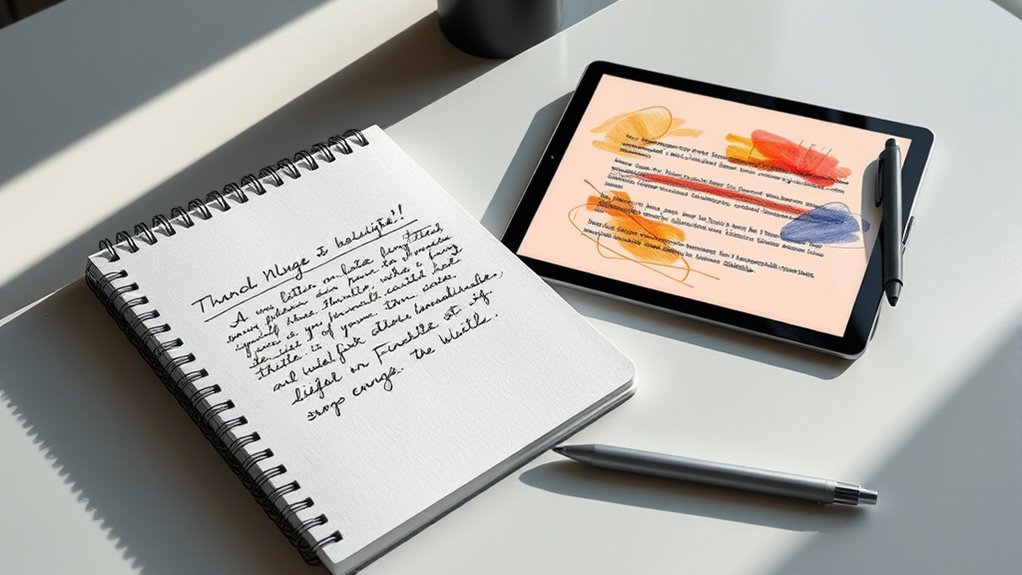
You’ll find that digital note methods often offer better accessibility and convenience, letting you access your notes from various devices anytime. Traditional notes can be harder to organize and search through quickly. Considering these points helps you decide which method suits your workflow best.
Accessibility and Convenience
Digital note-taking offers unmatched accessibility and convenience compared to traditional methods. You can access your notes anytime, anywhere, without the need for physical space or carrying multiple notebooks. However, accessibility barriers like device compatibility can sometimes limit this ease, especially if your devices aren’t fully compatible or up-to-date. Digital notes sync across platforms, making it simple to review or edit on different devices. You can also easily share notes with others, saving time and effort. On the flip side, reliance on technology means power outages or software glitches can temporarily hinder access. It’s essential to guarantee your devices work well together and that your digital tools suit your needs. This flexibility makes digital note-taking a powerful, convenient option for many users.
Organization and Searchability
Organizing and searching your notes is often more efficient with digital tools than with traditional methods. Digital note-taking allows you to create a structured system with folders, tags, and labels, enhancing note organization. You can quickly locate specific information using search functions, saving time compared to flipping through pages of a physical notebook. Digital notes are easily editable, allowing you to update or reorganize content without clutter. Many apps also support keyword searches, making search efficiency much higher than manual skimming. With traditional notebooks, finding a specific detail can be tedious and time-consuming, especially as notes grow. Digital note systems streamline both organization and search processes, helping you stay more productive and ensuring you can access important information instantly.
Real-World Applications and User Experiences

Smart notebooks and digital note-taking tools have become invaluable across various fields, transforming how you capture, organize, and access information in real-world settings. Professionals use them to streamline creative workflows, ensuring ideas are quickly documented and easily revisited. Students benefit from instant synchronization and organization, reducing clutter and lost notes. Creatives find that digital tools enhance collaboration and inspire innovation. Additionally, these tools can lower environmental impact by decreasing paper waste. You may notice that users report faster decision-making, improved project management, and more sustainable habits. The adaptability of smart notebooks allows for diverse applications—from brainstorming sessions to fieldwork—making them versatile assets in everyday life. These real-world experiences demonstrate their potential to boost efficiency and promote eco-conscious practices. Moreover, many users appreciate the high-quality, trusted information these tools can provide, enriching their California life with reliable insights. Incorporating digital organization techniques can further optimize your workflow and maximize the benefits of these innovative tools.
Is Investing in Smart Notebooks Justified?

You need to consider whether the benefits of smart notebooks outweigh their costs and if they match your specific needs. Evaluating the functionality they offer against what you actually require can help determine if the investment makes sense. Additionally, think about the long-term value and whether these notebooks will support your productivity over time. Incorporating connected devices into your workflow can enhance the overall usefulness of digital note-taking tools.
Cost-Benefit Analysis
Investing in smart notebooks can seem appealing, but it’s important to weigh their costs against the potential benefits. While they offer improved organization and digital convenience, consider the financial investment and long-term value. Smart notebooks often provide better cost efficiency over time, as you replace paper and pens. They also reduce environmental impact by cutting down on paper waste. Additionally, Vetted – Nightingale Studio factors can influence the durability and reliability of these devices, making it essential to choose quality options. Furthermore, understanding the sustainable benefits of using digital alternatives can help you make a more environmentally conscious decision. Considering the adoption and usability of these devices is also crucial, as ease of use can significantly impact their practicality. Ultimately, your decision should balance the tangible benefits with the costs involved, ensuring you make a choice that aligns with your needs and sustainability goals.
Functionality vs. Needs
While smart notebooks offer a range of advanced features, it’s essential to evaluate whether these functionalities align with your actual needs. Your personal preference plays a significant role in this decision. Some users value seamless digital integration, while others prefer traditional writing. Consider the technological limitations, such as app compatibility and device connectivity, which may restrict usability.
| Feature | Personal Preference |
|---|---|
| Digital sync speed | Fast sync appeals to productivity-focused users |
| Writing experience | Some prefer paper feel over digital input |
| Device compatibility | Limited compatibility may hinder needs |
If these features match your habits and priorities, investing could be worthwhile. Otherwise, the limitations or personal preferences might outweigh the benefits.
Long-Term Value
Evaluating the long-term worth of smart notebooks involves weighing their durability, ongoing costs, and how well they adapt to your evolving needs. Think about future proofing—will this investment stay relevant as technology advances? Consider environmental impact; reusable options often reduce waste compared to traditional notebooks. Ongoing costs, like replacements or subscriptions, can add up over time. Assess whether the device’s durability justifies the price. Smart notebooks designed with modular components may better serve you long-term, avoiding premature obsolescence. Keep in mind that a well-chosen smart notebook can evolve with your needs, offering sustained value. Ultimately, investing in one makes sense if it aligns with your habits, reduces environmental footprint, and remains adaptable over time.
Frequently Asked Questions
How Secure Is My Digital Handwritten Data Against Hacking?
Your digital handwritten data’s security depends on the encryption protocols used by your device or app. If strong encryption is in place, your notes are well-protected against hacking attempts. However, data privacy also relies on the provider’s security measures and your own practices, like using strong passwords. Stay vigilant, update software regularly, and choose reputable apps to guarantee your digital notes remain private and secure from unauthorized access.
Can Smart Notebooks Replace All Traditional Writing Tools Completely?
Smart notebooks can’t fully replace all traditional writing tools because digital handwriting still faces limitations, and many prefer the feel of analog supremacy. You might find digital notes convenient, but for certain tasks, pen and paper offer unmatched tactile feedback and simplicity. While smart notebooks are great for quick access and sharing, they complement rather than completely replace traditional tools, especially when authenticity and sensory experience matter most.
What Is the Durability and Lifespan of Digital Note Devices?
Think of your digital note device as a trusty old tree—its durability depends on how well you care for it. Typically, device longevity varies from 3 to 5 years, with good maintenance extending its life. Battery life is essential; many devices last about a day or more on a single charge. Keep it protected and updated, and your device will serve you well, like a loyal companion through many notes.
Are Smart Notebooks Environmentally Friendly Compared to Paper?
Smart notebooks can be more environmentally friendly than traditional paper, as they often use recyclable materials and reduce paper waste. However, consider their energy consumption, as digital devices require electricity, which may have a higher environmental impact depending on energy sources. If you use them wisely and choose devices with eco-friendly features, smart notebooks can help lower your carbon footprint and promote sustainability.
How Do Digital Notes Integrate With Existing Productivity Software?
Digital notes seamlessly integrate with your existing productivity software through cloud synchronization, so your notes stay updated across all devices. Handwriting recognition converts your handwritten notes into editable text, making it easy to search, organize, and share. This integration streamlines your workflow, saving you time and effort. You can effortlessly move from taking quick notes to editing documents, ensuring your productivity remains smooth and efficient.
Conclusion
Ultimately, whether smart notebooks are worth it depends on your habits and needs. As technology continues to evolve, you might find yourself unexpectedly embracing digital notes—especially when you realize how seamlessly they fit into your busy life. Sometimes, the biggest surprise is how a simple change can boost your productivity. So, next time you pick up a pen, consider whether this new tool could open your full potential—perhaps just when you least expect it.