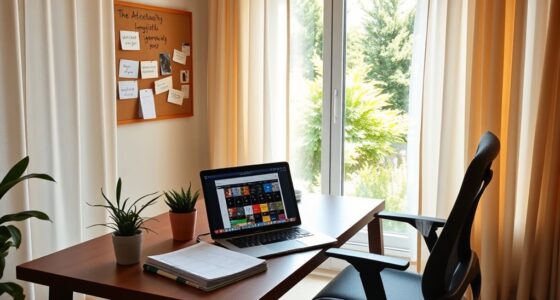
To improve focus as a remote worker, try incorporating simple mindfulness and meditation techniques like breathing exercises and body scans. Take a few minutes during breaks to focus on slow, deep breaths or systematically notice sensations from your toes to your head. These practices help reduce stress and bring calm, making it easier to stay present and focused. Keep exploring these techniques, and you’ll discover more ways to create a balanced remote work routine.
Key Takeaways
- Incorporate short breathing exercises, like slow inhales and exhales, to instantly calm the mind during work.
- Use body scans to identify and release physical tension, enhancing present-moment awareness.
- Integrate mindfulness moments into daily routines, such as during breaks or between tasks, for sustained focus.
- Practice regular meditation to build mental clarity and reduce work-related stress over time.
- Develop mindful habits that foster calmness and concentration, improving overall productivity and well-being.

Have you ever wondered how to find calm amid life’s chaos? As a remote worker, you often juggle deadlines, meetings, and endless to-do lists, making it hard to stay centered. That’s where mindfulness and meditation come into play, offering simple yet powerful ways to reset your mind and body. One effective method is to incorporate breathing exercises into your daily routine. These exercises are straightforward and can be done anywhere—whether you’re at your desk, taking a break outside, or even in your car. Focus on slow, deep breaths, inhaling through your nose and exhaling through your mouth. This helps slow your heart rate, reduce stress hormones, and bring your attention back to the present moment. When you consciously breathe, you’re giving your nervous system a signal that it’s safe to relax, which can be particularly helpful during high-pressure workdays. Over time, breathing exercises become a reliable tool to manage anxiety and maintain clarity amidst chaos.
Another powerful technique is the body scan. This practice involves systematically bringing your focus to different parts of your body, noticing sensations without judgment. You might start at your toes, observing any tension or discomfort, then slowly move upward—through your legs, torso, arms, neck, and head. As you do this, you become more aware of how your body holds stress and tension, often unconsciously. By intentionally scanning your body, you create space to release that tension, which can improve both physical and mental well-being. The body scan encourages you to stay present, grounding you in the here and now instead of spiraling into worries about future tasks or past mistakes. It’s especially useful after a long stretch of work or during breaks, helping you reset your energy and focus for the tasks ahead.
Both breathing exercises and body scans are accessible and require no special equipment or setting. They can be integrated seamlessly into your workday, whether it’s a quick five-minute pause or a longer meditation session. The key is consistency—regular practice helps these techniques become second nature, giving you a toolkit to manage stress whenever life gets overwhelming. As you develop these mindful habits, you’ll find it easier to maintain focus, reduce anxiety, and foster a sense of calm that persists beyond your meditation moments. Remember, even small efforts can lead to significant improvements in your overall well-being, making your remote work experience more balanced and manageable.
Frequently Asked Questions
How Long Should Daily Meditation Sessions Be for Beginners?
For beginners, meditation duration should start small, around 5 to 10 minutes daily, following beginner guidelines. You can gradually extend your sessions as you become more comfortable. Focus on consistency rather than length, as even short daily practices can improve focus and reduce stress. Listen to your body and mind, and increase your meditation duration over time, aiming for 15-20 minutes once you feel more confident in your practice.
Can Meditation Improve Productivity for Remote Workers?
Think of meditation as a reset button for your mind. Yes, it can boost your productivity by sharpening your focus and reducing stress. The mindfulness benefits help you stay present, avoid distractions, and work more efficiently. Regular meditation trains your brain like a muscle, making it easier to concentrate on tasks. So, yes, incorporating meditation into your routine can considerably enhance your productivity as a remote worker.
What Are Common Obstacles to Maintaining Mindfulness at Home?
Distractions at home and lack of motivation are common obstacles to maintaining mindfulness. You might find it hard to stay present when household chores or family needs interrupt your focus. Additionally, feeling unmotivated can make it tough to prioritize mindfulness practices. To overcome these, set clear boundaries, create a dedicated space for mindfulness, and remind yourself of its benefits. Consistency and intentional effort help you stay centered despite these challenges.
Are There Specific Meditation Techniques Suited for Busy Schedules?
Think of your busy schedule as a rushing river—you need quick, effective ways to catch your breath. You can try short breathing exercises or quick mindfulness practices, like a 2-minute pause to focus on your breath or surroundings. These techniques act like tiny anchors, helping you regain focus amid chaos. Even in a tight window, these simple methods restore calm and clarity, keeping you grounded throughout your hectic day.
How Do I Stay Consistent With My Mindfulness Practice?
To stay consistent with your mindfulness practice, prioritize it as a daily habit, even if it’s just a few minutes. Recognize the mindfulness benefits, like reduced stress and improved focus, which motivate you to keep going. Be aware of meditation challenges, such as distractions, and adjust your routine accordingly. Set reminders, create a peaceful space, and be gentle with yourself to build lasting consistency.
Conclusion
By embracing mindfulness and meditation, you’re planting seeds of calm in your busy mind, allowing clarity to blossom amid chaos. These practices serve as your guiding lighthouse, steering you safely through the storm of deadlines and distractions. Remember, each moment of presence is a gentle ripple, shaping a peaceful oasis within. Keep nurturing this inner sanctuary, and you’ll find your focus sharpening, transforming your remote work into a harmonious journey of growth and resilience.