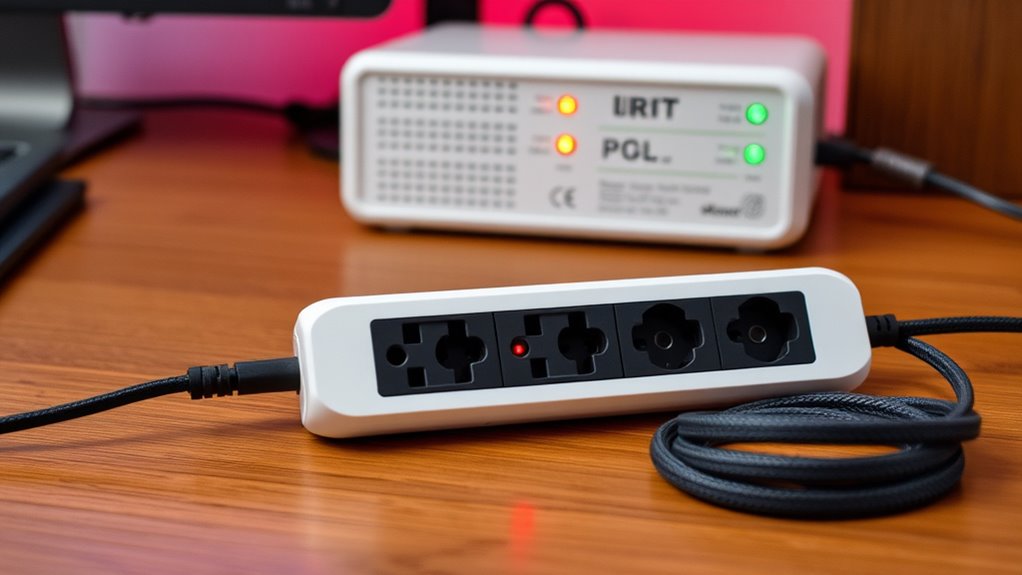

To protect your tech, use surge protectors to block voltage spikes and UPS units to provide backup power during outages. Surge protectors divert excess voltage away from your devices, preventing damage, while UPS systems ensure your equipment stays on and data stays safe when power cuts out. For thorough security, consider combining both devices for extensive coverage. Keep exploring to discover how each helps safeguard your valuable electronics more effectively.
Key Takeaways
- Surge protectors prevent electronics damage from voltage spikes by diverting excess energy.
- UPS units provide backup power during outages, allowing safe shutdowns and preventing data loss.
- Combining surge protectors with UPS offers comprehensive protection against both surges and power failures.
- Choose devices with high joule ratings and low clamping voltage for better surge mitigation.
- Properly understanding and selecting the right protection helps avoid costly hardware damage and data loss.

If you want to protect your sensitive electronic devices from power surges and outages, understanding the basics of surge protectors and uninterruptible power supplies (UPS) is vital. Power surges are sudden increases in voltage that can damage your electronics, potentially leading to data loss, hardware failure, or costly repairs. A surge protector acts as a barrier, diverting excess voltage away from your devices and preventing harm. It’s a simple device that plugs into your wall outlet, providing a safer outlet for your computers, TVs, and other sensitive gear. However, not all surge protectors are created equal. Look for ones with a high joule rating, which indicates better energy absorption capacity. The higher the joule rating, the more protection your devices will have during a significant power surge. It’s also wise to check the clamping voltage—the lower the number, the quicker the surge protector reacts to voltage spikes.
While surge protectors are great for handling brief surges, they don’t provide backup power during outages. That’s where uninterruptible power supplies come in. A UPS offers a continuous power source, keeping your devices running smoothly even when the main power grid goes down. This is especially vital for computers, servers, and networking equipment. When a power outage occurs, a UPS kicks in instantly, providing enough backup power to save your work and shut down devices properly. This prevents data corruption and hardware damage caused by abrupt power loss. Battery capacity determines how long your devices can stay powered during an outage, so choose a UPS with sufficient runtime for your needs. Some models also include surge protection features, giving you combined defense against both power surges and outages.
Additionally, understanding the contrast ratio of your devices can help ensure your electronics are protected from potential image quality issues caused by electrical fluctuations. Understanding the differences between these devices helps you make smarter choices based on your needs. For example, if you’re concerned primarily about power surges that could damage your electronics, a high-quality surge protector may suffice. But if you’re running critical equipment or want to avoid interruptions, investing in a UPS is a wise move. Remember, surge protectors don’t provide backup power, and UPS units don’t necessarily handle large power surges unless they include surge suppression. Combining both can offer complete protection: a surge protector to guard against voltage spikes and a UPS to ensure backup power and safe device shutdowns. By grasping these fundamentals, you can better safeguard your tech investments and avoid costly mishaps caused by electrical issues.
Frequently Asked Questions
How Do I Choose the Right Surge Protector for My Devices?
To choose the right surge protector, look for one with high surge protector ratings to guarantee maximum protection. Make sure it’s compatible with your devices’ power needs, especially if they’re high-end electronics. Check the joule rating, number of outlets, and whether it includes features like EMI/RFI noise filtering. Select a trusted brand, and consider one with a warranty for added security. Your devices will thank you for the right choice.
Can a UPS Protect Against Power Surges?
You might think a UPS fully safeguards your devices from lightning strikes or electrical noise, but that’s not entirely true. While a UPS offers some surge protection, especially against electrical noise and minor surges, it isn’t designed to withstand powerful lightning strikes. To better shield your tech, combine a UPS with a high-quality surge protector. This layered approach ensures stronger defense against unpredictable power surges and electrical disturbances.
What Is the Lifespan of a Typical UPS Battery?
Your UPS battery typically lasts between 3 to 5 years, depending on usage and environmental conditions. Regular battery maintenance, like keeping it clean and ensuring proper ventilation, can prolong its lifespan. To estimate its remaining life, monitor its performance during power outages and replace it when you notice reduced runtime. Proper upkeep helps ensure your UPS continues protecting your devices when you need it most.
Are There Portable Surge Protectors for Travel?
Yes, there are portable surge protectors designed for travel. These travel accessories are compact, lightweight, and often feature adjustable power compatibility to suit different outlets worldwide. You can easily pack them in your bag to safeguard your devices from power surges during trips. Make sure to check their voltage ratings and compatibility with your destination’s outlets to guarantee they work seamlessly and protect your tech wherever you go.
How Often Should I Test My UPS System?
Think of your UPS like a trusty sidekick—regular testing keeps it ready for battle. You should test your UPS at least once a month to guarantee power outage preparedness and reliable surge protector maintenance. During the test, unplug devices to simulate an outage and confirm your UPS kicks in smoothly. Consistent checks help you catch issues early, so your tech stays protected when you need it most.
Conclusion
Now that you know the basics of surge protectors and UPS systems, you’re better equipped to shield your tech from unexpected power surges. Think of it like installing a sturdy moat around your castle—preventing invaders from causing chaos. Whether you’re safeguarding your vintage radio from a lightning bolt or your latest laptop, these devices keep your electronics safe and sound. Remember, a little protection now can save you a lot of headaches later—don’t wait until the house is on fire!