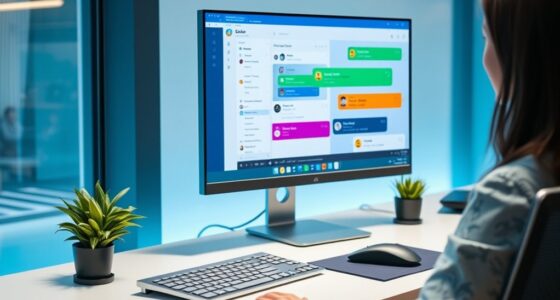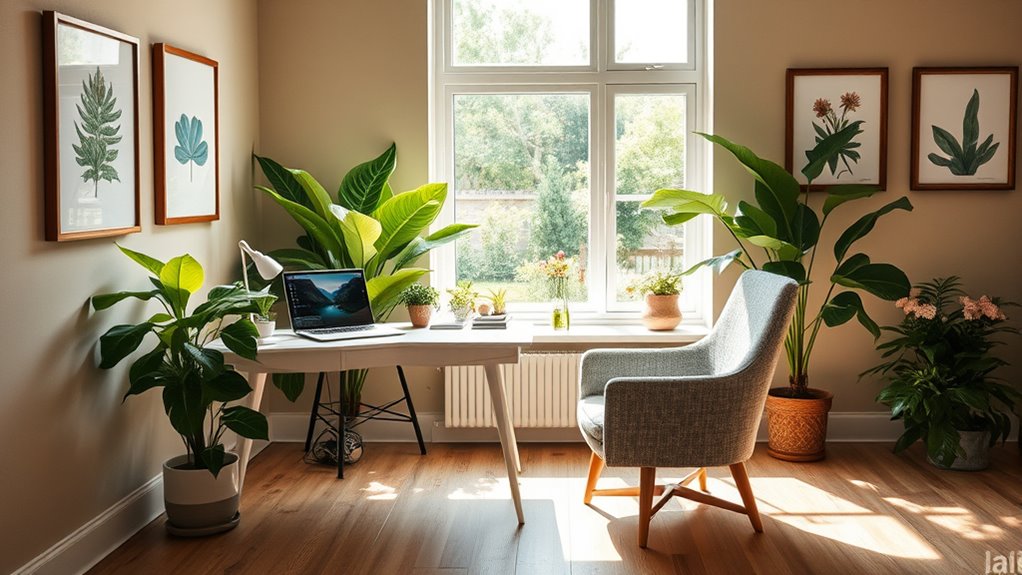

Setting up a green home office helps you cut your carbon footprint considerably. By using solar panels, you generate renewable energy, decreasing reliance on fossil fuels. Ergonomic furniture reduces physical strain and waste, while energy-efficient devices and LED lighting lower electricity use. Recycling and limiting printing reduce waste, and adding plants enhances air quality. These sustainable choices lead to a healthier environment and workspace. Stay with us to explore practical tips for making your home office even greener.
Key Takeaways
- Remote work reduces commuting, significantly lowering greenhouse gas emissions.
- Installing solar panels on home offices harnesses renewable energy, decreasing reliance on fossil fuels.
- Using energy-efficient devices and LED lighting minimizes electricity consumption.
- Ergonomic, sustainable furniture extends product lifespan, reducing waste and resource use.
- Incorporating eco-friendly habits like recycling and indoor plants enhances overall environmental impact.
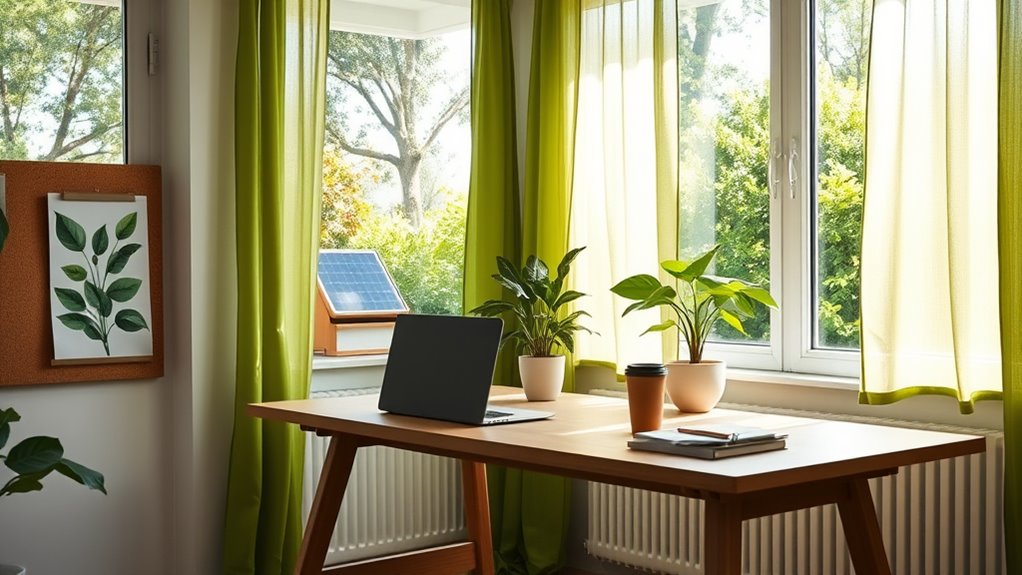
Have you ever considered how your home office can be greener? Making small adjustments can considerably reduce your carbon footprint while creating a healthier, more efficient workspace. One of the most impactful steps is to harness solar energy. Installing solar panels on your roof allows you to generate clean, renewable power right at home. This renewable energy source cuts down your reliance on fossil fuels, reducing greenhouse gas emissions and lowering your energy bills. Even if installing full-scale panels isn’t feasible, using solar-powered devices or solar chargers can make a difference. These small actions contribute to a more sustainable environment while supporting your work-from-home routine.
Harness solar power to create a greener, more sustainable home office environment.
Equally important is optimizing your workspace with ergonomic furniture. Not only does this enhance comfort and productivity, but it also encourages a healthier lifestyle. When you invest in ergonomic furniture, you reduce strain on your body, which can lead to fewer medical visits and less resource consumption over time. Think adjustable chairs, sit-stand desks, and supportive accessories that promote good posture. These choices help prevent injuries and improve your overall well-being, allowing you to work efficiently for longer periods. Plus, ergonomic furniture often lasts longer and requires fewer replacements, which minimizes waste and reduces the environmental impact associated with manufacturing and disposing of office furniture.
In addition, integrating energy-efficient technologies into your setup can further reduce your environmental footprint and enhance the sustainability of your home office. Combining these two strategies—embracing solar energy and choosing ergonomic furniture—sets the foundation for a truly green home office. By powering your workspace with renewable energy, you decrease your carbon footprint and contribute to a cleaner planet. At the same time, investing in ergonomic furniture not only benefits your health but also supports sustainability by reducing the frequency of replacements and repairs. These choices demonstrate that being eco-conscious doesn’t mean sacrificing comfort or efficiency; instead, it’s about making mindful decisions that benefit both you and the environment.
Beyond these primary steps, consider other eco-friendly habits to further lessen your impact. Use energy-efficient LED bulbs, recycle and repurpose materials, and limit unnecessary printing. Incorporating plants into your workspace can improve air quality and add a natural touch that boosts your mood. Small adjustments like these, combined with the use of solar energy and ergonomic furniture, can transform your home office into a truly sustainable environment. Ultimately, making your workspace greener isn’t just good for the planet; it’s also good for your health, productivity, and peace of mind.
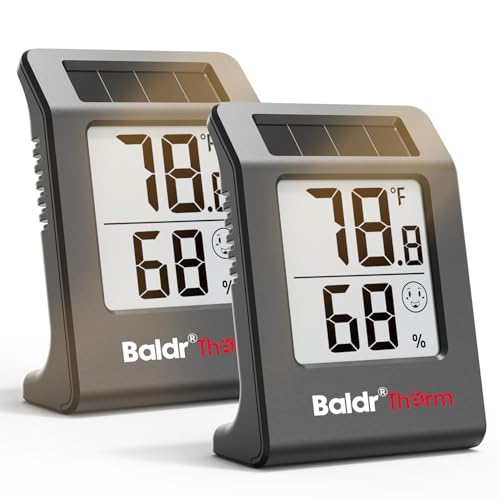
2.2'' Digital Thermometer and Hygrometer Meter, Solar-Powered Indoor Temperature Sensor Humidity Monitor, Humidity Gauge for Baby Rooms, Bedrooms, Home, Office, and Wine Cellars, Black, 2Pack
Solar-Powered, Never-Power Off: This indoor thermometer is powered by solar energy,In bright environments, solar panels can provide continuous…
As an affiliate, we earn on qualifying purchases.
As an affiliate, we earn on qualifying purchases.
Frequently Asked Questions
How Can I Measure My Reduced Carbon Footprint From Working Remotely?
To measure your reduced carbon footprint from remote work, start with a carbon footprint calculation that compares your current emissions to your previous commute. Use emission tracking tools like online calculators or apps to monitor your energy use, travel savings, and home office efficiency. Regularly update these tools to see your progress and identify areas where you can further lessen your impact. This way, you stay aware of your environmental benefits.
What Eco-Friendly Office Supplies Are Best for a Home Workspace?
Eco-friendly office supplies like biodegradable pens and recycled paper products are your best choices for a home workspace. While traditional pens and paper seem convenient, switching to biodegradable pens reduces plastic waste, and recycled paper minimizes deforestation. These small changes contrast with the convenience of disposable items, making your workspace more sustainable. Embrace these eco-conscious alternatives to cut your environmental impact while staying productive and organized at home.
How Does Remote Work Impact Overall Community Emissions?
Remote work reduces your community emissions by cutting down on local transportation emissions, which considerably improves community air quality. When you work from home, you eliminate daily commutes, decreasing pollution from vehicles. This not only benefits your health but also helps lower overall community emissions. Your choice to work remotely contributes to cleaner air and a healthier environment for everyone around you.
Are There Specific Renewable Energy Options for Home Offices?
You can power your home office with renewable energy options like solar panels and small wind turbines. Solar panels are popular because they capture sunlight and convert it into electricity, reducing your reliance on fossil fuels. Wind turbines, even small-scale ones, harness wind energy to generate power. Installing these systems helps you lower your carbon footprint and promotes sustainable living while maintaining a functional, eco-friendly workspace at home.
What Are the Best Practices for Sustainable Home Office Design?
To create a sustainable home office, you should prioritize energy efficient lighting like LED bulbs and maximize natural light. Choose eco friendly furniture made from sustainable materials, and arrange your workspace to reduce unnecessary energy use. Incorporate plants to improve air quality and opt for recycled or upcycled decor. These practices help lower your environmental impact while making your workspace more comfortable and eco-conscious.

Haworth Soji Office Chair with Ergonomic Adjustments and Lumbar Support, Adjustable Desk Computer Chair with Flexible Mesh Back for Home Office Furniture, Charcoal
ERGONOMIC DESIGN: The Soji ergonomic office chair blends comfort with flexible mesh back support to keep you focused…
As an affiliate, we earn on qualifying purchases.
As an affiliate, we earn on qualifying purchases.
Conclusion
So, here’s the irony: by simply working from home, you could be saving the planet—without even trying. No commute means fewer emissions, and a greener workspace means less waste. Yet, many still overlook this easy, everyday way to make a difference. Who knew that your home office could be your secret weapon against climate change? Next time you log on, remember—you’re not just working; you’re helping the Earth breathe a little easier.

LEPOWER Desk Lamp, 800LM LED for Home Office, True Eye-Caring for Reading
RG0 Certified Eye-Caring Desk Lamps: LEPOWER LED desk light is designed with RG0 lamp beads and professional optical…
As an affiliate, we earn on qualifying purchases.
As an affiliate, we earn on qualifying purchases.
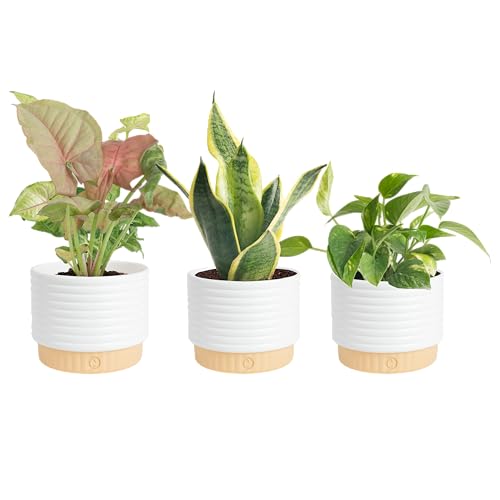
Costa Farms Live Indoor House Plants (3-Pack), Hand Selected Easy to Maintain Indoor Assorted Houseplants in Plant Pots, Curated Air Purifying Mix, Low Light, Home Office Decor Plant Gift
DECOR-READY LIVE INDOOR PLANTS: This 3-pack of houseplants offers incredible value to gift or instantly upgrade any space….
As an affiliate, we earn on qualifying purchases.
As an affiliate, we earn on qualifying purchases.