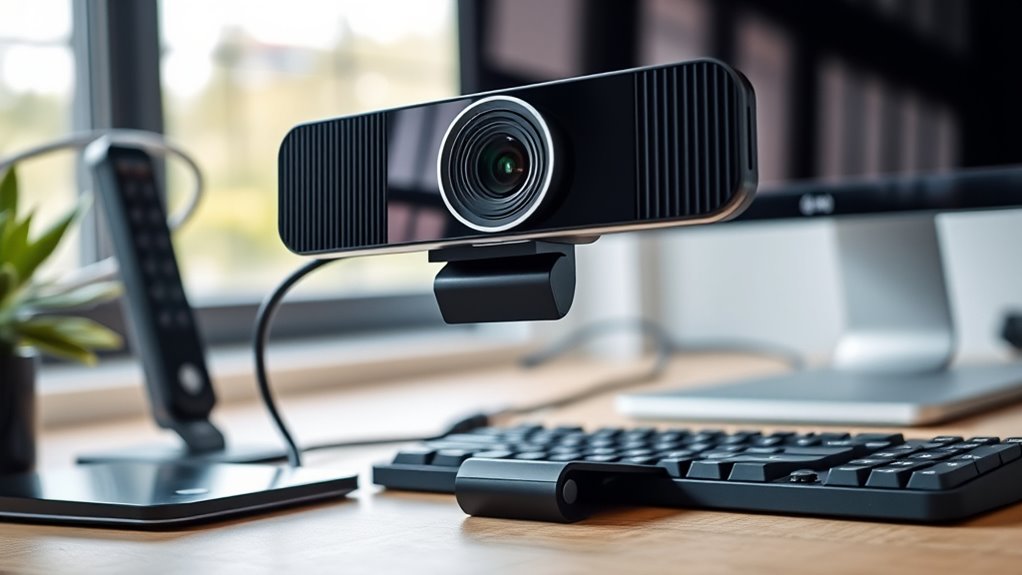

An external webcam is worth considering if you want better video quality, flexible angles, and more control over your setup. They often have higher resolutions, better optics, and features like autofocus or enhanced low-light performance. While they may cost more and require extra space, they can markedly improve your video calls and recordings. To discover if an external webcam fits your needs and how to optimize its use, explore the full details.
Key Takeaways
- External webcams offer higher resolution and better optics, significantly improving video quality over built-in cameras.
- Their adjustable positioning and customizable features help achieve professional-looking video for meetings or streaming.
- Compatibility and setup can be more complex, but they provide enhanced flexibility and use across multiple devices.
- Higher-quality models may be costly, but they justify the investment with improved performance and durability.
- Proper setup, lighting, and accessories maximize the benefits of an external webcam, making it a worthwhile upgrade for many users.
Advantages of Using an External Webcam
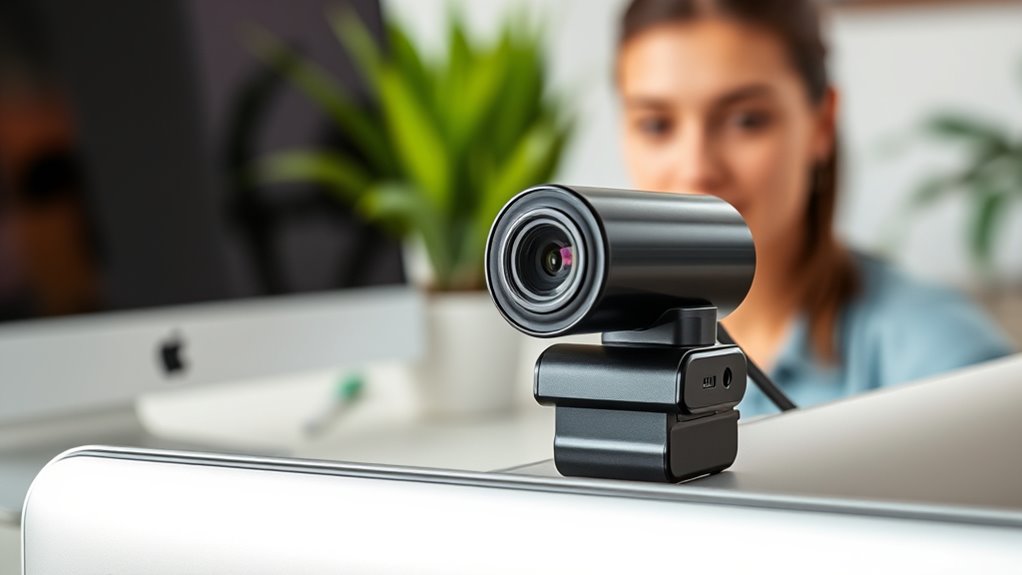
An external webcam offers significant benefits over built-in options, making it a worthwhile investment. One key advantage is improved video quality; external webcams often feature higher resolution sensors and better optics, ensuring clearer, sharper images during calls or recordings. This enhancement can make a noticeable difference in professional settings or when streaming. Additionally, portability is a major benefit. External webcams are lightweight and easy to move between devices or locations, giving you flexibility in how and where you use them. Unlike built-in cameras that are fixed, an external webcam can be positioned for ideal angles and lighting, further enhancing your video output. Moreover, wellness technology such as adjustable positioning and specialized lighting can help reduce eye strain and improve overall comfort during long video sessions. Incorporating video customization options, like autofocus and zoom, also contribute to a more polished appearance. Additionally, connectivity options such as USB-C or wireless connections can streamline setup and reduce clutter. Incorporating smart home automation features can even allow your webcam to adjust settings automatically based on your environment, further improving your experience. Furthermore, selecting a webcam with advanced sensor technology can significantly enhance low-light performance, ensuring clear visuals in various lighting conditions. Overall, these benefits make external webcams a smart choice for anyone looking to upgrade their video experience.
Key Features to Consider When Choosing a Webcam

When selecting an external webcam, focusing on key features can help guarantee you get the best value and performance. First, consider video quality; higher resolutions like 1080p or 4K ensure clear, sharp images. Second, evaluate compatibility with your devices and software to avoid connectivity issues. Third, compare prices carefully to find the best deal without sacrificing essential features. Doing a thorough price comparison helps you avoid overspending on unnecessary extras. Also, look at frame rate, low-light performance, and built-in microphone quality to enhance your video calls. Remember, investing in a webcam with superior video quality might cost more initially but can provide better long-term value. Prioritize features that match your needs to make a smart, cost-effective choice. Additionally, choosing a webcam that aligns with European cloud innovation can ensure you benefit from sustainable and secure solutions, especially if you prioritize environmentally friendly technology. Considering craftsmanship and design in your choice can also lead to a more durable and aesthetically pleasing device that complements a luxury-oriented setup.
Potential Drawbacks and Limitations
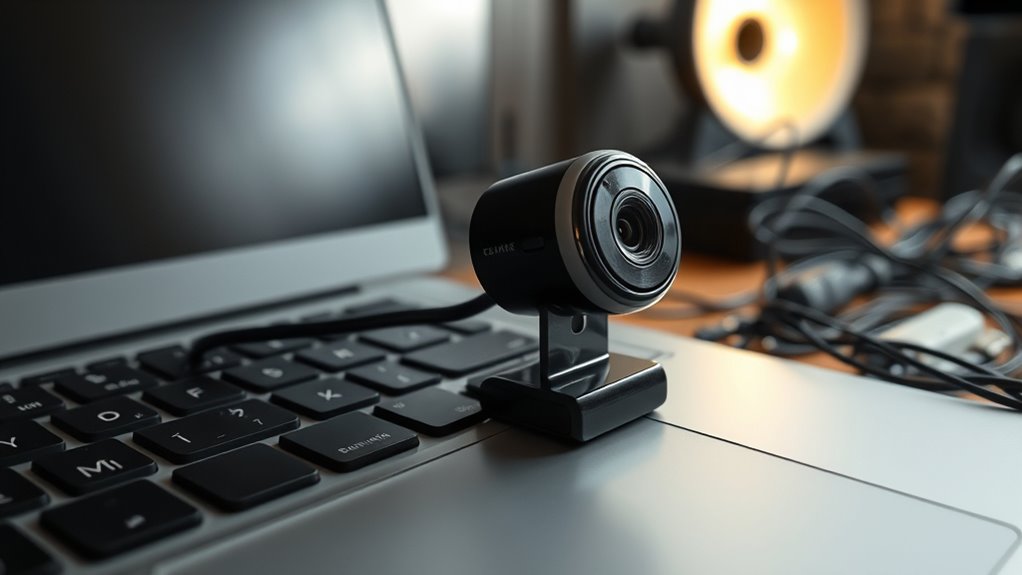
While external webcams offer many advantages, they also come with certain drawbacks that can affect your overall experience. Compatibility issues are common, especially if your computer’s hardware or operating system isn’t up-to-date, leading to setup frustrations or limited functionality. Additionally, the cost considerations can be a concern; high-quality models tend to be pricey, and investing in an external webcam might not always be justified if your needs are basic. Moreover, external webcams require extra space and proper positioning, which can be inconvenient in small setups. Power and connection stability can also be problematic if you’re using older USB ports or unreliable cables. Before buying, weigh these limitations against the benefits to determine if an external webcam truly fits your needs and budget. Properly selecting the right model can help mitigate some of these issues, especially if you consider industry trends and compatibility requirements for making informed purchasing decisions.
Comparing External Webcams to Built-In Cameras

Built-in cameras are standard on many laptops and desktops, offering a convenient, no-fuss option for video conferencing and recordings. However, external webcams often provide superior image quality, adjustable angles, and better low-light performance. When comparing the two, consider these factors:
Built-in cameras are convenient but external webcams often offer better quality and flexibility.
- Video quality: External webcams typically deliver sharper, clearer images.
- Privacy concerns: Built-in cameras can be easily covered or disabled, but external webcams often have physical shutters for added security.
- Flexibility: External webcams can be repositioned for ideal angles, unlike fixed built-in cameras.
- Image sensor technology is also an important factor that influences overall video clarity and performance. Additionally, video processing features in external webcams can enhance image quality further, especially in challenging lighting conditions. A high-quality sensor technology can significantly improve your video experience, especially in low-light environments. Considering sensor quality can help you select a webcam that meets your specific needs for clarity and reliability.
Tips for Setting Up and Maximizing Your Webcam Performance
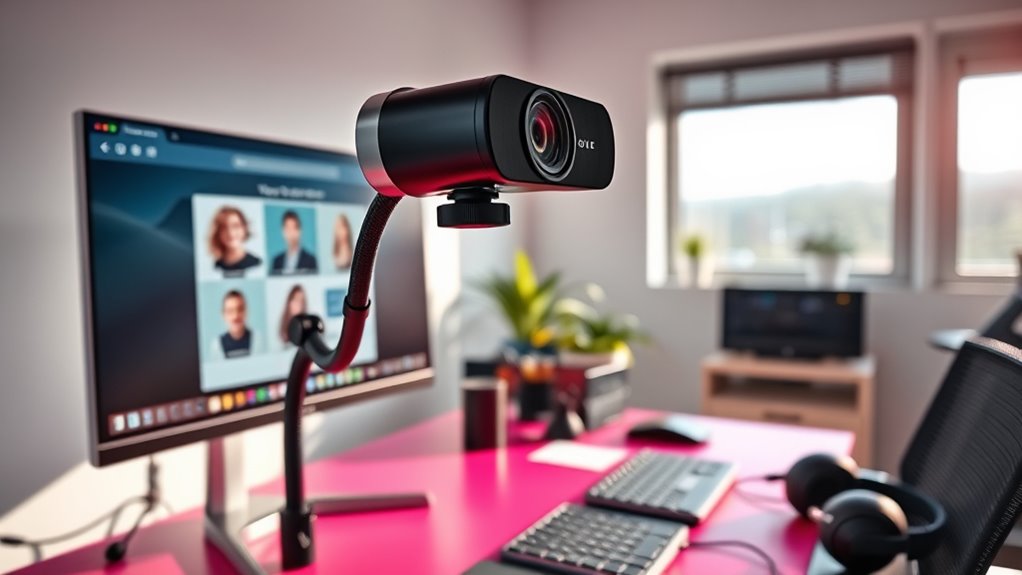
To get the best performance from your external webcam, start by positioning it at eye level and ensuring it’s stable. Proper lighting setup is essential; place lights to illuminate your face evenly and reduce shadows. Use natural light or soft diffused lamps for clarity. For audio enhancement, invest in a quality microphone or headset to improve sound quality during calls. Adjust your camera’s settings for peak sharpness and exposure. Here’s a quick guide:
| Tip | Details |
|---|---|
| Lighting setup | Use soft light sources, avoid harsh shadows |
| Audio enhancement | Upgrade microphone, minimize background noise |
| Camera positioning | Eye level, stable surface |
| Background | Keep clutter minimal, professional appearance |
| Settings adjustment | Focus, exposure, and resolution tweaks |
Maximize your webcam’s performance with these simple yet effective steps. Proper setup ensures you look professional and presentable during meetings. Additionally, understanding webcam specifications can help you choose the right equipment for your needs.
Frequently Asked Questions
How Do External Webcams Impact Overall Internet Bandwidth?
External webcams can impact your overall internet bandwidth by increasing bandwidth consumption, especially during high-quality streaming or video calls. When you use an external webcam, more data needs to be transmitted, which can affect your streaming quality if your connection isn’t fast enough. To maintain smooth streaming quality, make certain your internet plan provides sufficient bandwidth and consider adjusting webcam settings to optimize data usage.
Are There Compatibility Issues With Certain Devices or Operating Systems?
Think of your device as a dance partner—sometimes, external webcams face compatibility issues like device driver conflicts that can trip up the rhythm. You might find that some webcams don’t sync well with certain operating systems, causing connection or quality problems. To keep your performance smooth, check for updated drivers and guarantee your device supports your OS. This way, your webcam and device dance seamlessly together.
What Are the Best Cleaning and Maintenance Practices for Webcams?
You should establish regular cleaning routines and follow maintenance schedules to keep your webcam in top shape. Gently wipe the lens with a microfiber cloth to remove dust and smudges, avoiding harsh chemicals. Keep the device dust-free and store it properly when not in use. Regularly check for firmware updates and inspect cables for wear. These practices guarantee clear video quality and prolong your webcam’s lifespan.
Can External Webcams Improve Audio Quality or Just Video?
Think of your webcam like a camera crew—focused on video resolution, but often needing a mic upgrade for audio clarity. External webcams mainly enhance video quality, providing sharper images and better resolution. While some models include built-in microphones, they rarely deliver professional audio clarity. To truly improve sound, you might need a dedicated external microphone, ensuring both your video and audio meet your communication needs effectively.
How Long Is the Typical Lifespan of an External Webcam?
An external webcam typically lasts between 3 to 5 years, depending on its build quality and how well you care for it. You’ll find that webcam durability varies, and cheaper models may need replacement sooner, increasing your overall replacement costs. To get the most out of your investment, choose a reputable brand and handle it carefully, ensuring it stays functional and avoids unnecessary repairs or replacements.
Conclusion
Deciding if an external webcam is worth it is like upgrading from a small, fuzzy picture to a crystal-clear HD display. If you want sharper video, better lighting, and more flexibility, it’s a worthwhile investment. Just weigh the pros and cons, and follow setup tips to get the most out of your device. With the right webcam, your video quality will shine brighter than a starry night, making every call feel more personal and professional.