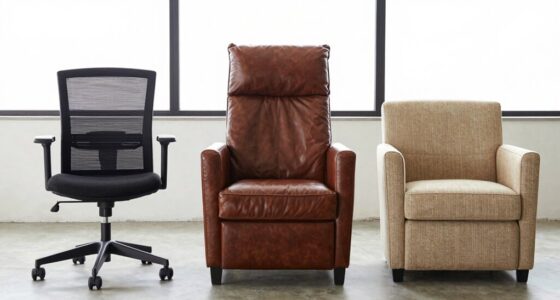
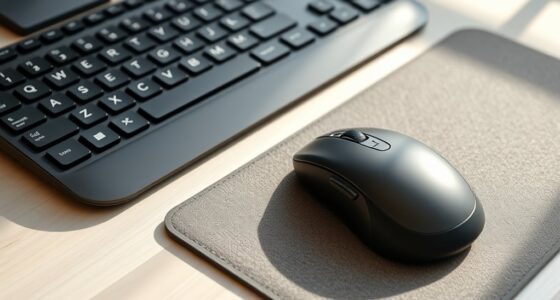
To find the perfect balance between sitting and standing, alternate your posture regularly to reduce discomfort and health risks. Use adjustable desks to switch easily between positions, and incorporate short movement breaks every 30 minutes. Pay attention to signs of fatigue or strain, and support your posture with ergonomic accessories like monitor stands or footrests. Developing a routine that combines movement, proper setup, and responsiveness to your body will keep you comfortable and productive—more tips await if you keep exploring.

Get comfort and recovery gear delivered free — and shop member deals
- Fast, free delivery on millions of items
- Access to Prime Big Deal Days deals on October 6–7
- Prime Video, Amazon Music and more included
Key Takeaways
- Alternate between sitting and standing every 30 to 60 minutes to reduce fatigue and promote circulation.
- Use adjustable desks and ergonomic accessories to easily switch positions and maintain proper posture.
- Watch for signs of discomfort, such as muscle tension or headaches, and adjust your routine accordingly.
- Incorporate movement, stretching, and short breaks to prevent strain during prolonged static positions.
- Develop a personalized routine that balances sitting, standing, and movement based on your body’s signals.
Understanding the Health Impacts of Sitting and Standing

While both sitting and standing have their benefits, understanding their true health impacts is essential for making informed choices at work. Sitting for prolonged periods can lead to increased muscle tension, especially in the lower back and neck, which may cause discomfort over time. Additionally, sitting reduces circulation, limiting blood flow and potentially contributing to fatigue. On the other hand, standing helps boost circulation, delivering more oxygen and nutrients to your muscles and organs. However, standing too long can cause muscle fatigue and strain. Balancing both positions allows you to minimize these issues, promoting better health. Recognizing how each posture affects your body helps you develop habits that support circulation and reduce tension, ensuring you stay comfortable and alert throughout your workday.
Recognizing the Signs of Fatigue and Discomfort

Paying attention to how your body feels during the workday helps you catch signs of fatigue and discomfort early. Recognizing fatigue symptoms such as muscle strain, headaches, or sluggishness allows you to adjust your posture awareness promptly. Notice if you feel tension in your neck, shoulders, or back, or if your legs feel numb or heavy. These are clear indicators you need to change positions or take a break. Use the table below to identify common fatigue symptoms and their possible causes:
| Fatigue Symptoms | Possible Causes | Recommended Action |
|---|---|---|
| Muscle tension | Poor posture, prolonged sitting or standing | Stretch and adjust posture |
| Headaches | Eye strain, dehydration | Rest eyes, hydrate |
| Numbness or tingling | Long periods in static positions | Shift positions frequently |
| Fatigue | Lack of movement, dehydration | Take short breaks |
| Discomfort | Improper ergonomics | Reassess workspace setup |
Setting Up Your Workspace for Flexibility

To work comfortably both sitting and standing, you need an adjustable desk that easily switches positions. Position ergonomic accessories like your keyboard, mouse, and monitor so they support good posture no matter your stance. Proper setup guarantees you stay comfortable and focused throughout your workday. Incorporating ergonomic accessories can further enhance your comfort and promote better posture during both sitting and standing periods. Using adjustable furniture can help you maintain proper alignment and reduce strain as you switch between positions. Additionally, selecting workspace ergonomics that prioritize flexibility can minimize discomfort and increase productivity. Being mindful of proper posture is also essential to prevent strain and support overall well-being during prolonged work periods. Paying attention to ergonomic principles can help you create a healthier and more adaptable workspace that accommodates your shifting needs.
Adjustable Desk Options
Adjustable desks have become essential tools for creating a flexible and ergonomic workspace. They allow you to switch between sitting and standing, maximizing comfort and productivity. When exploring adjustable desk options, you’ll find a variety of features designed to suit your needs. Choosing the right sit-stand desk benefits your health by reducing strain and boosting energy levels. Here are some key points to think about:
- Electric or manual height adjustments
- Memory presets for quick changes
- Spacious work surface for accessories
- Sturdy build for stability during use
- Easy shift between sitting and standing
These options make it simple to customize your workspace for comfort and efficiency. Investing in a good sit-stand desk promotes better posture and helps you enjoy the sit-stand desk benefits daily. Simple strategies can help you set up your workspace to support both comfort and organization. Incorporating ergonomic furniture can further enhance your workspace flexibility and overall well-being. For optimal performance, considering projector technology can also improve your home or office setup. Additionally, understanding Gold IRA Markets can provide insight into smart investment choices for your financial future. Proper workspace organization can maximize your efficiency and make switching positions seamless.
Ergonomic Accessories Placement
Setting up your workspace with ergonomic accessories in the right positions can make switching between sitting and standing much smoother. Start by adjusting your monitor height so the top of the screen is at or just below eye level, reducing neck strain. Your keyboard placement should be directly in front of you, with elbows bent at about 90 degrees and wrists straight. Use an adjustable keyboard tray or stand to keep your hands at a comfortable height. Keep your mouse close to your keyboard to avoid reaching. Positioning accessories correctly guarantees minimal movement and promotes good posture, whether you’re sitting or standing. Regularly check and adjust these setups to maintain comfort and prevent strain during your workday.
Implementing the 30-Second Stand and Sit Rule

Implementing the 30-Second Stand and Sit Rule is a simple yet effective way to break up prolonged sitting periods during your workday. This quick switch boosts your posture awareness and helps manage energy levels throughout the day. To make it work:
- Set a timer or reminder to stand and sit every 30 seconds.
- Focus on maintaining proper posture each time you switch.
- Use this routine to check your alignment and avoid slouching.
- Remember, consistency is key to building better habits.
- This practice encourages you to stay attentive to your body’s cues and prevents fatigue.
Incorporating Movement Breaks and Dynamic Postures

Incorporating movement breaks and dynamic postures into your workday can considerably reduce the risks associated with prolonged sitting. You can do this by integrating quick dynamic stretches, like shoulder rolls or torso twists, to activate muscles and improve circulation. Seated exercises, such as ankle circles or seated leg lifts, are simple ways to stay active without leaving your chair. These movements help break up long periods of inactivity and promote better posture. To further support your health, remember that regular movement is essential to prevent stiffness and discomfort during extended periods of sitting. Aim to stand up or stretch every 30 minutes, alternating between sitting and movement. Incorporating ergonomic practices can also help reduce strain and promote comfort throughout your workday. By regularly shifting positions and practicing these exercises, you boost your energy levels and reduce strain on your muscles and joints. Additionally, understanding ergonomic principles can guide you in setting up your workspace to encourage better posture and reduce fatigue. Practicing active sitting techniques can further enhance your comfort and support your musculoskeletal health. Engaging in proper workstation setup ensures that your desk and chair support natural alignment, helping to prevent discomfort. Consistently incorporating these habits encourages a healthier, more balanced work routine.
Using Ergonomic Tools to Support Balance

Using ergonomic tools can help you maintain better balance between sitting and standing. Adjustable desks, supportive accessories, and proper tool placement are key to reducing strain. By optimizing these tools, you can create a more comfortable and sustainable work routine. Incorporating unique high-quality home decor and gift ideas can also enhance your workspace environment, promoting comfort and inspiration throughout your workday. Additionally, integrating smart home technology such as adaptive lighting and climate control can further customize your workspace for optimal comfort and focus. Implementing ergonomic design principles can maximize the benefits of these tools, ensuring a healthier and more productive work experience. Paying attention to posture awareness can further improve your overall ergonomic setup and prevent discomfort. Being mindful of workspace ergonomics can help you identify and address potential issues before they lead to discomfort or injury.
Adjustable Desk Options
Adjustable desks equipped with ergonomic features make it easier to switch between sitting and standing positions throughout your workday. These sit stand desks come with adjustable heights, allowing you to customize your workspace for comfort and productivity. Choosing the right adjustable desk options can help reduce strain and improve your posture. With a variety of models available, you can find one that fits your budget and space. Easily transition between sitting and standing to stay energized and focused. Remember to set reminders to change positions regularly. When selecting an adjustable desk, consider factors like stability, ease of height adjustment, and workspace size. Investing in a quality sit stand desk promotes better movement habits and supports long-term health. Incorporating ergonomic tools can further enhance your comfort and prevent fatigue during long work sessions. Keep these tips in mind to optimize your ergonomic setup.
Supportive Ergonomic Accessories
Supportive ergonomic accessories play a crucial role in maintaining balance and comfort during your workday. Using ergonomic footrests helps elevate your feet, reducing pressure on your legs and improving circulation, especially when standing or sitting for long periods. Cushioned seat pads provide extra support and relieve pressure on your hips and lower back, making sitting more comfortable. These accessories enable you to shift positions easily and stay comfortable longer, promoting better posture and reducing fatigue. Incorporating ergonomic footrests and cushioned seat pads into your workspace creates a more supportive environment, helping you move seamlessly between sitting and standing. By investing in these tools, you support your body’s natural alignment and sustain comfort throughout the workday. Additionally, choosing adjustable workstation equipment can further enhance your ergonomic setup and balance. Embracing ergonomic solutions can significantly improve your overall comfort and productivity. Proper ergonomic design not only enhances comfort but also helps prevent strain and injury over time. Regularly adjusting your setup based on body positioning ensures continued support and reduces the risk of discomfort.
Proper Tool Positioning
To maintain proper balance at your workspace, positioning your ergonomic tools correctly is essential. Proper tool positioning reduces strain and promotes comfort during long work hours. Start with your keyboard placement—keep it close enough so your elbows stay relaxed and your wrists straight. Adjust your monitor height so the top of the screen is at eye level, preventing neck strain. Confirm your mouse is within easy reach to avoid overextending your arm. Use a wrist rest if needed to support your wrists. Remember, small adjustments to your tools can make a big difference in maintaining a healthy, balanced posture.
- Keep your keyboard flat or slightly tilted for comfort
- Set your monitor at eye level to reduce neck strain
- Place your mouse close to your keyboard for easy access
- Use ergonomic accessories like wrist rests for support
- Adjust your workspace regularly for ideal comfort
Developing a Personalized Routine for Long-Term Wellness

Creating a personalized routine for long-term wellness requires understanding your unique needs and habits. Start by evaluating how much sitting and standing you do daily and identify areas for improvement. Incorporate personalized routines that blend movement, stretching, and rest periods tailored to your work style. Consistency is key—set specific times to switch between sitting and standing, ensuring you don’t overdo either. Listen to your body’s signals and adjust your routine accordingly. Remember, long-term wellness isn’t about perfection but sustainability; small, intentional changes lead to lasting benefits. By developing a routine that aligns with your lifestyle, you’ll promote better posture, reduce fatigue, and foster overall health. This personalized approach ensures you stay energized and healthy in the long run.
Frequently Asked Questions
How Much Standing Is Ideal During an 8-Hour Workday?
You should aim to stand for about 2 to 4 hours during an 8-hour workday, incorporating sit-stand schedules to avoid fatigue. Use ergonomic footwear to stay comfortable and reduce strain. Take regular breaks to sit and stretch, balancing standing and sitting effectively. Listening to your body helps you find the right mix, so you stay energized and prevent discomfort throughout the day.
Can Standing Too Much Cause Health Issues?
Ever wonder if standing too much could harm you? Yes, it can cause health issues like posture pitfalls and circulation concerns. Prolonged standing puts strain on your muscles and joints, leading to discomfort or injuries. To avoid this, take regular breaks, shift your posture, and incorporate sitting periods. Balancing standing and sitting helps prevent these problems, ensuring you stay healthy and comfortable during your workday.
What Are Quick Stretches to Relieve Muscle Tension?
To relieve muscle tension quickly, try ergonomic stretches like shoulder rolls, neck stretches, and seated spinal twists. These movements help loosen tight muscles and promote tension relief. Incorporate deep breaths as you stretch to maximize relaxation. Remember to move gently and hold each stretch for about 15-30 seconds. Regularly practicing these ergonomic stretches can prevent discomfort and keep your muscles relaxed throughout your workday.
How Do I Stay Motivated to Change My Routine?
To stay motivated to change your routine, focus on habit formation by setting small, achievable goals that build gradually. Use motivational strategies like tracking your progress and rewarding yourself for milestones. Remind yourself of the benefits, such as improved energy and comfort, and stay consistent. Surround yourself with supportive people or reminders that reinforce your commitment. With persistence and positive reinforcement, you’ll make lasting changes more easily.
Are There Specific Ergonomic Tools Recommended for Standing Desks?
Yes, ergonomic accessories like adjustable monitor arms, anti-fatigue standing desk mats, and footrests are highly recommended. These tools help reduce strain and improve comfort while you’re standing. Standing desk mats, in particular, provide cushioning and support, making prolonged standing easier. Incorporating these ergonomic accessories guarantees you maintain proper posture, minimize fatigue, and stay comfortable throughout your workday, helping you stay motivated to stick with your improved routine.
Conclusion
Finding your perfect balance between sitting and standing is like tending a delicate garden—you need to nurture it with mindful choices and gentle care. By listening to your body’s whispers and sprinkles of movement, you can cultivate a workspace that keeps you energized and pain-free. So, embrace the dance of sit-stand, and let your daily routine blossom into a rhythm that fuels your health and happiness every step of the way.
Fall Picks
fall essentials
As an affiliate, we earn on qualifying purchases.