
To use lighting layers in your home office, start by maximizing natural light near windows, adjusting with blinds for comfort. Add task lighting, like adjustable desk lamps, to brighten specific work areas without causing glare. Incorporate ambient lighting, such as overhead lights or floor lamps, to create a warm, balanced environment. Using dimmable fixtures and accessories like reflectors helps control light quality. Keep exploring ways to perfect your setup to boost mood and productivity.

Get comfort and recovery gear delivered free — and shop member deals
- Fast, free delivery on millions of items
- Access to Prime Big Deal Days deals on October 6–7
- Prime Video, Amazon Music and more included
Key Takeaways
- Maximize natural light by positioning your desk near windows and using adjustable coverings to control glare.
- Incorporate task lighting, such as adjustable desk lamps with daylight bulbs, for focused illumination.
- Use overhead or ambient lighting to provide general brightness and depth in the workspace.
- Implement dimmable fixtures and lighting controls to customize brightness based on time and activity.
- Add accessories like diffusers and reflectors to optimize light distribution and reduce glare.
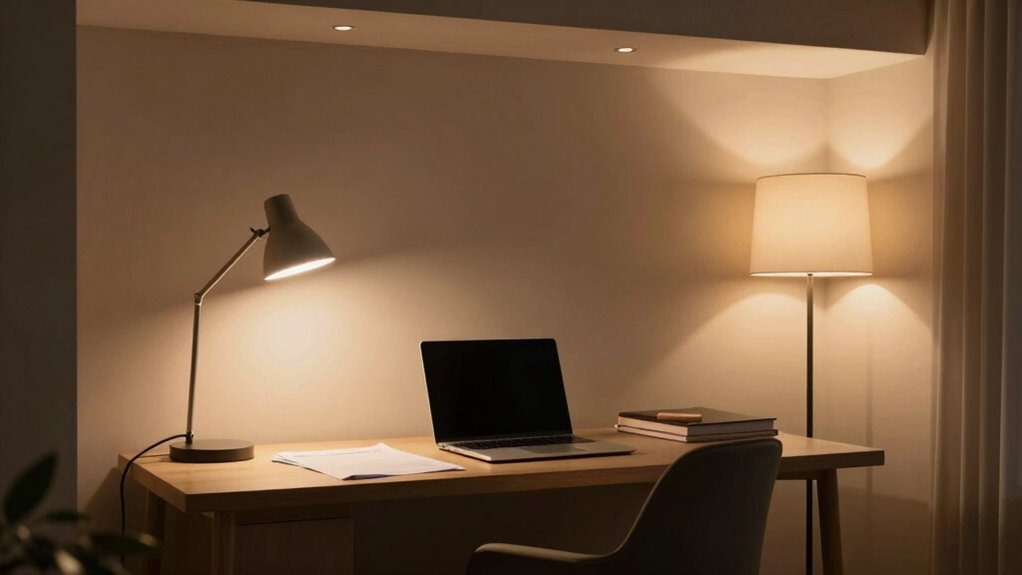
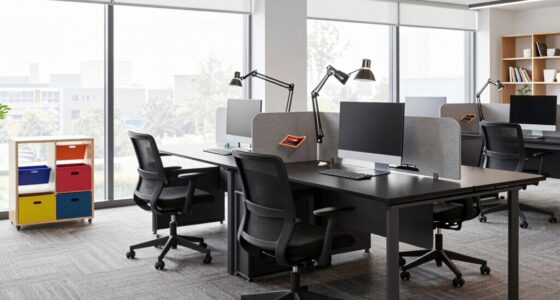
Creating a well-lit home office involves more than just flipping a switch; it requires layering different types of lighting to enhance both functionality and ambiance. Natural light plays a vital role in this setup, so positioning your desk near a window allows sunlight to flood the space during the day. Not only does natural light boost your mood and productivity, but it also reduces the need for artificial lighting, saving energy and creating a more inviting environment. Keep in mind, however, that sunlight can be unpredictable, so incorporating adjustable window coverings like blinds or sheer curtains helps control glare and direct light exactly where you need it.
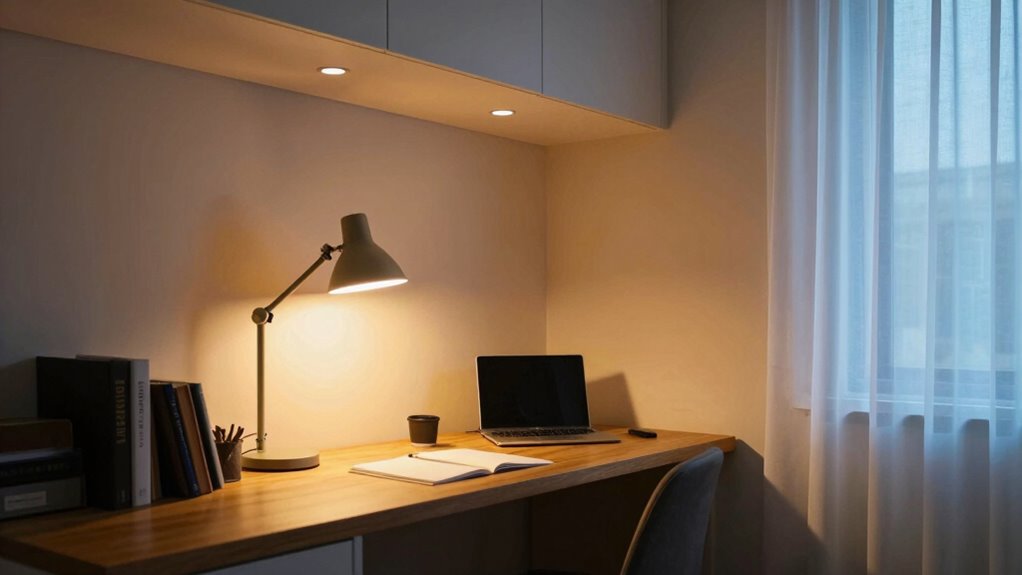
While natural light is indispensable, it won’t always be sufficient, especially in the early mornings, late evenings, or on cloudy days. That’s where task lighting comes into play. Task lighting is focused, bright light designed to illuminate specific work areas, such as your desk or reading nook. A good desk lamp with adjustable brightness ensures you have clear visibility for detailed tasks like reading, writing, or working on your computer. Position your task light to reduce shadows and avoid glare on your screen, which can cause eye strain. Using LED bulbs with a color temperature around 4000K to 5000K can mimic natural daylight, helping you stay alert and focused.
Layering these different lighting types creates a balanced environment. During the day, rely heavily on natural light, supplementing it only when needed. As daylight fades, turn on your overhead lights or add floor lamps to fill the room evenly. Overhead lighting provides general illumination, ensuring the entire space is well-lit without harsh shadows, but it shouldn’t be be the sole light source. Combining ambient lighting with task lighting not only improves visibility but also adds depth and warmth to your workspace, making it more comfortable and inviting. Understanding lighting layers and their interaction can help you design a versatile and effective lighting setup for your home office. Additionally, using lighting technology like dimmable fixtures can further customize your environment for different tasks and times of day. Proper use of lighting control systems can also enhance the flexibility and energy efficiency of your lighting setup. Incorporating lighting accessories, such as diffusers and reflectors, can further optimize light distribution and reduce glare. Furthermore, integrating sound healing science principles can create a calming atmosphere that enhances focus and reduces stress while working.
adjustable desk lamp with daylight bulbs
As an affiliate, we earn on qualifying purchases.
As an affiliate, we earn on qualifying purchases.
Frequently Asked Questions
How Many Lighting Layers Are Ideal for a Home Office?
For a home office, three lighting layers are ideal: natural light, task lighting, and ambient lighting. You should maximize natural light during the day to boost productivity and mood. Add task lighting, like a desk lamp, for focused work, and incorporate ambient lighting to create a comfortable atmosphere. Balancing these layers helps reduce eye strain and enhances your workspace’s overall functionality and comfort.
Can I Use Smart Lighting for Multiple Layers?
Yes, you can use smart lighting for multiple layers by leveraging smart integration and creating distinct lighting zones. With smart systems, you can easily control and customize each layer—ambient, task, and accent lighting—independently. This setup allows you to adjust brightness, color, and timing for each zone, giving you flexibility and efficiency. Smart lighting guarantees seamless management of your home office lighting layers, enhancing productivity and comfort.
What Is the Best Color Temperature for Work Lighting?
The best color temperature for work lighting is around 4000K to 5000K. Studies show that cooler light enhances focus and productivity. With color temperature options, you can customize your lighting mood to match your tasks—warmer tones for relaxation, cooler for concentration. For an effective home office, choose lighting that mimics natural daylight, helping you stay alert and comfortable throughout your workday.
How Do I Prevent Glare From Layered Lighting?
To prevent glare from layered lighting, focus on effective glare reduction techniques through strategic lighting placement. Position your light sources so they don’t shine directly into your eyes or reflect off screens. Use adjustable fixtures, diffusers, or lampshades to soften harsh light. Also, consider indirect lighting options, like wall-mounted fixtures or floor lamps, to create a balanced environment that minimizes glare and enhances comfort during work.
Are There Energy-Efficient Options for Layered Lighting?
You can brighten your workspace without draining energy by choosing LED fixtures, which shine brightly while using minimal power, like a lighthouse guiding ships safely. Consider solar options too, which harness sunlight to power your lighting, making your home office eco-friendly and cost-efficient. These energy-efficient choices help you create layered lighting that’s both sustainable and effective, reducing your carbon footprint while maintaining the perfect illumination for productivity.
As an affiliate, we earn on qualifying purchases.
Conclusion
By layering your lighting, you create a flexible, comfortable workspace that boosts productivity and reduces eye strain. Some might worry it’s complicated or expensive, but it doesn’t have to be. With a few strategic choices—like adding a desk lamp and ambient overhead lighting—you can easily transform your home office. Remember, good lighting isn’t just about brightness; it’s about creating the right mood and focus. Start small, and enjoy the difference it makes!
home office light reflectors and diffusers
As an affiliate, we earn on qualifying purchases.
As an affiliate, we earn on qualifying purchases.
natural light window blinds for office
As an affiliate, we earn on qualifying purchases.
As an affiliate, we earn on qualifying purchases.
Fall Picks
fall essentials
As an affiliate, we earn on qualifying purchases.