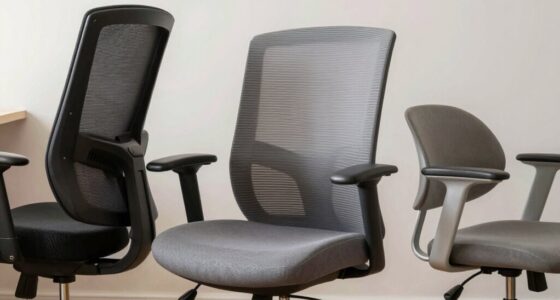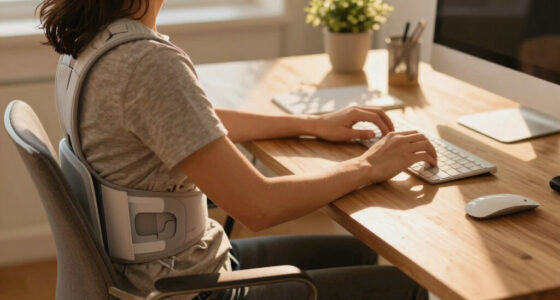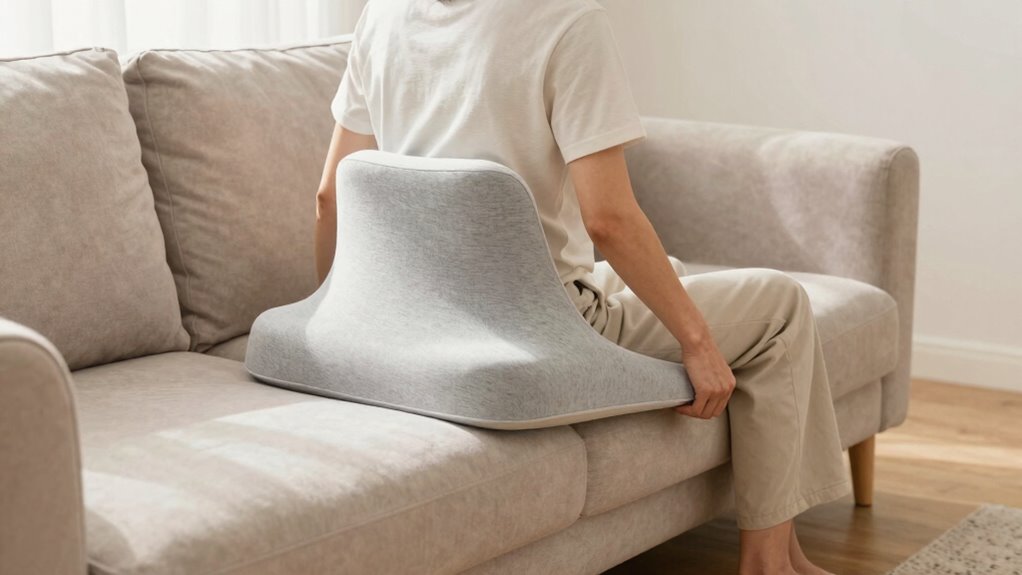

To use cushions safely, choose supportive, breathable materials that maintain proper alignment and avoid being too soft or firm. Position cushions to support your lower back, hips, or knees, and regularly adjust them to prevent slouching or uneven pressure. Be aware of your posture habits and use cushions as tools to enhance ergonomic sitting—not as quick fixes. If discomfort arises, reevaluate your cushion choice or placement to keep your posture healthy—more tips lie ahead.
Key Takeaways
- Select cushions with appropriate firmness and breathable covers to support natural posture without excessive compression or pressure points.
- Position cushions to support key areas like the lower back, hips, or knees, promoting proper spinal alignment.
- Regularly evaluate and adjust cushion placement to prevent slouching or uneven weight distribution.
- Use cushions as ergonomic tools to complement overall posture habits, not as sole support solutions.
- Listen to your body and modify cushion use if discomfort or new pain occurs, ensuring ongoing support and comfort.
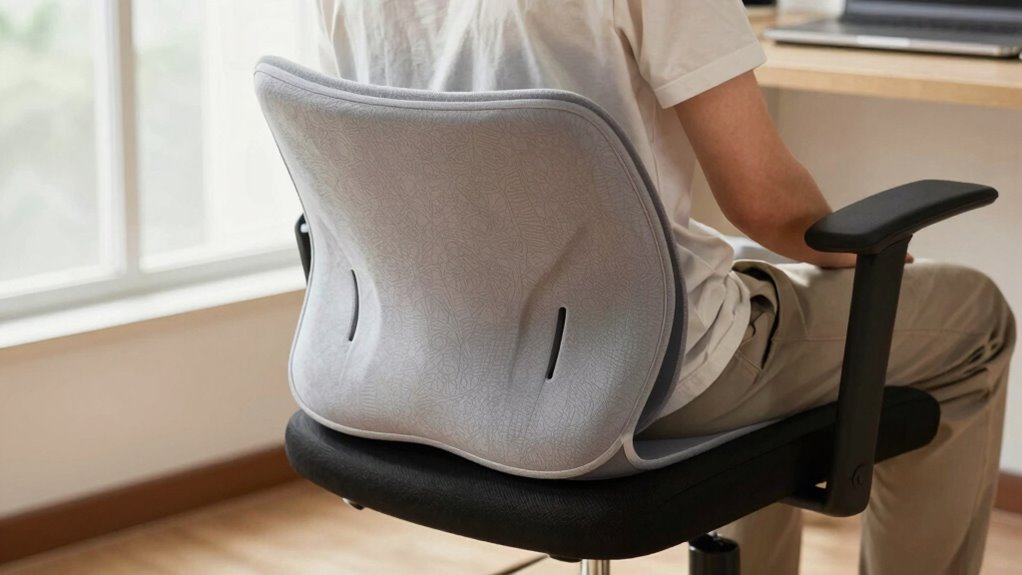
Have you ever wondered how to make the most of cushions in your home? Using cushions might seem straightforward, but selecting the right ones and placing them correctly can considerably impact your comfort and posture. To guarantee you’re benefiting from their ergonomic benefits, you need to pay attention to cushion selection and placement. The goal is to enhance your support without causing new posture problems, which requires a thoughtful approach.
Choosing and positioning cushions thoughtfully can significantly improve comfort and posture at home.
When choosing cushions, focus on their material, firmness, and size. The right cushion should provide enough support to maintain proper alignment, especially if you’re sitting for long periods. A cushion that’s too soft may compress too easily, leading to slouching or uneven weight distribution. Conversely, a cushion that’s too firm can create pressure points and restrict movement. Look for options with a supportive core, such as memory foam or high-density foam, which molds to your shape while maintaining structure. The cover material should be breathable and comfortable, especially if you plan to sit on the cushion for extended periods. Proper cushion selection is vital because it directly influences your ergonomic benefits, helping you avoid strain and discomfort.
Placement is equally important. Position cushions where they can support your lower back, hips, or knees, depending on your seating needs. For example, if you’re working at a desk, place a lumbar cushion behind your lower back to promote natural curvature and reduce back pain. When sitting on a chair, a seat cushion can raise your hips slightly, helping align your spine. If you’re using cushions on a sofa or floor, ensure they are arranged to support your natural posture, not force you into awkward angles. Proper positioning prevents you from slouching or leaning excessively, which can lead to muscle strain over time. Additionally, being mindful of posture habits and adjusting cushions accordingly can further enhance comfort and prevent discomfort. Incorporating awareness of ergonomic principles can help you make better choices in your cushion use. Regularly evaluating the correct placement of cushions will help maintain their effectiveness and prevent reliance on them as a crutch for poor habits.
It’s also beneficial to understand how different supportive materials can influence your comfort and posture, as not all cushions are created equal. It’s essential to avoid overusing cushions or relying on them as a quick fix for poor posture habits. Instead, see cushions as tools to complement your ergonomic setup. Adjust their placement regularly to avoid developing habits that could cause imbalance. Remember to listen to your body; if a cushion feels uncomfortable or causes pain, reevaluate your cushion choice or placement. Using cushions thoughtfully means understanding your body’s needs and making adjustments accordingly, guaranteeing you benefit from their ergonomic advantages without creating new issues.

Lexeme X Large Memory Foam Seat Cushion Lumbar Support Pillow for Sciatica & Tailbone Pressure Relief Coccyx Pad for Office Chair, Car,Wheelchair,Home,Office
- Unique Large Design: Supports hips and back comfortably
- Ergonomic Curve Shape: Promotes good posture and massage
- Extra Large Size: Provides ample sitting space
As an affiliate, we earn on qualifying purchases.
As an affiliate, we earn on qualifying purchases.
Frequently Asked Questions
Can Cushions Help With Chronic Back Pain?
Cushions can help with chronic back pain if they feature ergonomic design and are made from durable materials. They support proper spinal alignment, reducing strain and discomfort during prolonged sitting. Make certain to choose a cushion that fits your body well and provides adequate lumbar support. Properly selected cushions can alleviate pain without worsening posture issues, but avoid over-reliance and confirm they complement a healthy sitting posture for best results.
Are There Specific Cushions for Sciatica Relief?
Surprisingly, yes—there are cushions specifically for sciatica relief. These ergonomic-designed cushions target pressure points, easing sciatic nerve pain. You’ll want one made from durable materials that support your posture without flattening over time. Ironically, by choosing the right cushion, you might just find relief from discomfort, proving that comfort doesn’t have to come at the expense of long-term health. Just make sure it’s tailored to your needs.
How Often Should I Replace My Cushions?
You should replace your cushions when they no longer support you properly, typically every 1-2 years, depending on use and wear. Consider your aesthetic preferences and cushion size options when choosing a replacement, ensuring it fits your space and comfort needs. Regularly inspect for flattening or damage, and if you notice decreased support or discomfort, it’s time for a new cushion to maintain good posture and comfort.
Are Memory Foam Cushions Better Than Gel Ones?
While both options have their merits, memory foam cushions tend to offer superior support and contouring, making them ideal for long-term comfort. Gel cushions excel at temperature regulation, preventing overheating during extended use. If you prioritize pressure relief and personalized support, memory foam is a refined choice. However, if staying cool matters most, gel cushions provide a sophisticated solution. Ultimately, your comfort preferences will guide the best selection for your needs.
Can Cushions Prevent Posture Issues Long-Term?
Cushions can help prevent long-term posture issues when chosen wisely and used properly. They offer ergonomic benefits by supporting your natural spine alignment and reducing pressure points. However, you should also consider aesthetic considerations, ensuring the cushion complements your space and encourages consistent use. When used as part of an overall ergonomic setup, cushions can promote healthy posture over time, but they’re most effective when combined with proper sitting habits and movement.

Everlasting Comfort Doctor Recommended Memory Foam Seat Cushion for Office Chairs & Car – Ergonomic Office Desk Accessories – Cushions for Tailbone Pain Relief, Sciatica (Black, Large)
- Doctor Recommended Support: Provides ergonomic comfort and support
- Premium Memory Foam: Conforms to body for all-day comfort
- Breathable & Washable Cover: Easy to clean and keeps cool
As an affiliate, we earn on qualifying purchases.
As an affiliate, we earn on qualifying purchases.
Conclusion
So, next time you plop down on a cushion, remember—you’re not just creating a throne for your comfort, but a potential trap for your spine. Use them wisely, or risk turning your comfy corner into a new posture prison. Who knew that embracing softness could be so tricky? But hey, if you end up with a crooked back, at least you’ll have a hilarious story to tell—“The Cushion That Broke My Back”! Stay smart, sit smart.

BlissTrends Memory Foam Knee & Leg Pillow for Side Sleepers, Grey, Large
- High-Density Memory Foam: Provides strong, comfortable support
- Ergonomic Size Design: Fits body for optimal support and stability
- Removable & Washable Cover: Easy to clean and skin-friendly fabric
As an affiliate, we earn on qualifying purchases.
As an affiliate, we earn on qualifying purchases.

CloudBliss Lumbar Support Pillow, Memory Foam for Office Chair, Black
- Ergonomic Design: Pear-shaped for natural spine support
- High-Density Memory Foam: Maintains shape and provides lasting relief
- Universal Compatibility: Suitable for office, car, gaming seats
As an affiliate, we earn on qualifying purchases.
As an affiliate, we earn on qualifying purchases.