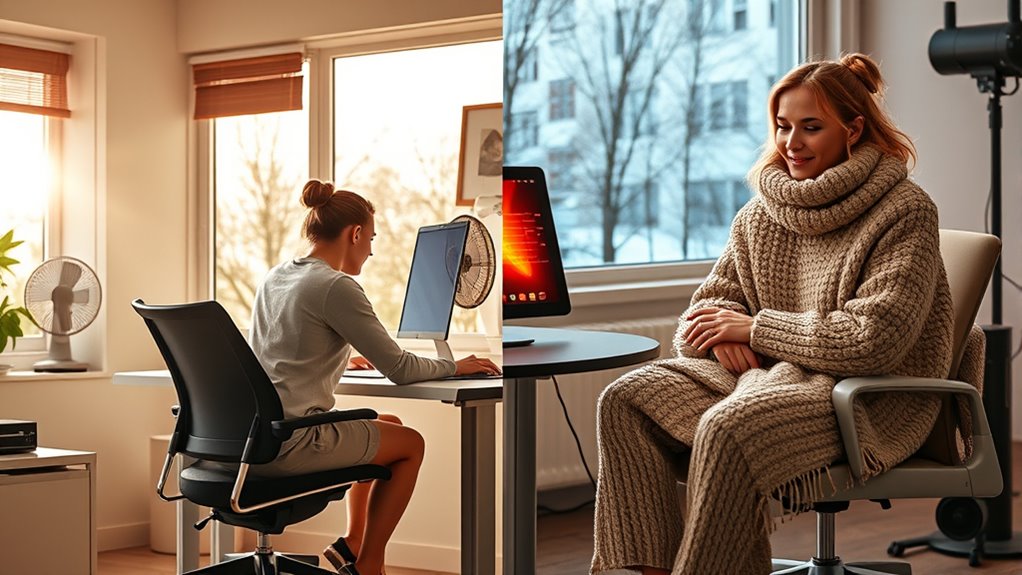

To stay comfortable year-round, adjust your clothing and workspace for summer and winter. In summer, wear breathable, moisture-wicking fabrics and keep your environment cool with fans or air conditioning. In winter, layer appropriately and guarantee your workspace stays warm with heaters. Keep your posture supported by modifying your chair or adding lumbar support if needed. By making these seasonal changes, you’ll maintain ergonomic comfort throughout the year—keep exploring for more tips.
Key Takeaways
- Adjust clothing for breathability and support in summer; layer and insulate in winter to maintain comfort and posture.
- Use indoor climate control like fans or heaters to keep temperatures stable, reducing discomfort and promoting proper ergonomics.
- Modify workspace setup seasonally, including chair support and desk height, to accommodate clothing and environmental changes.
- Ensure air circulation to prevent overheating in summer and chilliness in winter, both of which can cause posture issues.
- Practice year-round ergonomic habits by adapting clothing, support, and climate controls for optimal comfort and musculoskeletal health.
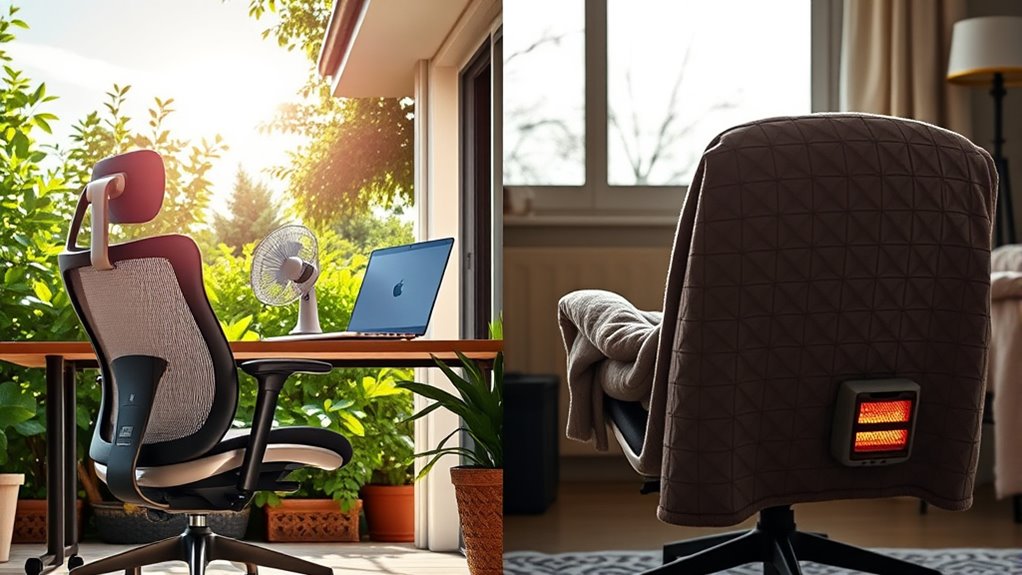
Have you ever noticed how your comfort and posture shift with the seasons? As temperatures rise and fall, your body responds differently, making it essential to adapt your ergonomic habits accordingly. During summer, you might find yourself reaching for lighter clothing adjustments—think breathable fabrics and looser fits—to stay cool, but these choices can also impact your posture if not carefully considered. Loose or ill-fitting clothes can cause you to slouch or shift awkwardly in your chair because they don’t provide the necessary support or keep your body aligned. To counteract this, it’s helpful to choose clothing that balances comfort with support, such as moisture-wicking shirts that stay snug without constricting movement. Additionally, indoor climate control becomes vital in summer months. You want to maintain a comfortable environment that prevents overheating or excessive sweating, both of which can distract you from maintaining proper ergonomics. Using fans, air conditioning, or dehumidifiers helps keep the air at a stable temperature and humidity level, reducing discomfort and the tendency to slump or fidget as you try to cool down. This controlled environment not only keeps you physically comfortable but also encourages better posture by eliminating the distractions caused by heat or humidity. Moreover, air circulation systems can improve overall comfort and support ergonomic health during hot months.
As the seasons change, your ergonomic setup should adapt too. In winter, clothing adjustments tend to shift toward layering, sweaters, and thicker fabrics. While these keep you warm, they can also make you feel bulkier and less flexible, which might influence your sitting posture. Heavy clothing can cause you to hunch or slouch if your chair or desk setup isn’t adjusted accordingly. It’s a good idea to ensure your workspace supports these changes—adding lumbar support if needed or adjusting the height of your chair so your body remains properly aligned despite the added layers. Indoor climate control becomes equally important in winter. Keeping your workspace warm and well-heated prevents you from tensing up or adopting awkward postures to stay warm. Conversely, if you neglect climate control and the space becomes too cold, you might find yourself curling up or tensing, leading to discomfort and potential musculoskeletal issues. Maintaining a steady, comfortable indoor temperature helps you keep your posture upright and relaxed, reducing strain on your neck, shoulders, and back.
Frequently Asked Questions
How Do Seasonal Changes Affect Ergonomic Office Equipment Choices?
Seasonal changes influence your ergonomic office equipment choices by prompting seasonal workspace adjustments. In summer, you might opt for ergonomic footwear and lighter, breathable clothing to stay comfortable. In winter, you’ll need to adjust your workspace with warmer clothing and better support to prevent discomfort. These adjustments help maintain proper posture, reduce fatigue, and keep you productive year-round, ensuring your ergonomic setup adapts seamlessly to seasonal shifts.
What Are the Best Fabrics for Ergonomic Clothing in Summer and Winter?
Think of clothing as your body’s armor—what you wear can make or break your comfort. For summer, opt for fabrics with high breathability like cotton or linen, which keep you cool and wick away moisture. In winter, choose materials with good thermal insulation like wool or fleece to trap heat and keep you warm. These fabrics help you stay comfortable, no matter the season, by balancing breathability and insulation.
How Can Ergonomic Setups Prevent Seasonal Affective Disorder?
You can prevent seasonal affective disorder by optimizing your ergonomic setup with proper ergonomic lighting, which mimics natural sunlight and boosts your mood. Position your workspace near windows or use full-spectrum bulbs to create a bright, inviting environment. Maintaining good posture and taking regular breaks also helps reduce stress. These ergonomic adjustments support your seasonal mood, helping you stay energized and balanced throughout the year.
Are There Specific Ergonomic Tips for Outdoor Winter and Summer Activities?
For outdoor winter and summer activities, you should focus on outdoor activity safety by using ergonomic tips like adjusting your posture and taking breaks. Wear seasonal clothing layers to stay comfortable and prevent strain from temperature changes. Keep your gear organized to avoid unnecessary movement, and choose supportive footwear to reduce fatigue. These steps help you enjoy outdoor activities safely and comfortably, regardless of the season.
How Does Humidity Impact Ergonomic Comfort Across Seasons?
Humidity effects can make or break your seasonal comfort, turning a simple task into a grueling challenge. High humidity during summer causes sweat to cling relentlessly, making you feel sticky and uncomfortable, while low winter humidity can dry out your skin and cause discomfort. Managing humidity levels helps you stay ergonomic, ensuring you feel comfortable and focused no matter the season. Adjust ventilation, stay hydrated, and wear breathable fabrics to combat humidity’s impact.
Conclusion
Whether summer’s heat or winter’s chill, adapting your ergonomics keeps you comfortable year-round. As you switch from fans to heaters, remember that good posture and proper setup are your constant allies. Just like layering clothes keeps you cozy in winter and light in summer, adjusting your workspace ensures comfort no matter the season. Embrace these small changes, and you’ll stay focused and pain-free, no matter if it’s blazing hot or freezing cold outside.