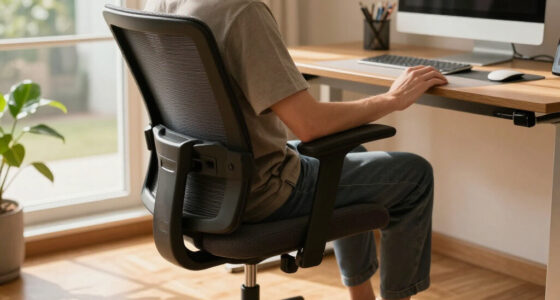
To stay flexible during your workday, try simple desk yoga stretches like tilting your head to each shoulder, rolling your shoulders back, and stretching your arms and wrists gently. Incorporate seated spinal twists, hamstring stretches, and ankle circles to loosen tight muscles. Remember to stand periodically and move around to boost circulation and reduce stiffness. Keep these tips in mind, and you’ll discover even more effective ways to keep your body relaxed and active throughout the day.

Get comfort and recovery gear delivered free with Prime
- Fast, free delivery on millions of items
- Prime Video, Amazon Music and more included
- Member-only deals all year
Key Takeaways
- Incorporate neck tilts and shoulder rolls to release tension and improve upper body flexibility during work hours.
- Perform seated spinal twists and hamstring stretches to maintain lower back and leg flexibility.
- Use wrist and arm stretches, like finger pulls, to prevent strain from repetitive motions.
- Stand periodically for calf and quad stretches, enhancing circulation and mobility.
- Combine ergonomic workspace setup with short movement breaks for optimal flexibility and comfort.

If you spend long hours at your desk, incorporating desk yoga into your routine can help reduce tension and boost your energy. Sitting for extended periods often leads to poor office posture, which can cause discomfort and even long-term health issues. Using ergonomic tools, like adjustable chairs, lumbar supports, and ergonomic keyboards, can considerably improve your workspace setup, making it easier to maintain proper posture. But even with the best tools, your muscles need movement and stretch breaks throughout the day. That’s where desk yoga comes in—simple, effective stretches you can do right at your desk to keep your body flexible and your mind alert.
Start by focusing on your neck and shoulders. Sit upright, feet flat on the floor, and gently tilt your head toward your shoulder, holding for a few seconds on each side. Follow this by rolling your shoulders backward and forward to release tension accumulated from hunching over your keyboard. These small movements help counteract the effects of poor office posture, which often leads to stiffness and soreness in the upper back and neck. Incorporate deep breathing as you stretch, inhaling through your nose and exhaling slowly to enhance relaxation.
Next, target your wrists and arms, especially if you spend a lot of time typing. Extend one arm in front of you with your palm facing down, then gently pull your fingers back with the opposite hand, stretching your forearm muscles. Switch sides and repeat. This relieves strain from repetitive motions and helps prevent conditions like carpal tunnel syndrome. Keep your workspace ergonomic by positioning your keyboard and mouse at a height that promotes natural wrist alignment, but remember to take breaks and stretch regularly. Incorporating regular movement into your routine can significantly improve your comfort and prevent stiffness over time.
To loosen your lower back and hips, try seated spinal twists. Sit upright, place your right hand on the back of your chair, and gently twist your torso to the right, holding the position for a few seconds before switching sides. You can also do seated hamstring stretches by extending one leg straight in front of you, keeping your heel on the ground, and reaching toward your toes. These stretches help maintain flexibility in your legs and lower back, which tend to tighten from prolonged sitting.
Incorporate gentle leg lifts or ankle circles while seated to improve circulation and prevent stiffness. Keep your feet active, and don’t forget to stand up periodically—stretching your calves and quads—especially if your desk setup limits movement. Small, consistent movements keep your muscles engaged, improve your posture, and help prevent discomfort. Remember, your workspace is most effective when complemented by ergonomic tools that support proper alignment. Regularly adjusting your setup and taking brief yoga breaks can make a noticeable difference in your comfort and productivity throughout the workday.
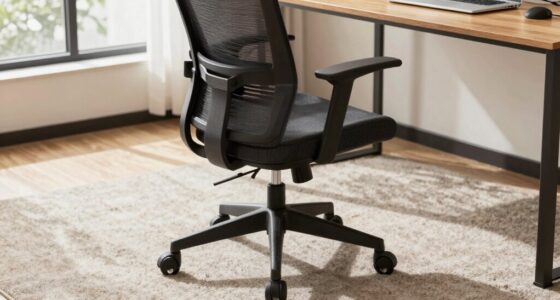
ergonomic office chair with lumbar support
As an affiliate, we earn on qualifying purchases.
As an affiliate, we earn on qualifying purchases.
Frequently Asked Questions
How Often Should I Do Desk Yoga During the Workday?
You should do desk yoga every 1 to 2 hours during your workday. Take short breaks, ideally lasting 2 to 5 minutes, to stretch and loosen up your muscles. This break frequency helps prevent stiffness and boosts circulation. Focus on a few simple stretches, holding each for about 15 to 30 seconds. Regular mini-sessions will keep you comfortable, alert, and flexible throughout the day.
Are Desk Yoga Stretches Suitable for Beginners?
Think of desk yoga as planting seeds; beginner-friendly stretches are the easy routines that help you grow stronger. Yes, these simple desk yoga routines are perfect for beginners, offering gentle movements that ease tension without strain. You can easily incorporate these stretches into your workday, slowly building flexibility and comfort. So, don’t worry—these beginner-friendly stretches are designed to make your workspace a more relaxed, healthier place to be.
Can Desk Yoga Improve My Posture Long-Term?
Yes, desk yoga can improve your posture long-term by promoting posture correction through targeted stretches. Regular practice helps strengthen your muscles and reduce tension, preventing slouching and discomfort. Over time, these stretches build awareness of proper alignment, leading to better habits even outside of your workday. Consistent desk yoga offers long-term benefits, making it easier to maintain a healthy posture and reduce the risk of chronic pain.
What Are the Best Times to Practice Desk Yoga?
Think of your office routine as a marathon; the best times to practice desk yoga are during break times and between tasks. You can stretch during short breaks or after long periods of sitting, just like a pit stop in a race. These moments refresh your body and mind, helping you stay flexible and focused. Incorporate quick stretches into your day to boost productivity and reduce tension effectively.
Do I Need Any Special Equipment for Desk Yoga?
You don’t need much to start desk yoga—just your body and a few ergonomic accessories, like a supportive chair or cushion, can help. While a yoga mat isn’t necessary, it can provide extra comfort if you prefer to do stretches on the floor. Focus on staying comfortable and mindful during your practice, and use the accessories to support proper alignment and prevent strain throughout your workday.
As an affiliate, we earn on qualifying purchases.
Conclusion
Even if you’re busy, taking just a few minutes for desk yoga can boost your flexibility and reduce stress. You might think you don’t have time, but these quick stretches fit easily into your day and can improve your focus and energy. So, don’t let a packed schedule stop you—your body will thank you for making those small, mindful moves. Give it a try today and feel the difference!
ergonomic keyboard and mouse set
As an affiliate, we earn on qualifying purchases.
As an affiliate, we earn on qualifying purchases.
As an affiliate, we earn on qualifying purchases.
Halloween Picks
halloween
As an affiliate, we earn on qualifying purchases.