You’ll notice if your chair is hurting your back when you feel persistent pain, stiffness, or discomfort that worsens over time. If you constantly shift positions, experience muscle strain from poor support, or find your feet aren’t flat on the floor, your chair may be to blame. Inadequate backrest support, lack of adjustability, and frequent readjustments are clear signs. Keep going, as you’ll learn how to identify and fix these issues for better comfort and posture.
Key Takeaways
- Experience persistent back, neck, or shoulder pain indicating inadequate support from your chair.
- Notice frequent discomfort or fatigue, prompting constant position adjustments.
- Find your feet not flat on the floor or knees higher than hips, affecting spinal alignment.
- Struggle to adjust height, tilt, or armrests, leading to poor posture and strain.
- Observe signs of stiffness or soreness after sitting, suggesting your chair isn’t supporting healthy habits.
If you spend long hours sitting at a desk, your chair could be secretly harming your back without you realizing it. Many chairs, especially those not designed with ergonomics in mind, can lead to poor posture and back pain over time. The good news is, you can often identify these issues early with a few simple observations. One of the first signs is persistent discomfort or pain in your lower back, neck, or shoulders. If you notice these symptoms, it’s worth reevaluating your chair’s setup and considering ergonomic accessories that promote better posture correction.
Persistent back, neck, or shoulder pain signals your chair may be harming your posture.
Look at the way you sit. Are you slouching, leaning forward, or craning your neck? These habits often develop when your chair doesn’t support your natural spinal curves. An unsupportive chair can force you into positions that strain your muscles and ligaments. If adjusting your seat height or backrest doesn’t improve your comfort, it may be time to upgrade. Ergonomic accessories like lumbar supports, footrests, or adjustable armrests can help you maintain proper alignment and reduce strain.
Pay attention to your feet. If they don’t rest flat on the floor or your knees are higher than your hips, your posture is compromised. An adjustable footrest can make a significant difference, encouraging better circulation and stabilizing your pelvis. Also, check if your chair’s backrest provides adequate support for your lower and upper back. If it’s too flat or too stiff, your spine might be forced into unnatural positions, leading to discomfort and long-term issues. Proper chair support is essential for maintaining healthy spinal alignment. Additionally, selecting a chair with adequate adjustability can help you customize your sitting position, preventing strain and discomfort over extended periods. Regularly inspecting and maintaining your chair’s components can also ensure continued support and comfort, reducing the risk of back problems. Furthermore, choosing a chair with stability features can prevent unnecessary movements that may cause strain.
Another clue that your chair might be ruining your back is if you frequently shift positions or get up feeling stiff or sore. Your body naturally seeks comfort, and persistent discomfort indicates your chair isn’t doing its job. If you’re constantly readjusting or experiencing fatigue, it’s a sign that your posture isn’t being properly supported. In such cases, investing in ergonomic accessories like adjustable lumbar cushions or seat pads can encourage healthier sitting habits and help you maintain better posture correction throughout the day.
Finally, consider whether your chair has enough adjustability. A good ergonomic chair should allow you to modify height, tilt, and arm position easily. If these features are lacking or difficult to manipulate, your sitting posture suffers, increasing the risk of back problems. Regularly assess your sitting habits, be attentive to discomfort, and don’t hesitate to make changes. Your back will thank you for it. Additionally, choosing chairs with proper stair proportions or planning your workspace layout can help create an environment that supports healthier sitting positions. Paying attention to ergonomic principles when selecting or adjusting your chair can make a significant difference in preventing ongoing back issues.
Frequently Asked Questions
Can Ergonomic Chairs Always Prevent Back Pain?
Ergonomic chairs with memory foam and lumbar support can substantially reduce back pain, but they can’t always prevent it. Your posture, sitting habits, and overall workstation setup play vital roles. Even the best chair needs proper adjustments and regular movement. If you neglect these factors, back pain may still occur despite using an ergonomic chair. So, invest in comfort and ergonomics, but also focus on healthy sitting habits.
How Often Should I Replace My Office Chair?
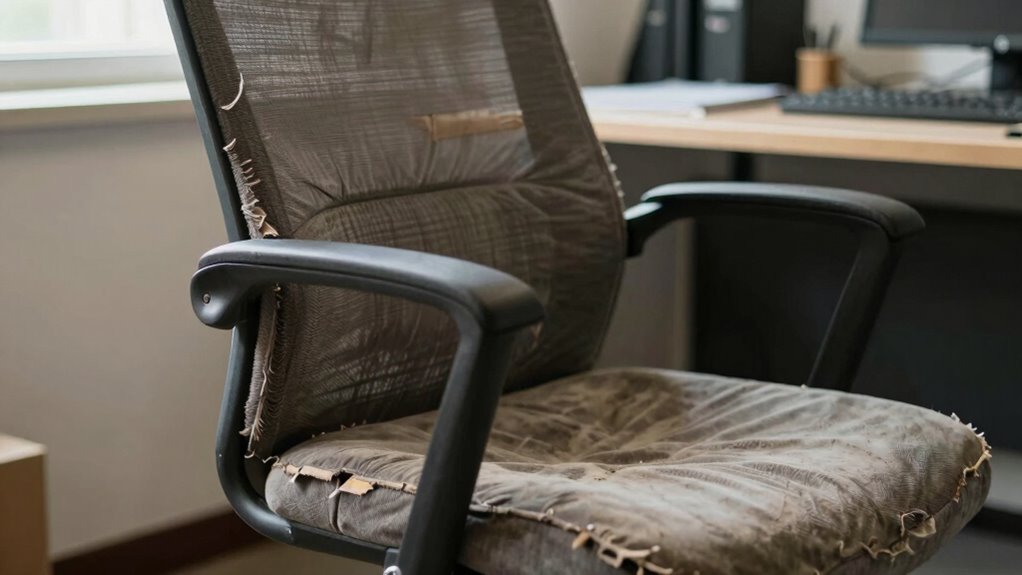
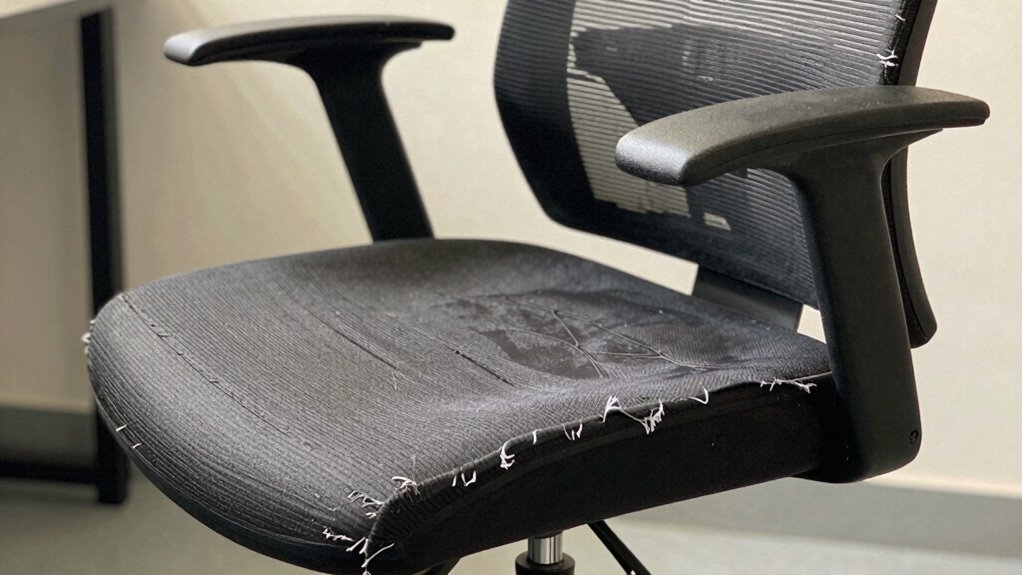
You should replace your office chair every 5 to 8 years. Imagine your chair as a trusty steed—over time, wear and tear from daily use can turn it into a liability. Check the chair material for signs of deterioration and make sure adjustable features still function smoothly. If you notice persistent discomfort or loss of support, it’s time for a new one to prevent back pain and maintain comfort.
Are There Signs of Long-Term Damage From Poor Seating?
Yes, long-term damage from poor seating can occur if you notice persistent pain, decreased flexibility, or numbness. Poor spinal alignment from an unsupportive chair strains your muscles and strains your back over time. If you experience ongoing discomfort, it’s a sign your chair isn’t supporting proper posture. Regularly check your seating setup, and prioritize ergonomic features to protect your spine and reduce muscle strain.
What Posture Should I Maintain While Sitting?
Think of your spine as a delicate tower of blocks; keep it aligned like a sturdy structure. Maintain good posture by sitting with your back straight, shoulders relaxed, and feet flat on the floor. This promotes proper spinal alignment and reduces muscle tension. Avoid slouching or leaning forward, which can cause strain. Regularly adjust your position to keep your back supported and your muscles relaxed, ensuring comfort and health.
Do Seat Cushions Improve Back Health?
Seat cushions with memory foam and lumbar support can improve your back health by providing better alignment and pressure relief. They help maintain proper posture, reduce strain on your lower back, and promote comfort during long sitting periods. If your chair lacks adequate support, adding a quality cushion can make a significant difference, encouraging healthier sitting habits and preventing back pain.
Conclusion
If your chair isn’t supporting your back properly, it’s like walking on shaky ground—eventually, it’ll take a toll. Pay attention to discomfort, poor posture, or persistent aches, because these signs tell you your chair might be doing more harm than good. Investing in a supportive chair is like planting a sturdy tree—over time, it provides stability and comfort. Don’t ignore the signs; your back deserves the best foundation.