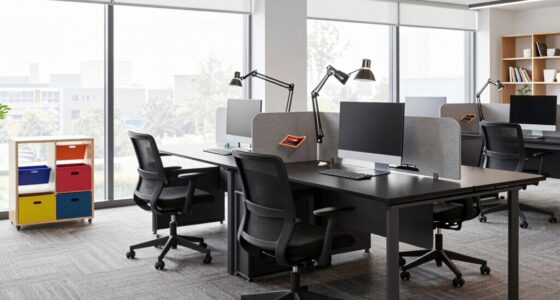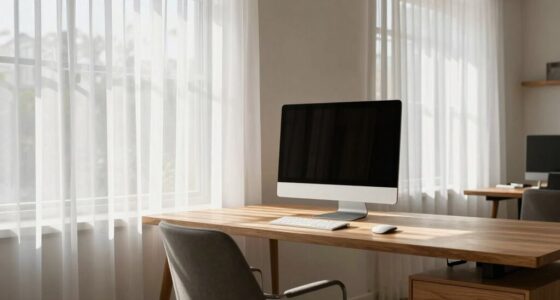
Having cluttered surfaces, mismatched furniture, and too many decorative items can make your home office feel busy and overwhelming. Excess equipment and accessories create visual noise, while bright or clashing colors add to the chaos. Avoid ignoring ergonomic comfort and proper lighting, which can also contribute to a cluttered vibe. Focus on simplicity, organization, and calming tones to create a peaceful space. Keep exploring how to transform your office into a more serene environment.

Get comfort and recovery gear delivered free — and shop member deals
- Fast, free delivery on millions of items
- Access to Prime Big Deal Days deals on October 6–7
- Prime Video, Amazon Music and more included
Key Takeaways
- Overcrowding surfaces with decorative items and equipment creates visual noise and a cluttered appearance.
- Mismatched furniture disrupts visual harmony and contributes to a chaotic feeling.
- Using bright, clashing colors overstimulates the mind and makes the space feel overwhelming.
- Poor lighting, especially harsh overhead lights, can make the room feel oppressive and busy.
- Lack of surface organization and excess accessories lead to visual clutter and reduce a sense of calm.
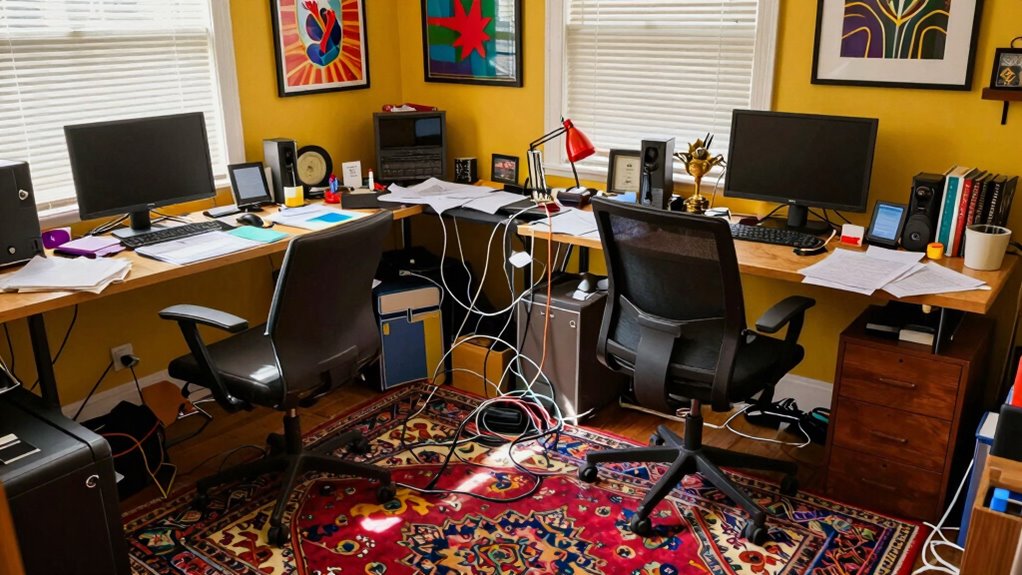
Have you ever wondered why your home office feels more stressful than productive? It’s often because of the design choices you’ve made—cluttered surfaces, mismatched furniture, or too many decorative items competing for attention. One common mistake is neglecting ergonomic furniture. If your chair is uncomfortable or your desk height isn’t right, you’ll find yourself constantly shifting or feeling fatigued, which adds to the chaos. Investing in ergonomic furniture isn’t just about comfort; it’s about creating a space that promotes focus and well-being. When your workspace supports good posture and easy movement, you naturally feel less overwhelmed and more in control. Additionally, understanding emerging trends in digital publishing can help you find innovative ways to improve your workspace or gather inspiration for your home office setup.
Another factor that contributes to a busy, chaotic vibe is poor use of color psychology. Bright, clashing colors or a mishmash of hues can overstimulate your mind, making it harder to concentrate and relax. Instead, choose a color palette that fosters calm and clarity. Soft blues, muted greens, or neutral tones can create a serene environment that encourages focus and reduces stress. When you’re intentional about your color choices, your brain perceives the space as organized and peaceful, even if other elements are cluttered or busy.
Many people make the mistake of overcrowding their home office with too many items or decorative pieces. While it’s tempting to personalize your space, too much visual clutter can make it feel chaotic. Keep your surfaces clear and only display a few meaningful items. Also, avoid filling every corner with equipment or accessories. Instead, organize supplies in drawers or storage containers, so your desk remains clean and inviting. This not only reduces visual noise but also makes it easier to find what you need, preventing the room from feeling overwhelming.
Lighting plays a pivotal role too. Relying solely on harsh overhead lights or neglecting natural light can make your office feel oppressive. Incorporate layered lighting—desk lamps, floor lamps, and soft ambient lights—to create a balanced environment that feels open rather than cramped. Proper lighting combined with strategic furniture placement enhances the sense of space, helping the room feel less busy and more serene.
In the end, avoiding these common mistakes—like neglecting ergonomic furniture, misusing color psychology, cluttering surfaces, and poor lighting—can transform your home office into a space that fosters productivity and calm. Keep your workspace simple, thoughtfully designed, and supportive of your needs, and you’ll find it’s easier to focus and feel less overwhelmed every day.
ergonomic office chair for back support
As an affiliate, we earn on qualifying purchases.
As an affiliate, we earn on qualifying purchases.
Frequently Asked Questions
How Can I Create a Calming Home Office Environment?
To create a calming home office, start with personalized decor that reflects your style, keeping the space inviting yet uncluttered. Use soundproofing techniques like rugs, heavy curtains, or wall panels to minimize noise distractions. Keep the color palette soothing—think soft neutrals or pastels—and incorporate natural elements like plants. Maintain organization with smart storage, and guarantee good lighting to foster focus and relaxation in your workspace.
What Color Schemes Help Reduce Visual Clutter?
To reduce visual clutter, opt for calming color schemes based on color psychology, like soft blues, greens, or neutrals. Monochrome palettes work well, creating a cohesive and serene look that minimizes distraction. You should choose muted tones and keep accessories minimal, which helps your home office feel more organized and peaceful. This approach enhances focus and reduces the feeling of chaos, making your workspace a more productive environment.
How to Balance Storage and Workspace Effectively?
You should prioritize hidden storage to keep your workspace clutter-free, allowing you to maintain a clean and organized look. Use decorative accents like stylish baskets or drawers that blend seamlessly into your design. Keep essential items within reach but out of sight, and regularly declutter to prevent buildup. Balancing storage and workspace creates a functional environment where you can focus without feeling overwhelmed by visual clutter.
Are There Ergonomic Tips for a Busy-Looking Office?
Your workspace isn’t just busy; it’s practically a tornado of clutter! To stay ergonomic, focus on desk organization by keeping essentials within reach and using storage solutions to reduce visual chaos. Invest in ergonomic furniture, like an adjustable chair and keyboard tray, to prevent strain. Regularly declutter and arrange items thoughtfully, so your office remains functional and comfortable, no matter how hectic things get.
How Does Lighting Impact the Room’s Visual Clutter?
Lighting impacts your room’s visual clutter by creating layers that add depth and focus. Use different lighting layers, like task, ambient, and accent lights, to highlight specific areas without overwhelming the space. Shadow effects from well-placed lighting can also reduce visual noise, making the room feel calmer. Avoid harsh, uniform lighting, as it can make clutter appear more prominent and busy, instead opting for a balanced, layered lighting design.
As an affiliate, we earn on qualifying purchases.
Conclusion
Avoiding these design pitfalls is like untangling a knot—once you straighten out the chaos, your home office becomes a sanctuary rather than a storm. Keep your space simple and intentional, letting each piece breathe and serve a purpose. When you steer clear of clutter and overstuffing, your room transforms into a peaceful harbor amid the chaos of daily life. Embrace clarity, and watch your workspace bloom into a haven of productivity and calm.
As an affiliate, we earn on qualifying purchases.
layered lighting for home office
As an affiliate, we earn on qualifying purchases.
As an affiliate, we earn on qualifying purchases.
Fall Picks
fall essentials
As an affiliate, we earn on qualifying purchases.