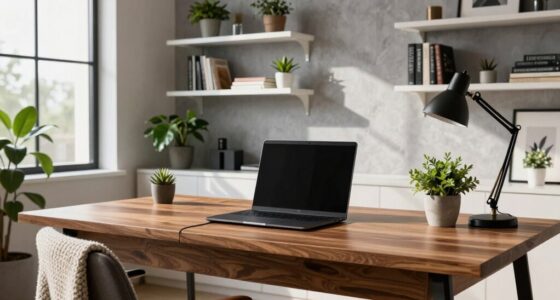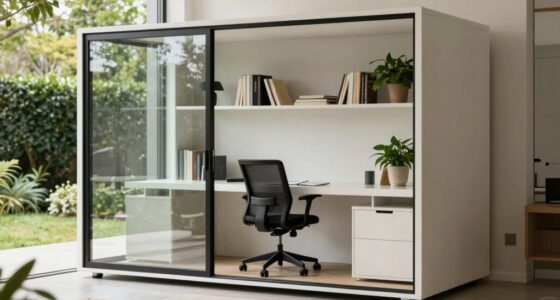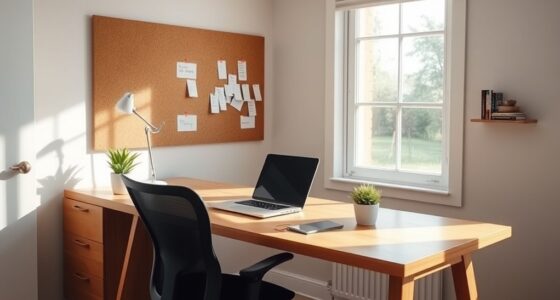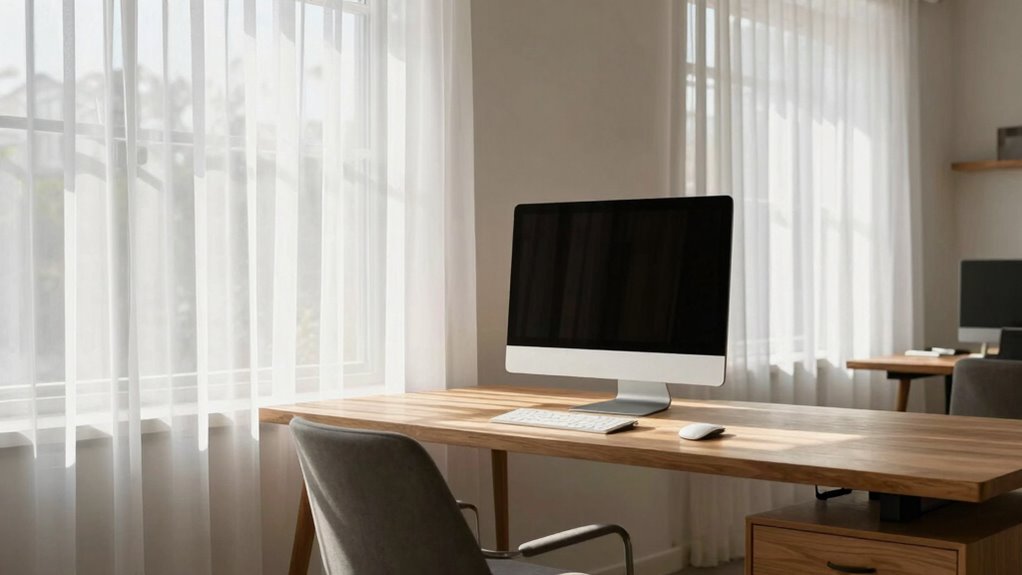

To design around natural light without screen problems, position windows to maximize indirect light and reduce glare, especially on east and west sides. Use adjustable blinds, shades, or tinted films to control brightness. Incorporate overhangs or reflective surfaces to diffuse sunlight and prevent harsh reflections. Choose light-colored walls to bounce light evenly and consider interior layout to minimize direct sunlight on screens. Keep exploring for more tips to create a comfortable, glare-free space that still benefits from natural daylight.

Get comfort and recovery gear delivered free — and shop member deals
- Fast, free delivery on millions of items
- Access to Prime Big Deal Days deals on October 6–7
- Prime Video, Amazon Music and more included
Key Takeaways
- Position windows to maximize indirect light and minimize direct glare on screens.
- Use adjustable window treatments like blinds or shades to control incoming sunlight.
- Incorporate overhangs or awnings to block harsh midday sun while allowing soft light.
- Choose reflective wall colors and surfaces to diffuse light evenly and reduce glare.
- Optimize room orientation based on building layout to avoid excessive direct sunlight exposure.
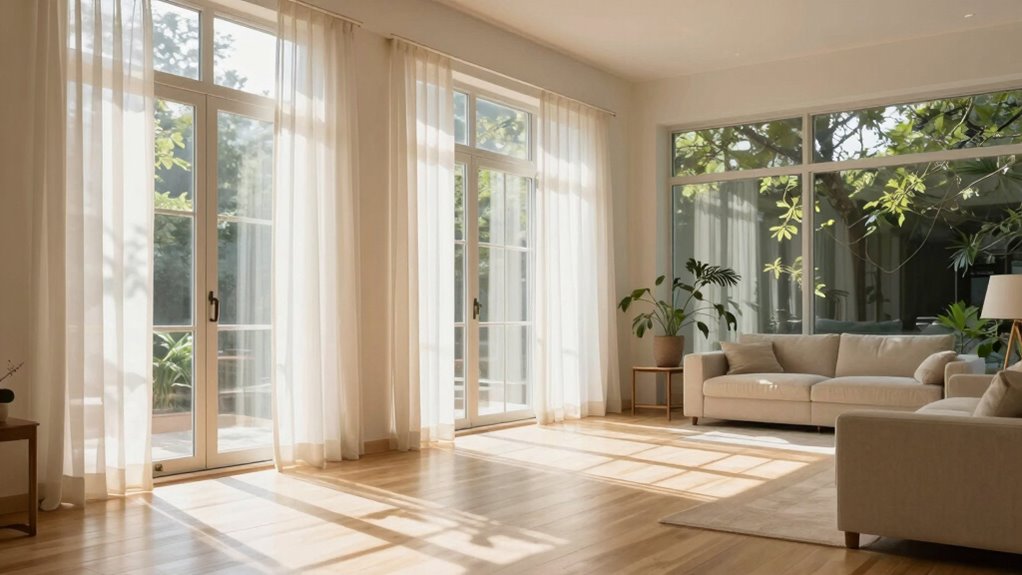
Natural light is one of the most powerful tools in creating a welcoming and functional space, and designing around it can transform your environment. To make the most of this valuable resource, you need to think carefully about window placement. Strategic positioning of windows allows sunlight to fill your room without overwhelming it or causing glare. For instance, placing windows on the east and west sides helps you harness morning and late afternoon light, while avoiding excessive midday sun that can lead to heat gain and glare. When planning window placement, consider the room’s purpose and how natural light will interact with different areas throughout the day. This way, you can maximize daylight while minimizing the need for artificial lighting and reduce potential screen problems caused by glare. Additionally, choosing window treatments that can be easily adjusted allows you to control light levels throughout the day, ensuring optimal comfort and screen visibility. Light control is essential to guarantee that natural light enhances your space rather than disrupts it. Installing adjustable window treatments like blinds, shades, or curtains allows you to manage sunlight levels easily. When you want to reduce glare on screens, simply draw your blinds or close shades during peak sunlight hours. This quick adjustment prevents screen problems like reflections and eye strain, especially in work or entertainment areas. Additionally, consider using tinted or reflective window films to filter sunlight without sacrificing the brightness you want. These options give you control over how much light enters your space, allowing you to create a comfortable environment for both work and relaxation. Another way to improve light control is by using window orientations and architectural features to your advantage. For example, overhangs or awnings can block harsh midday sun while still letting in soft, natural light. Strategically placed interior elements—like light-colored walls, reflective surfaces, or glass partitions—also help distribute daylight evenly across the room. This not only reduces the intensity of direct sunlight but also minimizes screen problems caused by direct glare. Incorporating color temperature adjustments can further optimize the lighting conditions for comfortable viewing. Moreover, understanding how building orientation impacts sunlight exposure can help in planning layouts that naturally regulate interior brightness and reduce reliance on artificial lighting. Recognizing the role of natural light in energy efficiency and comfort can guide better architectural decisions for sustainable living spaces. Additionally, understanding solar angles can assist in designing windows and shading devices that maximize beneficial sunlight while minimizing heat gain and glare. For example, some architects and designers use insights from the Gold IRA markets to inform their investment in sustainable and energy-efficient building materials, which also contribute to better natural light management.
adjustable window blinds for glare control
As an affiliate, we earn on qualifying purchases.
As an affiliate, we earn on qualifying purchases.
Frequently Asked Questions
How Can I Prevent Glare From Natural Light?
You can prevent glare from natural light by adjusting your screen brightness to match the ambient light levels. Position your screen perpendicular to windows to minimize direct sunlight hitting it. Use window treatments like blinds or curtains to diffuse natural light. Also, consider anti-glare screens or matte finishes to reduce reflections. These steps help you enjoy natural light without compromising your screen visibility or causing eye strain.
What Window Treatments Reduce Screen Reflections Effectively?
If you want to banish screen reflections, go for window film or blackout curtains—they’re the superhero duo of glare control. Window film reduces reflections without darkening the room, while blackout curtains block out almost everything, creating a glare-free zone. Together, they keep your screens crystal clear, no matter how bright the sun blazes outside. Say goodbye to annoying reflections and hello to a comfortable viewing experience!
How Does Natural Light Affect Screen Color Accuracy?
Natural light can impact your screen’s color accuracy by causing glare and uneven illumination. You should consider color calibration to maintain true colors, as it adjusts for ambient light variations. Using light diffusion techniques, like sheer curtains or diffusers, helps soften harsh sunlight and reduce reflections. These steps guarantee your screen displays consistent, accurate colors regardless of natural light changes, improving your overall viewing and work experience.
Can Natural Light Cause Screen Overheating Issues?
Imagine you’re back in the 80s, and yes, screens could overheat! Natural light itself doesn’t directly cause overheating, but it can increase screen brightness, which raises internal temperature. If your ambient temperature is high, this intensified brightness can contribute to overheating issues. To prevent that, adjust your screen brightness according to the ambient temperature, and consider using shades or curtains to control excessive sunlight, keeping your device cool and functioning most effectively.
What Are the Best Lighting Setups for Mixed Natural and Artificial Light?
You should use a combination of diffused natural light and adjustable artificial lighting to create the best setup. Use light diffusion techniques, like softboxes or sheer curtains, to minimize harsh shadows and glare. Match the color temperature of artificial lights to natural light, ideally around 5000K, for seamless blending. This approach balances brightness and color consistency, reducing eye strain and screen problems while maintaining a natural, inviting ambiance.
tinted window films for natural light
As an affiliate, we earn on qualifying purchases.
As an affiliate, we earn on qualifying purchases.
Conclusion
By embracing natural light, you invite warmth and vibrancy into your space, transforming your environment into a lively sanctuary. Yet, just as sunlight can energize, it can also cause glare and screen discomfort. Balancing these elements is like finding harmony in a dance—highlighting the beauty of natural brightness while gracefully managing its challenges. When you design thoughtfully around natural light, you create a space that’s both inspiring and comfortable, where every moment feels perfectly illuminated.
As an affiliate, we earn on qualifying purchases.
reflective wall paint for light diffusion
As an affiliate, we earn on qualifying purchases.
As an affiliate, we earn on qualifying purchases.
Halloween Picks
halloween
As an affiliate, we earn on qualifying purchases.