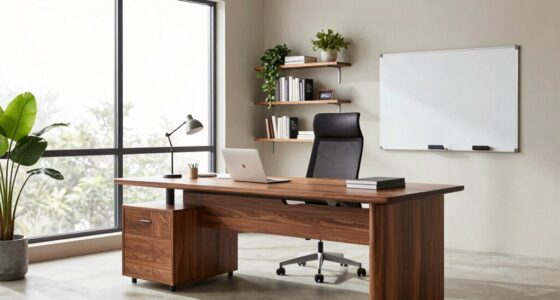
To declutter your home office, start by setting clear, achievable goals to stay motivated. Clear off your desk and surfaces, then sort your items into categories like daily essentials or obsolete supplies. Discard anything unnecessary, damaged, or no longer useful. Organize what’s left with labels and efficient storage options, such as bins or shelves. Keep your space tidy by regularly maintaining your system, so you’ll find more tips as you explore further steps.
Key Takeaways
- Set clear decluttering goals and break the process into manageable tasks to stay focused and motivated.
- Clear off your desk, eliminate unnecessary items, and wipe surfaces for a clean workspace.
- Categorize and label items for easy access, prioritizing frequently used essentials within reach.
- Use storage solutions like bins, shelves, and multifunctional furniture to maximize space and organization.
- Regularly discard or donate unused items to maintain a tidy, efficient home office environment.
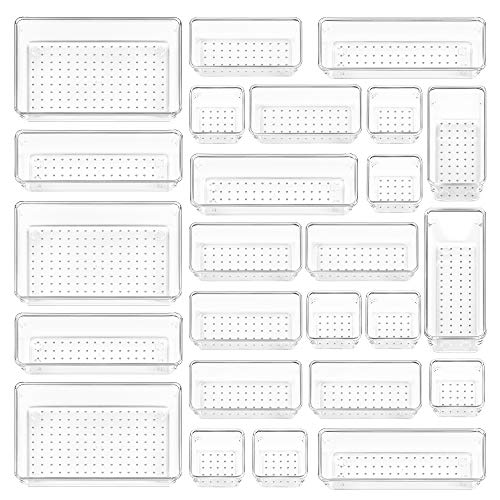
Vtopmart 25 PCS Clear Plastic Drawer Organizers Set, 4-Size Versatile Bathroom and Vanity Drawer Organizer Trays, Storage Bins for Makeup, Bedroom, Kitchen Gadgets Utensils and Office
- Versatile Drawer Organization: Suitable for bathroom, vanity, kitchen, and office drawers
- Includes 25 Storage Bins: Four sizes for customized storage solutions
- Multiple Sizes Included: Sizes: 9x6x2, 9x3x2, 6x3x2, 3x3x2 inches
As an affiliate, we earn on qualifying purchases.
As an affiliate, we earn on qualifying purchases.
Set Clear Decluttering Goals

To effectively declutter your home office, you need to set clear goals from the start. Establish specific, achievable objectives to keep yourself focused and motivated. Use motivational reminders to reinforce why you want an organized space, whether it’s to boost productivity or reduce stress. Break down your decluttering process into smaller tasks, and track your progress to stay accountable. Goal tracking helps you see how far you’ve come and keeps you motivated to finish each step. For example, aim to clear your desk within a day or organize all papers in a designated folder. Clear goals give you direction, making the decluttering process manageable and less overwhelming. Incorporating interior design tips can also inspire you to create a functional and aesthetically pleasing workspace. Additionally, understanding how to manage paperwork effectively can streamline your decluttering efforts and ensure long-term organization. Developing good storage solutions is essential for maintaining a tidy workspace over time. You can also consider ergonomic workspace setup strategies to enhance comfort and efficiency while working. Paying attention to lighting and ventilation can improve your overall work environment and increase motivation. With well-defined targets, you’ll stay motivated and make consistent progress toward a tidier home office.
![PRANDOM Large Collapsible Storage Bins with Lids [3-Pack] Linen/Cotton Blend Foldable Storage Boxes Organizer Containers Baskets Cube with Cover for Home Bedroom Closet Office Nursery(17.7x11.8x11.8)](https://m.media-amazon.com/images/I/51qVxrfLGaL._SL500_.jpg)
PRANDOM Large Collapsible Storage Bins with Lids [3-Pack] Linen/Cotton Blend Foldable Storage Boxes Organizer Containers Baskets Cube with Cover for Home Bedroom Closet Office Nursery(17.7×11.8×11.8)
- High-Quality Material: Linen fabric with stainless steel handles
- Stylish Design: Neutral gray and black colors match any decor
- Space-Saving Collapsible Bins: Foldable for easy storage when not in use
As an affiliate, we earn on qualifying purchases.
As an affiliate, we earn on qualifying purchases.
Clear Your Desk and Surfaces

Clearing your desk and surfaces is the first tangible step toward a more organized home office. Start with a thorough desk cleaning, removing everything from the surface. Wipe down your desk to eliminate dust, dirt, and smudges, creating a fresh workspace. Focus on surface organization by removing unnecessary items like old papers, empty cups, or clutter that doesn’t serve a purpose. Keep only essentials within arm’s reach, such as your computer, notepad, or pen holder. Use trays or small containers to group similar items and reduce visual clutter. A tidy surface boosts productivity and mental clarity, making it easier to focus on your tasks. Incorporating effective organization techniques can further enhance your workspace cleanliness and functionality. Additionally, implementing a simple system for managing papers and supplies can help you maintain a clutter-free environment over time. Employing energy-efficient tools can also contribute to a more sustainable and cost-effective workspace. Remember, maintaining a clean and organized workspace is key to sustained productivity and mental well-being.

Phomemo Label Maker, D30 Bluetooth Mini Label Maker Machine with Tape
- Supports Continuous Label Tapes: Fixed length, lightweight, compact design
- Enhanced Print Quality: German thermal print head, 25% clearer
- Extensive Creative Tools: Icons, borders, fonts, templates, design materials
As an affiliate, we earn on qualifying purchases.
As an affiliate, we earn on qualifying purchases.
Sort Items Into Categories

Start by grouping similar items together so everything has a designated spot. Use clear labels to make finding what you need quick and easy. Remember to keep frequently used items within easy reach to maintain an efficient workspace.
Group Similar Items
Grouping similar items into categories makes your home office more organized and efficient. Use categorization techniques to identify common groups, such as pens, notebooks, chargers, or paperwork. Once you’ve sorted these, find matching storage options that suit each category—like small bins for office supplies or file folders for documents. This method is inspired by Italian culinary traditions of grouping ingredients for optimal flavor, which can be applied to organizing your workspace for better efficiency and clarity. Proper categorization also minimizes clutter, making it easier to maintain an organized environment and reduce stress. Implementing effective storage solutions ensures your workspace remains tidy over time. This approach reduces clutter and makes it easier to locate what you need quickly. Consider grouping items based on how frequently you use them, placing daily essentials within arm’s reach. Clear organization helps you maintain a tidy workspace and boosts productivity. When items are grouped logically, you spend less time searching and more time working. Proper categorization and matching storage solutions create a streamlined environment that supports your workflow. Additionally, utilizing crypto market insights can help you understand trends that influence how you organize your workspace for optimal productivity. Incorporating digital tools can further enhance your organization by streamlining task management and inventory.
Use Clear Labels
Once you’ve sorted your items into categories, adding clear labels guarantees you can identify everything at a glance. Labeling clarity is essential for maintaining a tidy workspace, as it minimizes confusion and saves time. Use bold, legible fonts and consistent wording to ensure labels are easy to read. Incorporate visual organization by using color-coded labels or icons to differentiate categories quickly. This approach helps you locate supplies instantly and keeps your workspace streamlined. Avoid vague labels like “Stuff” or “Misc.” Instead, be specific, such as “Printer Supplies” or “Stationery.” Clear labels create a visual map of your office, making it simple to find what you need and return items to their proper place. Well-labeled storage boosts efficiency and keeps clutter under control. Additionally, understanding floating on water concepts can inspire you to create a calm, organized environment that promotes productivity.
Prioritize Accessibility
Have you ever struggled to find important items when you need them most? Prioritizing accessibility can transform your workspace. Start by grouping your frequently accessed files together within easy reach, so you don’t waste time searching. Next, keep your ergonomic accessories—like your mouse, keyboard, and wrist supports—within arm’s length to reduce strain and improve comfort. Finally, create designated zones for different categories of supplies: one for essentials, one for less-used items, and another for storage. This organization guarantees everything has a proper place, making your workflow smoother and more efficient. Incorporating organized storage solutions can further enhance your ability to quickly locate and access your tools and documents. Ensuring your workspace is ergonomically optimized can also prevent discomfort and boost productivity. Additionally, implementing customized organizational systems tailored to your specific needs can help maintain long-term tidiness. Embracing workplace organization principles inspired by professional environments can elevate your productivity even further. Remember, a tidy workspace isn’t just visually pleasing; it helps you stay focused and productive when it matters most.

MOSISO Wrist Rest Support for Mouse Pad&Keyboard Set, Antique Green
- Keyboard Wrist Rest Size: 17.32 x 3.15 inches
- Mouse Pad Size: 9.65 x 8.66 inches
- Coaster Diameter: 3.9 inches
As an affiliate, we earn on qualifying purchases.
As an affiliate, we earn on qualifying purchases.
Discard Unnecessary Items

Start by identifying items that are no longer useful or relevant, such as outdated documents or broken equipment. Set clear rules for discarding, like recycling paper or donating usable items. By establishing these guidelines, you can efficiently clear out clutter and make space for what truly matters. Additionally, consider ventilation considerations to ensure your workspace remains fresh and comfortable after decluttering.
Identify Obsolete Items
To effectively declutter your home office, you need to identify and remove obsolete items that no longer serve a purpose. Start by sorting through your supplies and equipment, looking for signs of aging or disuse. Ask yourself:
- Have I used this obsolete equipment in the last year?
- Are these supplies expired or outdated?
- Is this item taking up valuable space without adding value?
If the answer is yes, it’s time to let go. Discard outdated supplies to make room for essentials, and recycle or donate obsolete equipment that’s no longer functional. Removing these unnecessary items clears space and reduces visual clutter, making your workspace more efficient and inviting. Recognizing what’s no longer useful is a vital step toward a tidy, productive home office. Be mindful of infection risks and prevention, especially when handling older or unused items that may harbor bacteria or mold. Regularly inspecting your workspace for contaminated or hazardous materials helps maintain a safe environment. Incorporating proper tool maintenance routines can also prevent the buildup of dust and debris that contribute to clutter and health risks. Additionally, understanding the benefits of proper hygiene can support a healthier workspace environment if you handle skincare products during workspace organization.
Set Disposal Guidelines
Establishing clear disposal guidelines guarantees you handle unnecessary items consistently and efficiently. Decide what to keep, digitize, recycle, or discard. For digital file management, delete duplicates and outdated files regularly to stay organized. For physical items, set rules such as discarding broken equipment or outdated supplies. Use the table below to guide your decisions:
| Item Type | Keep / Discard / Digitize | Notes |
|---|---|---|
| Old paperwork | Discard | Scan important documents |
| Broken equipment | Discard | Replace if needed |
| Digital files | Digitize / Delete | Remove duplicates |
| Ergonomic accessories | Keep | Essential for comfort |
Following these guidelines guarantees a clutter-free workspace, promotes better digital file management, and helps create an ergonomic setup that boosts productivity.
Donate or Recycle
Have you ever wondered what to do with items you no longer need but can still benefit someone else? Donating or recycling allows you to give those items a new purpose. First, consider donating useful office supplies and equipment to donation charities—they’ll find a new home and help others. Second, recycle electronics, paper, and plastics at recycling centers to reduce waste and protect the environment. Third, let go of outdated or broken items that can’t be refurbished; recycling centers can process these responsibly. This not only clears your workspace but also supports sustainability efforts. By making these choices, you ensure your clutter benefits others and the planet, transforming your decluttering efforts into a positive, impactful act.
Organize What Remains

Once you’ve cleared out the unnecessary items, it’s time to organize what remains so your home office functions efficiently. Start by establishing a digital organization system—delete unused files, organize folders, and back up important documents. This reduces clutter and makes everything easier to find. Next, focus on creating an ergonomic setup: position your chair and monitor at comfortable heights, and arrange your workspace to promote good posture. Keep frequently used items within reach to minimize strain and maximize productivity. Use labeled trays or containers for supplies, and designate specific zones for work materials. A well-organized space minimizes distractions, boosts efficiency, and helps you stay focused. Remember, a tidy workspace supports both your mental clarity and physical comfort.
Create Storage Solutions

Creating effective storage solutions is key to maintaining an organized home office. When you choose decorative storage, you add style while keeping clutter at bay. Innovative solutions, like multi-purpose furniture or wall-mounted units, maximize space without sacrificing aesthetics. Consider these options:
- Use decorative baskets or bins that blend seamlessly with your decor, making storage feel intentional and stylish.
- Install wall-mounted shelves to keep essentials within reach and free up desk space.
- Invest in multi-functional furniture, like ottomans with hidden compartments, to hide away items effortlessly.
Maintain Your Tidy Space

To keep your home office organized over time, consistent maintenance is essential. Regularly review your digital organization by deleting unnecessary files and updating folders to stay efficient. An ergonomic setup promotes comfort and reduces strain, so adjust your desk, chair, and monitor height as needed. Keep your workspace clutter-free by returning items to their designated storage after use and tidying surfaces daily. Schedule brief weekly check-ins to reassess your organization system and make adjustments if needed. This habit prevents clutter from building up and ensures your workspace remains functional and inviting. By maintaining both your physical and digital spaces, you create a seamless environment that boosts productivity and keeps your home office a place you enjoy working in.
Frequently Asked Questions
How Often Should I Declutter My Home Office?
You should declutter your home office every few months to keep it organized and efficient. Frequently scheduling mini declutters helps prevent clutter buildup, while a seasonal cleanup guarantees deep cleaning and reorganization. By establishing a regular routine, you’ll maintain a tidy workspace that boosts productivity. Set reminders to declutter often and plan a thorough seasonal cleanup to stay on top of clutter and maintain a comfortable workspace year-round.
What Are the Best Storage Options for Small Spaces?
A small space is like a cozy nest, so choose smart storage options. Wall-mounted shelves free up desk space and keep essentials within reach. Multi-functional furniture, like a desk with built-in drawers or a fold-out bed, maximizes utility without clutter. These solutions help you stay organized, making your workspace feel open and inviting instead of cramped. Embrace these clever ideas to turn limited space into a functional haven.
How Do I Prevent Clutter From Accumulating Again?
To prevent clutter from piling up again, you should establish a routine for digital organization, deleting unnecessary files and organizing documents into clearly labeled folders. Keep your workspace ergonomic by regularly tidying cables and supplies, ensuring everything has a designated spot. Schedule weekly quick cleanups to maintain order, and resist the urge to leave items lying around. Consistency is key to keeping your home office tidy and functional.
Should I Keep Sentimental Items in My Workspace?
Think of your workspace as a gallery; only display personal mementos that truly inspire or bring joy, rather than every emotional attachment. Keep sentimental items if they motivate you, but avoid cluttering your space with too many. Regularly reassess what’s meaningful, and consider storing or rotating items to preserve their significance without overwhelming your workspace. This balance helps maintain focus while honoring your personal history.
How Can I Stay Motivated to Maintain Organization?
To stay motivated to maintain organization, you should set clear goals and use motivational strategies like rewarding yourself for small achievements. Establish consistent organizational habits, such as daily tidying routines or weekly reviews, to reinforce your progress. Keep visual reminders or inspirational quotes nearby to boost your motivation. Remember, creating a clutter-free space enhances focus and productivity, making it easier to stay committed to your organizational habits over time.
Conclusion
By following these steps, you’ll transform your home office into a sanctuary of clarity and productivity. Think of your space as a garden—you need to regularly tend and prune it to keep it thriving. Staying consistent with your decluttering routine ensures chaos doesn’t creep back in. Remember, a tidy workspace isn’t just neat—it’s your launchpad for success, where ideas flourish and stress takes a backseat. Keep it simple, stay committed, and watch your productivity soar.