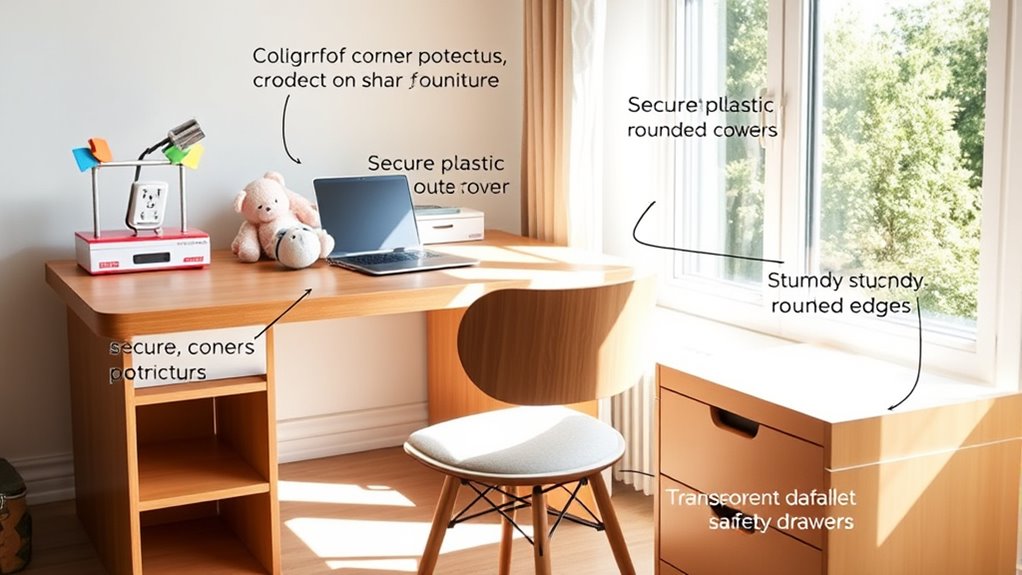

To childproof your home office, guarantee your workspace is safe and ergonomic by adjusting furniture and keeping cords organized. Cover outlets and secure chargers out of reach to prevent electrical hazards. Keep small items, sharp tools, and breakables away from kids, and use childproof locks on cabinets. Regularly inspect your setup for safety risks. Taking these steps creates a safer environment and minimizes accidents, and there’s more helpful advice to help you fully protect your space.
Key Takeaways
- Use childproof locks on cabinets and drawers containing office supplies or electronic accessories.
- Install outlet covers or safety plugs on all unused outlets to prevent electrical shock.
- Organize and secure cords and wires with clips or sleeves to eliminate tripping hazards.
- Keep small items, sharp tools, and breakables out of children’s reach to prevent choking or injuries.
- Adjust furniture and equipment to ensure stability and prevent tipping or accidental falls.
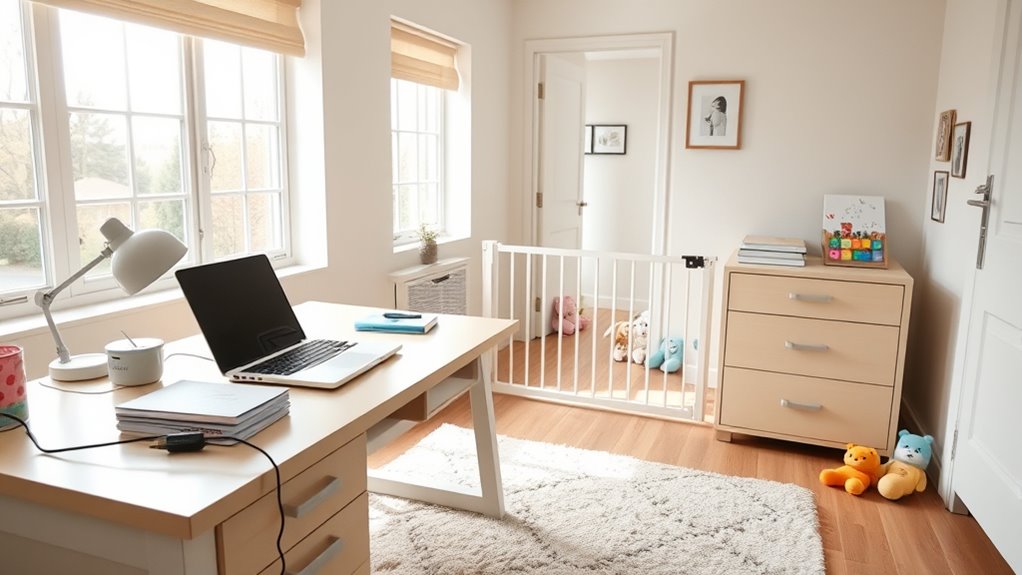
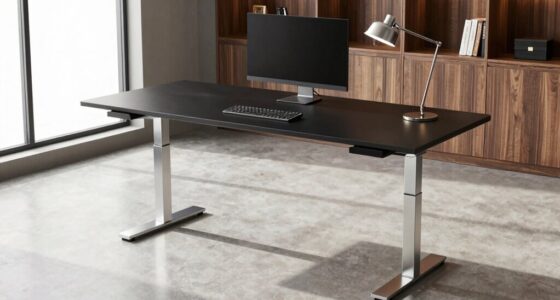
Creating a safe home office for your child requires proactive planning and quick action. As your little one spends time in this space, it’s essential to contemplate both their physical well-being and the safety of your equipment. One of the first steps is to focus on ergonomic safety. Kids, especially those who are learning or working on assignments, need a workspace that supports their posture. Ensure their chair and desk are appropriately sized, with the chair providing proper lumbar support and their feet flat on the floor. Adjustable desks can help them maintain comfort and reduce strain, preventing long-term musculoskeletal issues. Position screens at eye level to avoid neck strain, and encourage frequent breaks to stretch and move around. Making these ergonomic adjustments helps your child work comfortably and reduces the risk of injury. Proper load‑planning is also essential to prevent electrical overloads and ensure safety in your home office environment.
Electrical hazards are another critical concern in a home office. Children are naturally curious, and exposed cords or outlets can pose serious dangers. To prevent accidents, use outlet covers or safety plugs on all unused outlets, and avoid overloading power strips. Keep cords and wires organized and tucked away, so they’re not within reach or creating tripping hazards. Consider installing cord management solutions like clips or sleeves to keep wires neat and out of sight. When it comes to electronic devices, never leave chargers or power strips plugged in when not in use—they can cause overheating or accidental shocks if tampered with. If you have a surge protector, ensure it has a safety shutoff feature to prevent electrical overloads. Remember, any exposed wiring should be repaired immediately, and outlets should be covered securely. You should also teach your child about electrical safety, so they understand not to touch plugs, outlets, or cords.
In addition to these safety measures, always keep small items, sharp tools, or breakable objects out of reach. Use childproof locks on cabinets and drawers containing supplies or tech accessories. Position your workspace away from windows with cords or blinds that could be pulled down. Regularly inspect your setup to identify potential risks and address them before accidents happen. By creating a space that prioritizes ergonomic safety and minimizes electrical hazards, you’re not only protecting your child but also creating an environment conducive to focus and productivity. Taking these precautions now saves you from potential emergencies later, giving you peace of mind as your child learns and works comfortably in their safe home office.

Safety 1st Electrical Outlet Baby Proof Covers, Secure Outlet Plugs, Baby Proofing, 36 Count
- Childproof Electrical Outlets: Prevents access to outlets and sharp objects
- Easy to Install and Remove: Reusable covers for simple setup and flexibility
- Value Pack of 36: Multiple covers for various rooms
As an affiliate, we earn on qualifying purchases.
As an affiliate, we earn on qualifying purchases.
Frequently Asked Questions
What Are the Most Overlooked Hazards in a Home Office?
You might overlook furniture stability and air quality hazards in your home office. Unsecured shelves or heavy furniture can tip over if kids pull or climb, causing injuries. Poor air quality from dust or electronics can affect health. Regularly check furniture stability and guarantee proper ventilation. Keep cords tucked away and clean your space often to reduce dust and allergens, creating a safer, healthier environment for both you and your children.
How Can I Secure Cords and Wires Effectively?
Think of cords and wires as a tangled jungle in your home office. To tame it, use cord management tools like clips, sleeves, or cable ties to keep wires neat and orderly. For added safety, conceal wires behind furniture or use wire concealment covers, creating a barrier that keeps curious hands and little explorers at bay. This way, you turn chaos into a safe, organized space for everyone.
Are There Childproofing Products Suitable for All Ages?
Yes, there are childproofing products suitable for all ages. You can use age-appropriate barriers to block access to dangerous areas, and multi-purpose guards that adapt as your child grows. These products are designed to be safe, durable, and easy to install, ensuring your little one’s safety at every stage. By choosing versatile barriers and guards, you create a secure environment that evolves with your child’s development and curiosity.
How Often Should I Review Safety Measures in My Home Office?
You should schedule safety assessments consistently, ideally conducting routine inspections monthly or quarterly. Regularly reviewing your safety measures guarantees potential problems are promptly pinpointed and patched. Perform a thorough safety audit whenever you add new equipment or notice changes in your child’s age or abilities. Staying proactive helps prevent accidents, providing peace of mind and a protected environment where children can safely explore and grow without unnecessary risks.
What Should I Do if My Child Gets Injured in the Office?
If your child gets injured in the office, stay calm and assess the situation. Follow first aid steps like stopping bleeding with a clean cloth or applying ice for swelling. Confirm you have emergency contacts ready and call them if needed. Keep your child comfortable and monitor their condition until professional help arrives. Always seek medical attention for serious injuries and document the incident for future safety improvements.

Flezoo 12PCS Black Adhesive Cable Clips Cord Organizer for Wire Management
- Package Includes: 12 black cable clips for organization
- Strong Adhesive: Adheres to wood, wall, plastic, glass, metal, rubber
- Easy Installation: Peel, stick, and twist to remove
As an affiliate, we earn on qualifying purchases.
As an affiliate, we earn on qualifying purchases.
Conclusion
As you childproof your home office, you’ll notice how small adjustments make a huge difference—like a lost toy turning up in the right spot or your child unexpectedly discovering a safe corner. These little coincidences remind you that safety isn’t just about rules, but creating a space where both kids and gear can coexist peacefully. Keep adapting, stay alert, and enjoy a worry-free work environment where surprises are only positive ones.

Urban August Child-Proof Refrigerator Lock for Kids & Adults – Lock for French Door Fridge and Cabinet (Regular, Black – 1 Pack)
- Versatile Security Use: Secures refrigerators, cabinets, bikes, and more
- Easy Key Access: Includes 2 keys for simple, authorized unlocking
- Universal Fit: Fits most French door refrigerators, excluding wide handles
As an affiliate, we earn on qualifying purchases.
As an affiliate, we earn on qualifying purchases.

CHIOMEY Kids Desk and Chair Set for Ages 3-12 – Tilting Study Desk (Pink)
- Adjustable Height for Growing Kids: Fits ages 3-12 with lock-knob system
- 50° Tilting Desktop: Promotes good posture and reduces strain
- Integrated Storage & Backpack Hook: Keeps room tidy with shelves and hooks
As an affiliate, we earn on qualifying purchases.
As an affiliate, we earn on qualifying purchases.