
TL;DR

Get comfort and recovery gear delivered free with Prime
- Fast, free delivery on millions of items
- Prime Video, Amazon Music and more included
- Member-only deals all year
Moving your rig into a closet or separate room can drastically reduce noise. Combining strategic placement with targeted acoustic treatment and ventilation makes a closet-based setup both quiet and safe from heat buildup. It’s often better than trying to absorb sound with foam alone.
Ever tried working in a tiny closet and wondered why your voice sounds so echoey or why the fans keep rattling your bones? That’s because a closet isn’t just a small space—it’s a sound chamber. The truth is, the best way to silence a noisy rig isn’t just about slapping foam on the walls; it’s about putting distance, proper placement, and smart treatment into play.
If you’re running a high-power AI workstation or recording vocals in a cramped closet, this guide will show you how to tame noise, improve sound quality, and keep your gear cool. Think of it as turning your closet into a quiet, efficient studio or server room—without breaking the bank.
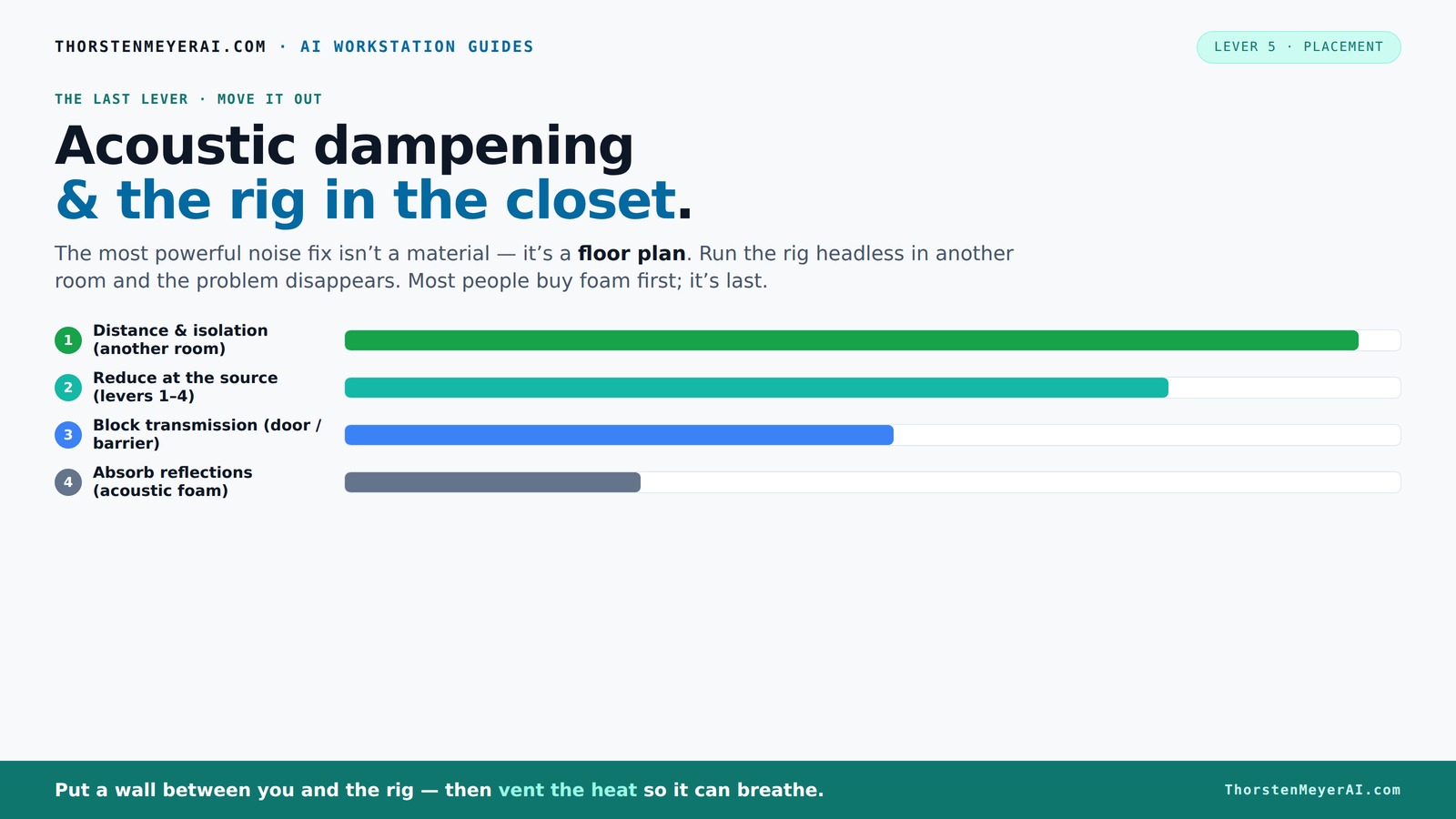
Acoustic dampening
& the rig in the closet.
The most powerful noise fix isn’t a material — it’s a floor plan. A rig you can’t hear because it’s in another room beats any amount of foam. Tap the approaches in Part 1 to see what actually works.
(another room)
(levers 1–4)
(door / barrier)
(acoustic foam)
Contain the noise, not the heat
Key Takeaways
- Moving your rig into another room or closet drastically reduces noise without extra treatment.
- Ventilation is critical: sealed closets trap heat, which can damage your hardware and cause louder fans.
- Use a layered approach: treat reflection points, seal gaps, and add bass traps if low-end issues persist.
- DIY solutions like blankets and foam are effective for echo control but don’t isolate sound leaks.
- For serious silence and cooling, consider professional soundproof cabinets and ducted airflow systems.
Products Worth Considering

Coway Airmega 250 Air Purifier for Large Rooms

LEVOIT Vital 200S-P Smart Air Purifier for Large Rooms

Bose SoundLink Flex Bluetooth Speaker (2nd Gen), Portable Waterproof Speaker, Black
As an affiliate, we earn on qualifying purchases.
Why Moving It Is Your First & Best Noise Fix
The simplest way to silence a noisy rig? Put it somewhere far away. Literally. Moving your machine into another room, a basement, or even a closet with a door closed can cut noise levels by over 90%. When your AI rig is in another room, the sound waves just can’t reach you.
Imagine your GPU humming like a jet engine. Now, picture it sitting behind a closed door, in a closet with a vent. You barely hear it from your desk. That’s because sound loses energy traveling through space and barriers. Plus, with a stable network connection, you can control that rig from your comfy desk, no problem.
This approach is perfect for AI work, where you don’t need to sit next to the hardware. Just SSH in or connect over a local API. Your workspace stays silent while the rig roars in peace. The key? A good wired connection and adequate ventilation.
The 'Rig in the Closet' Setup — How It Works & Its One Big Caveat
Placing a hot, noisy machine in a closet is a game changer—if you handle the heat. Sealing a closet traps warmth, turning it into a mini sauna. A GPU running 600W continuously in a sealed space will heat up the air, causing the fans to spin faster and louder to cool down. That’s counterproductive.
To make a closet work, you need ventilation. Passive vents help, but a quiet exhaust fan is better. For serious setups, a purpose-built soundproof cabinet with ducted airflow and temperature control is the gold standard. These units combine foam lining with active cooling, keeping noise low while dissipating heat effectively.
For DIY, consider installing a small exhaust fan or even a vent with a fan to pull hot air out. Keep an eye on the ambient temperature—overheating can throttle your machine and cause damage. When done right, a closet rig can be both quiet and cool.
Remember, inadequate ventilation can lead to overheating, which not only risks damaging your hardware but can also cause the fans to spin faster and louder, defeating the purpose of a quiet setup. The tradeoff is between noise reduction and thermal management; balancing these requires careful planning and sometimes investing in specialized cooling solutions.
How to Soundproof a Closet: The Real Deal
Soundproofing a closet isn’t just about slapping foam on the walls. It’s a layered process involving absorption, sealing, and sometimes structural upgrades. The goal? Reduce reflections, block sound leaks, and prevent low-frequency buildup.
Start by identifying your mic position. Place acoustic panels behind the mic, on side walls at reflection points, and on the ceiling. Thicker panels—around 2 to 4 inches—absorb lower frequencies better, especially in small spaces where bass can bounce around. Understanding the significance of these layers is crucial because each component addresses a specific aspect of sound control—reflections, leaks, or low-end rumble. Neglecting one layer can compromise the entire acoustic environment, leading to muddiness, echo, or outside noise intrusion.
Seal all gaps—around doors, outlets, and seams—with weatherstripping or acoustic sealant. Heavy blankets, rugs, and reflection filters also help soften reflections and flutter echoes. For more serious treatment, add bass traps in corners to tame low-end booms that can muddy recordings. The key is to recognize that each layer adds a level of isolation, and their combined effect significantly improves the quality of your sound environment.
Remember, acoustic treatment reduces echo and reflections but doesn’t block outside noise. For that, you need mass and sealing—like extra drywall or soundproof doors. Combining these strategies makes your closet a much quieter, more controlled environment.
Key Materials & Tricks for DIY Acoustic Treatment
Want to keep costs down? Use what’s around you. Heavy blankets and thick rugs absorb and diffuse sound inside your closet. For more advanced DIY solutions, check out this guide. Acoustic foam panels are great for reducing echo, especially on the walls behind your mic and in reflection points.
For low-end control, install bass traps—these are thicker panels or foam blocks placed in corners where low frequencies tend to build up. Reflection filters are a quick fix when you can’t modify the closet structure; they sit behind your microphone to block reflections directly. Each of these materials plays a role in shaping the acoustic environment—blankets and foam reduce internal echo, bass traps prevent low-frequency muddiness, and reflection filters target specific reflection points. Understanding their functions helps you optimize your setup efficiently and avoid unnecessary costs or over-treatment.
Weatherstripping and acoustic sealant help close gaps for better sound isolation. Rubber feet or grommets under your machine can reduce structure-borne hum. Combine these materials based on your budget and needs, and you’ll see a significant improvement.
Upgrading for Better Isolation & Cooling: When to Consider It
If you want more than just sound control—like blocking outside noise or managing heat—you’ll need to go further. Adding extra drywall, using Green Glue between layers, or insulating walls can boost soundproofing. These are more involved but make a real difference in noisy environments. The tradeoff involves increased weight, cost, and complexity, but the payoff is a significant reduction in both sound and heat transfer—creating a more stable environment for sensitive equipment.
For cooling, consider installing a ducted exhaust system or an AIO liquid cooler that vents heat outside the closet. This prevents heat buildup that causes fans to spin faster and louder. In high-power rigs, combining soundproofing with active cooling ensures longevity and quiet operation. Recognizing when to upgrade depends on the persistent noise levels and temperature issues—if basic measures aren’t enough, more advanced solutions are justified.
Research shows that a well-insulated, ventilated cabinet with mass and damping materials can cut noise transmission by over 50%. It’s worth it for critical setups or when silence is non-negotiable. The tradeoffs include higher costs and added complexity, which are justified by the gains in quietness and thermal stability.
Compare DIY & Pro Solutions: What Works & When
| DIY Fixes | Pro-Grade Solutions |
|---|---|
| Acoustic foam, blankets, rugs, sealant | Soundproof cabinets, insulation, Green Glue, ducted airflow |
| Cheap, quick, customizable | Expensive, more effort, but highly effective |
| Best for reducing echo & reflections | Best for blocking sound leaks & heat |
Frequently Asked Questions
What is the biggest difference between acoustic treatment and soundproofing?
Acoustic treatment reduces echo, reflections, and reverberation inside a space. Soundproofing blocks sound from leaking in or out, preventing noise from escaping or entering the room.
Where should I place acoustic panels in a closet booth?
Place panels directly behind the mic, on side walls at reflection points, and on the ceiling. Thicker panels help with low frequencies, especially in small spaces where bass can bounce around.
Do I need bass traps in a closet studio?
Yes, if you notice low-end muddiness or standing waves. Bass traps in corners absorb low frequencies, preventing them from creating boomy, indistinct sound.
How thick should acoustic panels be for a small closet?
2-inch panels are generally enough for small spaces, but 4-inch panels improve low-frequency absorption in larger or more reflective rooms.
Will moving blankets or foam panels actually help?
Yes, especially for reducing echo and reflections inside a small closet. They’re a cost-effective way to soften sound and improve clarity, but won’t block outside noise.
Conclusion
Silencing a closet rig isn’t about magic—it’s about smart placement, strategic treatment, and ventilation. When you treat the space right, your noisy hardware becomes a quiet partner in your workflow.
Next time you set up your AI rig or vocal booth, remember: sometimes the best fix is simply putting it in another room. Your ears—and your neighbors—will thank you.