TL;DR
Fit&Well has published a 10-minute resistance-band routine from personal trainer Anneli Marinovich, featuring pull-aparts, glute bridges and bird dogs. The routine is presented as a way to build strength and support movement, not as a proven treatment; the report advises consulting a health professional before exercising with back pain.
Fit&Well has outlined a 10-minute resistance-band routine from personal trainer and menopause coach Anneli Marinovich, with three movements intended to strengthen the core, back and glutes as people age. The report says people with back pain should consult a health professional before trying the exercises, and presents the workout as a fitness routine rather than a guaranteed way to prevent or relieve pain.

Get comfort and recovery gear delivered free with Prime
- Fast, free delivery on millions of items
- Prime Video, Amazon Music and more included
- Member-only deals all year
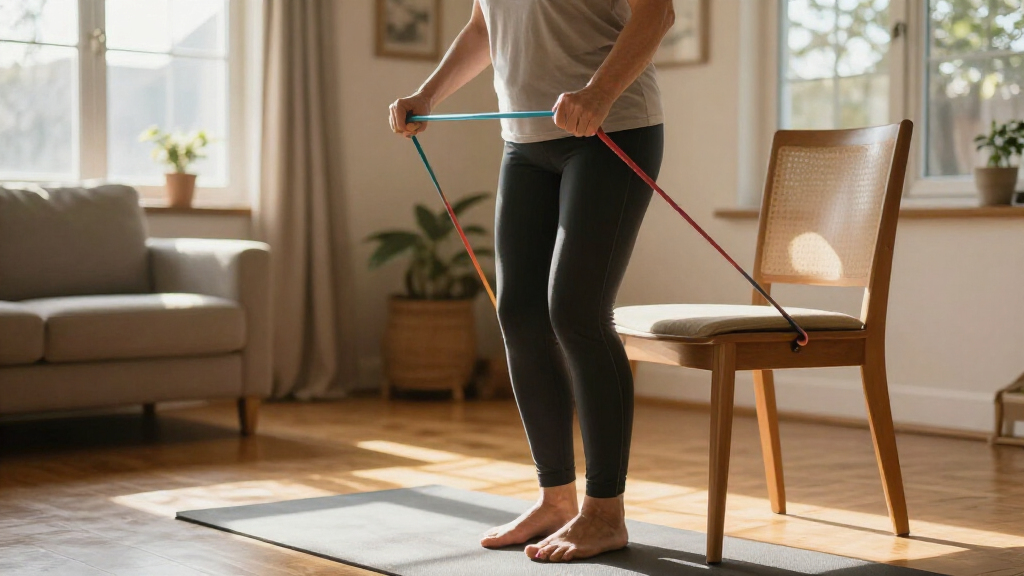
The routine uses a long loop resistance band and, ideally, a short loop band; the report says a long band can be doubled if a short one is unavailable. Marinovich recommends completing three rounds, with 45 seconds of rest between rounds. The supplied instructions do not specify how often to repeat the workout during the week.
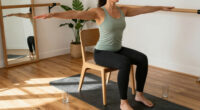
The first exercise is a band pull-apart: hold the band at chest height with arms relatively straight, pull the hands apart while drawing the shoulder blades together, pause, then return slowly. The prescription is 10 repetitions. Next, for a banded glute bridge, lie on your back with knees bent and a short band above the knees. Press through the heels to lift the hips, gently press the knees outward, hold for two seconds and lower with control, for 10 repetitions.
The third movement is the bird dog. From hands and knees, extend one arm and the opposite leg while keeping the spine steady, pause for two seconds, then return and switch sides. The report calls for five repetitions per side. It does not provide independent clinical evidence that this specific sequence prevents lower-back pain.
Strength Work With Safety in Mind
Lower-back discomfort can affect everyday activities, and the Fit&Well report says it becomes more common with age. A short routine that can be done with inexpensive equipment may offer readers a structured way to work on strength and control. Marinovich describes the target areas as the back, glutes and deep stabilising muscles, rather than focusing on appearance-driven abdominal exercises.
That rationale should not be confused with proof that the exercises will stop pain. The source is a workout report featuring a trainer’s guidance, not a clinical trial or a medical recommendation for every reader. People experiencing back pain should seek professional advice before starting; a clinician or physical therapist can help determine whether the movements are suitable for their circumstances.
Products Worth Considering

Samsung 43-Inch M70H Series 4K Mini LED Smart TV (2026)
Samsung 65-Inch M70H Series 4K Mini LED Smart TV (2026)

Hisense 75-Inch U7 Mini-LED ULED 4K UHD Smart Google TV (75U7SG)
As an affiliate, we earn on qualifying purchases.
The Routine and Its Three Movements
Marinovich is identified by Fit&Well as a personal trainer and menopause coach and host of the podcast “Mind and Muscle Beyond 40.” The report frames her routine around maintaining strength and the ability to move comfortably. Her descriptions of the exercises’ benefits are her stated rationale, rather than independently verified outcomes reported in the supplied material.
The sequence pairs an upper-body band pull-apart with a hip-extension exercise and a cross-body stability movement. Together, the instructions involve controlled repetitions, brief holds and rest between rounds. The article recommends keeping the spine steady during the bird dog and lowering the hips with control during the bridge; it does not state that readers should push through pain or give modifications for specific diagnoses.
““It moves away from aesthetic-driven abdominal work and focuses on the ‘posterior armour’—the back, glutes and deep stabilisers that keep you standing tall and moving safely.””
— Anneli Marinovich, as quoted by Fit&Well
Evidence and Individual Suitability
The supplied report does not name a publication date, cite clinical research on this exact routine, or state how often people should perform it. It also does not establish that the exercises prevent, treat or reduce lower-back pain, nor does it describe results from a measured group of participants. Effects may vary between individuals, and the report offers no tailored guidance for people with particular injuries or medical conditions.
It is also unclear from the source whether Marinovich or Fit&Well recommends adjustments for people who find a movement uncomfortable. The report’s stated safeguard is to consult a health professional about back pain before trying new exercises, and to proceed if a doctor or physical therapist recommends it.
Get Advice Before Starting
The next step for readers with back pain is to ask a doctor or physical therapist whether resistance training and these specific movements are appropriate. Those without pain who are considering the routine can follow the published repetitions and rest periods, while stopping if a movement causes discomfort and seeking professional guidance. The source provides no announced follow-up study, clinical evaluation or further milestone for the workout.
Key Questions
Which exercises are included in the routine?
The sequence includes band pull-aparts, banded glute bridges and bird dogs. The report prescribes 10 pull-aparts, 10 bridges and five bird dogs per side in each round.
How many rounds does the report recommend?
Fit&Well says to complete three full rounds, resting for 45 seconds between rounds. The supplied material does not say how many days per week to do the routine.
Can these exercises prevent or treat back pain?
The report presents the workout as intended to strengthen muscles that support movement, but it does not provide clinical evidence that this exact routine prevents or treats pain. Consult a health professional about back pain before trying new exercises.
What equipment is needed?
The routine calls for a long loop resistance band and ideally a short loop band. Fit&Well says a long band can be doubled if a short one is not available.
Source: fitandwell.com