TL;DR

Get comfort and recovery gear delivered free with Prime
- Fast, free delivery on millions of items
- Prime Video, Amazon Music and more included
- Member-only deals all year
A Tiny Buddha contributor describes using body awareness, naming physical sensations and slow breathing to create a pause before responding to anxiety triggers. The account is personal guidance, not a clinical study, and the source does not establish that the approach works for everyone.
A contributor to Tiny Buddha has described how noticing physical signs of anxiety and pausing before responding helped her create more choice in tense moments. The first-person essay presents a personal account—not clinical research—and recommends identifying sensations such as a tight chest or shallow breathing before deciding what another person’s behavior means.
The writer says she once treated anxiety as a personal flaw and tried to reason her way out of it. During a previous marriage, she became accustomed to anticipating conflict, and later found that seemingly ordinary events—including a raised voice or a delayed text—could prompt similar physical alarm. She says the reactions continued after she had left the relationship, even when she did not believe she was in immediate danger.
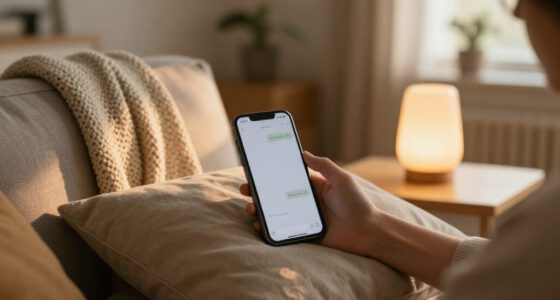
After training as a health counselor and studying attachment theory, the writer came to understand her reactions as learned responses. That is her interpretation of her experience; the essay does not assess her clinically or establish a diagnosis. She describes noticing her chest tighten and shoulders rise, placing a hand on her chest, breathing slowly and naming the sensations without immediately explaining them.
The author says the pause between a trigger and her response gradually grew, giving her more time to respond to what was happening in the present. Her practical suggestions are to notice before narrating, identify sensations without assigning meaning, and take a few slow breaths before deciding what to do. She also suggests grounding a hand on the chest, belly or thigh while paying attention to the body.
Making Space Before Responding
The essay addresses a common practical problem: a person may react quickly to a perceived threat before they have had time to check what is happening. The writer’s approach asks readers to create a brief pause between bodily alarm and action, which may help them avoid immediately apologizing, explaining or trying to resolve a situation based on an assumption.
Its value is as an accessible personal account of one coping approach, not proof of a general treatment effect. Readers should not take the essay to mean anxiety is always rooted in past experiences, or that a breathing exercise is a substitute for professional care. Persistent or disruptive anxiety may warrant discussion with a qualified health professional.
As an affiliate, we earn on qualifying purchases.
The Writer’s Account of Learned Alarm
The author links her sensitivity to conflict with years spent anticipating how situations in her former marriage might unfold. She says her body often reacted before she consciously understood why. After leaving, she continued to experience physical anxiety in situations she considered safe, such as a partner going quiet during a conversation.
In the essay, she uses terms including nervous system dysregulation and anxious attachment to frame what she experienced. These are the writer’s explanations, informed by her training and study; the supplied material does not cite a clinical assessment, research paper or independent expert confirming that framework in her case.
As an affiliate, we earn on qualifying purchases.
Limits of a Personal Essay
The supplied source does not give a publication date, cite research on the suggested techniques or report outcomes beyond the writer’s own experience. It is unclear whether the same practices would help other readers, how much the author’s training shaped her interpretation, or whether the experiences described were assessed by a clinician.
The article also does not provide a full set of instructions for managing severe anxiety or explain when readers should seek care. Its suggestions should be understood as personal coping practices rather than a diagnosis or a proven treatment plan.
grounding techniques for anxiety relief
As an affiliate, we earn on qualifying purchases.
As an affiliate, we earn on qualifying purchases.
Applying the Pause Safely
The essay offers no announced follow-up study or program. Readers who want to try its approach can start by noticing a sensation during a manageable moment, naming it without judgment and taking a few slow breaths before responding. The source’s central point is to give oneself time to check the present situation rather than act immediately on an assumption.
Anyone whose anxiety is persistent, worsening or interfering with daily life can seek guidance from a qualified health professional. The article does not say that readers should stop existing treatment or rely on self-guided exercises alone.
mindfulness journal for anxiety management
As an affiliate, we earn on qualifying purchases.
As an affiliate, we earn on qualifying purchases.
Key Questions
What does the Tiny Buddha contributor recommend doing when anxiety rises?
She recommends noticing physical sensations, naming them without immediately interpreting them, and taking a few slow breaths before deciding how to respond.
Does the essay show that this method works for everyone?
No. It is a first-person account and does not provide clinical evidence or establish that the approach will work for every person.
What does “notice before you narrate” mean?
It means observing a sensation—such as a tight chest or shallow breathing—before deciding what it says about a situation or another person’s intentions.
Should breathing and body awareness replace professional care?
No. The essay describes personal coping practices, not a replacement for assessment or treatment. People with persistent or disruptive anxiety can consult a qualified health professional.
Source: rss
Halloween Picks
halloween
As an affiliate, we earn on qualifying purchases.