
TL;DR

Get comfort and recovery gear delivered free with Prime
- Fast, free delivery on millions of items
- Prime Video, Amazon Music and more included
- Member-only deals all year
Fit&Well published a yoga therapist’s seven-part chair-based movement routine for older adults, including people who find floor exercises difficult or prefer to exercise seated. The therapist describes the movements as gentle and adaptable, but the report does not provide research showing specific health outcomes or a formal safety assessment.
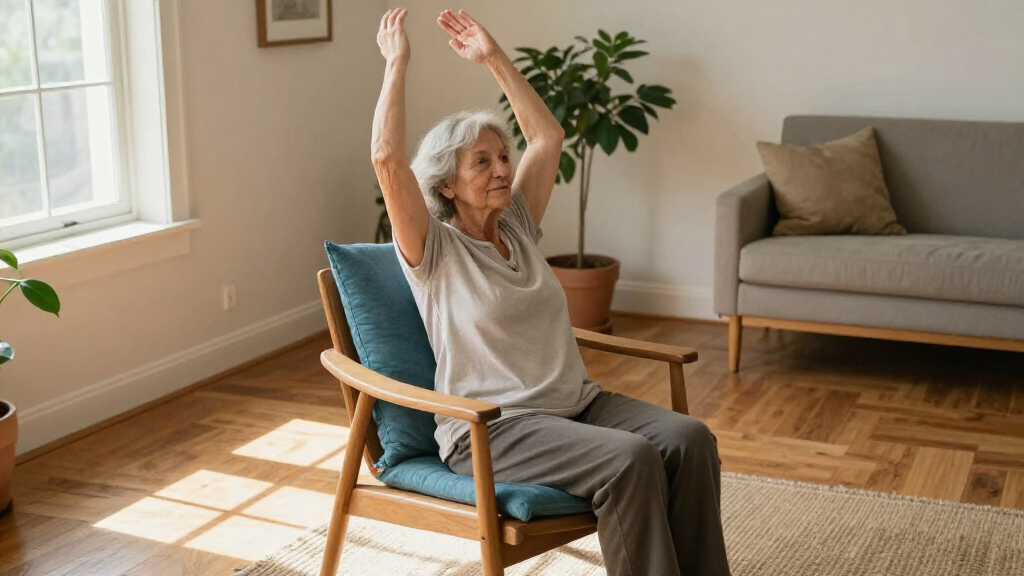
Fit&Well has published a seven-part chair-based movement routine recommended by a yoga therapist for older adults, including people who have limited mobility or feel more comfortable exercising from a chair. The sequence uses breathing, arm movements, gentle twists and bends, and the therapist advises participants to work within their own range rather than trying to achieve a particular pose.
The therapist says chair-based yoga can offer a way to practise mindful movement without getting down to the floor. In the Fit&Well report, they describe working mainly with older adults living with Parkinson’s, other movement disorders and chronic health conditions. They say the movements are gentle, while participants in their groups can still find them energizing.
The suggested sequence starts with a minute of settling into a sturdy chair, feet flat on the floor and hands resting on the lap. It then moves through seven stages: raising the arms into a prayer position; rotating the torso to each side; raising one arm at a time and then both arms; side bends; seated cat-cow movements; and forward folds. Most stages call for three to five repetitions, or three repetitions on each side.
The instructions include adjustments for people who need more support. For a side bend, a participant can hold the side of the chair instead of extending the lower arm. During a forward fold, the hands can stay on the knees for support. The therapist’s guidance is to explore movement that feels accessible, not to force the body into a set position. The source recommends a sturdy chair and enough clear space to raise the arms.
A Seated Option for Gentle Movement
The routine offers an accessible format for readers who have difficulty getting to or from the floor, or who prefer the stability of a chair. Its short, defined movements may also make it easier to adapt a group or home activity to different levels of mobility. These are practical features of the instructions, rather than evidence that the sequence produces a particular health result.
The therapist says participants in their classes leave feeling more rested and uplifted, and describes stretching muscles, mobilizing joints and feeling calmer as benefits of mindful movement. Those observations are attributed to the therapist and their experience with groups; the report does not cite a clinical trial or quantify effects. Readers should treat the routine as general movement guidance, not a treatment for Parkinson’s, another condition or chronic pain.
For older adults considering a new routine, the emphasis on individual capacity matters: the movements are presented as adaptable, not as a test of flexibility or strength. People with health conditions, pain, balance concerns or movement restrictions may want to seek guidance from a health professional or a qualified movement specialist before trying them.
Products Worth Considering

Blueair Blue Pure 511i Max Smart Air Purifier

TCL QM64L 85-Inch QD-Mini LED 4K Smart Fire TV

LEVOIT Vital 200S-P Smart Air Purifier for Large Rooms
As an affiliate, we earn on qualifying purchases.
How the Seven-Move Routine Works
The sequence progresses from a brief seated pause into larger movements, while pairing each action with breathing cues. Participants first settle with their feet on the floor and posture supported by the chair. In the arm arc, they inhale while lifting their arms and exhale while bringing their hands toward the chest. The twists and arm raises similarly coordinate movement with inhalation and exhalation.
Later exercises add side bending and spinal movement. In seated cat-cow, the participant moves between lifting the chest and rounding the back. The forward fold involves hinging the upper body toward the legs and returning upright. The report gives three to five repetitions for these movements and suggests keeping the gaze comfortable, rather than looking upward if that feels unsuitable.
The article does not describe the routine as a newly tested programme. It presents the therapist’s recommended sequence and modifications. Its stated audience includes older adults and people who cannot, or do not wish to, practise floor-based movement.
“There’s no particular shape or position to achieve.”
— The yoga therapist quoted in Fit&Well
Evidence and Individual Safety
The supplied report does not identify the therapist by name, give the article’s publication date, or cite research assessing this particular sequence. It also does not establish how the exercises affect people with specific diagnoses, or whether every movement is appropriate for every reader. The therapist’s account of class experiences is not a substitute for clinical evidence.
The routine includes general modifications, but it does not provide individualized advice about pain, balance, range of motion or other risks. Readers should stop if a movement causes discomfort and seek professional guidance if they are unsure whether chair exercises are suitable for them. The source does not specify a monitoring plan or list condition-specific precautions.
Adapting the Routine at Home
The Fit&Well report offers the sequence for readers to try with a sturdy chair and clear space, but it does not announce a study, programme launch or follow-up assessment. Anyone considering the routine can begin by reviewing the modifications, keeping movements within a comfortable range and asking a qualified health professional for advice where a medical condition or mobility concern may affect participation.
Any further evidence about benefits would require research beyond the therapist’s reported experience with classes. For now, the routine is best understood as practical, adaptable movement guidance, with individual suitability and outcomes still unestablished in the source.
Key Questions
What exercises are included in the chair routine?
The seven stages are a seated settling exercise, an overhead arm arc into prayer, torso twists, single and double arm raises, side bends, seated cat-cow movements and forward folds.
Who is the routine intended for?
The therapist recommends chair-based yoga for people who have limited mobility for floor movement or simply prefer to move from a chair. The report specifically describes work with older adults, including people living with Parkinson’s, other movement disorders and chronic health conditions.
How many repetitions should someone do?
The instructions generally call for three to five repetitions. Twists and side bends are listed as three repetitions on each side. Participants are also advised to work within their own capacity rather than force a range of movement.
What equipment and space are needed?
The report calls for a sturdy chair and enough clear space to raise the arms comfortably. It suggests holding the chair during a side bend for extra stability or keeping the hands on the knees during a forward fold.
Does the report show that the routine treats a health condition?
No. The report presents a therapist’s recommended movements and personal observations about class participants. It does not provide clinical evidence that the routine treats Parkinson’s or any other condition.
Source: fitandwell.com