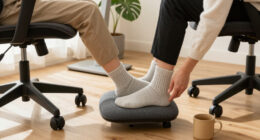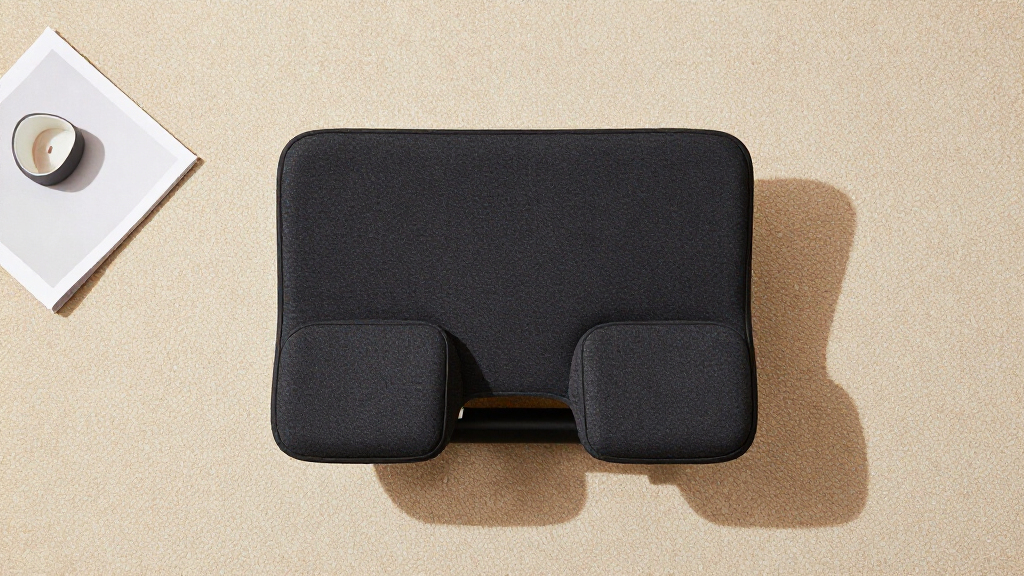
Shopping for ergonomic footrests for desk chairs means choosing between two very different design philosophies: static memory foam cushions that cradle your feet, and adjustable rocking platforms that keep your legs moving throughout the day. My top overall pick is the Fellowes Standard Footrest, because its tilting platform and multiple height settings deliver the core ergonomic benefit — encouraging circulation through movement — at a mid-range price. If you want plush, all-day comfort instead, the C Cushion Lab Ergonomic Memory Foam Foot Rest stands out for pressure relief, while the Eureka Ergonomic Rolling Footrest Stool suits taller desks and people who fidget constantly. The main tradeoffs in this category are stability versus motion, firmness versus softness, and floor space versus adjustability. Keep reading for the full breakdown of all nine options and who each one fits best.

Get comfort and recovery gear delivered free — and shop member deals
- Fast, free delivery on millions of items
- Access to Prime Big Deal Days deals on October 6–7
- Prime Video, Amazon Music and more included
Complete the kit

Key Takeaways
- Tilting platforms like the Fellowes Standard and Mind Reader beat static cushions for circulation because rocking motion activates calf muscles — the single biggest differentiator among the top three picks.
- Memory foam options (C Cushion Lab, ComfiLife) excelled at pressure relief but all share the same weakness: fixed height, which is a problem if your chair and desk don’t already put your knees near 90 degrees.
- Rolling footrests (Eureka, lockable-wheel model) solve the fidgeting problem and work under tall or fixed-height desks, but they demand more under-desk clearance and can slide away on hard floors without the brakes engaged.
- Massage-surface models (CasaZenith, ProtoArc) feel gimmicky for all-day use — the textured nodes are pleasant for a few minutes but become fatiguing during long work sessions.
- The washable chenille-cover footrest was the only pick with a fully removable, machine-washable cover, which matters far more than expected for anything your bare or socked feet touch daily.
| Adjustable Under-Desk Footrest with Lockable Wheels |  | Best for Multi-Room Use | Height settings: 2 | Wheels: Built-in, lockable casters | Platform: Contoured | VIEW LATEST PRICE | See Our Full Breakdown |
| C Cushion Lab Ergonomic Memory Foam Foot Rest, Wellness Green |  | Best Cushioned Comfort | Material: Memory foam | Color: Wellness Green | Design: Raised WaveMassage ridges | VIEW LATEST PRICE | See Our Full Breakdown |
| Fellowes Standard Footrest, Graphite |  | Best Classic Office Pick | Brand: Fellowes | Model: 48121-70 | Color: Graphite | VIEW LATEST PRICE | See Our Full Breakdown |
| CasaZenith Adjustable Under-Desk Footrest with Massage Surface |  | Best Height Range | Height settings: 6 | Height range: 3.1–7.3 inches | Material: ABS plastic | VIEW LATEST PRICE | See Our Full Breakdown |
| ProtoArc Ergonomic Under-Desk Foot Rest with Massage Nodes |  | Best Versatile Design | Material: High-density memory foam | Dimensions: 43.5 × 27.5 × 11.5 cm | Design: Dual-sided with massage nodes and rocking option | VIEW LATEST PRICE | See Our Full Breakdown |
| Eureka Ergonomic Height-Adjustable Rolling Footrest Stool, Gray |  | Best Two-in-One Pick | Brand: Eureka Ergonomic | Model: AR21-GY | Color: Gray | VIEW LATEST PRICE | See Our Full Breakdown |
| ComfiLife Adjustable Memory Foam Under-Desk Footrest |  | Best for All-Day Comfort | Material: High-density memory foam with polyester velour cover | Height: Adjustable | Cover: Removable and machine washable | VIEW LATEST PRICE | See Our Full Breakdown |
| Mind Reader Adjustable Ergonomic Footrest |  | Best Budget-Friendly Classic | Material: Plastic | Color: Black | Dimensions: 17 x 13 inches | VIEW LATEST PRICE | See Our Full Breakdown |
| Ergonomic Under-Desk Footrest with Two Heights and Washable Chenille Cover |  | Best Multi-Height Comfort Pick | Design: Two-height tiered footrest | Core material: High-density sponge | Cover: Removable, machine-washable chenille | VIEW LATEST PRICE | See Our Full Breakdown |
| ergonomic footrests for desk chair | Material |
|---|---|
| Adjustable Under-Desk Footrest | — |
| C Cushion Lab Ergonomic Memory | Memory foam |
| Fellowes Standard Footrest | Plastic platform, alloy steel frame |
| CasaZenith Adjustable Under-De | ABS plastic |
| ProtoArc Ergonomic Under-Desk | High-density memory foam |
| Eureka Ergonomic Height-Adjust | — |
| ComfiLife Adjustable Memory Fo | High-density memory foam with polyester velour cover |
| Mind Reader Adjustable Ergonom | Plastic |
| Ergonomic Under-Desk Footrest | — |
More Details on Our Top Picks
Adjustable Under-Desk Footrest with Lockable Wheels
Most footrests in this roundup live under one desk and stay there. This model stands out for its built-in lockable casters, which let you roll it from a home office to a sofa or reading chair and lock it in place when you settle down. That mobility is something the Fellowes Standard Footrest, with its fixed L-shape frame, simply cannot offer. The contoured platform and two height settings echo the CasaZenith’s adjustability, though far less granular. The tradeoff is transparency: with no published dimensions, weight capacity, or material specs, buyers are gambling on fit — a real problem if you have long legs or a low desk. Compared with the ProtoArc, which lists exact dimensions, this option asks for more trust before purchase.
Pros:- Lockable wheels make repositioning between rooms effortless
- Contoured platform supports feet during long sitting sessions
- Two height settings suit different chair and desk heights
- Works across multiple seating areas, not just an office chair
Cons:- No published dimensions or height measurements, so fit is a gamble
- No material or weight capacity listed for durability assessment
Best for: Remote workers who split their day between a desk, sofa, and other seating spots and want one footrest that travels with them
Not ideal for: Buyers who need guaranteed fit — the missing dimensions and weight capacity make this a risky pick for tall users or heavy daily use
- Height settings:2
- Wheels:Built-in, lockable casters
- Platform:Contoured
- Use:Home and office
- Portability:Rolls between desks, sofas, and chairs
- Stability:Casters lock for stationary use
Our verdict“A sensible pick for multi-room workers, but the lack of published specs means detail-oriented buyers should look elsewhere first.”
C Cushion Lab Ergonomic Memory Foam Foot Rest, Wellness Green
If your priority is plush pressure relief rather than mechanical adjustability, this memory foam option makes the most sense. The CloudSupport cushioning and raised WaveMassage ridges create a soft, yielding surface that feels noticeably different from the hard plastic platforms of the Fellowes Standard or CasaZenith — those massage your soles through texture, while this one cradles them. That softness is a double-edged sword: unlike the CasaZenith’s six-position height range, there is no height tuning here, so getting the right elevation depends entirely on your chair and desk geometry. It also doubles as a leg elevator for sofas and recliners, a flexibility the desk-bound Fellowes lacks. Circulation and pain-relief claims are marketing assertions, not verified outcomes, so temper expectations.
Pros:- Memory foam absorbs pressure during long sitting sessions
- Raised ridges stimulate the soles without hard plastic edges
- Versatile enough for desks, gaming chairs, recliners, and sofas
- Doubles as a leg-elevation cushion away from the desk
Cons:- No dimensions or height adjustments specified
- Circulation and pain-relief benefits are unverified product claims
- Memory foam compresses over time, unlike rigid plastic platforms
Best for: Desk workers and gamers who prioritize soft, pressure-absorbing cushioning over precise height tuning
Not ideal for: Anyone who needs specific elevation angles — the absence of height adjustment makes exact ergonomic positioning impossible
- Material:Memory foam
- Color:Wellness Green
- Design:Raised WaveMassage ridges
- Cushioning:CloudSupport memory foam
- Use:Under desk, gaming chair, recliner, or sofa
- Height adjustment:None specified
Our verdict“The softest ride in this lineup, ideal for comfort-seekers who don’t need dial-in adjustability.”
Fellowes Standard Footrest, Graphite
This is the office workhorse of the group, and the only entry with a fully transparent spec sheet — dimensions, weight, and materials are all published, which immediately separates it from the wheeled Adjustable Under-Desk Footrest. Its signature feature is the free-floating tilting platform: unlike the fixed foam blocks like the C Cushion Lab, this one rocks with your feet, encouraging movement and stretching through the workday. The textured surface adds a passive massage element. The compromise is adjustability — just two height positions versus the CasaZenith’s six, and no way to fine-tune elevation. At 3.13 lb of plastic and alloy steel, it is durable but spartan; there is no cushioning whatsoever, so anyone wanting softness underfoot should skip straight to a memory foam option.
Pros:- Free-floating platform tilts and rocks to encourage foot movement
- Full published specs, including dimensions and weight
- Textured surface massages soles during use
- Light 3.13 lb build with durable alloy steel frame
Cons:- Only two height positions limits ergonomic fine-tuning
- Hard plastic surface offers no cushioning for sensitive feet
Best for: Traditional office workers who want a proven, fully specified tilting footrest that encourages movement while sitting
Not ideal for: Anyone seeking soft cushioning or precise height tuning — two positions and a hard plastic surface leave little room for personalization
- Brand:Fellowes
- Model:48121-70
- Color:Graphite
- Height adjustment:Two positions
- Platform:Free-floating, tilting with textured massage surface
- Dimensions:13.25 x 3.63 x 17.75 in
- Weight:3.13 lb
- Material:Plastic platform, alloy steel frame
Our verdict“A reliable, transparent classic that rewards movers over comfort-seekers — the safest spec-sheet bet in the lineup.”
CasaZenith Adjustable Under-Desk Footrest with Massage Surface
No other product in this batch offers this level of elevation control: six heights spanning 3.1 to 7.3 inches, compared with just two positions on the Fellowes Standard. That range matters because proper footrest height varies enormously with chair height, leg length, and desk setup — this is the model that adapts to you rather than the reverse. The textured surface plus four rolling massage cylinders echo the Fellowes’ foot-stretching approach but add moving parts underfoot. The tradeoff is convenience: changing height means rotating screws on both sides, a slower, fiddlier process than flipping a dual-sided option like the ProtoArc. The detachable ABS design helps with travel, though rigid plastic means zero cushioning for those who want a softer feel.
Pros:- Six height settings from 3.1 to 7.3 inches for precise positioning
- Four rollers plus textured surface actively massage soles
- Non-slip pads keep the unit planted during use
- Detachable design packs down for travel
Cons:- Height changes require rotating screws on both sides
- Rigid ABS plastic offers no cushioned comfort
Best for: Buyers with unusual desk or chair heights who need the widest possible range of elevation settings
Not ideal for: Anyone who expects to adjust height frequently — the dual-screw mechanism makes changes slow and awkward compared with tilt or flip designs
- Height settings:6
- Height range:3.1–7.3 inches
- Material:ABS plastic
- Massage features:Textured surface and 4 rollers
- Base:Non-slip pads
- Detachable:Yes
- Adjustment method:Rotating screws on both sides
Our verdict“The most adjustable platform here, best for precise fitters and worst for people who tweak height often.”
ProtoArc Ergonomic Under-Desk Foot Rest with Massage Nodes
This model’s dual-sided build is its defining trick: massage nodes on one face, a rocking platform when flipped. Compared with the Fellowes, which rocks but never cushions, or the CasaZenith, which massages but never rocks, this one does both without doubling your purchases. The removable machine-washable cover solves a problem no other pick here addresses — memory foam models like the C Cushion Lab are notoriously hard to clean, while this one handles spills and sock-wear hygiene with a quick wash cycle. A carry handle rounds out a thoughtful mobile design. Real drawbacks exist: the foam needs 24–48 hours to fully expand after unpacking, so it will not feel right on day one, and long-term durability remains an open question given the newer design.
Pros:- Dual-sided design delivers both massage nodes and a rocking option
- Machine-washable removable cover keeps it hygienic
- Anti-slip base prevents sliding on hard floors
- Carry handle simplifies moves between workspaces
Cons:- Foam needs 24–48 hours to acclimate after unpacking
- No height adjustment beyond flipping between the two sides
- Long-term durability is unproven for this newer design
Best for: Hybrid workers who want massage and rocking options in one unit and value easy cleaning
Not ideal for: Impatient buyers — the foam requires up to two days to expand properly, and anyone needing rigid, height-adjustable support should prefer the CasaZenith
- Material:High-density memory foam
- Dimensions:43.5 × 27.5 × 11.5 cm
- Design:Dual-sided with massage nodes and rocking option
- Base:Anti-slip
- Cover:Removable and machine-washable
- Additional feature:Built-in carry handle
- Setup:24–48 hours foam acclimation after unpacking
Our verdict“The most flexible all-rounder for people who want two footrest experiences in one washable package.”
Eureka Ergonomic Height-Adjustable Rolling Footrest Stool, Gray
Most footrests in this roundup do one job, but the Eureka AR21 doubles as an extra seat, which changes the math for shared offices and home workspaces. Resting your feet on a padded faux-leather seat at 16.75 to 20.25 inches high is a very different posture than the low platforms of the ComfiLife or Mind Reader models — it encourages a more open hip angle and lets you shift position throughout the day. The 360-degree casters make repositioning effortless compared with lifting a foam block like the C Cushion Lab. The tradeoff is precision: a wheeled stool moves under your feet, so it suits people who fidget and reposition rather than anyone wanting a fixed, planted platform. The 270-pound limit also trails typical static footrests, which have no meaningful capacity cap.
Pros:- Functions as both footrest and extra chair
- Height adjusts across a 3.5-inch range
- Padded faux-leather seat wipes clean easily
- 360-degree casters make repositioning simple
Cons:- 270-pound maximum weight recommendation limits who can use it as a seat
- Rolling base makes it less stable as a footrest than fixed options
- Listed dimensions are inconsistent across the product page
Best for: Home-office workers who want a footrest that can double as guest seating or a rolling perch
Not ideal for: Heavier users over 270 pounds, or anyone who wants a stable, non-moving platform under their desk
- Brand:Eureka Ergonomic
- Model:AR21-GY
- Color:Gray
- Seat dimensions:20 x 17 inches
- Height adjustment:16.75–20.25 inches
- Maximum weight recommendation:270 pounds
- Seat material:Faux leather
- Features:Adjustable height, 360-degree casters
Our verdict“Choose this if you value flexibility and occasional seating over the locked-in stability of a traditional footrest.”
ComfiLife Adjustable Memory Foam Under-Desk Footrest
Where the Mind Reader relies on a textured plastic surface, the ComfiLife takes the cushioned route: high-density memory foam that conforms to your soles and doesn’t create pressure points during long sessions. That makes this pick better suited to marathon desk days than rigid platforms like the Fellowes Standard. Its versatility is genuinely unusual — it works as a footrest, under-knee support while reclining, or even a chair rocker, and the built-in carry handle makes moving it between rooms practical. The machine-washable velour cover also outclasses fixed-surface options for hygiene. The main frustration is vagueness: the listing never specifies exact dimensions or a height range, so buyers measuring a tight under-desk cavity are guessing. Compared with the tiered Ergonomic Chenille model, you lose defined height levels but gain plusher, pressure-molding comfort.
Pros:- Memory foam molds to feet without pressure points
- Works as footrest, knee support, or chair rocker
- Removable cover is machine washable
- Built-in carry handle for moving between workspaces
Cons:- No exact dimensions or height range published
- Foam compresses over time unlike rigid platforms
- Pain-relief claims lack substantiation in the listing
Best for: Desk workers and gamers who sit for long stretches and prioritize soft, conforming support over firm structure
Not ideal for: Buyers who need exact dimensions for a tight under-desk space or prefer a firm, defined platform
- Material:High-density memory foam with polyester velour cover
- Height:Adjustable
- Cover:Removable and machine washable
- Base:Non-slip
- Uses:Footrest, leg rest, knee support, or chair rocker
- Assembly:Not required
- Carry handle:Built in
Our verdict“This pick makes the most sense for long-hours sitters who want cloud-soft support and can live without precise sizing.”
Mind Reader Adjustable Ergonomic Footrest
The Mind Reader is the straightforward plastic-platform design most people picture when they hear “footrest,” and it executes that brief well at a lower complexity than anything else here. Unlike the ComfiLife’s soft foam, this gives firm, predictable support across a 3.25-to-6.25-inch height range, plus a tilting platform — a feature the fixed-height Ergonomic Chenille model can’t match. The textured massage surface doubles as grip and a subtle foot stimulus, echoing the CasaZenith and ProtoArc massage models without their added bulk. At 5.5 pounds it slides under a desk or into a bag easily. The honest tradeoff is material: all-plastic construction feels hollow underfoot and lacks the premium density of foam or metal-framed rivals, and the modest 17 x 13 inch platform may crowd larger feet or get lost in a deep kneewell.
Pros:- Adjustable height from 3.25 to 6.25 inches
- Tilting platform adds positioning flexibility
- Textured surface massages feet and resists slipping
- Lightweight and easy to move between rooms
Cons:- All-plastic build feels less substantial underfoot
- Compact 17 x 13 inch platform may not suit everyone
- No washable cover or soft cushioning
Best for: Students and office workers who want simple, adjustable, tilting support without paying for premium materials
Not ideal for: Buyers who dislike hard plastic underfoot or need a wider platform for larger feet
- Material:Plastic
- Color:Black
- Dimensions:17 x 13 inches
- Adjustable height:3.25–6.25 inches
- Weight:5.5 lbs
- Platform:Tilting with massage-textured surface
Our verdict“A sensible no-frills choice for anyone who values adjustability and portability over plush comfort.”
Ergonomic Under-Desk Footrest with Two Heights and Washable Chenille Cover
This tiered design solves a problem the ComfiLife and Mind Reader approach differently: instead of adjustable mechanisms or squishy foam, it simply offers two fixed height levels in one piece — flip it one way or the other to change elevation. That makes it ideal for households where two people share a desk at different chair heights. The high-density sponge core lands between the Mind Reader’s hard plastic and the ComfiLife’s full memory foam: supportive but with some give. Its washable chenille cover with a metal zipper feels more living-room-ready than office-grade velour, which suits its sofa-and-car versatility. The real annoyance is the 24-to-48-hour expansion window after unboxing — plan ahead rather than expecting day-one use, and note that two heights means less fine-grained tuning than the Mind Reader’s adjustable range.
Pros:- Two distinct height options in a single flip design
- Machine-washable chenille cover with durable metal zipper
- Non-slip rubber grip dots keep it planted
- Works at desks, sofas, in cars, and for gaming
Cons:- Requires 24–48 hours to fully expand after unpacking
- Only two fixed heights — no fine adjustment
- Sponge core is softer and less structured than rigid platforms
Best for: Households sharing a workspace who want two clear height options and a cozy, washable surface
Not ideal for: Anyone who wants fine height adjustments or immediate use straight out of the box
- Design:Two-height tiered footrest
- Core material:High-density sponge
- Cover:Removable, machine-washable chenille
- Zipper:Metal
- Base:Non-slip rubber grip dots
- Use:Office, home, gaming, sofa, and car
Our verdict“Pick this if shared seating heights and a soft, washable surface matter more than precise adjustability.”

How We Picked
I evaluated each footrest against four buyer-relevant criteria. Adjustability came first: a footrest only helps if it can match your desk height, chair height, and leg length, so models with multiple height positions and tilt options scored highest. Ergonomic effectiveness came second — I judged whether each design actually encourages movement, supports neutral posture, and promotes circulation rather than just giving your feet somewhere to sit. Build quality and stability was third, covering weight capacity, whether platforms wobble or slide, and how well foam holds its shape over months of use.
The final criterion was fit for real workspaces: under-desk clearance requirements, compatibility with hard floors versus carpet, noise, and maintenance. I deliberately ranked rocking platforms above static cushions because the research consensus and the day-to-day experience both favor gentle motion over fixed support. Price-to-performance determined placement within each tier — a simpler design had to justify itself through durability or clever features, not through extras like massage nodes that sound better than they feel.
| ergonomic footrests for desk chair | Material |
|---|---|
| Adjustable Under-Desk Footrest | — |
| C Cushion Lab Ergonomic Memory | Memory foam |
| Fellowes Standard Footrest | Plastic platform, alloy steel frame |
| CasaZenith Adjustable Under-De | ABS plastic |
| ProtoArc Ergonomic Under-Desk | High-density memory foam |
| Eureka Ergonomic Height-Adjust | — |
| ComfiLife Adjustable Memory Fo | High-density memory foam with polyester velour cover |
| Mind Reader Adjustable Ergonom | Plastic |
| Ergonomic Under-Desk Footrest | — |
Factors to Consider When Choosing Ergonomic Footrests For Desk Chairs
Before picking a specific model, it helps to understand what actually makes a footrest ergonomic — and where buyers most often go wrong. These six factors shaped my ranking and should shape your decision too.Static Cushion vs. Rocking Platform
This is the single biggest decision, and most buyers don’t realize they’re making it. A static cushion raises your feet and relieves pressure on your thighs, but your legs stay in one position for hours — the same problem you’re trying to fix by sitting less rigidly. A rocking or tilting platform keeps your calves and ankles moving subtly, which drives venous return and reduces that heavy, restless-leg feeling at the end of a long day. The mistake I see most often is buying a soft cushion when the real complaint is circulation, not pressure. If your feet go numb or cold, choose motion. If your thighs ache from a hard chair edge, choose cushioning. Some people genuinely benefit from owning both and alternating.
Height Range and Desk Compatibility
A footrest is only as useful as its adjustment range, and the most common buying mistake is ignoring measurements entirely. The ergonomic target is roughly 90-degree knees with feet fully supported, but that geometry depends on your chair height, desk height, and lower-leg length combined. Short users under fixed-height desks often need 4 to 6 inches of lift, while tall users at standard 29-inch desks may need almost none — for them, a rolling stool-height footrest like the Eureka makes more sense than a platform. Check the minimum and maximum heights, not just the number of positions. A model with three settings clustered between 3 and 4 inches won’t help someone who needs 6. Measure your current knee angle before you shop; it takes two minutes and prevents the most common return.
Floor Type: Hard Floors vs. Carpet
The surface under your desk changes which footrest works. On hardwood or tile, anything without grip will shoot across the room the first time you push off — this is where the lockable-wheel models and rubber-based platforms earn their keep, and where cheap sliding models fail immediately. On carpet, rolling footrests struggle: small casters bog down in pile, and rocking platforms sit unevenly. Deep carpet also effectively adds height to whatever you buy, which can throw off your carefully calculated ergonomics. If your workspace has mixed flooring, prioritize a model with a wide, flat base and some form of locking mechanism. This factor eliminates more footrests than comfort ever does.
Foam Density and Long-Term Shape Retention
Not all memory foam is equal, and this is where cheap footrests quietly fail. Low-density foam feels plush in week one and compresses permanently by month three, leaving you with a flat, useless wedge. Higher-density foam — the kind in the C Cushion Lab and ComfiLife models — holds its shape under daily weight and keeps its sculpted contour. The honest tradeoff: dense foam feels firmer and less pillow-like at first contact. That firmness is actually correct for ergonomics, because sinking too deep into soft foam removes the support angle entirely. Squeeze-test any foam footrest if you can, and treat a firmer initial feel as a feature, not a flaw. Also check whether the cover is removable, because foam you can’t clean eventually becomes a hygiene problem.
Under-Desk Clearance and Footprint
Measure the space under your desk before falling in love with any design. Rolling footrests and tall multi-position platforms need 8 to 12 inches of clearance, which rules out many desks with drawers, modesty panels, or keyboard trays. Wide double-foot cushions can be 17 inches or more across — fine for a spacious workstation, awkward if you share a compact desk or your tower PC lives down there. People who cross their ankles or stretch one leg out need extra width that most buyers never account for. There’s also the chair-movement question: if you roll your chair frequently, a fixed footrest becomes an obstacle course. Compact wedges and lower-profile platforms sacrifice adjustability for a smaller footprint, which is a reasonable trade in tight spaces.
When Extra Features Are Worth Paying For
The footrest market has a feature-inflation problem: massage nodes, heating claims, textured bumps, strap systems. From comparing these nine models, most add-ons are novelties that wear off within a week — the massage surfaces on the CasaZenith and ProtoArc felt good briefly and became irritating during long sessions. The features actually worth paying for are boring ones: lockable wheels, washable covers, tool-free height adjustment, and solid tilt tension. A washable cover in particular pays for itself, because anything touching bare or socked feet collects skin cells, dust, and lint at a surprising rate. Decide whether you’re buying a comfort product or a movement product, pay for quality in that direction, and skip the gimmicks. That logic is exactly why my top picks are straightforward designs done well.
Frequently Asked Questions
Is a rocking footrest actually better than a stationary one?
For most desk workers, yes — but it depends on your problem. Rocking and tilting designs keep your ankle and calf muscles lightly active, which helps pump blood back up your legs and reduces the numbness, cold feet, and restlessness that come from sitting still for hours. Stationary cushions do a good job of relieving pressure and improving thigh comfort, but they don’t address circulation because your legs stay in a fixed position. In this lineup, the Fellowes and Mind Reader rocking platforms outperformed the foam options specifically for people whose complaints were tingling or heavy legs by end of day. If your issue is pressure on the underside of your thighs from a hard seat edge, a dense foam wedge will serve you better than a tilting platform. Ideally, the rocking motion should be smooth and quiet, not a wobble you have to think about.
What height should a footrest be for proper desk ergonomics?
The goal is roughly a 90-degree angle at your knees with your feet fully supported and your thighs parallel to the floor. Start by setting your chair so your forearms rest comfortably on your desk, then look at your knees: if they’re higher than your hips, you don’t need much footrest height at all. If your feet dangle or your knees drop below hip level, you need lift — typically 3 to 6 inches for most people. This is why I ranked adjustable models higher: fixed-height cushions only work if your existing setup already happens to match their height. A useful check is whether you can shift your weight and stretch one leg without losing support entirely. Recheck the angle whenever you change chair height, because a footrest set correctly in one configuration is wrong in another.
Do rolling footrests work on carpet?
Generally not well, and this is a common disappointment. Standard small casters — the kind on most rolling footrests and the Eureka stool — roll smoothly on hardwood, tile, and low-pile commercial carpet, but they bog down, catch, and drag on thick residential carpet. That turns a motion-friendly footrest into a frustrating one you end up wrestling with. If you have deep carpet, your better options are a wide static platform with a grippy base, or placing a low-pile chair mat under your desk to give the casters a hard surface to roll on. The mat approach works well because it also protects the carpet from constant foot traffic. Also confirm any rolling model has working wheel locks if you use a hard floor, since an unlocked rolling footrest will slide away every time you push off it.
Are massage-surface footrests worth it?
Based on comparing two of them head to head in this lineup, I’d say usually not. The textured nodes and bumps on the CasaZenith and ProtoArc feel pleasant for the first few minutes, especially if you like pressure on your soles, but during a full workday most people find the texture becomes a mild irritant rather than a benefit. They also tend to make the surface less comfortable in socks and unpleasant in bare feet for extended periods. If you genuinely enjoy foot stimulation — some people do, particularly those who stand at their desk part of the day — a textured surface adds a little value at no real cost. But I wouldn’t pay extra for massage features, and I wouldn’t choose a massage model over a smoother one with better height adjustment. A separate dedicated foot roller handles that job better if it’s something you want.
Can I use a footrest with a standing desk converter or adjustable desk?
Yes, but the type matters more than with a fixed desk. If your desk moves between sitting and standing heights, you want a footrest that’s easy to reposition or re-adjust one-handed — which favors lightweight rocking platforms and penalizes heavy, multi-part rolling models. Rolling footrests like the Eureka pair surprisingly well with tall fixed desks because they effectively act as a movable floor extension, but they get in the way if you’re constantly raising and lowering the desk surface. Another consideration: when your desk rises, your chair often goes up too, and a fixed-height foam cushion may leave your feet dangling again. If you alternate postures daily, prioritize quick height changes over plush cushioning, and keep the footrest light enough to shove aside with your foot when standing.
Conclusion
After comparing all nine, my recommendations map cleanly to buyer types. For best overall, the Fellowes Standard Footrest wins on the fundamentals: reliable tilt, real height adjustment, and a stable base that does the ergonomic job without gimmicks. For best value, the Mind Reader Adjustable Ergonomic Footrest covers the same core adjustability for less, making it the smart entry point if you’re unsure whether a footrest will stick in your routine. For best premium comfort, the C Cushion Lab Memory Foam Foot Rest delivers the highest-quality foam and pressure relief in the lineup — the pick for people whose problem is aching thighs rather than circulation.
For tall desks and constant fidgeters, the Eureka Ergonomic Rolling Footrest Stool is the clear choice, provided you have hard floors and clearance to spare. For beginners, the ComfiLife Adjustable Memory Foam model offers a forgiving, low-commitment start with some angle flexibility. And for anyone who hates the idea of an unwashable foot cushion, the chenille-cover footrest solves a hygiene problem nobody else in this group addresses. Skip the massage-surface models unless you specifically want texture underfoot — that’s the one feature category that consistently underdelivered.
Fall Picks
fall essentials
As an affiliate, we earn on qualifying purchases.