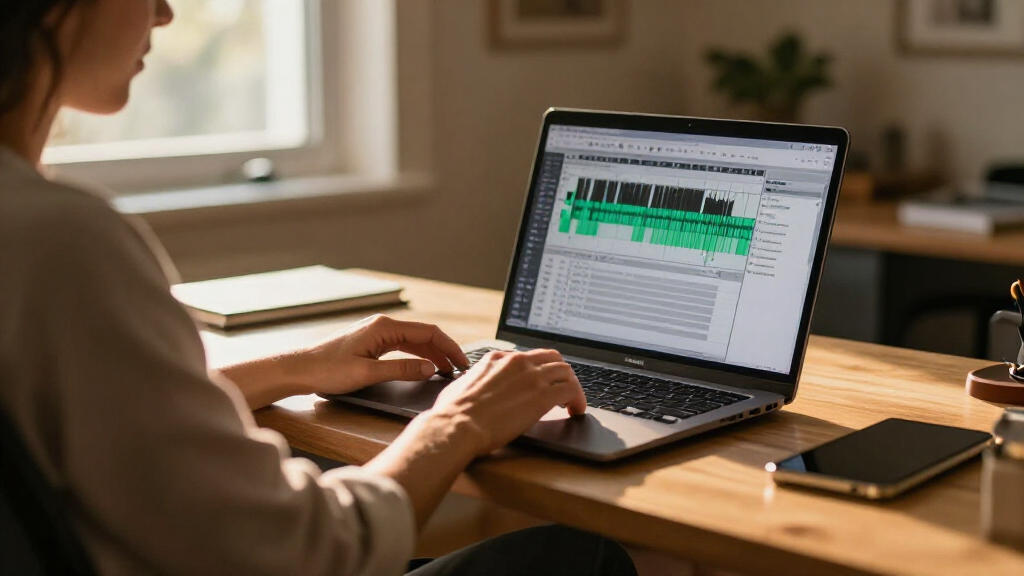
For most people, I’d start with the Lenovo ThinkPad E16 Gen 3: its 32GB of memory, 1TB SSD, and business-focused design suit long sessions and heavy multitasking. The Lenovo ThinkBook 16 Gen 8 is a strong alternative if you want the same generous memory and storage with a Core Ultra 7, while the Acer Aspire 14 AI is the more portable choice. The main tradeoffs are screen and keyboard comfort versus portability, and performance headroom versus a simpler, lower-demand setup. I compare all 15 laptops by the tasks that matter for transcription, from typing along with audio to handling multiple browser tabs and files. Continue reading for the full breakdown and help matching a laptop to your workflow.

Get comfort and recovery gear delivered free with Prime
- Fast, free delivery on millions of items
- Prime Video, Amazon Music and more included
- Member-only deals all year
Complete the kit


Key Takeaways
- The ThinkPad E16 Gen 3 and ThinkBook 16 Gen 8 lead for demanding workflows: both pair 32GB RAM with 1TB SSD storage, giving heavy multitaskers more breathing room than the 8GB and 16GB configurations in several other picks.
- A 16-inch display is the lineup’s practical sweet spot: it gives transcript and reference material more room than a 14-inch screen, while avoiding the extra footprint of the 17.3-inch HP.
- The Aspire 14 AI and Surface Laptop prioritize portability, but buyers should weigh their smaller displays against the more workspace-friendly 15- and 16-inch options.
- Not every laptop here is a good fit for sustained transcription work: the HP 14-inch model’s 4GB RAM and 128GB storage leave little room for multitasking or a growing local audio archive.
- Business models offer useful workflow extras, not automatic transcription advantages: options such as Windows 11 Pro, Ethernet, Thunderbolt 4, and numeric keypads matter most when they match your security, connection, or desk setup.
| Lenovo Yoga 7i 2-in-1 16-inch Touchscreen Laptop, Core Ultra 7 155U |  | Best for Flexible Transcription Work | Processor: Intel Core Ultra 7 155U, 12 cores | Display: 16-inch LCD touchscreen, 1920 × 1200, 300 nits | Memory: 16GB DDR5 | VIEW LATEST PRICE | See Our Full Breakdown |
| Lenovo ThinkPad L16 Gen 2 Business Laptop, Intel Core Ultra 5 225U, 16-inch Touchscreen, 16GB DDR5, 512GB SSD, Windows 11 Pro |  | Best for Business Transcription Workflows | Processor: Intel Core Ultra 5 225U, 12 cores, up to 4.8 GHz | Display: 16-inch FHD+ IPS touchscreen, 1920 × 1200, antiglare, 400 nits, 60Hz | Memory: 16GB DDR5 | VIEW LATEST PRICE | See Our Full Breakdown |
| Dell 15.6-Inch FHD Laptop with Intel Core Ultra 5 225U |  | Best for Straightforward Daily Transcription | Processor: Intel Core Ultra 5 225U | Display: 15.6-inch LED, 1920 × 1080, matte antiglare, up to 300 nits, 60Hz | Memory: 16GB DDR5 | VIEW LATEST PRICE | See Our Full Breakdown |
| Lenovo ThinkBook 16 Gen 8 Laptop, Intel Core Ultra 7, 32GB DDR5, 1TB SSD |  | Best for Heavy Multitasking | Processor: Intel Core Ultra 7 255H, 16 cores, up to 5.1 GHz | Display: 16-inch WUXGA IPS, 1920 × 1200, 300 nits, antiglare, 60Hz | Memory: 32GB DDR5 | VIEW LATEST PRICE | See Our Full Breakdown |
| HP Pavilion 16″ Touchscreen Laptop, Intel Core Ultra 5, 8GB RAM, 512GB SSD |  | Best for Lightweight Mobile Use | Processor: Intel Core Ultra 5 225U, 12 cores, up to 4.8 GHz | Memory: 8GB DDR5 | Storage: 512GB PCIe Gen4 NVMe M.2 SSD | VIEW LATEST PRICE | See Our Full Breakdown |
| Lenovo IdeaPad Slim 3 16-Inch Laptop, Intel Core i5-13420H, 16GB RAM, 1TB SSD |  | Best for a Spacious Transcription Workspace | Processor: Intel Core i5-13420H, 8 cores, up to 4.6GHz | Memory: 16GB DDR5 | Storage: 1TB PCIe 4.0 NVMe SSD | VIEW LATEST PRICE | See Our Full Breakdown |
| Microsoft Surface Laptop 13.8-inch (2026), Snapdragon X2 Elite, 16GB RAM, 1TB SSD, Dune |  | Best Premium Compact Pick | Processor: Qualcomm Snapdragon X2 Elite, 12 cores | Memory: 16GB | Storage: 1TB SSD | VIEW LATEST PRICE | See Our Full Breakdown |
| Acer Aspire 14 AI Copilot+ PC, 14-inch WUXGA Touchscreen, Intel Core Ultra 5 226V, 16GB RAM, 1TB SSD |  | Best Lightweight Touchscreen Pick | Processor: Intel Core Ultra 5 226V | NPU: Up to 40 TOPS | Memory: 16GB LPDDR5X | VIEW LATEST PRICE | See Our Full Breakdown |
| Dell 15.6-inch FHD Touchscreen Business Laptop, Intel Ultra 7 255U, 16GB DDR5 RAM, 1TB SSD, Windows 11 Pro |  | Best for Windows Pro Workflows | Processor: Intel Ultra 7 255U, 12 cores, 14 threads, up to 5.2GHz | Memory: 16GB DDR5 | Storage: 1TB PCIe SSD | VIEW LATEST PRICE | See Our Full Breakdown |
| HP 17.3-Inch Laptop with AMD Ryzen 5, 16GB RAM, 512GB SSD, and Windows 11 |  | Best for a Large, Simple Typing Setup | Processor: AMD Ryzen 5 | Memory: 16GB | Storage: 512GB SSD | VIEW LATEST PRICE | See Our Full Breakdown |
| Lenovo V15 Gen 4 Business Laptop, 15.6-inch FHD, Intel Core i5-13420H, 16GB RAM, 512GB SSD, Windows 11 Pro |  | Best for Wired Office Setups | Processor: Intel Core i5-13420H, 8 cores, 12 threads, up to 4.6 GHz | Memory: 16GB listed in title; description conflicts and states 4GB | Storage: 512GB SSD listed in title and product details; description conflicts and states 128GB | VIEW LATEST PRICE | See Our Full Breakdown |
| Lenovo ThinkPad E16 Gen 3 Business Laptop, 16-inch WUXGA Touchscreen, Intel Core 5 210H, 32GB DDR5 RAM, 1TB SSD, Windows 11 Pro |  | Best for Heavy Multitasking | Processor: Intel Core 5 210H, 8 cores, up to 4.8 GHz | Memory: 32GB DDR5 | Storage: 1TB total, two 512GB PCIe NVMe M.2 SSDs | VIEW LATEST PRICE | See Our Full Breakdown |
| HP 14-inch Laptop with Intel N150, 4GB RAM, and 128GB Storage |  | Best for Occasional, Basic Transcription | Processor: Intel N150 quad-core, up to 3.6 GHz | Memory: 4GB LPDDR5-4800 | Storage: 128GB UFS | VIEW LATEST PRICE | See Our Full Breakdown |
| HP 15.6″ FHD Touchscreen Laptop, 32GB RAM, 1TB SSD, AMD Ryzen 7 7730U |  | Best for Touchscreen Multitasking | Processor: AMD Ryzen 7 7730U, 8 cores, 16 threads, up to 4.5 GHz | Memory: 32GB DDR4-3200 | Storage: 1TB PCIe NVMe SSD | VIEW LATEST PRICE | See Our Full Breakdown |
| Dell Pro 16 Business Laptop, 16″ FHD+ Anti-Glare, Intel Core Ultra 7 255U, 16GB DDR5, 512GB SSD, Thunderbolt 4, Ethernet, Numeric Keypad, Fast Charge, Windows 11 Pro |  | Best for Mobile Business Transcription | Processor: Intel Core Ultra 7 255U, 12 cores, up to 5.2 GHz | Memory: 16GB DDR5 | Storage: 512GB PCIe SSD | VIEW LATEST PRICE | See Our Full Breakdown |
| laptops for transcription | Processor | Display | Memory | Storage |
|---|---|---|---|---|
| Lenovo Yoga 7i 2-in-1 16-inch | Intel Core Ultra 7 155U, 12 cores | 16-inch LCD touchscreen, 1920 × 1200, 300 nits | 16GB DDR5 | 1TB PCIe 4.0 SSD |
| Lenovo ThinkPad L16 Gen 2 Busi | Intel Core Ultra 5 225U, 12 cores, up to 4.8 GHz | 16-inch FHD+ IPS touchscreen, 1920 × 1200, antiglare, 400 nits, 60Hz | 16GB DDR5 | 512GB PCIe M.2 SSD |
| Dell 15.6-Inch FHD Laptop with | Intel Core Ultra 5 225U | 15.6-inch LED, 1920 × 1080, matte antiglare, up to 300 nits, 60Hz | 16GB DDR5 | 512GB SSD |
| Lenovo ThinkBook 16 Gen 8 Lapt | Intel Core Ultra 7 255H, 16 cores, up to 5.1 GHz | 16-inch WUXGA IPS, 1920 × 1200, 300 nits, antiglare, 60Hz | 32GB DDR5 | 1TB PCIe NVMe SSD |
| HP Pavilion 16" Touchscreen La | Intel Core Ultra 5 225U, 12 cores, up to 4.8 GHz | 16-inch WUXGA IPS touchscreen, 1920 × 1200, 300 nits | 8GB DDR5 | 512GB PCIe Gen4 NVMe M.2 SSD |
| Lenovo IdeaPad Slim 3 16-Inch | Intel Core i5-13420H, 8 cores, up to 4.6GHz | 16-inch WUXGA IPS, 1920 × 1200, 300 nits, 60Hz | 16GB DDR5 | 1TB PCIe 4.0 NVMe SSD |
| Microsoft Surface Laptop 13.8- | Qualcomm Snapdragon X2 Elite, 12 cores | 13.8-inch LCD PixelSense touchscreen, 2304 × 1536 | 16GB | 1TB SSD |
| Acer Aspire 14 AI Copilot+ PC | Intel Core Ultra 5 226V | 14-inch IPS LED touchscreen, 1920 × 1200, 60Hz | 16GB LPDDR5X | 1TB Gen 4 SSD |
| Dell 15.6-inch FHD Touchscreen | Intel Ultra 7 255U, 12 cores, 14 threads, up to 5.2GHz | 15.6-inch FHD, 1920 × 1080, anti-glare touchscreen | 16GB DDR5 | 1TB PCIe SSD |
| HP 17.3-Inch Laptop with AMD R | AMD Ryzen 5 | 17.3-inch Full HD anti-glare | 16GB | 512GB SSD |
| Lenovo V15 Gen 4 Business Lapt | Intel Core i5-13420H, 8 cores, 12 threads, up to 4.6 GHz | 15.6-inch LCD, 1920 × 1080 | 16GB listed in title; description conflicts and states 4GB | 512GB SSD listed in title and product details; description conflicts and states 128GB |
| Lenovo ThinkPad E16 Gen 3 Busi | Intel Core 5 210H, 8 cores, up to 4.8 GHz | 16-inch WUXGA (1920 × 1200) IPS touchscreen, 300 nits, anti-glare | 32GB DDR5 | 1TB total, two 512GB PCIe NVMe M.2 SSDs |
| HP 14-inch Laptop with Intel N | Intel N150 quad-core, up to 3.6 GHz | 14-inch HD (1366 × 768), anti-glare, 250 nits | 4GB LPDDR5-4800 | 128GB UFS |
| HP 15.6" FHD Touchscreen Lapto | AMD Ryzen 7 7730U, 8 cores, 16 threads, up to 4.5 GHz | 15.6-inch Full HD (1920 × 1080), anti-glare IPS, 300 nits, touchscreen | 32GB DDR4-3200 | 1TB PCIe NVMe SSD |
| Dell Pro 16 Business Laptop | Intel Core Ultra 7 255U, 12 cores, up to 5.2 GHz | 16-inch WUXGA (1920 × 1200), anti-glare, 300 nits | 16GB DDR5 | 512GB PCIe SSD |
More Details on Our Top Picks
Lenovo Yoga 7i 2-in-1 16-inch Touchscreen Laptop, Core Ultra 7 155U
The Yoga 7i is the most adaptable pick here for transcribers who switch between typing, reviewing audio, and sharing a screen. Its 16-inch touchscreen and 360-degree hinge let you use it as a conventional laptop for long typing sessions, then fold it into stand or tablet mode for listening or reviewing documents. Compared with the Lenovo ThinkBook 16 Gen 8, it has less memory, but adds touch input and a more flexible form factor. The 16GB of RAM and 1TB SSD are a useful baseline for transcription software, browser tabs, and a growing collection of audio files. Its 4.6-pound weight is the main tradeoff: the large screen is comfortable at a desk, but less appealing for frequent commuting. Integrated graphics are adequate for transcription, not graphics-heavy work.
Pros:- 360-degree hinge supports laptop, tablet, tent, and stand modes
- 16-inch 1920 × 1200 touchscreen gives ample room for transcripts and reference material
- 16GB DDR5 memory and 1TB SSD suit everyday transcription multitasking and file storage
- Broad port selection includes HDMI, Ethernet, USB-A, USB-C, and Micro SD
Cons:- At 4.6 pounds, it is heavier than the listed Dell 15.6-inch laptop
- 16GB memory is less headroom than the ThinkBook 16 Gen 8’s 32GB
- Integrated graphics are not intended for demanding graphics workloads
Best for: Transcribers who want a large touchscreen, multiple viewing modes, and plenty of local storage for audio files.
Not ideal for: Frequent commuters seeking a light laptop, or buyers who need the higher memory capacity of the ThinkBook 16 Gen 8.
- Processor:Intel Core Ultra 7 155U, 12 cores
- Display:16-inch LCD touchscreen, 1920 × 1200, 300 nits
- Memory:16GB DDR5
- Storage:1TB PCIe 4.0 SSD
- Operating system:Windows 11 Pro
- Form factor:Convertible 2-in-1 with 360° hinge
- Wireless:Wi-Fi 6E and Bluetooth 5.2
- Weight:4.6 pounds
Our verdict“Choose the Yoga 7i if touch input and flexible listening or review positions matter more than carrying the lightest laptop.”
Lenovo ThinkPad L16 Gen 2 Business Laptop, Intel Core Ultra 5 225U, 16-inch Touchscreen, 16GB DDR5, 512GB SSD, Windows 11 Pro
The ThinkPad L16 Gen 2 suits transcribers who need a business-focused Windows setup and useful built-in security, rather than a convertible design. Its 16-inch, 16:10 antiglare touchscreen offers more vertical room for long documents, while Ethernet and a generous selection of USB ports make connecting a headset or desk accessories straightforward. Compared with the Lenovo Yoga 7i, this model has a more business-oriented feature set and a brighter listed display, but half the SSD capacity and no 360-degree hinge. The Core Ultra 5 processor and 16GB RAM fit typical transcription and office workloads. I would weigh two ownership details carefully: the listed five-hour battery life and the opened seal, with upgraded RAM and storage covered by the seller rather than the manufacturer.
Pros:- 16-inch 1920 × 1200 antiglare touchscreen is well suited to document-heavy work
- Windows 11 Pro, fingerprint reader, and ThinkShield target business use
- Three USB-A ports, two USB-C ports, HDMI, and Ethernet simplify desk connections
- Core Ultra 5 225U and 16GB DDR5 support routine transcription multitasking
Cons:- Listed battery life is five hours, limiting long mobile work sessions
- Original seal was opened for the RAM and SSD upgrade
- Warranty coverage is split between the seller and manufacturer
Best for: Office-based transcribers who want Windows 11 Pro, a large antiglare touchscreen, fingerprint security, and Ethernet connectivity.
Not ideal for: Buyers who need long unplugged sessions, an unopened retail unit, or straightforward single-provider warranty coverage.
- Processor:Intel Core Ultra 5 225U, 12 cores, up to 4.8 GHz
- Display:16-inch FHD+ IPS touchscreen, 1920 × 1200, antiglare, 400 nits, 60Hz
- Memory:16GB DDR5
- Storage:512GB PCIe M.2 SSD
- Operating system:Windows 11 Pro
- Connectivity:Wi-Fi 6; 2 USB-C, 3 USB-A, HDMI, Ethernet, and headphone/mic combo
- Security:Fingerprint reader and ThinkShield
- Battery life:Listed at 5 hours
- Warranty:One year on upgraded RAM and SSD from PCOnline US; one year manufacturer warranty on remaining components
Our verdict“Pick the ThinkPad L16 Gen 2 for a security-minded office setup, but skip it if battery endurance or uncomplicated warranty coverage comes first.”
Dell 15.6-Inch FHD Laptop with Intel Core Ultra 5 225U
The Dell is a sensible clamshell choice for transcribers who want a conventional keyboard-and-screen setup without paying for a convertible hinge or a premium business feature set. Its 15.6-inch matte Full HD display reduces reflections, and the backlit keyboard includes a numeric keypad for people who also handle data entry. At 3.7 pounds, it is lighter than the Lenovo Yoga 7i, though its screen is smaller and it lacks that model’s touchscreen flexibility. The Core Ultra 5 225U and 16GB of RAM provide a suitable foundation for transcription apps, browser research, and document editing; the 512GB SSD is more modest than the Yoga’s 1TB. Windows 11 Home keeps the setup familiar for personal use, but buyers who need Pro edition business controls should look at the ThinkPad L16 Gen 2 instead.
Pros:- Matte 15.6-inch Full HD display helps limit reflections during document work
- Backlit keyboard and numeric keypad support typing in dim rooms and data entry
- 3.7-pound weight is lower than the Lenovo Yoga 7i’s listed weight
- 16GB DDR5 memory and Core Ultra 5 processor suit common transcription workloads
Cons:- Windows 11 Home lacks the Pro edition included with the ThinkPad L16 Gen 2
- 512GB SSD offers less space than the Yoga 7i’s 1TB drive
- Non-touch 60Hz display offers fewer ways to interact with documents
Best for: Independent transcribers who want a lighter everyday laptop with a matte display, backlit keyboard, and numeric keypad.
Not ideal for: Business users who require Windows 11 Pro, a touchscreen, or more than 512GB of included storage.
- Processor:Intel Core Ultra 5 225U
- Display:15.6-inch LED, 1920 × 1080, matte antiglare, up to 300 nits, 60Hz
- Memory:16GB DDR5
- Storage:512GB SSD
- Operating system:Windows 11 Home
- Keyboard:Backlit QWERTY with numeric keypad
- Battery:41 watt-hours, 3-cell lithium polymer
- Weight:3.7 pounds
Our verdict“Choose this Dell for a practical, lighter clamshell transcription setup; choose the ThinkPad L16 Gen 2 for Pro features and touch input.”
Lenovo ThinkBook 16 Gen 8 Laptop, Intel Core Ultra 7, 32GB DDR5, 1TB SSD
For transcribers who keep large audio libraries, several reference documents, and many browser tabs open at once, the ThinkBook 16 Gen 8 has the strongest memory and storage combination in this group. Its 32GB DDR5 and 1TB SSD give it more room for simultaneous work than the 16GB Yoga 7i or Dell, while the 16-inch 16:10 antiglare display provides a broad editing workspace. The Core Ultra 7 255H and Thunderbolt 4 add capacity for demanding multitasking and fast accessory connections, though those advantages may be more than a single-task transcription workflow needs. Unlike the Yoga, the screen is not touch-enabled and the laptop cannot fold into alternate modes. Its integrated graphics also make it a less fitting choice for workloads centered on high-end graphics.
Pros:- 32GB DDR5 gives more multitasking headroom than the 16GB alternatives in this batch
- 1TB NVMe SSD provides substantial space for local audio and document storage
- 16-inch 1920 × 1200 antiglare display offers extra vertical workspace
- Thunderbolt 4, Ethernet, HDMI, and an SD card reader support varied desk setups
Cons:- The display is not touch-enabled, unlike the Yoga 7i and ThinkPad L16 Gen 2
- Integrated graphics are not aimed at demanding graphics work
- Higher memory and processor capacity may be unnecessary for basic transcription tasks
Best for: Professional transcribers who run transcription software alongside large document sets, research tabs, and other work applications.
Not ideal for: Buyers who want a touchscreen or 2-in-1 format, or who only need a basic laptop for one task at a time.
- Processor:Intel Core Ultra 7 255H, 16 cores, up to 5.1 GHz
- Display:16-inch WUXGA IPS, 1920 × 1200, 300 nits, antiglare, 60Hz
- Memory:32GB DDR5
- Storage:1TB PCIe NVMe SSD
- Operating system:Windows 11 Pro 64-bit
- Graphics:Integrated Intel Arc 140T
- Wireless:Wi-Fi 6E and Bluetooth 5.3
- Ports:Thunderbolt 4, USB-C, 2 USB-A, HDMI 2.1, Ethernet, SD card reader, and 3.5mm audio
- Weight:3.75 pounds
Our verdict“Choose the ThinkBook 16 Gen 8 when multitasking capacity and file storage matter more than touch input or convertible flexibility.”
HP Pavilion 16″ Touchscreen Laptop, Intel Core Ultra 5, 8GB RAM, 512GB SSD
The HP Pavilion combines a large touchscreen with a relatively light, slim chassis, making it the most portable large-screen touch option in this set. At 3.61 pounds, it is lighter than the 16-inch Yoga 7i, though it does not offer that laptop’s 360-degree hinge. Its 16-inch WUXGA display and extensive ports make it easy to set up at different desks, and the AI noise reduction and privacy shutter may help during calls with clients or colleagues. The main compromise for transcription is memory: its 8GB RAM is below the 16GB in the Dell and Lenovo options, which leaves less room for many open applications. I’d favor the ThinkBook 16 Gen 8 for heavy multitasking; this Pavilion makes more sense when portability and touch input outweigh memory headroom.
Pros:- 3.61-pound weight is lower than the Yoga 7i’s listed 4.6 pounds
- 16-inch WUXGA touchscreen provides a large area for transcript and document work
- Wi-Fi 7, Bluetooth 6.0, and a broad range of ports support flexible connections
- AI noise reduction and a privacy shutter are useful for calls
Cons:- 8GB RAM is less than the 16GB in the Dell and Lenovo laptops in this batch
- 512GB SSD is smaller than the 1TB drives in the Yoga 7i and ThinkBook 16 Gen 8
- No 360-degree hinge, unlike the Yoga 7i
Best for: Mobile transcribers who want a lighter 16-inch touchscreen laptop for focused work and occasional calls.
Not ideal for: Users who keep many applications open, work with large audio projects, or want 16GB or more of RAM for added multitasking room.
- Processor:Intel Core Ultra 5 225U, 12 cores, up to 4.8 GHz
- Memory:8GB DDR5
- Storage:512GB PCIe Gen4 NVMe M.2 SSD
- Display:16-inch WUXGA IPS touchscreen, 1920 × 1200, 300 nits
- Operating system:Windows 11 Home
- Weight:3.61 pounds
- Wireless:Wi-Fi 7 and Bluetooth 6.0
- Ports:2 USB-C, 2 USB-A, HDMI 2.1, RJ-45, headphone/mic combo, SD and micro-SD slots
- Dimensions:14.12 × 9.91 × 0.44 inches at front / 0.58 inches at rear
Our verdict“Choose the Pavilion for a light, large touchscreen and flexible connections, but choose a 16GB-or-more model for heavier multitasking.”
Lenovo IdeaPad Slim 3 16-Inch Laptop, Intel Core i5-13420H, 16GB RAM, 1TB SSD
I’d choose the IdeaPad Slim 3 for transcription when screen space and local storage matter more than an especially light carry. Its 16-inch, 1920 × 1200 anti-glare display gives transcripts and reference material room to sit side by side, while the 16GB of DDR5 memory and eight-core processor leave headroom for audio playback, a browser, and word-processing software at once. The 1TB SSD also suits anyone who keeps recordings on the laptop. Compared with the smaller Acer Aspire 14 AI, this Lenovo gives you a larger work area and an SD card reader, but it weighs more and has a less portable footprint. The display’s 45% NTSC color gamut is a modest concern for transcription, though its 300-nit brightness and anti-glare coating are more relevant for long document sessions. Its integrated graphics are for everyday use, not demanding creative workloads.
Pros:- 16-inch, 1920 × 1200 anti-glare display provides room for transcript and reference windows
- 16GB DDR5 memory and an eight-core processor support typical transcription multitasking
- 1TB PCIe 4.0 NVMe SSD provides ample room for recordings and work files
- Includes USB-C, HDMI, an SD card reader, and a 3.5mm audio jack
Cons:- At 3.70 pounds, it is less convenient to carry than the 3-pound Acer Aspire 14 AI
- 45% NTSC color gamut limits color accuracy for visual creative work
- Integrated Intel UHD graphics are suited to light graphics tasks
Best for: Transcriptionists who work at a desk, keep audio files locally, and want a large anti-glare screen for transcripts and source material.
Not ideal for: People who regularly carry a laptop between work sites or need a compact machine; its 16-inch chassis is larger and heavier than the Acer Aspire 14 AI.
- Processor:Intel Core i5-13420H, 8 cores, up to 4.6GHz
- Memory:16GB DDR5
- Storage:1TB PCIe 4.0 NVMe SSD
- Display:16-inch WUXGA IPS, 1920 × 1200, 300 nits, 60Hz
- Operating system:Windows 11 Home
- Wireless:Wi-Fi 6, Bluetooth 5.2
- Ports:2 USB-A, 1 USB-C, HDMI 1.4, SD card reader, 3.5mm audio jack
- Weight:3.70 lbs (1.68 kg)
Our verdict“Choose the IdeaPad Slim 3 if a roomy, glare-reducing workspace and 1TB of local storage matter more than portability.”
Microsoft Surface Laptop 13.8-inch (2026), Snapdragon X2 Elite, 16GB RAM, 1TB SSD, Dune
The Surface Laptop is the premium compact choice for transcriptionists who move around and want a sharp screen without giving up a 1TB drive. Its 13.8-inch PixelSense touchscreen has a 2304 × 1536 resolution, which makes text and interface details crisp, while the 12-core Snapdragon X2 Elite and 16GB of memory are well suited to keeping audio, notes, and browser tabs open together. Microsoft claims up to 20 hours of battery life, but that figure depends on usage, so I wouldn’t treat it as a guarantee for a full transcription shift. Compared with the larger Lenovo IdeaPad Slim 3, this Surface prioritizes a premium aluminum build and portability over screen area and built-in port variety. Its two highlighted USB-C/USB4 ports may mean carrying adapters for USB-A accessories or wired audio equipment.
Pros:- High-resolution 13.8-inch touchscreen renders transcript text and interface details sharply
- 12-core Snapdragon X2 Elite and 16GB memory support multitasking
- 1TB SSD offers generous local capacity for recordings and documents
- Aluminum alloy chassis and claimed long battery life suit mobile work
Cons:- Only two USB-C/USB4 ports are specifically listed, limiting direct connection options
- The claimed battery life can vary with workload and settings
- Smaller display offers less room for audio controls and transcript windows than the Lenovo IdeaPad Slim 3
Best for: Mobile transcriptionists who want a compact touchscreen, a high-resolution display, and substantial SSD capacity for work files.
Not ideal for: People who need a large side-by-side workspace or frequently connect USB-A peripherals, wired accessories, and external displays without adapters.
- Processor:Qualcomm Snapdragon X2 Elite, 12 cores
- Memory:16GB
- Storage:1TB SSD
- Display:13.8-inch LCD PixelSense touchscreen, 2304 × 1536
- Operating system:Windows 11 Home
- Battery life:Up to 20 hours claimed
- Ports:Two USB-C/USB4 ports
- Wireless:Wi-Fi 802.11ax, Bluetooth 5.4
- Chassis:Aluminum alloy, Dune
Our verdict“Pick the Surface Laptop for a premium, portable transcription setup, provided its compact screen and USB-C-centered connectivity fit your workflow.”
Acer Aspire 14 AI Copilot+ PC, 14-inch WUXGA Touchscreen, Intel Core Ultra 5 226V, 16GB RAM, 1TB SSD
At 3 pounds, the Acer Aspire 14 AI is a strong fit for transcriptionists who take their laptop between meetings, classrooms, or client sites. The 14-inch 1920 × 1200 touchscreen keeps the machine compact without dropping to a cramped, lower-resolution display, and its 180-degree hinge can make sharing text easier. A 1080p FHD IR webcam is a practical advantage for frequent remote calls, though it matters less to audio-only work. Compared with the Surface Laptop, the Acer lists four USB ports rather than only two USB-C/USB4 ports, offering more flexibility for accessories. Its 16GB memory and 1TB SSD match the Surface’s capacity, while the Core Ultra 5 NPU adds support for AI features, not a guarantee of better transcription results. Acer’s up-to-22-hour battery figure comes from specific video playback conditions, and shared graphics memory makes this a poor pick for heavy graphics work.
Pros:- Three-pound aluminum design is easier to carry than the 16-inch Lenovo IdeaPad Slim 3
- 14-inch 1920 × 1200 touchscreen balances portability with usable workspace
- 1080p FHD IR webcam suits video meetings better than the HP 17.3-inch model’s 720p webcam
- 16GB LPDDR5X memory and a 1TB Gen 4 SSD provide useful capacity for multitasking and audio files
Cons:- Up-to-22-hour battery claim was measured under specific video playback conditions
- Integrated graphics use shared memory, limiting suitability for demanding graphics tasks
- Its 14-inch screen gives less room for side-by-side transcript and reference windows than larger options
Best for: Transcriptionists who travel frequently, use a touchscreen, and also need a capable webcam for remote meetings.
Not ideal for: Buyers focused on maximum sustained performance for graphics-heavy work, or anyone who needs guaranteed all-day battery runtime rather than a lab-condition estimate.
- Processor:Intel Core Ultra 5 226V
- NPU:Up to 40 TOPS
- Memory:16GB LPDDR5X
- Storage:1TB Gen 4 SSD
- Display:14-inch IPS LED touchscreen, 1920 × 1200, 60Hz
- Webcam:1080p FHD IR
- Battery:65Wh; up to 22 hours reported under video playback test conditions
- Ports:4 USB ports
- Weight:3 pounds
Our verdict“Choose the Aspire 14 AI if you want a light touchscreen laptop with a stronger meeting webcam and practical port variety.”
Dell 15.6-inch FHD Touchscreen Business Laptop, Intel Ultra 7 255U, 16GB DDR5 RAM, 1TB SSD, Windows 11 Pro
The Dell’s case for transcription is its combination of a 15.6-inch anti-glare touchscreen, Windows 11 Pro, and a 12-core Intel Ultra 7 processor. The screen gives more room than the Acer Aspire 14 AI’s 14-inch panel, while the backlit keyboard is useful when working in dim rooms. Its 16GB DDR5 memory and 1TB PCIe SSD cover common needs such as running transcription software alongside audio playback and retaining working files. Compared with the Lenovo IdeaPad Slim 3, the Dell adds touch input and Windows 11 Pro, but it has a lower-resolution Full HD display and a stated battery runtime of up to nine hours. At 3.67 pounds, it is portable enough for occasional travel, though not the lightest choice. Its 720p webcam is basic for frequent video meetings.
Pros:- Windows 11 Pro suits buyers whose work setup calls for the Pro edition
- 15.6-inch anti-glare touchscreen provides a larger work area than the Acer Aspire 14 AI
- Backlit keyboard supports typing in dim workspaces
- USB-C with Power Delivery and DisplayPort, HDMI, and USB-A provide useful connectivity
Cons:- Battery life is listed at up to nine hours, which may not cover a full unplugged workday
- 720p webcam is less suitable for frequent video calls than the Acer’s 1080p FHD IR camera
- At 3.67 pounds, it is heavier than the Acer Aspire 14 AI
Best for: Business transcriptionists who need Windows 11 Pro, a backlit keyboard, and a mid-size touchscreen for office and remote work.
Not ideal for: People who need a laptop for long unplugged shifts, a high-resolution webcam, or a lighter everyday carry.
- Processor:Intel Ultra 7 255U, 12 cores, 14 threads, up to 5.2GHz
- Memory:16GB DDR5
- Storage:1TB PCIe SSD
- Display:15.6-inch FHD, 1920 × 1080, anti-glare touchscreen
- Operating system:Windows 11 Pro
- Battery:Up to 9 hours runtime
- Webcam:720p HD
- Ports:USB-C with Power Delivery and DisplayPort, USB-A 3.2, USB 2.0, HDMI 1.4, audio jack
- Weight:3.67 lbs
Our verdict“Choose the Dell if Windows 11 Pro and a backlit, mid-size touchscreen matter more than longer claimed battery life or a sharper webcam.”
HP 17.3-Inch Laptop with AMD Ryzen 5, 16GB RAM, 512GB SSD, and Windows 11
The HP’s 17.3-inch anti-glare display and full-size keyboard with numeric keypad make it the clearest pick here for transcriptionists who mostly work at a fixed desk. The larger panel offers generous room for a transcript beside playback controls, and the keypad can help with number-heavy records. Its 16GB of memory and 512GB SSD provide a workable foundation for everyday transcription, but storage is half the 1TB offered by the Lenovo IdeaPad Slim 3, Surface Laptop, Acer Aspire 14 AI, and Dell. That can matter if you retain many recordings locally. The supplied details identify the processor only as AMD Ryzen 5, so I can’t compare its exact performance confidently with those Intel and Snapdragon chips. Its 720p webcam is also modest, and Office 365 access is for the web rather than a stated desktop subscription.
Pros:- 17.3-inch Full HD anti-glare screen provides the largest listed workspace in this batch
- Full-size keyboard with numeric keypad suits number-heavy transcription
- 16GB RAM supports common document, browser, and audio playback tasks
- Includes Windows 11, web access to Office 365, and HP Fast Charge
Cons:- 512GB SSD offers less local storage than the 1TB drives in the other four products
- A 17.3-inch format is less suited to regular travel than the Acer Aspire 14 AI or Surface Laptop
- 720p webcam is a basic option for video meetings, and Office 365 access is web-based
Best for: Desk-based transcriptionists who prioritize a large display, full-size keyboard, and numeric keypad for entering figures.
Not ideal for: Frequent travelers, people who need a compact laptop, or users who require more than 512GB of local storage for audio archives.
- Processor:AMD Ryzen 5
- Memory:16GB
- Storage:512GB SSD
- Display:17.3-inch Full HD anti-glare
- Operating system:Windows 11
- Keyboard:Full-size keyboard with numeric keypad
- Webcam:720p with digital microphones
- Software:Office 365 for the web and Copilot
Our verdict“Pick this HP for a mostly stationary workflow where the largest screen and a numeric keypad matter more than portability or 1TB storage.”
Lenovo V15 Gen 4 Business Laptop, 15.6-inch FHD, Intel Core i5-13420H, 16GB RAM, 512GB SSD, Windows 11 Pro
The Lenovo V15 Gen 4 suits transcriptionists who work at a desk and want a full-size screen, a numeric keypad, and direct connections for office equipment. Its 15.6-inch Full HD display gives transcripts more room than the HP 14-inch Laptop’s lower-resolution screen, while the RJ45 Ethernet and HDMI ports are handy for a stable wired connection and an external monitor. The Core i5-13420H and the listed 16GB of RAM should handle transcription software and routine multitasking comfortably.
My main reservation is the product listing: its description conflicts with the title on both memory and storage, so I would verify the delivered configuration before relying on it for a long-term work setup. Its 26Wh battery also makes it a weaker mobile pick than the Dell Pro 16. Choose it for straightforward desk work, not for dependable all-day unplugged use.
Pros:- 15.6-inch Full HD display provides more working room than a compact HD screen.
- Numeric keypad is useful for entering timestamps, references, or numeric data.
- Ethernet and HDMI support wired networking and an external monitor.
- Windows 11 Pro and an included webcam suit a standard business workflow.
Cons:- The listing conflicts on RAM and SSD capacity, so the exact configuration needs confirmation.
- The 26Wh battery is a limitation for extended mobile sessions.
- Integrated Intel UHD Graphics are suited to everyday tasks, not graphics-heavy work.
Best for: Desk-based transcriptionists who need a numeric keypad, Ethernet, HDMI, and a readable Full HD screen.
Not ideal for: Buyers who need verified memory and storage specifications or frequently transcribe away from an outlet; the listing conflicts on configuration and the battery is 26Wh.
- Processor:Intel Core i5-13420H, 8 cores, 12 threads, up to 4.6 GHz
- Memory:16GB listed in title; description conflicts and states 4GB
- Storage:512GB SSD listed in title and product details; description conflicts and states 128GB
- Display:15.6-inch LCD, 1920 × 1080
- Operating system:Windows 11 Pro
- Ports:USB 3.0 Type-A, USB 2.0 Type-A, USB-C, HDMI, RJ45 Ethernet, headphone/microphone combo
- Battery:26Wh lithium-ion
- Weight:3.6 pounds
Our verdict“Pick the V15 for a connected desk setup, but confirm its RAM and SSD configuration before buying.”
Lenovo ThinkPad E16 Gen 3 Business Laptop, 16-inch WUXGA Touchscreen, Intel Core 5 210H, 32GB DDR5 RAM, 1TB SSD, Windows 11 Pro
When transcription work means keeping audio, a word processor, research tabs, and reference documents open together, the ThinkPad E16 Gen 3 has the strongest memory and storage combination in this group: 32GB DDR5 RAM and 1TB across two SSDs. That headroom gives it a clearer multitasking advantage over the Dell Pro 16, which has 16GB of RAM and a 512GB SSD. Its 16-inch 1920 × 1200 touchscreen adds vertical space for long documents, and the backlit keyboard and numeric keypad suit extended desk sessions.
It also brings a 1080p IR webcam, fingerprint reader, and a broad selection of ports, including Thunderbolt 4 and Ethernet. The tradeoff is that the seller installed the memory and storage upgrades and resealed the computer, so buyers should check the warranty details and configuration carefully. For basic single-task transcription, this capacity may be more than necessary.
Pros:- 32GB DDR5 memory supports heavy multitasking across transcription and research applications.
- Two 512GB SSDs provide 1TB total storage and room to organize files.
- 16-inch WUXGA touchscreen offers added vertical document space.
- Thunderbolt 4, Ethernet, fingerprint reader, and IR webcam suit a business workstation.
Cons:- Seller-installed memory and SSD upgrades mean the machine was resealed.
- Warranty coverage is split between the seller and Lenovo.
- Integrated graphics are not intended for demanding GPU-heavy tasks.
Best for: Transcriptionists who keep large audio libraries, multiple reference files, and several applications open during work.
Not ideal for: Buyers who want an untouched factory configuration or need only a simple laptop for occasional transcription.
- Processor:Intel Core 5 210H, 8 cores, up to 4.8 GHz
- Memory:32GB DDR5
- Storage:1TB total, two 512GB PCIe NVMe M.2 SSDs
- Display:16-inch WUXGA (1920 × 1200) IPS touchscreen, 300 nits, anti-glare
- Operating system:Windows 11 Pro
- Wireless:Wi-Fi 6E, Bluetooth 5.3
- Webcam and security:1080p IR webcam with privacy shutter, fingerprint reader, facial recognition
- Weight:3.6 pounds
Our verdict“Choose the ThinkPad E16 if you need the most memory and file capacity here and are comfortable with seller-installed upgrades.”
HP 14-inch Laptop with Intel N150, 4GB RAM, and 128GB Storage
The HP 14-inch Laptop is the lightest, simplest option here, but its 4GB of RAM and 128GB of UFS storage put it in a different class from the work-focused ThinkPad E16 Gen 3 and HP 15.6-inch Ryzen 7. It can suit short, occasional transcription sessions using a basic editor and one or two browser tabs; it is less well suited to juggling large audio files, research tabs, and multiple applications. The 3.24-pound body, Wi-Fi 6, and included Microsoft 365 Personal subscription make it a practical starter for document work and video calls.
The 14-inch display is only 1366 × 768, so long transcripts offer less workspace and sharpness than the Full HD Lenovo V15. Storage is also tight for keeping recordings locally. I would choose this only when portability and simple tasks matter more than speed, screen detail, or room to grow.
Pros:- At 3.24 pounds, it is the lightest option in this five-product group.
- Wi-Fi 6 and Bluetooth 5.4 provide current wireless connectivity.
- Includes a 1-year Microsoft 365 Personal subscription.
- HD anti-glare screen and noise-reduction camera cover basic document and video-call needs.
Cons:- 4GB of RAM limits practical multitasking.
- 128GB UFS storage leaves little room for an extensive local audio library.
- The 1366 × 768 display is less detailed and spacious than the Full HD alternatives.
Best for: Students or occasional transcribers handling short recordings and documents, with most files stored elsewhere.
Not ideal for: Daily professional transcribers who use multiple applications, keep recordings locally, or need a sharp, spacious transcript display.
- Processor:Intel N150 quad-core, up to 3.6 GHz
- Memory:4GB LPDDR5-4800
- Storage:128GB UFS
- Display:14-inch HD (1366 × 768), anti-glare, 250 nits
- Operating system:Windows 11 Home
- Battery life:Up to 11 hours of video playback
- Weight:3.24 pounds
- Ports:USB-C, two USB-A, HDMI 1.4b, headphone/microphone combo, SD card reader
- Included subscription:1-year Microsoft 365 Personal
Our verdict“Choose this HP for light, occasional transcription on the go, not as a primary machine for sustained work.”
HP 15.6″ FHD Touchscreen Laptop, 32GB RAM, 1TB SSD, AMD Ryzen 7 7730U
The HP 15.6-inch Ryzen 7 is a strong fit for transcriptionists who want substantial multitasking capacity without moving to a 16-inch business laptop. Its 32GB of RAM and 1TB NVMe SSD give it the same headline memory and storage totals as the ThinkPad E16 Gen 3, while the 15.6-inch Full HD touchscreen offers direct interaction with documents and controls. The 8-core, 16-thread Ryzen 7 7730U should handle audio playback alongside browser research and word processing more comfortably than the HP 14-inch model with 4GB of RAM.
It is also lighter than the Dell Pro 16, at 3.52 pounds, and the listed battery life reaches 10.75 hours. The compromise is a more limited port selection: there is just one USB-C port, and no Ethernet is listed. Integrated Radeon graphics are fine for transcription, but this is not a choice for GPU-heavy editing.
Pros:- 32GB DDR4 memory supports transcription alongside research and other open applications.
- 1TB PCIe NVMe SSD provides room for recordings and quick file access.
- Full HD anti-glare IPS touchscreen supports clear document work and touch input.
- 3.52-pound chassis and stated battery life of up to 10.75 hours suit mobile work.
Cons:- Only one USB-C port limits connections to newer peripherals.
- Ethernet is not listed, unlike on the ThinkPad E16 Gen 3 and Dell Pro 16.
- Integrated Radeon graphics are not designed for GPU-intensive workloads.
Best for: Transcriptionists who want a responsive touchscreen, generous memory, and ample local storage in a relatively light 15.6-inch laptop.
Not ideal for: Users who need built-in Ethernet, multiple USB-C connections, or graphics performance for demanding video work.
- Processor:AMD Ryzen 7 7730U, 8 cores, 16 threads, up to 4.5 GHz
- Memory:32GB DDR4-3200
- Storage:1TB PCIe NVMe SSD
- Display:15.6-inch Full HD (1920 × 1080), anti-glare IPS, 300 nits, touchscreen
- Operating system:Windows 11 Pro
- Battery life:Up to 10.75 hours
- Weight:3.52 pounds
- Ports:USB-C 3.0, two USB-A 3.0, HDMI 1.4, headphone/microphone combo
Our verdict“Pick this HP for touchscreen transcription with plenty of multitasking headroom, provided its limited port selection fits your setup.”
Dell Pro 16 Business Laptop, 16″ FHD+ Anti-Glare, Intel Core Ultra 7 255U, 16GB DDR5, 512GB SSD, Thunderbolt 4, Ethernet, Numeric Keypad, Fast Charge, Windows 11 Pro
The Dell Pro 16 is the most travel-ready business option in this set for transcriptionists who value connectivity and a durable chassis over the lightest carry. Its 55Wh battery with fast charge, MIL-STD 810H testing, and 1080p IR webcam suit work between locations. The 16-inch WUXGA anti-glare display and numeric keypad provide a comfortable setup for long documents, while Thunderbolt 4, Ethernet, and HDMI 2.1 make it easier to connect to office networks and accessories than the HP Ryzen 7, which lists only one USB-C port and no Ethernet.
The 12-core Core Ultra 7 255U and 16GB DDR5 are well matched to transcription software and everyday multitasking, though the ThinkPad E16 Gen 3 and HP Ryzen 7 offer 32GB of RAM and twice the listed storage. At 4.2 pounds, the Dell is also heavier than both. It makes most sense when business durability and ports outweigh maximum memory or minimal carry weight.
Pros:- 55Wh battery with fast charging supports work away from a desk.
- MIL-STD 810H testing and a 1080p IR webcam suit business use on the move.
- Thunderbolt 4, Ethernet, HDMI 2.1, and USB ports offer versatile connectivity.
- 16-inch WUXGA anti-glare display and numeric keypad support extended document work.
Cons:- At 4.2 pounds, it is heavier than the other laptops in this group.
- 16GB RAM and 512GB storage are less generous than the ThinkPad E16 Gen 3 and HP Ryzen 7.
- Integrated graphics are not intended for GPU-intensive tasks.
Best for: Mobile business transcribers who need a large anti-glare display, durable construction, fast charging, and built-in Ethernet.
Not ideal for: Frequent travelers prioritizing a light bag or power users who need 32GB RAM and 1TB of storage as standard.
- Processor:Intel Core Ultra 7 255U, 12 cores, up to 5.2 GHz
- Memory:16GB DDR5
- Storage:512GB PCIe SSD
- Display:16-inch WUXGA (1920 × 1200), anti-glare, 300 nits
- Operating system:Windows 11 Pro
- Battery:55Wh with fast charge
- Ports:Thunderbolt 4, USB-C, USB-A, HDMI 2.1, RJ45 Ethernet, headphone jack
- Wireless:Wi-Fi 6E, Bluetooth 5.3
- Weight:4.2 pounds
Our verdict“Choose the Dell Pro 16 for mobile business transcription where durability, battery capacity, and built-in ports matter more than lower weight or maximum storage.”
How We Picked
I ranked these laptops around the demands of real transcription workflows: typing for extended stretches, listening to audio while working, switching between documents and browser tools, and keeping recordings and transcripts on hand. I gave more weight to usable screen area, memory, storage, and a practical keyboard-oriented design than to processor branding alone. For this use, extra RAM can matter more than a faster-sounding chip if your work involves multiple tabs, transcription software, and reference documents at once.
The order reflects both capability and fit. Models with 32GB RAM, 1TB storage, and 16-inch screens rank highly for sustained or multitask-heavy work; smaller machines earn a place when portability is the clearer advantage. I also considered tradeoffs that can change a purchase decision, including modest memory configurations, larger carry size, and the limited headroom of entry-level hardware. Product details supplied for this roundup do not specify every factor—such as keyboard feel, battery runtime, or microphone quality—so I do not treat those as verified strengths.
| laptops for transcription | Operating system |
|---|---|
| Lenovo Yoga 7i 2-in-1 16-inch | Windows 11 Pro |
| Lenovo ThinkPad L16 Gen 2 Busi | Windows 11 Pro |
| Dell 15.6-Inch FHD Laptop with | Windows 11 Home |
| Lenovo ThinkBook 16 Gen 8 Lapt | Windows 11 Pro 64-bit |
| HP Pavilion 16" Touchscreen La | Windows 11 Home |
| Lenovo IdeaPad Slim 3 16-Inch | Windows 11 Home |
| Microsoft Surface Laptop 13.8- | Windows 11 Home |
| Acer Aspire 14 AI Copilot+ PC | — |
| Dell 15.6-inch FHD Touchscreen | Windows 11 Pro |
| HP 17.3-Inch Laptop with AMD R | Windows 11 |
| Lenovo V15 Gen 4 Business Lapt | Windows 11 Pro |
| Lenovo ThinkPad E16 Gen 3 Busi | Windows 11 Pro |
| HP 14-inch Laptop with Intel N | Windows 11 Home |
| HP 15.6" FHD Touchscreen Lapto | Windows 11 Pro |
| Dell Pro 16 Business Laptop | Windows 11 Pro |
Factors to Consider When Choosing Best Laptops For Transcription
The right transcription laptop depends less on a headline processor name than on how and where you work. I’d start by thinking about your session length, software, audio source, and whether the laptop stays at a desk or travels with you. These broader checks can help prevent paying for hardware you will not use—or buying a configuration that feels cramped after your workload grows.
Choose screen space for the way you transcribe
A larger display can make it easier to keep audio controls, a transcript, and reference material visible without constant window switching. That can reduce friction during long sessions, especially if you work in a word processor beside a browser or transcription platform. But display size is not a simple bigger-is-better decision: a 17.3-inch machine takes more desk and bag space than a 14-inch option. Think about whether you usually work from one fixed location or move between rooms and clients. If you travel often, a smaller laptop paired with an external monitor at home can be a more flexible setup than carrying a large screen everywhere. Check resolution and screen finish too, since readable text and manageable reflections matter over hours of editing.
Match memory to your actual multitasking
Memory affects how comfortably a laptop handles transcription software alongside browser tabs, reference files, and communication tools. A basic workflow may run well on 16GB, while frequent app switching or larger workloads can make 32GB a more comfortable reserve. Avoid judging a laptop only by its processor tier: a fast chip paired with limited memory can still feel restrictive when several programs are open. Also check whether memory is upgradeable before buying, since some configurations may not allow a later increase. If your work is mostly one document and one audio file at a time, paying for maximum memory may bring less benefit than a better screen or keyboard setup. If you handle large projects or keep many tools open, extra capacity can help the computer remain useful as your workflow expands.
Plan storage around audio files and backups
Transcription projects can build up through source recordings, drafts, exports, and client archives, so storage needs depend on how long you keep files locally. A 1TB drive offers more room than a 512GB option, but it does not replace a backup plan. Estimate the size and number of recordings you retain, then decide whether you need internal capacity, an external SSD, or cloud storage. A common mistake is to count only finished documents and forget uncompressed audio and duplicate project files. For confidential work, check your employer or client’s rules before placing recordings in a cloud service. Leave free space for software updates and active projects rather than planning to fill the drive completely.
Treat keyboard comfort as a workflow requirement
When transcription involves hours of typing, the keyboard is part of the work tool, not a minor accessory. Look for a layout that suits your hands, with keys you can locate quickly and enough room for punctuation and editing shortcuts. A numeric keypad can help with number-heavy material, though it may shift the main keyboard off center or widen the laptop. Backlighting is handy in dim rooms but does not make a keyboard comfortable by itself. Product specifications rarely capture key feel or layout quirks, so check the exact model’s keyboard details or return terms before relying on assumptions. If you already use a preferred external keyboard, prioritize screen and port choices instead of paying extra for a built-in feature you may not use.
Check software compatibility before choosing a processor platform
Transcription tools may run in a browser, as desktop software, or through a service with particular operating-system and hardware requirements. Confirm support for your chosen applications before picking a laptop, especially if you depend on specialist software, foot-pedal controls, or audio peripherals. The Surface Laptop’s Snapdragon platform can suit compatible workflows, but buyers should verify that their specific tools and accessories work as expected. Intel- and AMD-based choices may be simpler matches for software with established Windows support, though compatibility still varies by program. Also check whether your workflow depends on local processing or a reliable internet connection. A device with ample performance cannot compensate for a tool that does not support its platform.
Spend on the bottleneck, not the longest spec sheet
It is easy to pay for a premium processor when the real constraint is a cramped display, limited memory, or an uncomfortable typing setup. Identify the part of your current workflow that slows you down, then direct your budget there. For occasional short transcripts, a capable midrange laptop may be more sensible than a premium configuration built for heavier multitasking. For full-time work, storage, screen comfort, and sufficient memory can have a larger day-to-day effect than extras aimed at demanding creative software. Business features such as Windows 11 Pro, Ethernet, and Thunderbolt 4 are useful when your organization or desk setup calls for them, but they do not improve transcription automatically. Leave room in your plan for a headset, external keyboard, or backup drive if those would solve a more immediate problem.
Frequently Asked Questions
Is 8GB of RAM enough for transcription work?
It can handle a light workload, such as one browser-based tool and a document, but it leaves less room for multitasking. Audio playback, many open tabs, and other applications can compete for memory during a session. In this lineup, the HP Pavilion’s 8GB configuration is less suited to keeping several tools open than the 16GB or 32GB options. I’d choose 16GB as a more comfortable starting point for regular work, and consider 32GB if you routinely juggle larger projects or multiple applications. Check upgrade options before buying if the configuration is otherwise a good fit.
Should I choose a 14-inch laptop or a 16-inch laptop for transcription?
Choose based on where you work and how many windows you keep visible. A 16-inch screen can make side-by-side audio controls and text easier to manage, which is useful for long editing sessions at a desk. A 14-inch model such as the Acer Aspire 14 AI is easier to carry, but may call for more window switching or an external monitor. If you travel frequently, portability may outweigh the extra workspace. If the laptop mostly stays home or at an office, the larger screen is often the more comfortable fit. An external monitor can bridge the gap for a compact machine used at a fixed workstation.
Does a transcription laptop need an AI processor?
Not necessarily. A transcription service that runs in a browser or processes audio online may not make meaningful use of specialized local AI features. Processor choice matters more when your software performs transcription on the laptop, or when you also run demanding applications. Before paying extra for an AI-focused model, check where your transcription tool processes audio and what hardware it supports. Memory, storage, screen layout, and keyboard comfort may bring more direct benefits to a typical workflow. If you rely on a specific application, confirm its compatibility with the laptop’s processor platform.
Is a 1TB SSD worth choosing over 512GB for transcription?
It depends on how many audio files you keep on the laptop and how long you retain completed projects. A 512GB drive may be enough if you regularly archive or move recordings elsewhere, while 1TB gives more room for active work and a local library. Audio files, duplicate drafts, and software can take up space faster than finished text alone suggests. Neither capacity is a substitute for backups, especially when client recordings are difficult or impossible to replace. Consider an external drive or approved cloud storage if your archive grows. Keep confidentiality and retention rules in mind when choosing where files live.
Will a laptop with Snapdragon run my transcription software and foot pedal?
It may, but compatibility depends on the exact software, driver, and accessory. Before buying the Surface Laptop, check the transcription application’s current support for its Snapdragon platform and confirm that your foot pedal has a compatible driver or works through a supported connection. Browser-based services can have different requirements from desktop programs, so test the specific workflow rather than relying on general platform claims. If your tools are mission-critical and compatibility is unclear, an Intel- or AMD-based Windows laptop may be the lower-risk choice. Also verify headset and microphone support if your setup uses dedicated audio equipment.
Conclusion
For a single recommendation that suits a wide range of regular workloads, I’d choose the Lenovo ThinkPad E16 Gen 3: its 32GB RAM, 1TB SSD, and 16-inch touchscreen make it the strongest balanced choice here for multitasking and workspace. The Lenovo IdeaPad Slim 3 16-inch is my value-leaning pick for buyers who want 16GB RAM and 1TB storage without needing the higher memory configurations of the ThinkPad or ThinkBook. For a premium-feeling, more portable option, the Microsoft Surface Laptop 13.8-inch stands out, provided your software and accessories support Snapdragon. Beginners with light workloads can start with the Dell 15.6-inch Core Ultra 5, while anyone who wants extra screen area should compare the HP 17.3-inch with the 16-inch models and accept the larger footprint. For business connectivity and desk-based work, the Dell Pro 16 adds Ethernet and Thunderbolt 4; for beginners on a very tight hardware allowance, I’d skip the HP 14-inch with 4GB RAM unless the workload is minimal.
Halloween Picks
halloween
As an affiliate, we earn on qualifying purchases.