AR/VR meetings are transforming remote work by creating immersive digital environments that make collaboration feel more natural, engaging, and effective. With these technologies, you can participate in shared virtual spaces where colleagues appear as avatars, manipulate 3D models, and visualize data seamlessly. This immersive setup helps bridge physical and digital worlds, reduces misunderstandings, and boosts productivity. If you explore further, you’ll discover how these innovations are shaping the future of remote work endeavors.
Key Takeaways
- AR/VR enables immersive, shared digital spaces that closely mimic real-world office interactions, enhancing remote collaboration.
- Virtual offices support real-time 3D model sharing, visualization, and interactive whiteboards to boost creativity and decision-making.
- Spatial awareness and avatar-based presence reduce misunderstandings and feelings of isolation in remote teams.
- Integration with secure cloud infrastructure ensures seamless, private connectivity for virtual meetings worldwide.
- As technology advances, AR/VR virtual offices are poised to become a more natural and efficient alternative to traditional remote work setups.
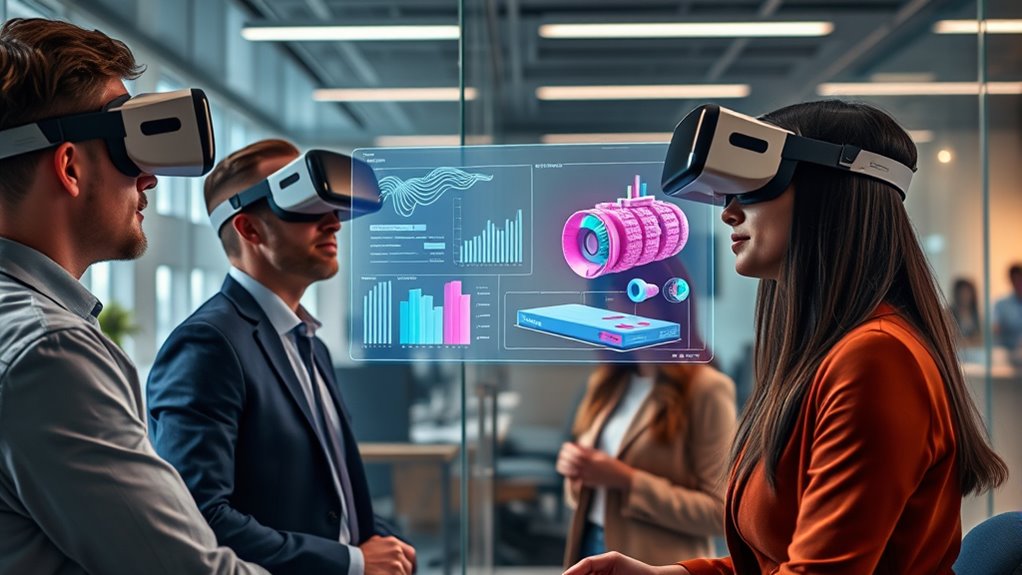
Have you ever wondered how AR and VR are transforming the way we hold meetings? These technologies are revolutionizing remote work by creating immersive environments that make virtual collaboration feel more natural and engaging. Augmented reality, in particular, allows you to overlay digital information onto your physical surroundings, making it easier to share ideas and visualize concepts during meetings. Instead of staring at a flat screen, you can see 3D models or data projections superimposed onto your real-world workspace, which enhances understanding and speeds up decision-making. This blend of physical and digital worlds bridges the gap between remote and in-person interactions, fostering a sense of presence that was hard to achieve before.
In virtual collaboration, AR and VR tools enable you to step into a shared digital space with colleagues, regardless of where they are located. Imagine putting on a headset and instantly finding yourself inside a virtual conference room, where everyone appears as an avatar, yet feels remarkably real. You can move around, gesture, and even manipulate virtual objects just like you would in a physical meeting. This sense of spatial awareness makes conversations more dynamic and intuitive, reducing misunderstandings common in traditional video calls. Plus, the ability to collaborate on 3D models or interactive whiteboards in real time helps teams brainstorm more creatively and efficiently. European cloud infrastructure is increasingly supporting these advanced virtual environments, ensuring secure and reliable connectivity.
As these technologies become more sophisticated, virtual meetings are starting to resemble real-world interactions more closely. Augmented reality, for example, lets you project documents or diagrams into your physical space, so you can discuss and edit them together without switching screens or sharing files. This seamless integration of digital and physical elements not only boosts productivity but also makes remote meetings feel less isolated. Instead of feeling like you’re just staring at a camera, you’re actively participating in a shared environment that encourages spontaneous collaboration and idea exchange.
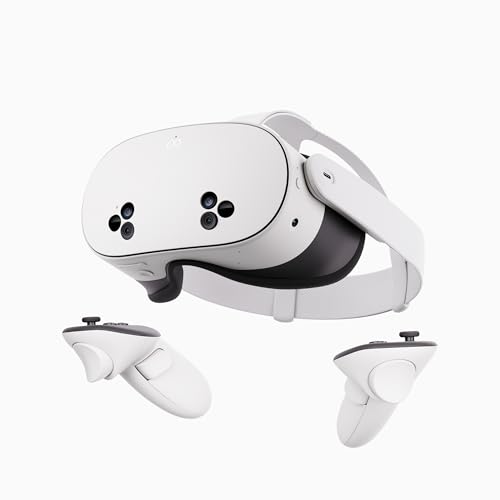
Meta Quest 3S 128GB | VR Headset — Thirty-Three Percent More Memory — Virtual Reality Without Wires — Access to 40+ Games with a 3-Month Trial of Meta Horizon+ Included (Renewed Premium)
- Wireless VR Experience: Untethered gaming and exploration
- Enhanced Graphics Power: Twice the processing for smooth visuals
- Immersive Virtual Reality: Blend virtual objects with real space
As an affiliate, we earn on qualifying purchases.
As an affiliate, we earn on qualifying purchases.
Frequently Asked Questions
How Secure Are Ar/Vr Meeting Platforms Against Cyber Threats?
AR/VR meeting platforms can be quite secure if they implement strong cybersecurity protocols and data encryption. You should guarantee the platform uses end-to-end encryption to protect your data during meetings. Regular security updates and multi-factor authentication also enhance protection against cyber threats. However, no system is completely invulnerable, so stay vigilant, update software promptly, and follow best practices to keep your virtual meetings safe from cyber attacks.
What Is the Cost Comparison Between Virtual Offices and Traditional Workspaces?
You’ll find that virtual offices can reduce costs by up to 30% compared to traditional workspaces, making them a compelling option. A thorough cost analysis reveals lower expenses in rent, utilities, and commuting. While initial investments in AR/VR technology may seem high, the long-term expense comparison favors virtual offices, especially for remote teams. This shift could save your organization significant money while enhancing collaboration and flexibility.
How Do Ar/Vr Meetings Impact Employee Productivity and Engagement?
AR/VR meetings boost your productivity and engagement by enhancing virtual collaboration through immersive experiences. You feel more connected with team members, reducing misunderstandings and fostering real-time interaction. These technologies create a sense of presence, making remote work feel more natural and interactive. As a result, you stay motivated, communicate effectively, and contribute to projects more efficiently, ultimately improving your overall work experience and team cohesion.
What Are the Technical Requirements for Setting up Ar/Vr Meeting Environments?
You need powerful hardware specifications like high-resolution headsets, fast processors, and ample RAM to guarantee smooth AR/VR meetings. Compatibility between software platforms is vital, so make sure your devices support the necessary applications and updates. A stable, high-speed internet connection is essential, and peripherals such as motion controllers can enhance interaction. Investing in the right hardware and software setup makes immersive virtual meetings seamless and engaging.
How Accessible Are Ar/Vr Tools for Employees With Disabilities?
You’ll find that AR/VR tools are increasingly focused on user accessibility through Assistive Technology, making them more inclusive for employees with disabilities. Many developers incorporate features like voice commands, subtitles, and customizable interfaces to support diverse needs. While some advanced tools are accessible, others still need improvements. As a user, you’ll benefit from ongoing innovations aimed at ensuring all employees can effectively participate in virtual meetings.

Nouiseuns Pivot Pin Tool AR Tool Kit for Installation Process Easier, Compatible with The Pivot Pin of Any 223, AR Vise Block Takedown Pin for Assembly and Repair(1PCS, Red)
- Stable, Non-Slip Hex Surface: Ensures firm grip during use
- Durable Red Polymer and Stainless: Long-lasting, easy to clean construction
- Quick Installation Tool: Speeds up pivot pin setup in under 60 seconds
As an affiliate, we earn on qualifying purchases.
As an affiliate, we earn on qualifying purchases.
Conclusion
Imagine stepping into a virtual office where you’re seamlessly connected, like pieces of a puzzle fitting perfectly together. AR and VR meetings aren’t just tech trends—they’re shaping the future of remote work, making distance disappear. As you embrace this new reality, you’ll find collaboration becomes as natural as face-to-face conversations. The future is a digital landscape waiting to be explored—are you ready to take the leap into virtual offices?

Third Reality Voice/Music Assistant Dev Edition – Preloaded with Home Assistant Voice Assistant and Music Assistant, Dual Digital Mics, 3W Speaker, 2.4G WiFi only, Open Source
- Preloaded with Home Assistant: Voice and music workflows ready to use
- Dual Digital Microphones: Enhanced voice capture and wake word detection
- Built-in 3W Speaker: Direct audio playback for TTS and music
As an affiliate, we earn on qualifying purchases.
As an affiliate, we earn on qualifying purchases.

Smart Board,49 Inch JAV Interactive Whiteboard, 8+128GB Interactive Whiteboard Google EDLA Certified Rotating Touch Screen, for Advertising Display and Classroom (Wall Mount Included)
- AI Voice Remote Control: Effortless voice and button control
- Live Broadcast Functionality: Supports wireless and wired content sharing
- Split Screen Support: Displays up to four screens simultaneously
As an affiliate, we earn on qualifying purchases.
As an affiliate, we earn on qualifying purchases.