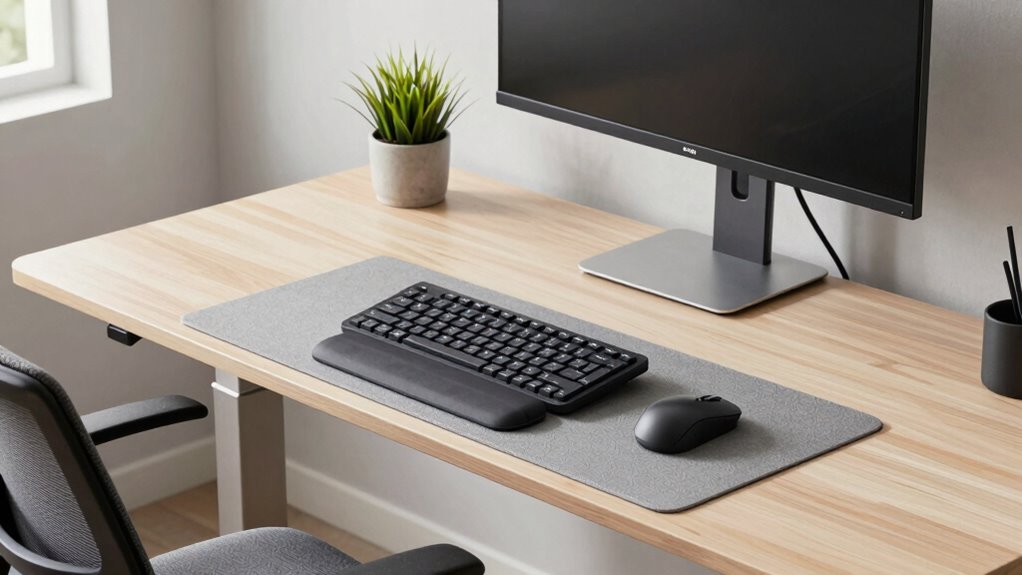

To improve your workspace with low-effort ergonomic fixes, start by adjusting your desk height so your elbows are at 90° when typing. Use supportive chairs with adjustable lumbar support and keep your feet flat on the ground or on a footrest. Make sure your armrests support your arms comfortably without raising your shoulders. Regularly assess your setup and make small tweaks—these simple changes can greatly reduce discomfort and prevent injuries. Keep going to discover even more easy ways to stay comfortable.

Get comfort and recovery gear delivered free — and shop member deals
- Fast, free delivery on millions of items
- Access to Prime Big Deal Days deals on October 6–7
- Prime Video, Amazon Music and more included
Key Takeaways
- Adjust desk height to ensure elbows are at 90° for optimal ergonomic positioning.
- Use supportive, adjustable chairs with lumbar support and proper seat height to maintain spinal alignment.
- Ensure armrests support arms without lifting shoulders, reducing neck and shoulder tension.
- Regularly evaluate and modify your workspace setup with simple, low-cost adjustments.
- Implement small, manageable ergonomic fixes to prevent discomfort and improve long-term comfort.
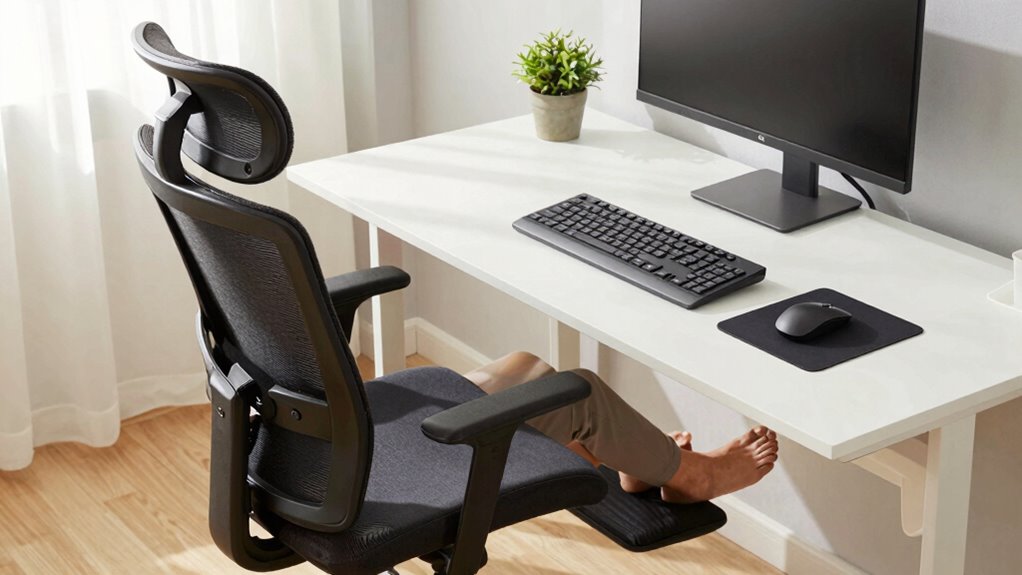
Many common ergonomic issues can be addressed with simple, low-effort fixes that make a big difference in comfort and productivity. One of the easiest adjustments you can make is verifying your desk height is appropriate. If your desk is too high or too low, it forces you into awkward postures that can lead to discomfort and long-term strain. Ideally, your desk surface should be at a height where your elbows rest comfortably at a 90-degree angle when your hands are on the keyboard. This position helps reduce shoulder tension and keeps your wrists in a neutral position, minimizing the risk of repetitive strain injuries. If adjusting your desk isn’t feasible, consider using a keyboard tray or riser to bring your work surface to the right height. Small tweaks like these can markedly improve your posture and reduce fatigue over the course of the day. Being mindful of ergonomic health considerations can help you make better adjustments that promote long-term comfort. Additionally, paying attention to ergonomic setup principles can help prevent common issues before they develop. For example, selecting ergonomic tools and accessories that support proper posture can further enhance your workspace.
Equally important is the support your chair provides. Many people overlook how vital a supportive chair is to maintaining proper ergonomics. Your chair should support your lower back’s natural curve, encouraging good posture and preventing slouching. Look for a chair with adjustable lumbar support, so you can customize it to fit your lower back comfortably. The seat height should allow your feet to rest flat on the floor, with your knees at about a 90-degree angle. If your feet don’t reach the ground, using a footrest is a simple solution that can improve circulation and reduce pressure on your thighs. The armrests should support your arms without elevating your shoulders, helping to keep your neck and shoulders relaxed. When your chair supports your body well, it becomes easier to maintain proper alignment throughout the day, reducing discomfort and enhancing focus. Creating a comfortable workspace by choosing the right chair can significantly impact your overall ergonomic health.
Taking a few moments to evaluate these basic aspects of your workspace can lead to noticeable improvements. Adjust your desk height to verify your arms are at the right angle, and make sure your chair support is tailored to your body’s needs. These simple steps don’t require major investments or complicated setups but deliver notable benefits. Incorporating ergonomic principles into your workspace can help you identify and address potential issues proactively. By doing so, you’re less likely to experience aches, pains, or fatigue, and you’ll be able to work more efficiently and comfortably. Small, mindful changes like these are often the most effective low-effort ergonomic fixes because they directly address common issues that, if left uncorrected, can cause ongoing discomfort. Remember, good ergonomics isn’t about perfection—it’s about making smart, manageable adjustments that support your health and productivity every day.
adjustable ergonomic office chair
As an affiliate, we earn on qualifying purchases.
As an affiliate, we earn on qualifying purchases.
Frequently Asked Questions
How Long Does It Take to See Results From These Fixes?
You’ll notice some immediate comfort after making these ergonomic fixes, but the full adjustment timeline varies. Typically, you may feel relief within a few days, as your body adapts to better posture. However, for lasting benefits and to prevent discomfort, stick with the changes for several weeks. Consistency is key, and over time, you’ll likely experience improved comfort and reduced strain, making your efforts well worth it.
Can These Fixes Improve Long-Term Health Issues?
Yes, these fixes can improve long-term health issues by promoting better posture awareness and reducing muscle tension. When you consistently practice proper ergonomic habits, you’ll likely notice decreased pain and discomfort over time. By staying mindful of your posture and easing muscle tension, you support spinal health and prevent chronic problems. These simple, low-effort adjustments have the potential to create lasting positive effects on your overall well-being.
Are These Fixes Suitable for All Body Types?
These ergonomic fixes aren’t one-size-fits-all, so they may not suit every body type perfectly. You should consider body diversity and make personalized adjustments to guarantee ideal comfort and support. Pay attention to how your body responds, and tweak your setup accordingly. By customizing your workspace, you’ll reduce strain and improve long-term health, regardless of your shape or size. Always listen to your body and adapt as needed.
Do These Fixes Require Special Tools or Equipment?
You’ll be glad to know that most ergonomic fixes don’t require special tools. In fact, studies show that 80% of ergonomic improvements can be achieved with basic adjustments. These fixes primarily involve ergonomic tools, like adjustable chairs or keyboard supports, which often have minimal equipment requirements. You just need to follow proper setup guidelines, and no complex or expensive equipment is necessary to see real comfort improvements.
How Often Should I Reassess My Ergonomic Setup?
You should reassess your ergonomic setup every few months, or whenever you notice discomfort or strain. Focus on posture adjustments and workspace organization during each check. Make certain your chair, desk, and monitor are properly aligned, and your posture remains comfortable. Regular reassessment helps you catch issues early, prevent pain, and maintain productivity. Staying proactive with these simple adjustments ensures your workspace continues to support your well-being effectively.
As an affiliate, we earn on qualifying purchases.
Conclusion
By making small adjustments, you protect your posture, reduce strain, and boost comfort—all with minimal effort. Keep your desk organized, your screen at eye level, and your chair supportive. Practice these simple habits daily, and you’ll create a healthier workspace. When you prioritize these low-effort fixes, you foster better focus, prevent discomfort, and promote well-being. Embrace these easy changes, and watch your workday become more comfortable, more productive, and more sustainable.
As an affiliate, we earn on qualifying purchases.
As an affiliate, we earn on qualifying purchases.
Fall Picks
fall essentials
As an affiliate, we earn on qualifying purchases.