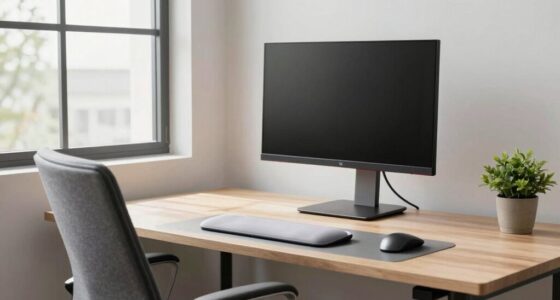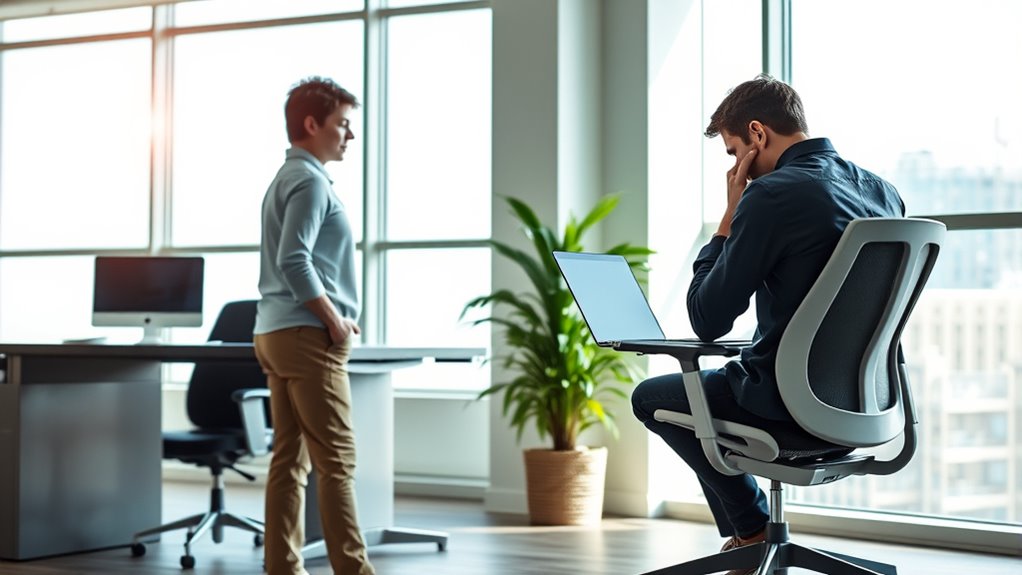

Standing helps activate your muscles, improve posture, and boost circulation, which can reduce pressure on your back and hips. However, standing too long can cause fatigue, muscle strain, and discomfort if you don’t shift your weight or wear supportive shoes. Sitting offers rest and can reduce fatigue temporarily, but prolonged sitting may lead to poor posture and circulation issues. Balancing both positions and incorporating movement can maximize health benefits—so keep exploring ways to optimize your workspace.
Key Takeaways
- Standing activates muscles, improves posture, and enhances circulation, reducing risks associated with prolonged sitting.
- Sitting reduces strain on leg muscles but may lead to poor posture, back pain, and decreased circulation over time.
- Alternating between sitting and standing promotes muscle engagement, reduces stiffness, and supports ergonomic health.
- Prolonged standing can cause fatigue and muscle strain without proper support, highlighting the need for movement and balance.
- Incorporating movement, proper footwear, and ergonomic workspace setups maximizes health benefits of both sitting and standing.

Have you ever wondered whether standing or sitting is better for your health? It’s a common question, especially as more people become aware of the impact their daily habits have on their bodies. When you stand, you might assume you’re doing your health a favor, but it’s worth understanding the ergonomic benefits and how muscle engagement plays a role in this debate. Standing can improve your posture and reduce the strain caused by prolonged sitting, but it’s not a one-size-fits-all solution. The key lies in understanding how each position affects your body and what you can do to maximize benefits while minimizing drawbacks.
When you stand, you activate a variety of muscles in your legs, core, and back. This muscle engagement helps keep your posture aligned and can prevent the stiffness and discomfort often associated with sitting for long periods. The ergonomic benefits of standing include less pressure on your lower back and hips, which are common trouble spots for people who sit extensively. By standing, you encourage a more natural spinal alignment and promote better circulation, reducing issues like swelling or numbness in your legs. However, standing all day isn’t without its own risks. Standing for prolonged periods can lead to fatigue and strain, especially if your shoes lack proper support or you’re not shifting your weight regularly. That’s why the ideal approach involves balancing standing with periods of sitting and movement, allowing your muscles to engage without overtaxing any one area.
Incorporating standing desks or taking frequent breaks to stretch can enhance the ergonomic benefits and keep your muscles engaged. When you switch between standing and sitting, it promotes circulation and prevents the stiffness that can develop from static postures. You’ll find that actively engaging your muscles—whether by shifting your weight, stretching, or walking around—helps maintain comfort and reduces the risk of musculoskeletal problems. Remember, the goal isn’t to eliminate sitting but to create a dynamic environment where your muscles are regularly engaged and your posture stays healthy. Additionally, understanding the role of contrast ratio in visual comfort can help you optimize your workspace lighting and reduce eye strain, making your sitting and standing periods more comfortable. By understanding the ergonomic benefits of standing and actively involving your muscles, you can make smarter choices about how you work and move throughout the day. It’s all about balance, awareness, and listening to your body’s signals, so you stay comfortable and healthy in the long run.

ErGear 48 X 24 Inch Height Adjustable Electric Standing Desk, Black
- Electric Height Adjustable Standing Desk for Comfortable Work…
- Powerful Motor with Memory Presets – Equipped with…
- Exceptional Stability Steel Frame – Built with a…
As an affiliate, we earn on qualifying purchases.
As an affiliate, we earn on qualifying purchases.
Frequently Asked Questions
How Does Posture Affect Long-Term Health Risks?
Your posture markedly impacts your long-term health risks. Poor posture can lead to musculoskeletal issues like back, neck, and shoulder pain, and increase the risk of chronic conditions. By practicing posture correction, you help maintain proper alignment and support your musculoskeletal health. Consistently paying attention to how you sit and stand can prevent long-term problems, ensuring you stay comfortable and healthy over time.
Can Alternating Between Sitting and Standing Improve Productivity?
Yes, alternating between sitting and standing can boost your productivity. Using ergonomic accessories like adjustable desks helps you switch comfortably, while incorporating posture exercises prevents fatigue. You stay more focused and energized when you change positions regularly, reducing strain and discomfort. This dynamic approach keeps your mind sharp, encourages movement, and ultimately enhances your overall work efficiency. So, make sure to vary your posture throughout the day for better results.
What Are the Best Ergonomic Setups for Standing Desks?
Like a well-tuned instrument, your ergonomic setup should be perfectly aligned. Use ergonomic accessories like a supportive mat, wrist rests, and monitor stands to enhance comfort. Adjust your desk height so your elbows are at a 90-degree angle and your monitor is eye level. Guarantee your keyboard and mouse are within easy reach, promoting good posture and reducing strain. Proper desk height adjustment and accessories make standing all day a breeze.
How Often Should One Switch Between Sitting and Standing?
You should switch between sitting and standing every 30 to 60 minutes to maintain good health. Incorporate ergonomic footwear to stay comfortable during these sit-stand routines. Listen to your body and avoid staying in one position for too long, as this helps reduce strain and fatigue. Regularly alternating positions encourages better circulation and minimizes risks associated with prolonged sitting or standing, promoting overall well-being throughout your workday.
Are There Specific Health Conditions Worsened by Prolonged Sitting?
Yes, prolonged sitting can worsen conditions like obesity, type 2 diabetes, and cardiovascular problems. Sedentary behavior negatively impacts your cardiovascular health by reducing blood flow and increasing the risk of heart disease. If you sit for hours without breaks, it can lead to poor circulation and higher blood pressure. To protect your health, you should regularly stand, stretch, and move throughout the day to minimize these risks.

Litfun Orthopedic Slippers for Women Arch Support House Shoes
- Orthopedic Footbed: Ergonomic design with memory foam cushioning
- Arch Support: Provides superior arch support and pressure distribution
- Relieves Foot Pain: Designed for plantar fasciitis and swollen feet
As an affiliate, we earn on qualifying purchases.
As an affiliate, we earn on qualifying purchases.
Conclusion
Choosing between standing and sitting is like walking a tightrope—you want balance. Standing more often can boost your health, but too much can be just as risky as sitting all day. Find your sweet spot, switch things up, and give your body the variety it craves. Think of it as tending a garden—regularly shifting your position helps everything thrive. Stay mindful, stay active, and keep your health blooming.

FEATOL Anti Fatigue Mat for Standing, 9/10 Extra Thick Ergonomic Standing Desk Mat, Comfort Memory Foam Standing Mat at Home,Office All Day (20" x 32", Black, 1PC)
- Anti Fatigue Design: Reduces stress on feet, knees, and back
- Ergonomic Thickness: 9/10 inch high-density memory foam for comfort
- Durable & Easy to Clean: PU leather surface resists stains, tears, and deformation
As an affiliate, we earn on qualifying purchases.
As an affiliate, we earn on qualifying purchases.

Marsail Ergonomic Office Chair: Office Desk Chair with High Back Mesh and Adjustable Lumbar Support Rolling Work Swivel Task Chairs with Wheel 3D Armrests and Headrest
- Fully Adjustable Headrest: 2D adjustable for personalized comfort
- Reclining Backrest: Adjusts from 90° to 120°
- 3D Adjustable Armrests: Customizable for various postures
As an affiliate, we earn on qualifying purchases.
As an affiliate, we earn on qualifying purchases.