
TL;DR

Get comfort and recovery gear delivered free with Prime
- Fast, free delivery on millions of items
- Prime Video, Amazon Music and more included
- Member-only deals all year
In a 16-week study of prefrail and frail adults, 69.6% of participants assigned to supervised higher-intensity walking improved by one category on a frailty measure, compared with 46.4% in a casual-speed group. Both groups improved on that measure, and the findings do not establish that brisk walking is suitable for everyone or that the results will hold without supervision.
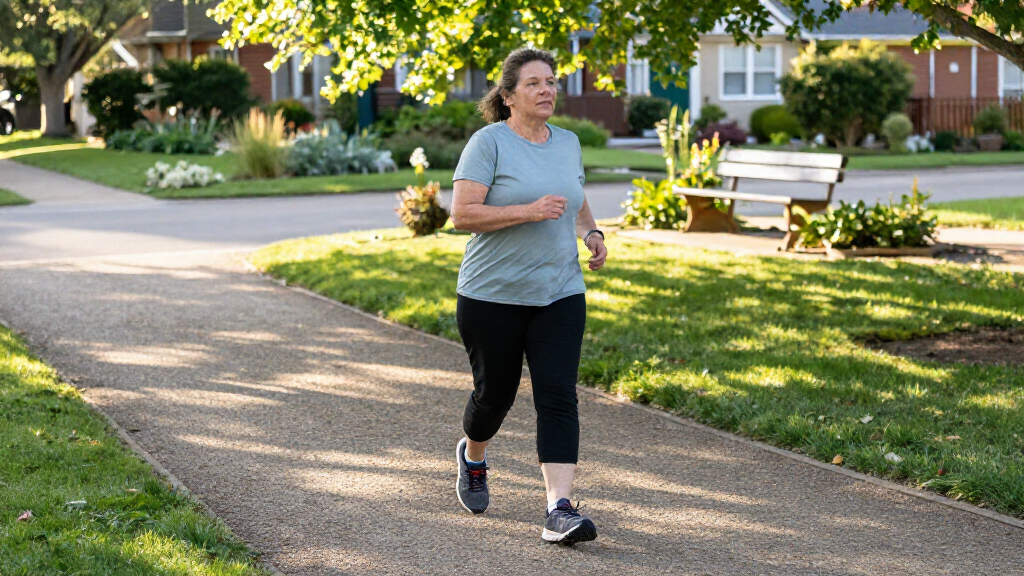
A 16-week study of adults described as prefrail or frail found that more participants improved by one category on a frailty measure after supervised higher-intensity walking than after walking at a self-selected casual pace. The result suggests that walking effort may matter for this group, but the supplied report does not establish that the higher intensity is appropriate for every older adult.
Participants completed three supervised walking workouts a week. The higher-intensity group aimed to raise its pulse to about 70% of maximum heart rate, while the casual-speed group walked at self-selected speeds below 60% of maximum heart rate. The report does not state the total number of participants or give further detail about how the groups were assigned.
By the end of the program, 69.6% of the higher-intensity group had improved by one category on the Survey of Health Among Retired Europeans Frailty Index, known as SHARE-FI. The corresponding figure was 46.4% in the casual-speed group. These percentages describe improvement on one frailty measure; they do not mean that participants were cured of frailty or that every aspect of their health improved.
SHARE-FI assesses fatigue, appetite, grip strength, functional ability and how often a person completes low- or moderate-energy daily tasks. The functional questions include whether someone can walk 100 meters or climb a flight of stairs without resting. The report says both walking groups improved in one category, though the share was higher among those assigned the harder effort.
Why Walking Intensity May Matter
The findings matter because frailty can affect strength, stamina and everyday function, and the study tested a practical form of exercise rather than a specialized treatment. If further research supports the result, walking programs for prefrail and frail adults may need to consider not only how often people walk, but also the effort level they can safely manage.
Still, the comparison does not show that everyone should aim for 70% of maximum heart rate. The workouts were supervised**, lasted 16 weeks and involved a specific population. The supplied report does not provide enough information about participants’ ages, health conditions, adverse events or the size of the study to judge how broadly the results apply. The percentages also do not tell readers how large the measured improvement was for each person.
For readers, the main takeaway is measured: higher-intensity walking was associated with a greater share of one-category improvements in this study, while the lower-intensity group also recorded improvements. People who are frail, have chronic conditions or are unsure about exercise intensity should seek advice from a health professional before making workouts harder.
Products Worth Considering

Levoit Core 600S-P Smart Air Purifier for Large Rooms

LEVOIT Vital 200S-P Smart Air Purifier for Large Rooms

Bose SoundLink Flex (2nd Gen) Portable Bluetooth Speaker
As an affiliate, we earn on qualifying purchases.
How the Walking Groups Compared
The study was designed to examine whether there was an effective walking intensity for prefrail and frail adults. It compared walking at a target of roughly 70% of maximum heart rate with walking at a self-selected pace below 60%. Both groups followed the same broad schedule of three supervised sessions a week for 16 weeks, allowing the report to compare outcomes across two effort levels.
The outcome highlighted in the report was a change of one category on SHARE-FI, not a diagnosis-free status or a long-term health outcome. The measure combines reported experiences, such as fatigue and appetite, with indicators of strength and daily function. The available source does not state whether improvements persisted after the sessions ended or whether participants’ walking habits changed afterward.
The report’s authors proposed that more intensive activity may have offered a stronger physiological stimulus. That is an explanation offered by the authors, not a mechanism proven by the percentages alone. The supplied material also does not include the study’s title, journal, publication date, sample size or detailed methods, so those points cannot be independently assessed here.
“High-intensity walking can reverse frailty more effectively than casual-speed walking due to increased physiologic stimuli during more intensive activity.”
— The study authors, as quoted in the Fit&Well report
Limits of the Reported Findings
The supplied report leaves several important details unspecified, including the number of participants, their characteristics and the full study methods. It also does not report whether the difference between the groups was statistically significant, how many participants dropped out, or whether any injuries or other adverse events occurred.
It is also unclear how long the improvements lasted, whether the higher-intensity group improved more across each individual SHARE-FI measure, or whether benefits extended beyond the index. The findings therefore support a comparison within this supervised 16-week program, not a general claim that brisk walking prevents frailty in all older adults.
What Follow-Up Evidence Should Show
The supplied report does not identify a planned follow-up or a next study milestone. More detail from the original research would help readers assess the sample size, participant health, statistical results and safety record. Longer follow-up could also show whether changes on SHARE-FI persist after supervised sessions stop.
Anyone considering a faster walking routine can ask a clinician or qualified exercise professional whether that effort is appropriate, particularly if they have existing health conditions or mobility concerns. The study tested supervised sessions; it did not establish that readers should independently target a particular heart-rate percentage.
Key Questions
What did the study find?
After 16 weeks, 69.6% of the higher-intensity group improved by one category on SHARE-FI, compared with 46.4% of the casual-speed group. Both groups had participants who improved.
How intense was the higher-intensity walking?
Participants aimed to reach about 70% of maximum heart rate. The comparison group walked at a self-selected pace below 60% of maximum heart rate. The report does not say that this target is safe or appropriate for everyone.
What does SHARE-FI measure?
It assesses fatigue, appetite, grip strength, functional ability and how often a person carries out low- or moderate-energy daily activities. The reported result was a one-category improvement on this index.
Should older adults start brisk walking based on this study?
Not without considering individual health and ability. The participants exercised under supervision, and the report does not provide enough detail to apply the findings to every older adult. Anyone with a health condition or mobility concern should consult a health professional before increasing intensity.
Source: fitandwell.com