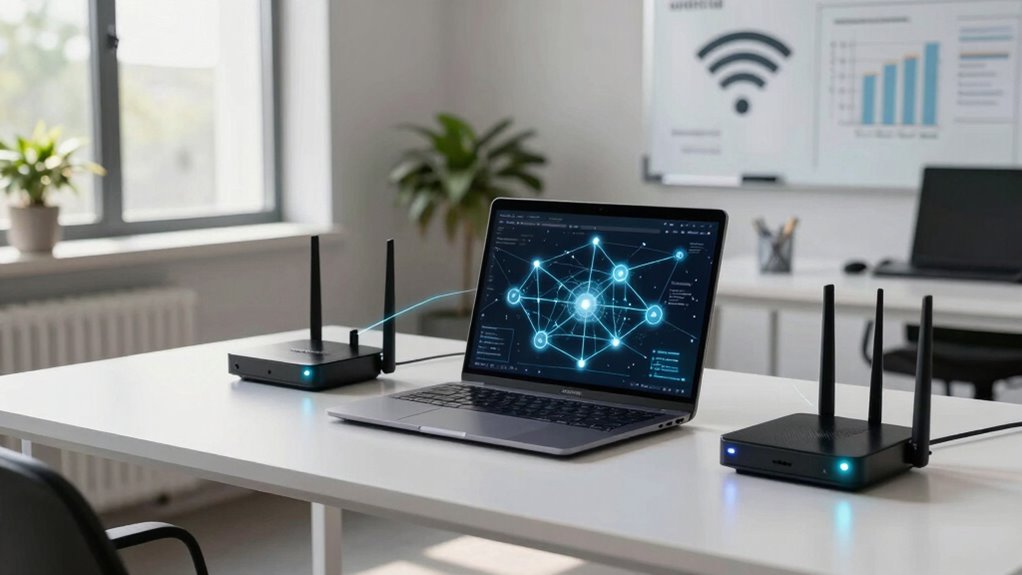

If your office has large or wall-heavy spaces with dead zones, a mesh network can improve coverage and stability by using multiple interconnected nodes. It’s ideal if you have many devices or rely on high-bandwidth applications like video calls or cloud software. Mesh systems also offer better security features and easier management. If you want a more reliable and seamless Wi-Fi experience for your team, exploring your options further can help you make the right choice.
Key Takeaways
- Assess your office size and layout to determine if traditional routers create dead zones or coverage gaps.
- Consider the number of devices and bandwidth needs to ensure the network can handle high traffic efficiently.
- Evaluate security features offered by mesh systems, especially for sensitive business data.
- Review management tools available for easy network monitoring and troubleshooting.
- Determine if seamless, reliable Wi-Fi is critical for productivity, video calls, and cloud-based applications.

If your office struggles with dead zones or inconsistent Wi-Fi coverage, a mesh network might be the solution you need. Traditional routers often fall short in larger spaces or buildings with thick walls, leaving some areas with weak or no signal. A mesh network uses multiple interconnected nodes to blanket the entire office with seamless wireless coverage, ensuring every corner gets a strong, reliable connection. This setup not only improves productivity but also minimizes the frustrations employees face when trying to connect in certain areas.
When considering a mesh network, think about your office’s specific wireless coverage requirements. If you have a sprawling workspace or an open-plan layout, a single router may struggle to provide consistent coverage everywhere. Mesh networks are designed to eliminate dead zones by dynamically routing data through the most suitable node, maintaining a stable connection throughout. It’s also essential to evaluate how many devices will connect simultaneously, as mesh systems are built to handle multiple connections without sacrificing speed or stability. If your office relies heavily on Wi-Fi for video conferencing, cloud applications, or VoIP calls, a mesh network can help maintain high performance and reduce lag or drops. Additionally, understanding the importance of network security** within larger networks can help safeguard sensitive business information from cyber threats. Incorporating network management tools** can further optimize performance and simplify troubleshooting.
Another crucial factor is network security. As your office’s Wi-Fi network becomes more extensive, managing security becomes increasingly complex. Mesh systems often come with built-in security features, such as automatic firmware updates, guest network options, and advanced encryption protocols. These features help protect sensitive business data from cyber threats while keeping your network accessible to authorized users. Ensuring your mesh system supports robust security standards is essential for safeguarding your company’s information, especially if remote work or bring-your-own-device policies are in place. Additionally, selecting a system with easy management tools can streamline security updates and device control. Incorporating network performance metrics can also help monitor and optimize your network’s efficiency over time.
As an affiliate, we earn on qualifying purchases.
Frequently Asked Questions
Can a Mesh Network Improve Security for Office Wi-Fi?
Yes, a mesh network can improve your office Wi-Fi security. It offers network redundancy, which helps prevent outages that could be exploited by attackers. Additionally, mesh systems often include advanced encryption and security features. They also reduce signal interference, ensuring a stable connection that’s harder for intruders to intercept. Overall, a mesh network enhances security by providing reliable coverage and multiple layers of protection for your office data.
What Is the Cost Difference Between Mesh and Traditional Networks?
A mesh network generally costs more upfront than traditional networks because of multiple nodes and setup complexity. However, it offers better signal redundancy, reducing dead zones and improving network reliability. While traditional networks might have lower initial costs, they can suffer from higher network latency and weaker coverage, leading to potential productivity issues. Ultimately, investing in a mesh network can save money long-term by providing consistent, reliable connectivity across your office.
How Scalable Is a Mesh Network for Growing Offices?
A mesh network easily scales for growing offices by adding more nodes, maintaining strong wireless signals and network redundancy. As your office expands, you can simply install additional devices to extend coverage without sacrificing performance. This flexible setup guarantees your wireless signal remains reliable across larger areas, reducing dead zones and maintaining seamless connectivity. Mesh networks adapt smoothly to your evolving needs, making them a smart choice for expanding office environments.
Do Mesh Networks Require Professional Installation?
You can set up a mesh network yourself if you’re comfortable with DIY tasks and have some technical expertise; it’s not a job for the faint of heart. While many systems offer user-friendly guides, a professional installation might be wise if you want to avoid any hiccups or if your office’s layout complicates setup. Ultimately, it’s about whether you’re willing to roll up your sleeves or prefer expert help to get it right.
How Does a Mesh Network Handle Device Bandwidth Demands?
A mesh network handles device bandwidth demands through bandwidth allocation and device prioritization. It intelligently manages traffic by allocating more bandwidth to critical devices or applications, ensuring they perform smoothly. Prioritization features let you set which devices or services get precedence, reducing lag and congestion. This dynamic management helps your office maintain ideal performance, even with multiple devices competing for bandwidth, making your network more reliable and efficient.
As an affiliate, we earn on qualifying purchases.
Conclusion
Think of your office Wi-Fi as a bustling city. Without proper roads, traffic jams slow everything down. A mesh network acts like a smart subway system, seamlessly connecting every corner. If your office struggles with dead zones or slow speeds, it’s time to upgrade. Embrace the mesh, and watch your digital city thrive—more connected, more efficient, and ready to grow. Sometimes, a simple new route makes all the difference.
As an affiliate, we earn on qualifying purchases.
As an affiliate, we earn on qualifying purchases.