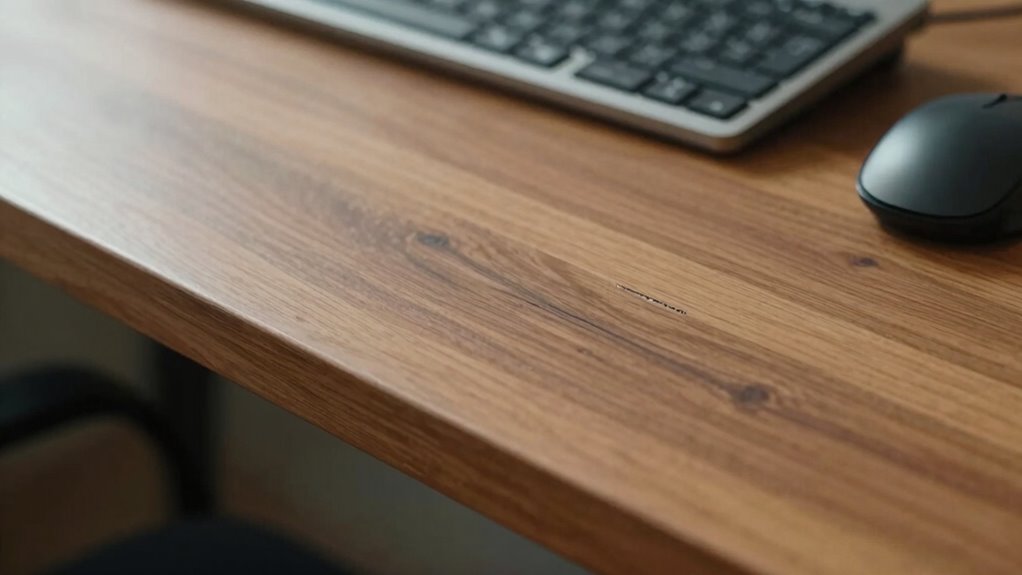

Persistent pressure from your desk edge can cause discomfort, soreness, and even long-term health problems like nerve compression or musculoskeletal pain. Poor workspace setup, hard or rough edges, and extended work hours increase this risk. If you ignore these issues, they can lead to serious conditions like carpal tunnel syndrome. Taking steps to improve your ergonomics and desk materials is essential for comfort and safety. You’ll discover more about how to protect yourself by continuing to explore this topic.
Key Takeaways
- Persistent pressure from desk edges can cause nerve compression and increase risk of conditions like carpal tunnel syndrome.
- Poor ergonomic setup intensifies pressure, leading to muscle strain and long-term musculoskeletal issues.
- Rough or chipped edges from low-quality materials create sharp points that damage skin and worsen discomfort.
- Extended exposure to uncomfortable edges results in inflammation, numbness, and chronic pain over time.
- Ignoring desk edge maintenance and ergonomic adjustments can lead to significant health problems and reduced productivity.
If you spend long hours at your desk, you’ve probably noticed discomfort or numbness along the edge where your forearms rest. This discomfort isn’t just minor annoyance—it can develop into real pain or repetitive strain injuries over time. One major cause is pressure from the desk edge itself, which can dig into your forearms and wrists, especially if your workspace isn’t set up properly. To prevent this, making ergonomic adjustments is essential. Adjust the height of your chair and monitor so your arms naturally rest at a comfortable angle, reducing unnecessary pressure. Using a cushioned or rounded desk edge can also help distribute pressure more evenly, minimizing the risk of numbness or soreness.
Adjust your chair and monitor height for comfort, and use rounded edges to prevent forearm numbness and discomfort.
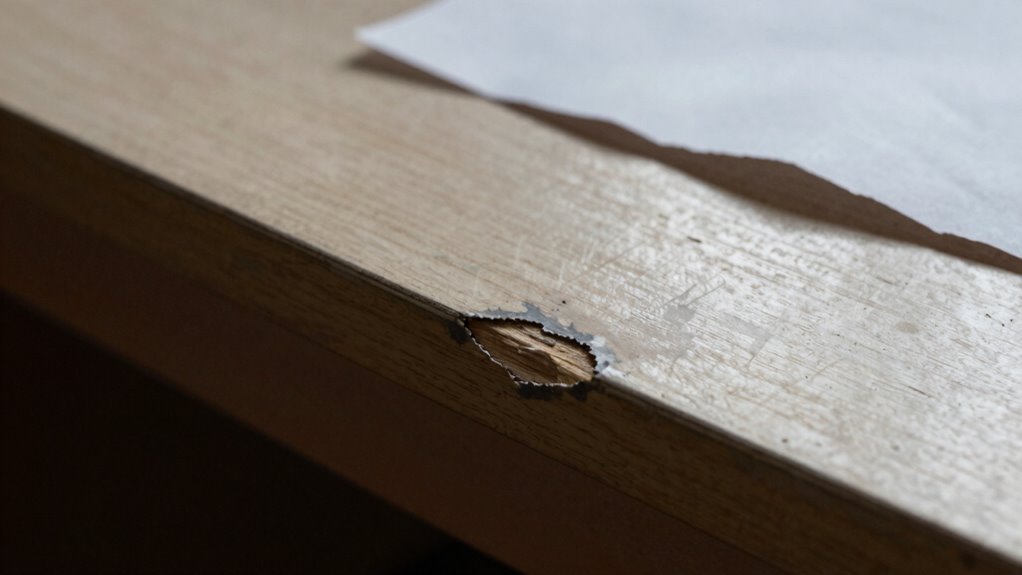
However, the problem often goes beyond just comfort. If your desk is made from materials with poor durability, the edges may chip, roughen, or become uneven over time. These imperfections can exacerbate pressure points, making the discomfort worse as you continue working. Material durability is crucial in choosing a desk because a sturdy surface maintains smooth, rounded edges that are gentle on your skin and forearms. A high-quality material withstands daily wear and tear, preventing sharp corners or rough patches that could press into your skin and cause irritation or even small cuts. When you opt for a desk with durable materials, you’re investing in long-term comfort and safety, ensuring that the edge remains smooth and supportive for years. Additionally, material strength can influence how well the desk withstands environmental factors like moisture and temperature changes, which can further impact edge integrity. Properly assessing the material properties during selection can help reduce deterioration caused by environmental wear.
Ignoring desk edge pressure can lead to more serious health issues, like carpal tunnel syndrome or chronic musculoskeletal pain. It might seem minor at first, but prolonged pressure can cause inflammation, nerve compression, and muscle strain. That’s why ergonomic adjustments aren’t just about comfort—they’re about protecting your health. Choosing a desk with high material durability also plays a vital role here. A well-made desk prevents the edges from deteriorating quickly, which means fewer sharp or uneven spots that could cause harm. Additionally, incorporating sound healing science techniques such as mindful breathing or calming sounds during work breaks might help reduce overall stress and tension in your muscles. Moreover, understanding the importance of ergonomic workspace design can further reduce the risk of developing pressure-related injuries.
In the end, addressing desk edge pressure involves a combination of ergonomic setup and selecting the right furniture materials. It’s about creating a workspace that supports your body and prevents injury. Don’t overlook the importance of smooth, durable edges and proper adjustments; these small changes can significantly improve your daily comfort and long-term health. Your workspace should be a place where you feel supported, not pressured or strained.

MEKASS L-Shaped Desk Elbow Pad for Desk, Memory Foam Elbow Support Padding with Non-Slip, Ergonomic Desk Edge Cushion, Wrist Comfort Support for Office Home 2 Pcs (Diamond Black)
- Ergonomic L-Shaped Design: Provides comfortable arm and elbow support
- Memory Foam Comfort: Offers breathable, supportive cushioning
- Adjustable Two-Piece Set: Flexible spacing for custom fit
As an affiliate, we earn on qualifying purchases.
As an affiliate, we earn on qualifying purchases.
Frequently Asked Questions
How Does Desk Edge Pressure Affect Wrist Health Long-Term?
Desk edge pressure can negatively impact your wrist health long-term by restricting wrist circulation and increasing joint strain. When your wrists are pressed against a hard surface, blood flow slows, leading to discomfort and potential nerve issues. Over time, this pressure can cause repetitive strain injuries, chronic pain, and decreased mobility. To protect your wrists, guarantee proper ergonomic setup and avoid pressing your wrists directly against the desk edge.
What Are Quick Fixes for Immediate Relief From Desk Edge Pressure?
To relieve desk edge pressure quickly, start by adjusting your chair height so your forearms are parallel to the desk. Make sure the desk height allows your wrists to stay straight and not bend at an awkward angle. You can also use a wrist rest or cushion to reduce pressure immediately. Taking short breaks to stretch your hands and wrists helps, but adjusting your chair and desk setup provides longer-lasting relief.
Can Desk Edge Pressure Cause Nerve Damage?
Yes, desk edge pressure can cause nerve damage if it leads to sustained nerve compression. When you sit with your elbows or wrists pressed against a hard edge for long periods, it can compress nerves and potentially cause nerve damage over time. To prevent this, you should adjust your workspace, use padding, and take regular breaks. Addressing pressure early helps avoid long-term nerve issues.
Are Certain Desk Materials More Prone to Causing Pressure?
Certain desk materials are more prone to causing pressure because they affect pressure distribution. Harder materials like metal or dense wood can create uneven pressure points, increasing discomfort and potential nerve issues. Softer materials like cushioned laminate or padded surfaces distribute pressure more evenly, reducing risks. When choosing a desk, consider how the material influences pressure distribution to prevent long-term discomfort or injury from prolonged pressure on your body.
How Can Ergonomic Adjustments Prevent Desk Edge Pressure?
You can prevent desk edge pressure by making ergonomic adjustments like using desk padding to cushion your wrists and reduce strain. Keep your wrists in a neutral position with minimal wrist extension, avoiding leaning heavily on the sharp edges. Adjust your chair height and keyboard placement so your forearms are parallel to the ground. These small changes help distribute pressure evenly, reducing discomfort and preventing potential nerve issues.

1.57 in x 9.84 FT,Corner Protector Baby,Clear Edge Protector Strip,Sharp Edge Wrap Cover Tape,Self Adhesive Protective Bumper Guards for Cabinet Door,Desk,Glass Table,Bed Furniture and Wall
- Protects Edges from Damage: Clear adhesive strip safeguards edges
- Wide Compatibility: Suitable for furniture, walls, and doors
- Simple Peel-and-Stick: Easy to install without tools
As an affiliate, we earn on qualifying purchases.
As an affiliate, we earn on qualifying purchases.
Conclusion
If you ignore those subtle signs of desk edge pressure, you might unknowingly set the stage for bigger issues down the line. Your body’s telling you something’s off—will you listen in time? The discomfort could escalate, affecting your focus and health more than you realize. Stay alert to these early warnings; the real trouble could be just around the corner. Don’t wait until it’s too late—your comfort and well-being depend on catching it early.

Nulaxy Ergonomic Adjustable Laptop Stand for Desk, Dual Foldable Computer Riser with Advanced Heat-Vent, Heavy-Duty Portable Notebook Holder for Posture Correction, Compatible with Mac 10-17" Laptops
- Ergonomic Posture Support: Elevates laptop for better eye level
- Stable Dual-Rod Design: Ensures wobble-free support up to 22 lbs
- Enhanced Heat Dissipation: Geometric vents improve airflow and cooling
As an affiliate, we earn on qualifying purchases.
As an affiliate, we earn on qualifying purchases.

Marsail Ergonomic Office Chair: Office Desk Chair with High Back Mesh and Adjustable Lumbar Support Rolling Work Swivel Task Chairs with Wheel 3D Armrests and Headrest
- Fully Adjustable Headrest: 2D adjustable for personalized comfort
- Reclining Backrest: Adjusts from 90° to 120°
- 3D Adjustable Armrests: Customizable for various postures
As an affiliate, we earn on qualifying purchases.
As an affiliate, we earn on qualifying purchases.