
TL;DR

Get comfort and recovery gear delivered free with Prime
- Fast, free delivery on millions of items
- Prime Video, Amazon Music and more included
- Member-only deals all year
A Fit&Well report outlines a beginner step-aerobics routine that uses a low platform, body weight and short rest breaks. Certified personal trainer Nelly Flaque recommends starting at about four inches, moving with control and substituting floor marches when needed.
Fit&Well has published a beginner guide to step aerobics at home, describing a short, body-weight routine that uses a low platform to exercise the legs and glutes while raising the heart rate. Certified personal trainer Nelly Flaque, whom the report consulted, recommends starting with a step around four inches high and adjusting the workout to a pace and height the beginner can manage with control.
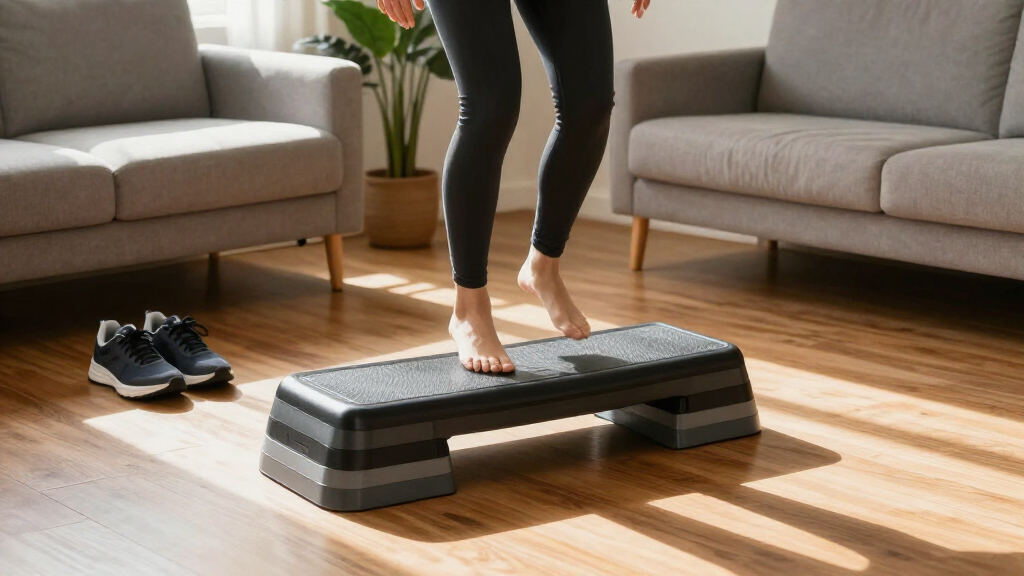
The routine takes just under 15 minutes, according to Fit&Well, and calls for a sturdy aerobic step on a flat, nonslip surface, supportive athletic shoes and the lowest available platform setting. The guide advises choosing a platform wide enough for the whole foot, with a textured surface; adjustable risers can allow users to begin low and raise the step as their strength and confidence improve.
The session begins with one minute each of marching in place and side steps. Its main set includes basic and alternating step-ups, floor side steps, marching and side step-ups. Most movements are prescribed for one minute, with 15-second rests; some step-up intervals are split into 30 seconds leading with each side. The report says users can take longer breaks when needed and should keep movements controlled.
To finish, the plan calls for a one-minute slow march, followed by calf and quadriceps stretches held for 15 seconds per side and a forward fold held for one minute. Flaque says the warm-up should raise the heart rate gradually and the cool-down should let breathing move back toward normal rather than stopping abruptly. For a lower-intensity option, the report says beginners can replace platform steps with marching on the floor or use a lower height.
A Low-Equipment Route to Leg Work
The guide offers a structured option for people who want to combine cardio and lower-body movement at home without using weights. Step-ups use body weight, and the platform’s height can be kept low, which gives beginners a way to practise the movement before adding more challenge. The report does not present the routine as a substitute for individualized exercise advice or as a guaranteed way to build strength.
Flaque says stepping can resemble moving uphill because the body travels from a lower point to a higher one, and that it can raise heart rate more than walking on flat ground. Those are the trainer’s explanations in the Fit&Well report, not measured results from a study included in the supplied material. The practical takeaway is to begin at a manageable height, prioritize balance and control, and pause whenever necessary.
Products Worth Considering

Hisense 43-Inch E6 Cinema Series Hi-QLED 4K UHD Smart Fire TV (43E6QF)

TCL 43-Inch 4K UHD Smart LED Roku TV (43S435, 2021 Model)

Hisense 43-Inch E6SR Series Hi-QLED 4K UHD Smart Roku TV (2026 Model)
As an affiliate, we earn on qualifying purchases.
How the Beginner Plan Is Set Up
The source presents step aerobics as a workout built around repeated movements onto and off a raised platform, sometimes paired with music. It says regular sessions can support cardiovascular fitness and strengthen legs and glutes, while Flaque describes the equipment as usable for basic step-ups or a brief cardio session. The report supplies no research citation or training schedule to quantify those potential benefits.
Its beginner advice centers on equipment stability and a comfortable step height. Flaque recommends starting at about four inches, but says the right height is one that allows a person to step up and down without losing balance, leaning too far forward or pushing excessively from the trailing leg. The supplied source cuts off during its discussion of further workout adjustments, so no additional modifications beyond marching, lowering the step and taking breaks can be confirmed from the material provided.
Limits of the Published Guidance
The supplied report does not give a publication date, cite a clinical trial, or provide data measuring the routine’s effects on strength or cardiovascular fitness. Its benefit statements should be read as general exercise guidance, with Flaque’s comments attributed to her rather than treated as independently tested outcomes. The report also does not specify how often readers should repeat the workout or how quickly to raise the platform.
The source text ends partway through its section on adjustments, after mentioning floor marching and a lower step height. It is not clear what other modifications the full report may have included. Readers with pain, balance concerns, injuries or health conditions are not given individualized instructions in the supplied material; they may need guidance from a qualified health professional before beginning.
Starting Safely at Home
The immediate next step for a beginner is to set up a stable, nonslip platform at its lowest height and try the warm-up before starting the main movements. The Fit&Well plan suggests wearing supportive athletic shoes, keeping each step controlled and extending rests as needed. If stepping onto the platform feels unsteady, the report’s stated alternative is to march on the floor instead.
The supplied material does not announce a follow-up, new study or scheduled milestone. Progression is framed as gradual: once a person can step up and down with control, Flaque says they can consider increasing the height. The report gives no specific timeline for that change, so users should not treat a fixed schedule as part of the guidance.
Key Questions
What equipment does the beginner workout require?
It calls for a sturdy aerobic step on a flat, nonslip surface and supportive athletic shoes. Fit&Well recommends a platform wide enough for the whole foot, with a textured surface; adjustable risers can make it easier to start low.
How high should a beginner set the step?
Trainer Nelly Flaque recommends starting at about four inches. The report’s main test is whether a person can step up and down without losing balance, leaning too far forward or pushing excessively off the floor.
Can the workout be done without stepping onto the platform?
Yes. The report says a beginner or someone having a low-energy day can march in place instead, lower the step height or take longer rests. It does not provide further modification details in the supplied text.
How long is the routine?
Fit&Well describes the full session, including warm-up, main workout and cool-down, as taking just under 15 minutes. The plan includes brief rests, which can be extended when needed.
When should someone increase the platform height?
Flaque says to consider increasing the height once stepping up and down is controlled. The report gives no set timetable; balance and technique, rather than a particular number of sessions, are its stated guide.
Source: fitandwell.com