
TL;DR

Get comfort and recovery gear delivered free with Prime
- Fast, free delivery on millions of items
- Prime Video, Amazon Music and more included
- Member-only deals all year
Fit&Well published a five-minute evening Tai Chi routine recommended by instructor Brian Thompson, combining seated breathing, gentle arm movements, weight shifts and self-massage. Thompson says the practice may help people unwind before bed, but the report does not provide evidence that this specific routine improves sleep.
Fit&Well has published a five-minute evening Tai Chi routine recommended by instructor Brian Thompson for people who want to unwind before bed. The sequence uses slow breathing, gentle movement and self-massage; Thompson says it may ease accumulated tension and help prepare the body for rest, though the report does not establish that the routine treats insomnia or guarantees better sleep.
The routine begins with one to two minutes of seated breathing. Practitioners sit upright on a sturdy chair, place both feet flat on the floor and breathe naturally through the nose, allowing the abdomen, shoulders and chest to soften. Fit&Well describes the exercise as “The waterfall,” with the breath rising and falling at an unforced pace.
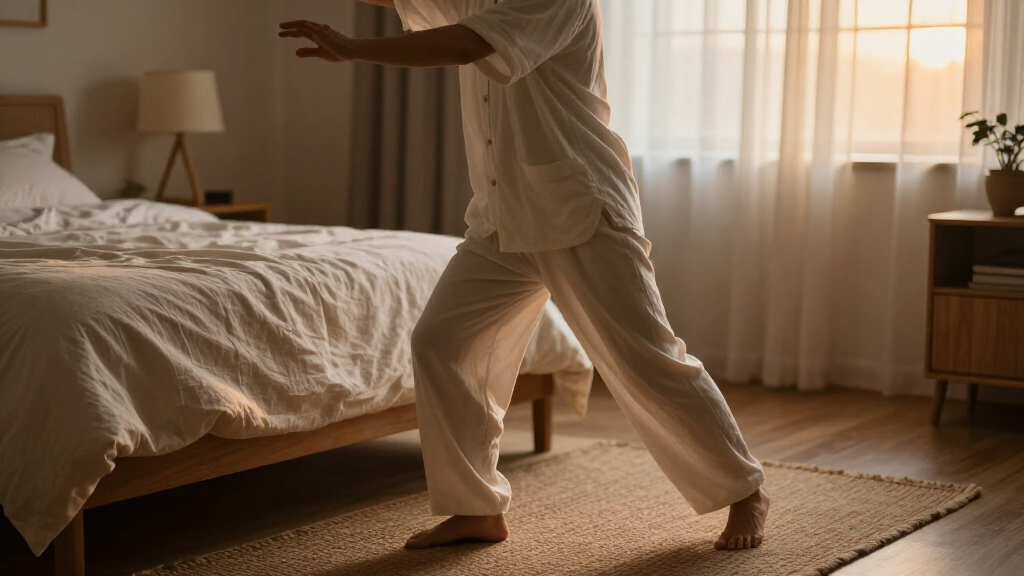
Next is “Lift water,” performed for two to three repetitions. Standing with feet about shoulder-width apart and knees slightly bent, the practitioner raises relaxed arms to shoulder height while inhaling, turns the palms forward and lowers the arms gently. The longer “silk reeling” sequence adds slow waist rotations and shifts of weight from one leg to the other, first with one hand and then with both. The instructions call for movement coordinated with breathing, without rushing.
The final step is self-massage and cupping: standing or sitting beside the bed, the practitioner massages areas such as the neck, arms, torso and legs, then lightly pats those areas with cupped hands. The article presents these steps as a short wind-down practice. It does not report a clinical trial, measured sleep outcomes or a comparison with another bedtime activity.
A Short Routine Before Bed
A brief, low-impact sequence may appeal to people looking for a structured way to slow down at night without equipment. Its emphasis on easy movements and natural breathing makes the instructions accessible to many people who can stand or sit comfortably. The routine can be shortened or adapted if a movement feels uncomfortable.
However, the distinction between a relaxation suggestion and evidence of a sleep benefit matters. Thompson’s comments explain his rationale as an instructor, not a demonstrated outcome for every practitioner. Readers with ongoing sleep difficulties should not treat the routine as a substitute for professional medical advice or an assessment of persistent insomnia.
As an affiliate, we earn on qualifying purchases.
Thompson’s Evening Tai Chi Rationale
Tai Chi is described in the source as an ancient Chinese practice using gentle movement and breathing to build a mind-body connection. The Fit&Well report says it can be practiced at different times of day and focuses here on an evening version intended to help people settle before bed.
Thompson, identified as the founder of BNEW4LIFE, recommends the practice as a way to address physical tension he says can build in the back, neck and shoulders during the day. The article gives no additional research review or sleep-science findings, so its support for the routine is the instructor’s explanation and the practical instructions rather than evidence presented in the report.
“The benefit of an evening Tai Chi practice is that it helps to unwind accumulated physical tension in the back, neck and shoulders from the day.”
— Brian Thompson, Tai Chi teacher and founder of BNEW4LIFE, as quoted by Fit&Well
As an affiliate, we earn on qualifying purchases.
Sleep Effects Remain Unmeasured
The Fit&Well article does not state when it was published in the supplied material, and it does not cite a study testing this particular five-minute routine. It is therefore unclear whether the sequence has been evaluated for sleep onset, sleep duration or sleep quality, or how often a person would need to practice to notice a change.
Thompson’s statements about calming the heart rate, settling breathing and promoting restorative sleep are claims attributed to the instructor. The report does not establish that the routine works for everyone, nor does it say it can resolve a sleep disorder. Individual comfort and ability to perform the standing movements may also vary.
As an affiliate, we earn on qualifying purchases.
How to Try the Sequence Safely
The report offers the routine as an option to try before bed, with instructions to move gently and synchronize movement with breathing. Practitioners can use the chair-based opening or remain seated for movements they cannot comfortably perform standing. Stop if a position causes pain, dizziness or unusual discomfort; people with mobility concerns or relevant health conditions can ask a health professional about suitable movement.
No follow-up study or formal evaluation is announced in the source. Readers who try the sequence can treat it as a relaxation practice rather than a proven sleep treatment. Persistent or worsening sleep problems warrant discussion with a qualified health professional.
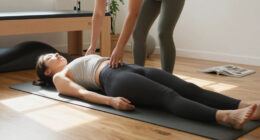
gentle stretching routine for bedtime
As an affiliate, we earn on qualifying purchases.
As an affiliate, we earn on qualifying purchases.
Key Questions
What does the five-minute Tai Chi routine involve?
It combines seated breathing, gentle arm lifts, silk-reeling movements with weight shifts, and self-massage. Fit&Well describes the breathing section as lasting one to two minutes and suggests two to three repetitions of the arm-lifting exercise.
Does the routine guarantee better sleep?
No. The article does not report evidence or measured sleep outcomes for this sequence. Thompson recommends it to help people unwind, but the claimed benefits should not be read as a guarantee or treatment for insomnia.
Can the exercises be done while seated?
The opening breathing exercise is seated, while the later movements are described standing. Someone unable to stand comfortably can adapt or skip those movements and should seek professional guidance if unsure which activity is suitable.
When should someone seek help for sleep problems?
This routine is presented as a wind-down activity, not medical care. People with persistent or worsening sleep difficulties should consult a qualified health professional rather than relying on the practice alone.
Source: rss
Fall Picks
fall essentials
As an affiliate, we earn on qualifying purchases.