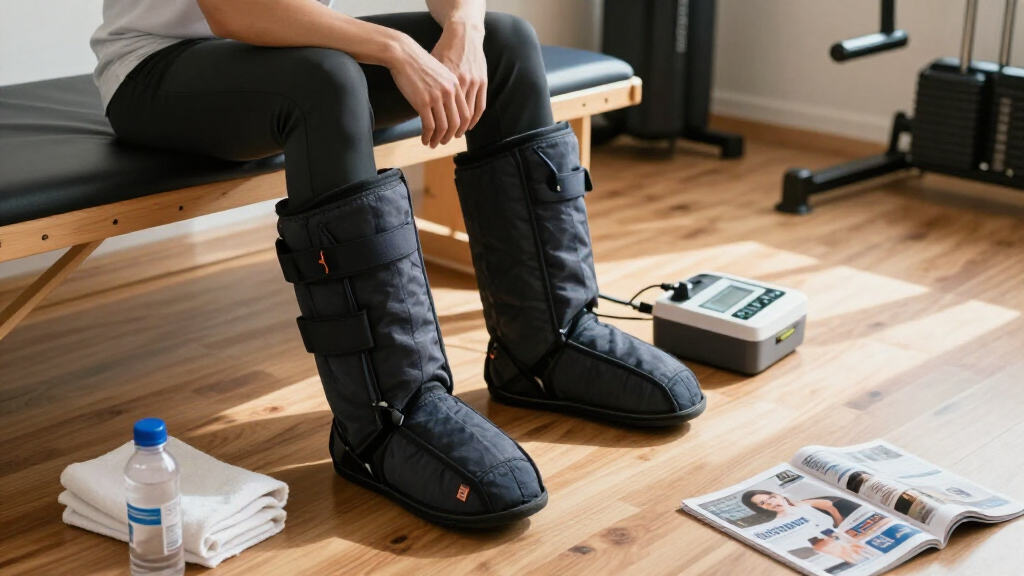

Choosing cold therapy recovery boots starts with the area you need to cool. For focused, post-surgical foot care, I’d compare the Cold Therapy Ice Machine for Foot After Surgery with the Cold Therapy Machine for Foot and Ankle Surgery: both circulate chilled water, while the former adds a portable tank and the latter lists a manual pressure regulator. For treating both feet together, the SuzziPad Dual-Foot Cold Therapy Machine is the clearest match. The main tradeoffs are single-foot targeting versus bilateral coverage, powered water circulation versus cordless compression, and purpose-built cold therapy versus broader massage features. This roundup ranks each pick by how directly its design supports cold recovery, not by claims that compression or massage automatically replaces clinical guidance.

Get comfort and recovery gear delivered free with Prime
- Fast, free delivery on millions of items
- Prime Video, Amazon Music and more included
- Member-only deals all year
Complete the kit


Key Takeaways
Best dedicated foot option: The Cold Therapy Ice Machine for Foot After Surgery pairs a foot-specific pad with an integrated thermometer, three flow speeds, and a carry handle.
Best for adjustable treatment: The Cold Therapy Machine for Foot and Ankle Surgery adds manual pressure adjustment and a temperature display, but its large insulated bag and multi-bottle filling routine take space and setup.
Best for both feet: SuzziPad cools both feet, ankles, and lower calves at once; it needs ice, and its listed cooling temperature and noise level are unspecified.
Best cordless versatility: Lunix LX10 combines reusable gel packs with air compression, heat, and coverage up to the thighs, though it is not a dedicated circulating-water boot system.
Compression-only distinction: QUINEAR offers adjustable air compression but no listed cold-therapy system, so I would not choose it as a substitute for a cold-water or gel-pack option.
| Cold Therapy Ice Machine for Foot After Surgery with Foot-Specific Pad |  | Best Overall for Dedicated Foot Cooling | Capacity: 16 qt | Coverage: Entire foot with foot-specific pad | Maximum listed foot size: US men’s size 13 | VIEW LATEST PRICE | See Our Full Breakdown |
| Cold Therapy Machine for Foot and Ankle Surgery with Pressure Regulator, Timer, Temperature Display and Ice Pack Wrap |  | Best for Adjustable Foot and Ankle Treatment | Coverage: Foot and ankle | Insulated bag capacity: 3.96 gallons | Cooling duration: Up to 12 hours | VIEW LATEST PRICE | See Our Full Breakdown |
| SuzziPad Dual-Foot Cold Therapy Machine |  | Best for Cooling Both Feet at Once | Coverage: Both feet, ankles, and lower calves | Reservoir capacity: 18 qt | Insulation: Triple-layer | VIEW LATEST PRICE | See Our Full Breakdown |
| Lunix LX10 Full-Leg Massager with Heat and Cold Therapy |  | Best Cordless Cold-and-Compression Alternative | Coverage: Feet to thighs | Massage programs: 4 | Intensity levels: 6 | VIEW LATEST PRICE | See Our Full Breakdown |
| QUINEAR Air Compression Recovery Boots for Legs, Large |  | Best for Air Compression, Not Cold Therapy | Air chambers: 4 | Coverage: Feet, calves, and thighs | Intensity levels: 8 | VIEW LATEST PRICE | See Our Full Breakdown |
| cold therapy recovery boot | Coverage | Timer |
|---|---|---|
| Cold Therapy Ice Machine for F | Entire foot with foot-specific pad | 15, 30, 45 minutes, or continuous |
| Cold Therapy Machine for Foot | Foot and ankle | 15, 30, 45 minutes, or continuous |
| SuzziPad Dual-Foot Cold Therap | Both feet, ankles, and lower calves | — |
| Lunix LX10 Full-Leg Massager w | Feet to thighs | 15, 20, or 30 minutes |
| QUINEAR Air Compression Recove | Feet, calves, and thighs | 20, 25, or 30 minutes |
More Details on Our Top Picks
Cold Therapy Ice Machine for Foot After Surgery with Foot-Specific Pad
I rank this first because its core design is specific to the job: circulating ice water through a foot-focused pad. The 16-quart system lists continuous operation for 12+ hours, three flow speeds, and a temperature display, giving buyers several practical controls without turning the device into a general-purpose leg massager. A built-in handle and leak-proof design also make it easier to move between storage and a recovery spot than a bulky unit without a stated carrying feature.
Compared with the Cold Therapy Machine for Foot and Ankle Surgery, this model is more explicit about its foot pad, tank portability, and maximum foot size. The other machine lists a manual pressure regulator and a quiet 15 dB pump, which may appeal to someone who prioritizes adjustable pressure. This one instead gives a straightforward mix of circulation, timer choices, and a portable tank. Its stated maximum is US men’s size 13, so buyers with larger feet should check fit before choosing it.
The main limitation is that it remains a powered, water-based system: it needs an outlet, and a 16-quart tank can occupy meaningful floor or bedside space. It is also intended for targeted foot care rather than simultaneous treatment of both feet or full-leg compression. I’d choose it for a focused foot or ankle recovery setup, but skip it if cordless mobility or bilateral cooling is the priority. Follow medical guidance on cold exposure and use after surgery.
Pros:- Foot-specific pad targets the intended area rather than relying on a general leg sleeve.
- Three flow speeds and 15-, 30-, 45-minute, or continuous timer options provide session control.
- Integrated temperature display and stated 12+ hour cooling duration support repeat home sessions.
- Leak-proof design and built-in handle make the tank easier to carry.
Cons:- Requires a power outlet, so treatment is not truly mobile.
- The 16-quart tank may be awkward to store in a small recovery space.
- Listed fit tops out at US men’s size 13, which may exclude some buyers.
Best for: People seeking a foot-specific circulating cold-water system for home recovery who want flow adjustment, a timer, and a carry handle.
Not ideal for: Buyers who need cordless treatment, simultaneous cooling for both feet, or a fit beyond the listed US men’s size 13 maximum.
- Capacity:16 qt
- Coverage:Entire foot with foot-specific pad
- Maximum listed foot size:US men’s size 13
- Timer:15, 30, 45 minutes, or continuous
- Flow intensities:3 speeds
- Operating noise:Less than 15 dB
- Temperature display:Integrated thermometer
- Portability and warranty:Leak-proof tank with carry handle; 1-year warranty
Our verdict“My strongest dedicated-foot pick is this model, provided its size limit, outlet requirement, and tank footprint suit your recovery space.”
Cold Therapy Machine for Foot and Ankle Surgery with Pressure Regulator, Timer, Temperature Display and Ice Pack Wrap
This model earns its place near the top because it combines a foot-and-ankle wrap with two controls that are not listed together on the other dedicated foot system: manual pressure adjustment and a built-in water thermometer. Low, medium, and high pump speeds provide another way to tailor circulation. For a buyer comparing cold therapy options after foot or ankle surgery, those controls make it more configurable on paper than a basic system with a single flow setting.
Compared with the Cold Therapy Ice Machine for Foot After Surgery, this unit lists a larger 3.96-gallon insulated bag and three elastic Velcro straps for hands-free positioning. Its description also calls out a 15 dB pump and timer choices through continuous operation, which may suit someone who wants to schedule sessions. The tradeoff is a less compact setup: the bag is bulky, and filling it involves multiple water bottles. The other foot-specific machine lists a 16-quart tank and carry handle, details that may make transport easier to picture.
The stated cooling duration reaches up to 12 hours, but the amount of water and the initial filling process mean this is not a grab-and-go device. It focuses on one treatment area, unlike SuzziPad’s simultaneous two-foot coverage, and it requires a powered pump rather than offering cordless wear. I would favor it when adjustable pressure and a hands-free wrap matter more than storage simplicity. Skip it if frequent setup, a large insulated reservoir, or dual-foot treatment would frustrate your routine.
Pros:- Manual pressure regulator and three pump speeds provide multiple adjustment points.
- Built-in thermometer displays water temperature during use.
- Three elastic Velcro straps support hands-free positioning.
- Timer options include 15, 30, 45 minutes, and continuous operation.
Cons:- Large insulated bag can be bulky to store and handle.
- Setup requires filling multiple water bottles, adding preparation work.
- Single-area design does not provide simultaneous dual-foot coverage.
Best for: Buyers recovering from a foot or ankle procedure who value a hands-free wrap, manual pressure adjustment, and a water temperature display.
Not ideal for: People with little storage space, those who want to cool both feet at once, or buyers who prefer minimal filling and setup.
- Coverage:Foot and ankle
- Insulated bag capacity:3.96 gallons
- Cooling duration:Up to 12 hours
- Timer:15, 30, 45 minutes, or continuous
- Pressure regulator:Manual adjustable
- Temperature monitoring:Built-in water thermometer
- Pump:Low, medium, and high speeds; listed noise level 15 dB
- Wrap:Three elastic Velcro straps
Our verdict“Choose this over the more portable foot-specific alternative if you value adjustable pressure and a strapped wrap more than compact storage.”
SuzziPad Dual-Foot Cold Therapy Machine
If both feet need attention, SuzziPad offers the most direct solution in this lineup: two fitted boots connected to one chilled-water system. Its described coverage reaches both feet, ankles, and lower calves, whereas the two highest-ranked machines focus on a single foot or foot-and-ankle area. That wider bilateral coverage can simplify a routine when treating one side at a time would take too long or feel inconvenient.
The 18-quart foldable reservoir, triple-layer insulation, and stated 12–18-hour cooling duration are aimed at extended sessions at home. I also like the range of operating modes on paper: interval cycling, continuous operation, auto timer, and adjustable flow. Its 160 cm hoses give more flexibility in where the boots sit relative to the reservoir. Compared with the foot-specific machine with a carry handle, SuzziPad is more focused on two-sided reach and storage flexibility than a clearly stated leak-proof portable tank.
The tradeoff is less performance detail. The listing says ice is required, but it does not give a measured cooling temperature or noise level, so I can’t compare those directly with the thermometer-equipped foot machines or their stated quiet pumps. This remains a powered circulating-water setup, not a cordless boot. Choose it for bilateral coverage and skip it if you need a precise temperature readout, a published noise figure, or a single compact wrap for one injured foot.
Pros:- Fitted boots treat both feet simultaneously.
- Coverage extends through the ankles and lower calves.
- Four listed modes include interval cycling, continuous, auto timer, and adjustable flow.
- Foldable insulated reservoir and 160 cm hoses aid positioning and storage.
Cons:- Requires ice to chill the circulating water.
- No measured cooling temperature or noise level is supplied.
- The 18-quart reservoir still needs space and a suitable location during sessions.
Best for: People who want one system to circulate cold water through both feet, ankles, and lower calves at the same time.
Not ideal for: Buyers who need a stated temperature display or measured noise level, or who want a cordless cold therapy device.
- Coverage:Both feet, ankles, and lower calves
- Reservoir capacity:18 qt
- Insulation:Triple-layer
- Stated cooling duration:12–18 hours
- Modes:LOOP interval, continuous, auto timer, adjustable flow
- Hose length:160 cm
- Pump:Brushless, low-noise; no measured dB figure listed
Our verdict“I’d pick SuzziPad when treating both feet together matters more than temperature readouts or a compact, single-foot setup.”
Lunix LX10 Full-Leg Massager with Heat and Cold Therapy
Lunix LX10 has a different role from the three water-circulation systems above: it combines reusable gel packs with full-leg air compression, rather than pumping chilled water through a dedicated foot boot. Its coverage runs from feet to thighs, and the four massage programs and six intensity levels give it a broader recovery-and-relaxation brief. Optional heat adds another modality, which could appeal to someone who wants one cordless device for more than cold sessions.
Compared with SuzziPad, Lunix is easier to move and does not depend on a large reservoir or ice-water circulation during use. The tradeoff is that its cold delivery relies on four reusable gel packs rather than a listed continuous water loop or long cooling duration. Gel-pack routines involve preparing and reusing the packs, and the device needs charging for cordless operation. Its maximum listed fit is 20 inches at the calf and 27 inches at the thigh, with extension straps included; buyers should check those measurements rather than assume the full-leg design will fit every body.
The touchscreen remote, 15-, 20-, or 30-minute timer settings, travel bag, and foot roller make the kit notably broader than the foot-focused machines. However, that broader feature set does not make it the best choice for a specific post-surgical foot protocol. It is a versatile compression device with cold-pack capability, not my first pick for continuous, targeted cold water. I’d choose it for cordless full-leg sessions and multiple modalities, but skip it if a clinician has recommended a dedicated circulating cold therapy system.
Pros:- Compression coverage extends from feet to thighs.
- Includes four reusable gel packs and offers both cold and heat options.
- Cordless rechargeable design and travel bag support movement between locations.
- Four programs, six intensity levels, and extension straps allow fit and session adjustments.
Cons:- Cold therapy relies on gel packs rather than a circulating-water system.
- Rechargeable operation requires charging before cordless sessions.
- Listed calf and thigh limits may not fit every user.
Best for: People seeking cordless full-leg compression with reusable cold packs, optional heat, and several massage programs.
Not ideal for: Buyers who specifically need continuous circulating ice water, a foot-only post-surgical pad, or a stated cold temperature.
- Coverage:Feet to thighs
- Massage programs:4
- Intensity levels:6
- Therapy:Heat and cold with reusable gel packs
- Timer:15, 20, or 30 minutes
- Maximum listed fit:20-inch calf; 27-inch thigh
- Power:Rechargeable and cordless
- Included accessories and warranty:4 gel packs, extension straps, travel bag, foot roller; 1-year warranty
Our verdict“This is my pick for cordless, multi-modality leg sessions, but not for shoppers whose main requirement is dedicated cold-water foot therapy.”
QUINEAR Air Compression Recovery Boots for Legs, Large
QUINEAR’s main strength is adjustable air compression across the feet, calves, and thighs. Four chambers inflate in sequence or through other listed modes, while eight intensity levels and a pressure sensor adapt the session to different leg sizes. Those functions can suit buyers looking for a compression-focused recovery boot, but the supplied description does not list a cold source, ice-water circulation, gel packs, or temperature control. That makes it the least direct match for a roundup centered on cold therapy.
Compared with Lunix LX10, QUINEAR offers more listed intensity levels and a stated 50–120 mmHg pressure range, but Lunix includes reusable gel packs and optional heat. Compared with the water-circulating picks, QUINEAR avoids reservoirs, hoses, and ice preparation, yet it cannot provide the same described form of cold delivery. It has three modes—sequence, circulation, and combination—and 20-, 25-, or 30-minute timers. A carry bag is included, and the stated 24-month warranty is longer than the warranty listed for the other products in this lineup.
The buyer should keep the category distinction clear: air compression is not cold therapy. The supplied recovery and circulation benefit claims do not include supporting detail here, so I would judge it by its listed chambers, controls, fit, and warranty rather than assuming a medical result. Only the large size is specified, which narrows its appeal for anyone who needs a different fit. I’d consider it for compression sessions if cold is not required, but skip it when cooling is the reason for buying boots.
Pros:- Four air chambers cover feet, calves, and thighs.
- Eight intensity levels and a stated 50–120 mmHg range offer adjustment.
- Three modes and three timer choices support varied compression sessions.
- Includes a carry bag and lists a 24-month warranty.
Cons:- No cold source, gel packs, or chilled-water circulation is listed.
- Only the large size is specified.
- Recovery and circulation benefit claims are not supported with further details in the supplied description.
Best for: People who want adjustable air-compression sessions for feet, calves, and thighs and do not require cold therapy.
Not ideal for: Anyone shopping specifically for cold treatment, a circulating-water boot, gel-pack cooling, or a size other than the listed large.
- Air chambers:4
- Coverage:Feet, calves, and thighs
- Intensity levels:8
- Pressure range:50–120 mmHg
- Modes:Sequence, circulation, and combination
- Timer:20, 25, or 30 minutes
- Size:Large
- Warranty:24 months
Our verdict“Choose QUINEAR only if adjustable air compression is your goal; I would not treat it as a cold therapy recovery boot.”
How We Picked
I ranked these five products by how well their listed design fits the search for cold therapy recovery boots. That distinction matters: some options actively circulate cold water through foot pads or boots, one combines reusable gel packs with compression, and one is an air-compression system without a stated cold source. I give dedicated, targeted cold delivery more weight than general recovery language. A product that offers massage or compression may suit a different recovery routine, but those functions alone do not make it a cold therapy boot.
Next, I compared coverage and fit. A foot-specific wrap can make more sense after foot or ankle surgery than a full-leg sleeve, while bilateral boots can save time for someone treating both sides. Listed coverage, maximum fit details, strap arrangements, and sizing information all affect whether a buyer can match the device to the intended area. When the supplied details do not name a temperature, noise measurement, or sizing range, I treat that as missing information rather than assuming performance.
I also weighed practical operation: timer controls, flow or pressure adjustments, reservoir design, power needs, noise claims, and portability. These details shape daily use, especially when someone needs repeated sessions at home or wants to position a unit beside a recovery chair. Longer stated cooling duration can reduce the need for repeated refills, but tank capacity and ice requirements can add handling work. A cordless device is easier to move, yet it may rely on gel packs or battery charging rather than continuous chilled-water circulation.
Finally, I kept the ranking grounded in the information supplied for each product. I did not treat stated recovery benefits as proven medical outcomes, and I did not infer features that were not listed. My top positions go to products with clearly described, foot-focused cold-water delivery and useful controls. The broader compression choices appear lower because they are less direct matches for cold therapy, even though their wider coverage or massage functions may appeal to buyers with different priorities. Anyone recovering from surgery should follow their clinician’s instructions for cold exposure, timing, pressure, and device use.
| cold therapy recovery boot | Coverage |
|---|---|
| Cold Therapy Ice Machine for F | Entire foot with foot-specific pad |
| Cold Therapy Machine for Foot | Foot and ankle |
| SuzziPad Dual-Foot Cold Therap | Both feet, ankles, and lower calves |
| Lunix LX10 Full-Leg Massager w | Feet to thighs |
| QUINEAR Air Compression Recove | Feet, calves, and thighs |
Factors to Consider When Choosing Cold Therapy Recovery Boots
When I compare cold therapy recovery boots, I first separate actual cooling systems from compression-only devices. Then I match coverage, controls, and setup demands to the body area and routine. The right choice is not necessarily the one with the most features: it is the one whose cooling method and fit align with your needs and any instructions from your care team.
Start With the Cooling Method
Circulating cold-water systems move chilled water from a reservoir through a wrap or boot. The foot-focused machines in this list use that approach, as does SuzziPad’s dual-foot system. Their controls can include flow adjustment, timers, and temperature displays; the tradeoff is handling water, ice, a reservoir, hoses, and a powered pump. Check whether ice is required and how the unit is filled before deciding that a long stated cooling duration will make the process effortless.
Reusable gel packs offer a different kind of cold. Lunix pairs packs with air compression, but the listed description does not give a continuous circulating-water loop or a temperature readout. Gel packs can make a system easier to move, though they need preparation and reuse. By contrast, QUINEAR lists air compression but no cooling mechanism. I would not assume that a compression boot provides cold just because it is marketed for recovery.
Match Coverage to the Treatment Area
A foot-specific pad is the most targeted choice for someone whose main need is the foot. The two single-area machines are close competitors: one lists a foot-specific pad, a carry handle, and a size limit; the other covers the foot and ankle and highlights pressure adjustment and a strapped wrap. Compare fit information with your own foot size and the location you need to treat. If the listing does not state a fit range for your body area, ask the seller or clinician rather than guessing.
For two-sided treatment, SuzziPad is the only listed option with boots for both feet at once, extending to the ankles and lower calves. Lunix and QUINEAR reach farther up the legs, but their purpose and cooling method differ: Lunix includes gel packs, while QUINEAR is compression-only in the supplied details. Wider coverage can be helpful for a broader routine, but it is unnecessary bulk if you only need to target one foot.
Read Controls as Practical Differences
Timer choices can make it easier to follow a clinician’s recommended session length, but a timer is not a substitute for medical guidance. The dedicated foot systems list 15-, 30-, and 45-minute options or continuous operation. SuzziPad lists continuous and auto-timer modes along with interval cycling and adjustable flow. Lunix offers three timer settings, while QUINEAR provides three session lengths for compression. Choose controls you will actually use, and do not infer that more settings mean better clinical results.
Pressure, flow, and intensity are not interchangeable measures. A manual pressure regulator can let a user alter how the wrap is positioned or supplied, while a flow-speed control changes circulation settings. Air-compression intensity describes a different mechanism. If you have post-surgical restrictions, sensation changes, circulation concerns, or uncertainty about pressure, ask your clinician which settings and session plan are appropriate before use.
Account for Ice, Water, Power, and Storage
Reservoir capacity and cooling duration affect how often a system may need attention, but larger does not always mean easier. A 16-quart tank or 18-quart reservoir needs a place to sit; a multi-gallon insulated bag can also be cumbersome to fill and store. SuzziPad explicitly requires ice, while the foot machines describe water-based operation and their own reservoir or filling approach. Check setup steps before buying: consider where you will add water, where melted or used water will go, and how far the hose must reach.
Power is another clear divide. The water-circulation machines require a powered pump; their hoses and reservoirs keep the treatment area connected to the unit. Lunix is rechargeable and cordless during use, though it must be charged and uses gel packs. QUINEAR’s listed compression setup avoids a cold-water reservoir, but that convenience does not supply cold therapy. Portability should be judged by the whole routine—unit, accessories, cooling source, and charging—not only by whether a carry bag is included.
Check Noise, Fit, and Medical Guidance
Noise figures help only when a measurement is actually supplied. Two foot-focused listings give values below 15 dB or 15 dB; SuzziPad describes its pump as low-noise without a measured figure. I would compare the stated information cautiously rather than treating unlike descriptions as a controlled test. Fit details are similarly important: one foot system lists a maximum shoe size, Lunix specifies calf and thigh limits, and QUINEAR only identifies a large size. Measure where the product sits and confirm that closures can fit without excessive pressure.
These products are recovery equipment, not a replacement for clinical care. Follow your care team’s instructions for cold exposure, session length, compression, and use around an incision or injury. Stop and seek appropriate medical advice if use causes unexpected pain, skin changes, numbness, or other concerning symptoms. This is especially relevant after surgery or when sensation and circulation may be affected. Product controls describe what a device can adjust; they do not establish which treatment is medically suitable for you.
Frequently Asked Questions
What is the difference between cold therapy boots and air-compression boots?
Cold therapy boots use a cooling source, such as circulating chilled water or reusable gel packs. Air-compression boots inflate chambers to apply pressure and may massage the legs, but they do not provide cold unless a separate cooling feature is listed. In this comparison, QUINEAR is described as an air-compression system without a cold source, while Lunix includes reusable gel packs and the foot-focused machines circulate cold water. I would check the stated mechanism rather than relying on a general recovery label.
Which option is best for treating both feet at the same time?
SuzziPad is the clearest match because its described boots cool both feet, ankles, and lower calves simultaneously. The other water-circulation choices focus on a single foot or foot-and-ankle area. Before choosing bilateral coverage, consider whether you need both sides treated, how much space an 18-quart reservoir will take, and whether the ice requirement and lack of a listed temperature reading fit your routine.
Which listed product is most focused on cold therapy after foot surgery?
The Cold Therapy Ice Machine for Foot After Surgery is the most directly foot-specific option in the supplied descriptions: it includes a foot-specific pad, adjustable flow, a thermometer, timer settings, and a carry handle. The Cold Therapy Machine for Foot and Ankle Surgery is another close match, especially for someone who values its manual pressure regulator and hands-free straps. The right choice depends on fit, setup, and your clinician’s instructions rather than on the product title alone.
Can I use a cold therapy recovery boot after surgery without asking my clinician?
I would follow the instructions from your surgeon or care team before using a cold therapy or compression device after surgery. The appropriate body area, pressure, session length, and timing can depend on the procedure and your health needs. A product’s timer or adjustable settings do not establish that a particular session is safe for you. Ask for guidance if you are unsure, especially if you have changes in sensation or circulation or if the treatment area includes an incision.
Do these products all provide continuous cold treatment?
No. The water-circulation models list continuous operation as an available mode or timer choice, while Lunix supplies reusable gel packs alongside compression and heat functions. QUINEAR lists air-compression modes but no cold source in the supplied product details. Even among water systems, the cooling setup differs: SuzziPad requires ice, and the products vary in reservoir design, controls, and stated duration. Confirm the operating instructions and cooling method before buying.
Conclusion
For a dedicated foot recovery setup, I’d start with the Cold Therapy Ice Machine for Foot After Surgery because its foot-specific pad, temperature display, flow speeds, and carry handle make its role clear. Choose the Cold Therapy Machine for Foot and Ankle Surgery instead if manual pressure adjustment and a hands-free strapped wrap matter more than a less cumbersome filling routine. If both feet need cooling, SuzziPad is the bilateral pick, with the caveat that it requires ice and provides no measured temperature or noise figure.
For someone who wants cordless full-leg compression with cold packs and heat, Lunix LX10 is the more versatile option, but it is not a circulating-water boot. QUINEAR is for buyers who specifically want adjustable air compression and do not need cold therapy. My ranking favors products that clearly deliver cold to the intended area, while the best choice for any post-surgical routine should also match your clinician’s guidance, your fit, and the space and setup you can manage.
Fall Picks
fall essentials
As an affiliate, we earn on qualifying purchases.