
To create more separation between work and life at home, set specific work hours and stick to them, using alarms and calendars to stay on schedule. Designate a dedicated workspace away from personal areas, keeping work-related items confined there. Clearly communicate your boundaries to family or housemates and ask for their support. Practice discipline by avoiding work tasks outside those hours, and prioritize personal activities during your free time. Keep these boundaries consistent to foster a healthier balance—and you’ll discover ways to strengthen this separation even further.

Get comfort and recovery gear delivered free with Prime
- Fast, free delivery on millions of items
- Prime Video, Amazon Music and more included
- Member-only deals all year
Key Takeaways
- Establish and communicate fixed work hours, using alarms and calendars to reinforce boundaries.
- Dedicate a specific physical space solely for work activities to create clear separation.
- Set expectations with family or housemates about your work schedule and availability.
- Avoid checking work emails or tasks outside designated work hours to maintain mental separation.
- Engage in personal activities and hobbies during non-work time to promote relaxation and balance.
Balancing work and personal life at home can be challenging, especially when the boundaries between the two blur. When your work desk is just a few steps from your living space, it’s easy for tasks to spill over into your personal time, making it hard to disconnect. To create more separation, you need to focus on effective time management and boundary setting. These strategies help you carve out clear distinctions between work hours and personal time, so you can recharge without feeling guilty or overwhelmed.
Start by establishing specific work hours and sticking to them. When you set a schedule, you’re telling yourself and others when you’re available for work and when you’re not. This not only helps you stay disciplined but also signals to your family or housemates that your work time is non-negotiable. Use tools like calendars and alarms to remind you when to start and end your workday. By managing your time carefully, you prevent work tasks from creeping into your personal hours, which can lead to burnout and frustration.
Set clear work hours, use alarms and calendars to stay disciplined, and protect your personal time from work encroachment.
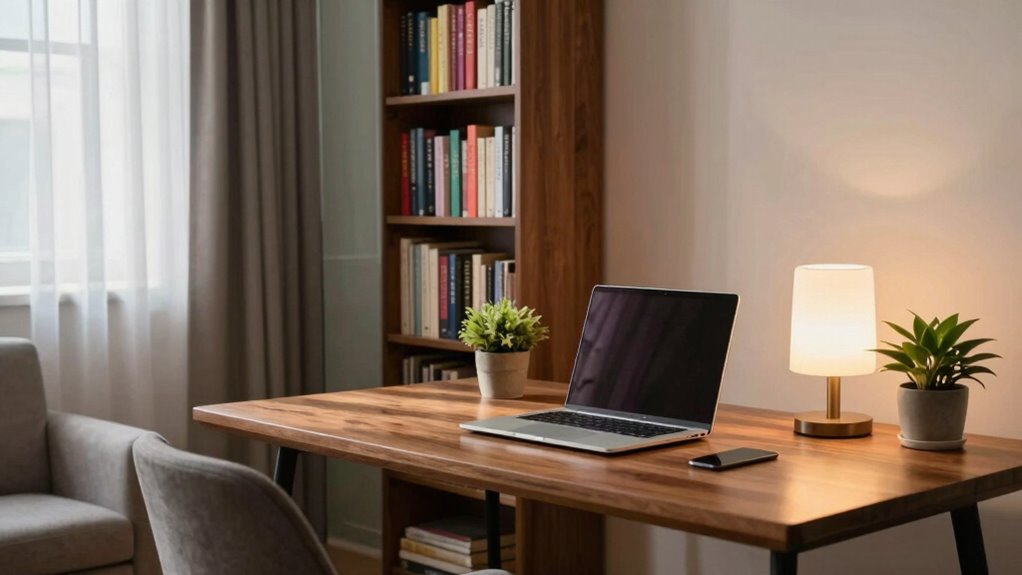
Boundary setting is equally essential. Physically designate a dedicated workspace, preferably a separate room or a distinct corner, where you do all your work. When you step out of that space, it’s a mental cue that your workday has ended. Keep work-related items confined to this area, and avoid bringing your laptop or work documents into the living room or bedroom. This physical separation reinforces mental boundaries, making it easier to switch off when your workday is over.
Communicate your boundaries clearly with family members or housemates. Let them know your work schedule and ask for their support in respecting your work hours. Likewise, set expectations with your employer or clients about your availability outside those hours. This way, you prevent work from encroaching on your personal life and vice versa.
Finally, practice discipline by sticking to your set hours and not checking work emails or messages during your personal time. Use this time for hobbies, exercise, or relaxation—activities that help you decompress. When you prioritize your personal life, you’ll find it easier to maintain a healthy separation from work, which improves your overall well-being and productivity.
digital calendar and alarm clock for work schedule
As an affiliate, we earn on qualifying purchases.
As an affiliate, we earn on qualifying purchases.
Frequently Asked Questions
How Can I Set Boundaries With Family During Work Hours?
You can set clear boundaries with your family during work hours by communicating your schedule openly and consistently. Explain your work commitments and ask for their support in respecting your workspace. Enforce these boundaries firmly but kindly, and remind them when boundaries are crossed. Regular family communication helps prevent misunderstandings, and consistent boundary enforcement guarantees everyone understands your work time is dedicated, fostering respect and reducing interruptions.
What Technology Tools Help Maintain Work-Life Separation?
You can use technology tools like virtual boundaries apps to set clear work hours and prevent work from spilling into personal time. Schedule digital detox periods by turning off notifications or using focus modes on your devices, helping you disconnect after work. These tools reinforce your boundaries, making it easier to switch off mentally and physically, ensuring a healthy work-life separation at home.
How Do I Handle Work Emergencies at Home?
When a work emergency strikes, you jump into action like a superhero! First, activate your work emergency protocols—quick, clear steps to handle the crisis. Use your emergency communication plans to stay connected with colleagues or clients instantly. Keep your phone handy and notifications on, so you’re always in the loop. Staying prepared helps you manage work emergencies smoothly without letting them invade your personal space or derail your home life.
What Are Quick Ways to Transition From Work to Personal Mode?
To quickly shift from work to personal mode, establish mental boundaries by mentally shutting off work thoughts and focusing on personal interests. Use physical separation, like changing clothes or moving away from your workspace, to reinforce this shift. Take a few deep breaths or do a quick stretch to reset your mindset. These simple actions help signal to your brain that work is done, and personal time begins.
How Can I Avoid Work-Related Distractions at Home?
To avoid work-related distractions at home, optimize your work environment by creating a dedicated, clutter-free workspace. Use distraction management techniques like turning off non-essential notifications and setting specific work hours. Communicate boundaries with family or housemates, so they know when you’re working. Regularly taking breaks helps maintain focus. By managing your environment and distractions effectively, you’ll stay productive without letting work seep into your personal time.
As an affiliate, we earn on qualifying purchases.
Conclusion
By setting clear boundaries and sticking to a routine, you can truly keep work and personal life separate at home. Remember, you don’t have to burn the candle at both ends—sometimes, you just need to step back and recharge. Creating that healthy divide helps you stay focused during work hours and enjoy your downtime without guilt. After all, a well-balanced life isn’t just a pipe dream; it’s within your reach if you take the right steps.
office organization and boundary setting tools
As an affiliate, we earn on qualifying purchases.
As an affiliate, we earn on qualifying purchases.
privacy screens for home workspace
As an affiliate, we earn on qualifying purchases.
As an affiliate, we earn on qualifying purchases.
Fall Picks
fall essentials
As an affiliate, we earn on qualifying purchases.