As a hybrid worker, you need different home office habits because balancing in-office and remote work means adjusting routines to stay productive, comfortable, and balanced. You’ll want to personalize your ergonomic setup for each environment and manage your time effectively to avoid burnout. Regular breaks and focused work periods are essential to keep energy high. Developing these tailored habits helps you stay aligned with your goals—continue to explore ways to optimize your home office for sustained success.
Key Takeaways
- Hybrid workers benefit from adaptable routines to accommodate varying work environments and schedules.
- Different home setups require personalized ergonomic adjustments to prevent discomfort.
- Flexibility in time management helps balance work demands with personal life effectively.
- Varying work locations necessitate distinct habits for maintaining focus and productivity.
- Regularly refining habits ensures comfort, health, and sustained efficiency in a hybrid work model.
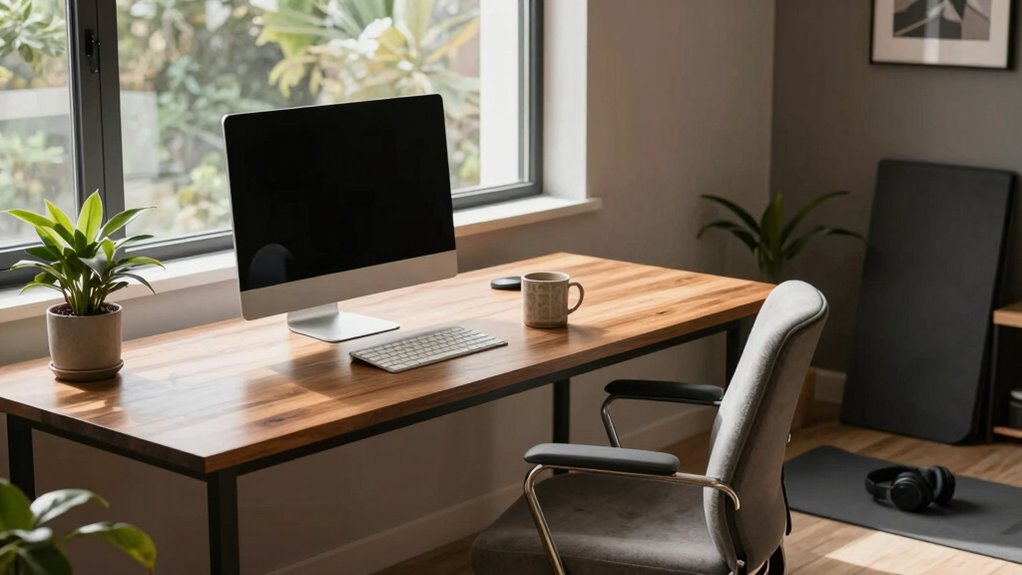
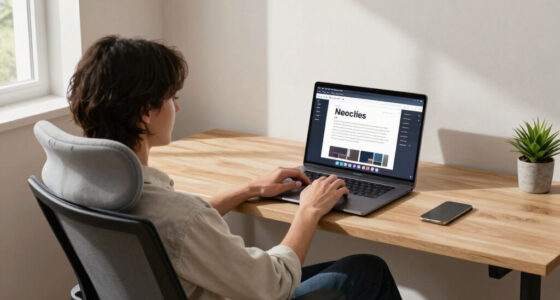
As hybrid work becomes more common, you’ll notice that employees develop a variety of home office habits tailored to their routines and preferences. One key aspect of these habits is creating ergonomic setups that support comfort and productivity. You might find that some prefer standing desks, ergonomic chairs, or adjustable monitor stands to reduce strain during long work sessions. These setups are essential because they help prevent discomfort and injuries that can arise from poor posture, allowing you to stay focused and energized throughout the day. You recognize that what works for one person may not suit another, so personalizing your workspace is fundamental. Investing in ergonomic equipment isn’t just about comfort; it’s about maintaining your health in a home environment not originally designed for work.
Personalize your workspace with ergonomic setups to boost comfort and protect your health at home.
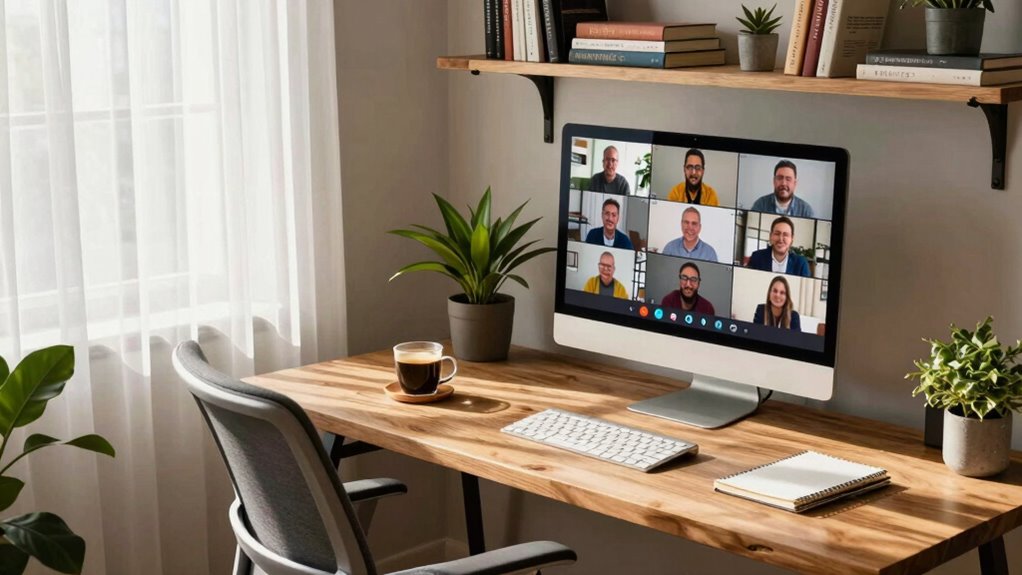
Alongside ergonomic setups, effective time management becomes even more critical when working from home. Without the structure of a traditional office, it’s easy to fall into habits that blur the lines between work and personal life. You might find yourself working late into the evening or taking frequent breaks that disrupt your focus. To combat this, you develop routines that help you stay on track, such as setting specific start and end times, planning your tasks ahead, and using timers or apps to monitor your productivity. These techniques help you create a sense of discipline similar to an office environment, so you can prioritize important tasks and avoid burnout. Good time management also means knowing when to disconnect and step away from your workspace, which is essential for maintaining mental clarity. Recognizing the importance of ergonomic setups can also influence how effectively you manage your time, as comfort often correlates with productivity and focus. Additionally, being mindful of home layout can help you optimize your workspace for better focus and efficiency. Furthermore, understanding the impact of home environment on your work habits can lead to more intentional adjustments that support your productivity. A well-designed home workspace can significantly enhance your ability to concentrate and work efficiently.
You may also notice that your home office habits evolve over time as you learn what boosts your efficiency and comfort. For example, you might discover that standing while working for short periods keeps you alert, or that scheduling breaks prevents fatigue. Adjusting your ergonomic setup based on these insights can lead to even better posture and reduced physical stress. Likewise, refining your time management strategies helps you balance work demands with personal needs, reducing stress and increasing overall satisfaction. These habits aren’t static; they adapt to your changing workload, environment, and personal preferences.
In essence, your success as a hybrid worker depends on developing tailored routines that prioritize ergonomic comfort and effective time management. By paying attention to these elements, you create a sustainable work-from-home environment that enhances productivity, protects your health, and supports your well-being. Every individual’s habits will differ, but the common goal remains the same: to work smarter, not harder, while maintaining a healthy balance between your professional and personal life.
ergonomic adjustable standing desk
As an affiliate, we earn on qualifying purchases.
As an affiliate, we earn on qualifying purchases.
Frequently Asked Questions
How Do Hybrid Workers Balance In-Office and Remote Productivity?
You balance in-office and remote productivity by creating flexible schedules and sticking to personal routines. When working remotely, set specific start and end times to stay focused. In the office, prioritize tasks that benefit from face-to-face interaction. Use your personal routines to switch gears smoothly between environments, ensuring you’re energized and organized. Regularly evaluate your habits, adjusting your schedule to maximize efficiency and maintain a healthy work-life balance.
What Technology Tools Enhance Hybrid Work Efficiency?
Tools like virtual collaboration platforms and cloud storage turbocharge your hybrid work efficiency. They foster seamless communication, streamline sharing, and support spontaneous problem-solving across distances. With real-time updates and secure storage, you stay synchronized and productive whether you’re in the office or at home. These tech tools turn teamwork into a smooth, simple, and scalable experience, empowering you to excel in any environment.
How Can Hybrid Workers Maintain Work-Life Boundaries?
To maintain work-life boundaries, you should set clear personal boundaries by establishing specific work hours and sticking to them. Create a dedicated workspace to mentally separate work from personal life. Prioritize your mental well-being by taking regular breaks and disconnecting after hours. Communicate your boundaries to colleagues and family, ensuring they respect your work time. This balance helps you stay productive while protecting your mental health.
What Ergonomic Setups Suit Hybrid Work Environments?
Think of your workspace as a well-tuned orchestra; every piece must work in harmony. To suit hybrid work environments, choose ergonomic accessories like adjustable chairs, keyboard stands, and monitor risers to support your posture. Keep your workspace organized with proper cable management and designated zones. These setups reduce strain and boost productivity, making your home office a comfortable, efficient haven where you can perform at your best, no matter where you work.
How Do Hybrid Habits Impact Team Collaboration?
Your hybrid habits directly influence team collaboration and communication. When you adapt your routines to stay connected, you enhance team communication, ensuring everyone stays informed. Using effective collaboration strategies, like regular check-ins and shared digital tools, helps bridge gaps between remote and in-office members. By actively engaging and maintaining consistency, you foster a collaborative environment where ideas flow freely, making teamwork more seamless and productive.
As an affiliate, we earn on qualifying purchases.
Conclusion
Adapting your home office habits might seem like extra effort, but it truly boosts your productivity and well-being. You might worry about the time it takes to make these changes, but remember, small adjustments lead to lasting improvements. Embracing different routines isn’t about complexity; it’s about creating a workspace that supports your best work and mental health. So, don’t resist change—see it as an opportunity to thrive in your hybrid work life.
monitor stand for ergonomic setup
As an affiliate, we earn on qualifying purchases.
As an affiliate, we earn on qualifying purchases.
timers and productivity apps for work
As an affiliate, we earn on qualifying purchases.
As an affiliate, we earn on qualifying purchases.