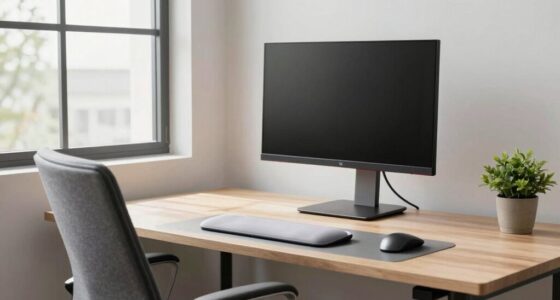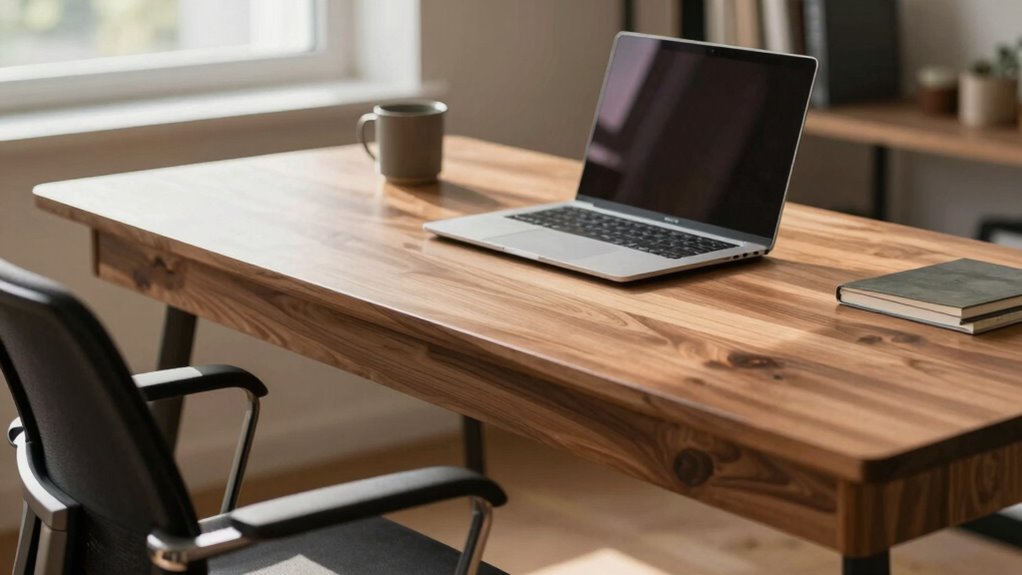
Your desk depth directly impacts your comfort and posture. If it’s too shallow, you’ll constantly reach forward, straining your shoulders and neck, and making it hard to keep your monitor at the right distance. Too deep, and clutter can make working awkward and reduce focus. The right depth keeps essential tools within easy reach, supports neutral body positions, and helps you stay comfortable during long tasks. Keep exploring to discover how to optimize your workspace even further.

Get comfort and recovery gear delivered free — and shop member deals
- Fast, free delivery on millions of items
- Access to Prime Big Deal Days deals on October 6–7
- Prime Video, Amazon Music and more included
Key Takeaways
- Proper desk depth ensures essential tools are within easy reach, reducing strain from overreaching and maintaining neutral posture.
- An ideal depth supports correct monitor placement, preventing neck and eye strain during extended work sessions.
- Adequate desk depth promotes better organization, minimizing clutter that can distract or cause awkward postures.
- Insufficient or excessive depth can cause discomfort, hunching, or leaning, leading to long-term musculoskeletal issues.
- Correct desk depth enhances overall comfort, enabling longer, more productive work periods without fatigue or strain.
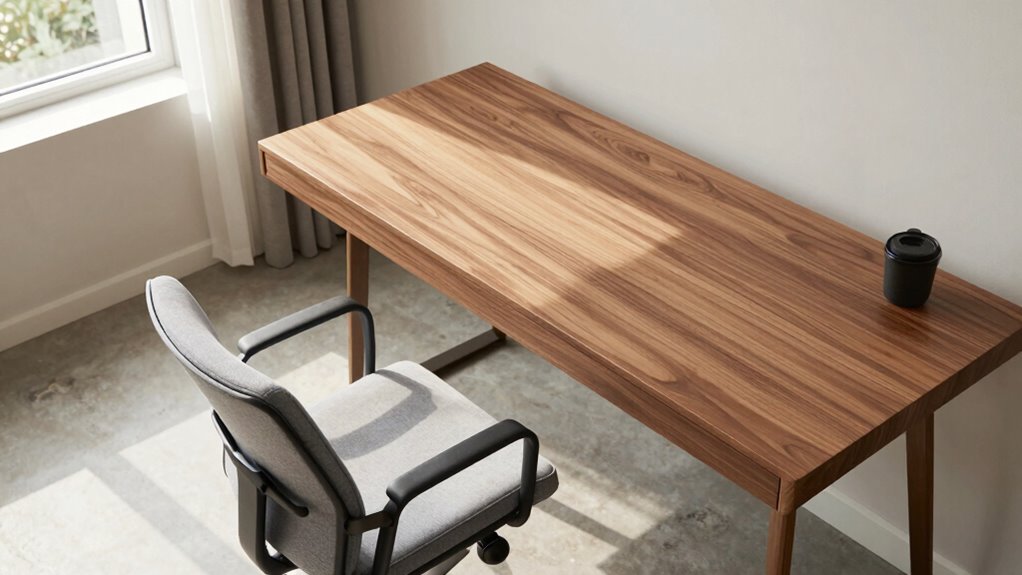
Choosing the right desk depth is essential for ensuring comfort and productivity in your workspace. When your desk isn’t properly sized, it’s easy to develop bad ergonomic posture, which can lead to discomfort or even long-term health issues. A desk that’s too shallow forces you to reach forward constantly, straining your shoulders and neck, while a desk that’s too deep may make it difficult to keep your monitors and other essential tools within easy reach. Finding the optimal depth helps you maintain proper alignment, reducing fatigue and preventing discomfort throughout your workday.
Choosing the right desk depth maintains proper alignment, reduces fatigue, and prevents discomfort during your workday.
A correctly sized desk encourages better workspace organization, making it easier to keep your tools and materials within arm’s reach without clutter. When your desk depth is just right, you can position your monitor at an ideal distance—about an arm’s length away—which supports ergonomic posture by reducing eye strain and encouraging a neutral neck position. Additionally, with adequate depth, you can set up your keyboard and mouse ergonomically, ensuring your wrists stay straight and your shoulders relax. This setup minimizes the risk of repetitive strain injuries and promotes a more comfortable working experience. Proper workspace organization can also help reduce distractions and improve focus during long work sessions.
Beyond comfort, choosing the right desk depth affects your efficiency. When your workspace is organized and everything is within easy reach, you spend less time searching for items or adjusting your posture. This streamlined setup keeps you focused and enables you to work more effectively, whether you’re typing, drawing, or analyzing data. Proper workspace organization also means your workspace isn’t cluttered, which can be distracting and hinder productivity. When your desk provides enough room for all your essential tools without feeling cramped, it creates a more inviting and functional environment.
Furthermore, a suitable desk depth supports your overall well-being. If your desk is too deep, you might find yourself leaning forward or hunching over, which compromises your ergonomic posture. Conversely, a shallow desk can cause you to overreach or strain your arms, leading to discomfort. Striking the right balance means you can sit comfortably for longer periods without feeling the need to constantly adjust or stretch awkwardly. This balance not only helps prevent discomfort but also encourages better posture habits, making your workspace healthier and more sustainable. Considering ergonomic principles when selecting your desk can further enhance your comfort and health. Additionally, understanding anti-fatigue mats and other ergonomic gear can help mitigate fatigue during long work sessions.
As an affiliate, we earn on qualifying purchases.
Frequently Asked Questions
How Does Desk Depth Affect Posture Over Long Periods?
Desk depth directly impacts your posture over long periods by influencing seat positioning and arm support. If the desk is too shallow, you might hunch forward, straining your neck and shoulders. If it’s too deep, you’ll struggle to keep your arms supported comfortably, causing tension. A properly sized desk guarantees your seat is positioned correctly, allowing your arms to rest naturally and maintaining good posture throughout your workday.
What Is the Ideal Desk Depth for Small Spaces?
For small spaces, an ideal desk depth is around 24 inches. This depth optimizes space without sacrificing functionality, helping you maintain a clutter-free environment. It also enhances aesthetic appeal by keeping your workspace clean and proportionate to the room. You’ll find it easier to work comfortably while maximizing room efficiency. A well-chosen desk depth balances practical use and visual harmony, making your small space feel open and organized.
Can Adjustable Desks Solve Depth-Related Comfort Issues?
Think of an adjustable desk as your personal sailing vessel, adaptable to changing seas. It can indeed solve depth-related comfort issues by easily aligning your ergonomic chair and keyboard height. You can customize the workspace to maintain proper posture, ensuring your arms stay relaxed and your monitor at eye level. With this flexibility, you navigate around discomfort, ensuring smooth sailing through your workday, no matter your space constraints.
How Does Desk Depth Influence Monitor Placement?
Desk depth directly impacts monitor positioning, influencing your overall desk ergonomics. If your desk is too shallow, you might have to push your monitor back, leading to awkward neck angles and strain. Conversely, a deeper desk allows you to position your monitor at an ideal distance, promoting better posture. Proper desk depth helps you maintain comfortable monitor placement, reducing eye and neck fatigue, and enhancing your work efficiency.
What Ergonomic Accessories Complement Different Desk Depths?
You can improve comfort by adding ergonomic accessories suited to your desk depth. For shallow desks, use adjustable monitor arms to maintain appropriate monitor distance, preventing neck strain. A keyboard tray helps set the ideal keyboard height, reducing wrist fatigue. For deeper desks, consider monitor risers to elevate screens and wrist rests to support your wrists. These accessories guarantee proper posture, making your workspace more comfortable regardless of desk depth.
As an affiliate, we earn on qualifying purchases.
Conclusion
Choosing the right desk depth isn’t just about aesthetics—it directly impacts your comfort and productivity. An ergonomic setup can reduce strain and prevent long-term health issues. Did you know that improper desk height and depth can cause neck and shoulder pain in up to 50% of office workers? By selecting a desk with the proper depth, you guarantee a healthier, more comfortable workspace. Remember, investing in your comfort now pays off with increased focus and well-being later.
As an affiliate, we earn on qualifying purchases.
As an affiliate, we earn on qualifying purchases.
Fall Picks
fall essentials
As an affiliate, we earn on qualifying purchases.