Choosing the right Mac mini for software development involves balancing performance, budget, and future-proofing. The Apple 2024 Mac Mini with M4 Chip stands out for its impressive processing power and efficiency, making it ideal for intensive tasks. The Apple Mac Mini with M4 Pro Chip offers a significant boost in performance with its 10-core CPU and GPU, suited for demanding workflows. Meanwhile, the upcoming Apple 2026 Mac mini with M6 Chip promises further advancements in AI and multi-display support but may come with limited availability and higher costs. Each option has tradeoffs around storage, upgradeability, and price, so I’ll help you decode which fits your development needs best.

Get comfort and recovery gear delivered free with Prime
- Fast, free delivery on millions of items
- Prime Video, Amazon Music and more included
- Member-only deals all year
Complete the kit


Key Takeaways
- The M4 and M4 Pro chips deliver substantial performance gains over older Intel or M1 models, making them better suited for demanding coding tasks.
- Storage capacity varies significantly, with 256GB SSD options ideal for lightweight setups, while 1TB or more suits larger projects.
- Connectivity options like Thunderbolt 4 and multiple display support are crucial for multi-monitor setups common in development work.
- Compact size doesn’t mean limited power—high-end models pack significant processing and GPU capabilities.
- Price and upgradeability remain key considerations—more powerful chips often come with higher costs and limited hardware upgrades.
| Apple 2024 Mac Mini with M4 Chip, 16GB RAM, 256GB SSD, Silver (Renewed) |  | Best Overall Performance for Developers | Processor: Apple M4 10-Core | RAM: 16GB | Storage: 256GB SSD | VIEW ON AMAZON | See Our Full Breakdown |
| Apple Mac Mini Desktop Intel Core i5 2.6GHz (Renewed) |  | Best Budget Option for Light Development | Processor: 2.6GHz Dual-Core Intel Core i5 | Memory: 8GB DDR3 | Storage: 1TB Hard Drive | VIEW ON AMAZON | See Our Full Breakdown |
| Mac mini with M4 Pro Chip, 10-core CPU & GPU, 24GB Memory, 1TB Storage | 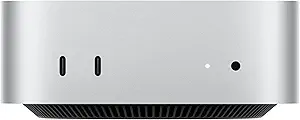 | Best for Performance-Intensive Development | Processor: M4 Pro 10-core | GPU: 10-core | Memory: 24GB | VIEW ON AMAZON | See Our Full Breakdown |
| Apple 2026 Mac mini Desktop Computer with M6 Chip |  | Future-Ready Powerhouse for Developers | Processor: M6 chip | Memory: up to 32GB | Storage: up to 2x faster options | VIEW ON AMAZON | See Our Full Breakdown |
| Apple 2020 Mac Mini with M1 Chip, 8GB RAM, 256GB SSD – Silver (Renewed) |  | Best Value for Everyday Development | Processor: Apple M1 | RAM: 8GB | Storage: 256GB SSD | VIEW ON AMAZON | See Our Full Breakdown |
| mac mini for software development | Processor | Storage | Ports | Memory |
|---|---|---|---|---|
| Apple 2024 Mac Mini with M4 Ch | Apple M4 10-Core | 256GB SSD | — | — |
| Apple Mac Mini Desktop Intel C | 2.6GHz Dual-Core Intel Core i5 | 1TB Hard Drive | ThunderBolt, HDMI, USB, SDXC | 8GB DDR3 |
| Mac mini with M4 Pro Chip | M4 Pro 10-core | 1TB | Thunderbolt, HDMI, USB-C | 24GB |
| Apple 2026 Mac mini Desktop Co | M6 chip | up to 2x faster options | Three Thunderbolt 4, HDMI, USB-C, headphone | up to 32GB |
| Apple 2020 Mac Mini with M1 Ch | Apple M1 | 256GB SSD | USB, HDMI | — |
More Details on Our Top Picks
Apple 2024 Mac Mini with M4 Chip, 16GB RAM, 256GB SSD, Silver (Renewed)
This Mac Mini with the new M4 chip stands out for its powerful 10-core processor and 16GB of unified RAM, making it well-suited for compiling code, running virtual machines, and multitasking. Compared to older Intel models, it offers a significant leap in speed and energy efficiency. The main tradeoff is its limited 256GB SSD, which might require external storage for larger projects. Its compact size and broad connectivity make it an excellent choice for developers who need a reliable, high-performance machine without taking up much space.
Pros:- Powerful M4 10-core chip with integrated GPU
- Lightweight and compact design
- Multiple connectivity options including Thunderbolt 4 and HDMI
- Energy-efficient operation
Cons:- Limited storage with only 256GB SSD
- No options for internal upgrades
- Small form factor may limit future expansion
Best for: Developers needing a fast, reliable desktop with modern Apple Silicon architecture
Not ideal for: Those requiring extensive local storage or upgradability
- Processor:Apple M4 10-Core
- RAM:16GB
- Storage:256GB SSD
- Operating System:macOS
- Connectivity:Thunderbolt 4, HDMI, USB-C
- Weight:1.5 pounds
Our verdict“A highly capable, future-proof choice for most software development needs, balancing power and size.”
Apple Mac Mini Desktop Intel Core i5 2.6GHz (Renewed)
This Intel-based Mac Mini offers a 2.6GHz dual-core i5 processor and 8GB of DDR3 RAM, making it suitable for developers working on less demanding projects. While it provides broad connectivity options, including Thunderbolt and HDMI, its older hardware and slower DDR3 memory can hinder performance during intensive tasks. It’s a good pick for those on a tight budget or working on legacy projects that don’t require the latest hardware, but it’s less future-proof and may struggle with multitasking or large codebases.
Pros:- Reliable performance for basic development tasks
- Multiple ports for peripherals
- Renewed product with warranty
Cons:- Older DDR3 memory limits speed
- Limited to 8GB RAM
- No dedicated GPU
Best for: Budget-conscious developers or those working on simpler applications
Not ideal for: Heavy multitasking, virtual machines, or future-proofing
- Processor:2.6GHz Dual-Core Intel Core i5
- Memory:8GB DDR3
- Storage:1TB Hard Drive
- Ports:ThunderBolt, HDMI, USB, SDXC
- Display Resolution:Up to 2560×1600
- Network:Wi-Fi, Ethernet
Our verdict“A decent entry-level machine for simple coding tasks, but it falls short for demanding development workflows.”
Mac mini with M4 Pro Chip, 10-core CPU & GPU, 24GB Memory, 1TB Storage
This Mac mini features the M4 Pro chip with a 10-core CPU and GPU, plus 24GB of RAM, making it ideal for intensive development tasks like large codebases, virtual machines, or machine learning workloads. Its compact size doesn’t compromise on power, and it offers extensive connectivity with Thunderbolt, HDMI, and USB-C ports. However, its high price and limited upgrade options mean it’s best suited for professional developers who need top-tier performance and are willing to invest accordingly.
Pros:- Powerful M4 Pro 10-core CPU and GPU
- Large 24GB RAM for multitasking
- Multiple connectivity options
- Seamless Apple ecosystem integration
Cons:- High cost
- Limited upgradeability
- No dedicated graphics card option
Best for: Developers working on demanding projects requiring high processing and graphics power
Not ideal for: Budget-conscious developers or those needing internal hardware upgrades
- Processor:M4 Pro 10-core
- GPU:10-core
- Memory:24GB
- Storage:1TB
- Ports:Thunderbolt, HDMI, USB-C
- Display Support:Multiple external displays
Our verdict“A premium choice for professionals needing maximum performance in a small form factor.”
Apple 2026 Mac mini Desktop Computer with M6 Chip
The upcoming M6 chip promises significant advances in AI, multi-display, and processing capabilities. It supports up to three external displays and offers support for faster storage and 32GB of RAM in higher configurations. While specifics are limited, this model appears tailored for developers working on AI applications, multi-tasking across several environments, and demanding workflows. The main considerations are the potential high cost and limited details about upgrade pathways, but its integration within the latest Apple ecosystem makes it a compelling choice for future-proofing your development setup.
Pros:- Advanced AI capabilities with M6 chip
- Supports multiple external displays
- Up to 32GB RAM and fast storage options
- Seamless ecosystem integration
Cons:- Limited details on price and upgrade options
- Potentially high cost
- Availability may be limited
Best for: Developers needing cutting-edge hardware with AI and multi-display support
Not ideal for: Those seeking immediate availability or on a strict budget
- Processor:M6 chip
- Memory:up to 32GB
- Storage:up to 2x faster options
- Ethernet:2.5Gb Ethernet
- Wi-Fi:Wi-Fi 7
- Ports:Three Thunderbolt 4, HDMI, USB-C, headphone
Our verdict“A forward-looking choice for developers planning to leverage the latest Apple Silicon innovations.”
Apple 2020 Mac Mini with M1 Chip, 8GB RAM, 256GB SSD – Silver (Renewed)
The M1-powered Mac Mini delivers excellent performance for most development tasks, especially on a budget. Its 8-core CPU and integrated GPU handle compiling and testing well, and 8GB RAM is sufficient for many development environments. While it’s the oldest among the options, it still performs admirably for basic workflows and is ideal for those starting out or working on less resource-intensive projects. Its main limitation is the smaller RAM and storage, which may require external solutions for larger or more complex projects.
Pros:- Solid performance with M1 chip
- Compact and energy-efficient design
- Fast SSD for data access
- Affordable for its class
Cons:- Limited 8GB RAM for heavy multitasking
- Older architecture may lag behind newer chips
- Limited upgrade options
Best for: Budget-conscious developers or those starting with light workloads
Not ideal for: Heavy multitasking, AI workloads, or future-proofing
- Processor:Apple M1
- RAM:8GB
- Storage:256GB SSD
- Ports:USB, HDMI
- Dimensions:8.26 x 8.2 x 3.22 inches
- Weight:1.18 kg
Our verdict“A solid choice for entry-level development, balancing cost and performance.”

How We Picked
Our selection process focused on the key factors that matter most for software development: processing power, RAM, storage, expandability, connectivity, and value. We prioritized recent and upcoming Apple Silicon models for their efficiency and performance advantages over older Intel-based options. Each product was evaluated against its ability to handle development workloads, multitasking, and integration with development tools. We also considered user feedback, price points, and the longevity of hardware to recommend options that balance performance with practical constraints.
| mac mini for software development | Ports |
|---|---|
| Apple 2024 Mac Mini with M4 Ch | — |
| Apple Mac Mini Desktop Intel C | ThunderBolt, HDMI, USB, SDXC |
| Mac mini with M4 Pro Chip | Thunderbolt, HDMI, USB-C |
| Apple 2026 Mac mini Desktop Co | Three Thunderbolt 4, HDMI, USB-C, headphone |
| Apple 2020 Mac Mini with M1 Ch | USB, HDMI |
Factors to Consider When Choosing Mac Mini For Software Development
Picking the best Mac mini for software development hinges on understanding your workload, budget, and growth plans. The key considerations include processor power, RAM, storage capacity, connectivity options, and future compatibility. Whether you prioritize raw performance, cost-efficiency, or ecosystem integration, I’ll guide you through what to look for in each category to find the best fit for your development environment.
Processor Power and Performance
The processor is the heart of your development machine. Recent Apple Silicon chips like the M4, M4 Pro, and M6 deliver significant speed and efficiency improvements over older Intel models. For intensive tasks like compiling large codebases or running virtual machines, prioritize models with at least 10-core CPUs and dedicated GPU options. For lighter workloads, a more modest chip like the M1 can suffice.
Memory and Storage
RAM determines how smoothly multitasking and large projects run. Developers working with multiple environments or virtual machines should opt for 16GB or more. Storage capacity matters too—256GB SSDs are fast but may fill quickly if you’re working with large datasets or multiple tools. Consider models with 1TB or higher if your budget allows, or plan to supplement with external drives.
Connectivity and Expandability
Multiple Thunderbolt 4 ports and HDMI outputs are vital for connecting multiple monitors and peripherals, common in development setups. While compact models limit internal upgrade options, high-end models with multiple ports support extensive peripherals and external storage, enhancing productivity. Think about your current and future accessory needs when choosing.
Future-Proofing and Ecosystem
Investing in the latest Apple Silicon chips like the M4 Pro or M6 can extend the lifespan of your setup, especially as development tools evolve to leverage newer hardware. Compatibility with Apple’s ecosystem and seamless integration with other Apple devices also add value, streamlining workflows and data sharing.
Frequently Asked Questions
Is the Mac mini suitable for heavy development tasks?
Yes, especially the models with M4 Pro or M6 chips, which provide ample CPU and GPU power for compiling large codebases, running virtual machines, and multitasking. However, for extremely demanding workloads, consider models with higher RAM and storage, or explore adding external drives and peripherals to extend capabilities.
How important is RAM for software development on a Mac mini?
RAM is critical for multitasking, running IDEs, virtual machines, and containers. For most development workflows, 16GB of RAM strikes a good balance, but power users working on complex projects or AI models should aim for 24GB or more if available. The ability to upgrade RAM internally is limited in most Mac minis, so choose wisely at purchase.
Should I prioritize the latest Apple Silicon models or older Intel-based Macs?
Latest Apple Silicon models—like the M4, M4 Pro, and upcoming M6—offer better performance, energy efficiency, and longer software support. Older Intel Macs are generally cheaper but may struggle with future updates and demanding workflows. For longevity and performance, newer models are the better investment for development work.
What connectivity options are most important for multi-monitor setups?
Multiple Thunderbolt 4 ports and HDMI are essential for connecting several monitors and peripherals. High-end models typically support multiple external displays and offer versatile port options, making them ideal for developers who rely on a multi-screen workflow.
Is external storage necessary with these Mac minis?
While internal SSDs are fast, 256GB or 512GB storage can fill up quickly. External drives or network-attached storage (NAS) are often necessary for larger projects, backups, and data management, especially if your internal storage is limited or you work with large datasets.
Conclusion
For casual or entry-level developers, the Mac mini with M1 chip offers excellent value and performance. Those needing a powerful, future-proof workstation should lean toward the M4 Pro or M6 models, especially if working on intensive projects or AI workloads. Developers who prioritize portability and top-tier specs will find the M6 ideal, while budget-conscious users should consider renewed Intel-based models but with the understanding of potential performance limitations. Ultimately, your choice depends on your workload demands, budget, and desire for ecosystem integration.